so thrilled to share that i finished the two papers i’ve been working on these past months: “Feminine Dimensions of ‘God’: The Deification of Mahābhārata’s Tragic Heroine” & “The Western Revival of Goddess Worship”. 
my first essay explored the richness of the non-dual concept of ‘God’ by addressing the intricate worship of Draupadī, Mahābhārata’s enigmatic female character – whose tragic and distinct storyline establishes her as a multifaceted heroine: a devoted wife; a caring mother; an abused and vindicative woman; a polyandrous empress; an avatar of the Goddess; the Supreme Parāśakti, the all-pervading absolute reality herself; the celestial Śrī. i argued that, through the worship of an abused & vengeful woman, her devotees are deifying the entirety of the human experience. my second essay employed a discourse rooted in psychoanalysis, and was centred on the therapeutic values Goddess archetypes hold for the traumatised female psyche + commented on the ramifications of the phenomenon of religious revival in a secular age.
 i have adored writing both, no matter how frustrating the writing inevitably got at times. i had so much fun with the two topics, which i’m very passionate about, but i especially enjoyed delving into Mahābhārata – three months in, and i still am absolutely fascinated by it and in awe of the beautiful Draupadī, who i’m sure will be the subject of much of my future research.
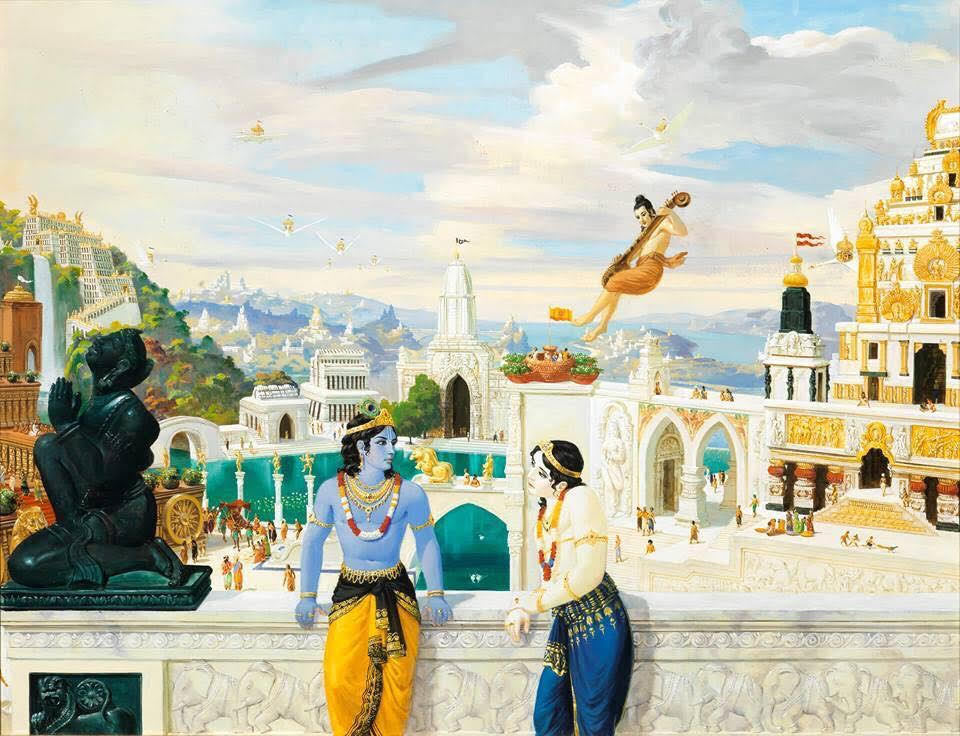
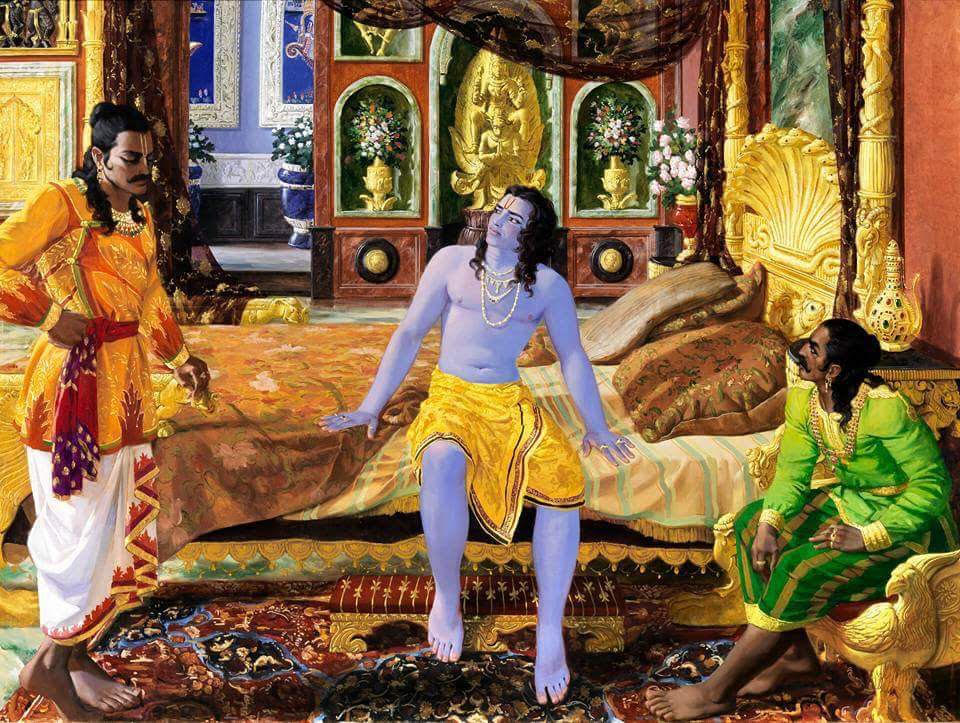
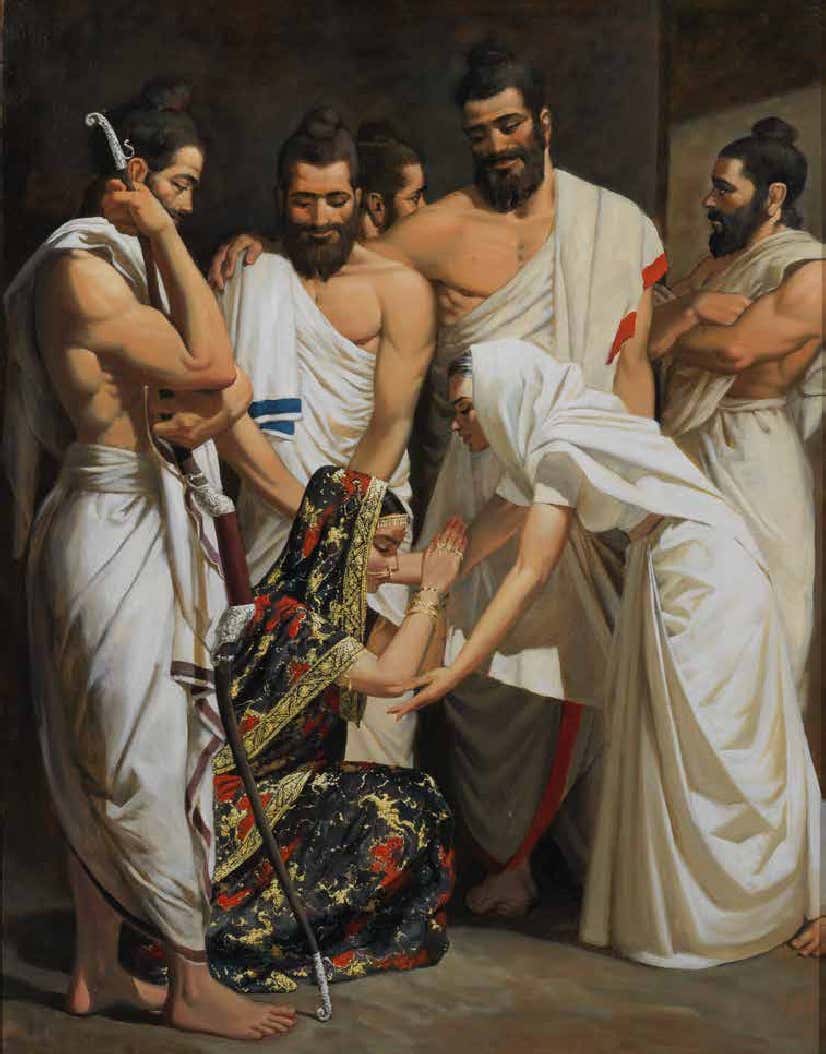
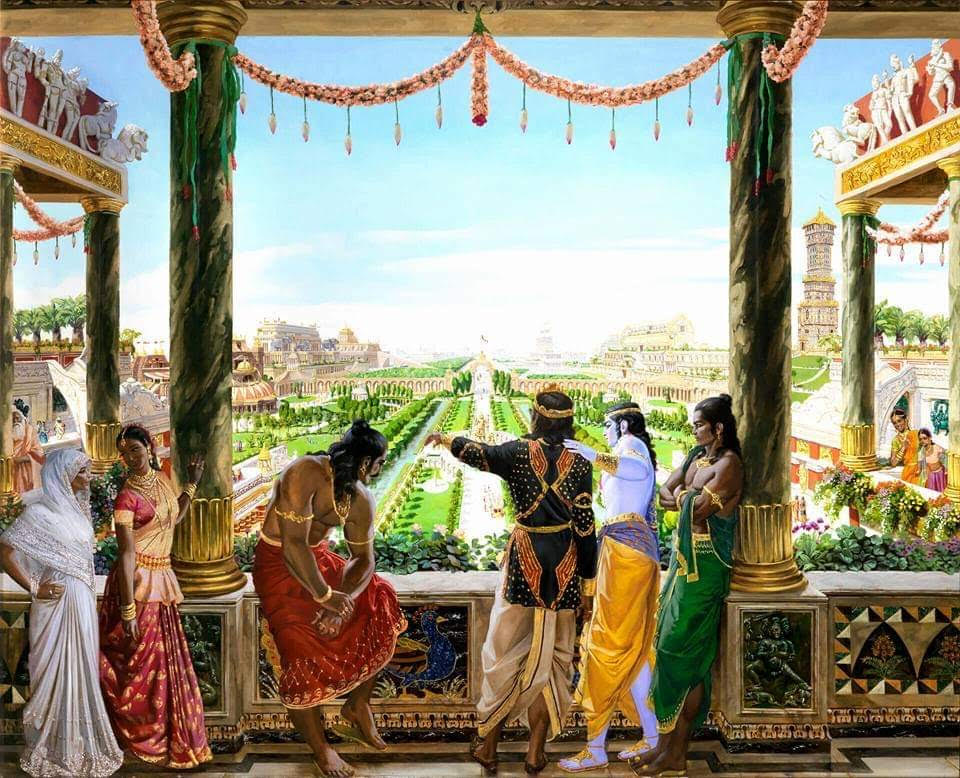
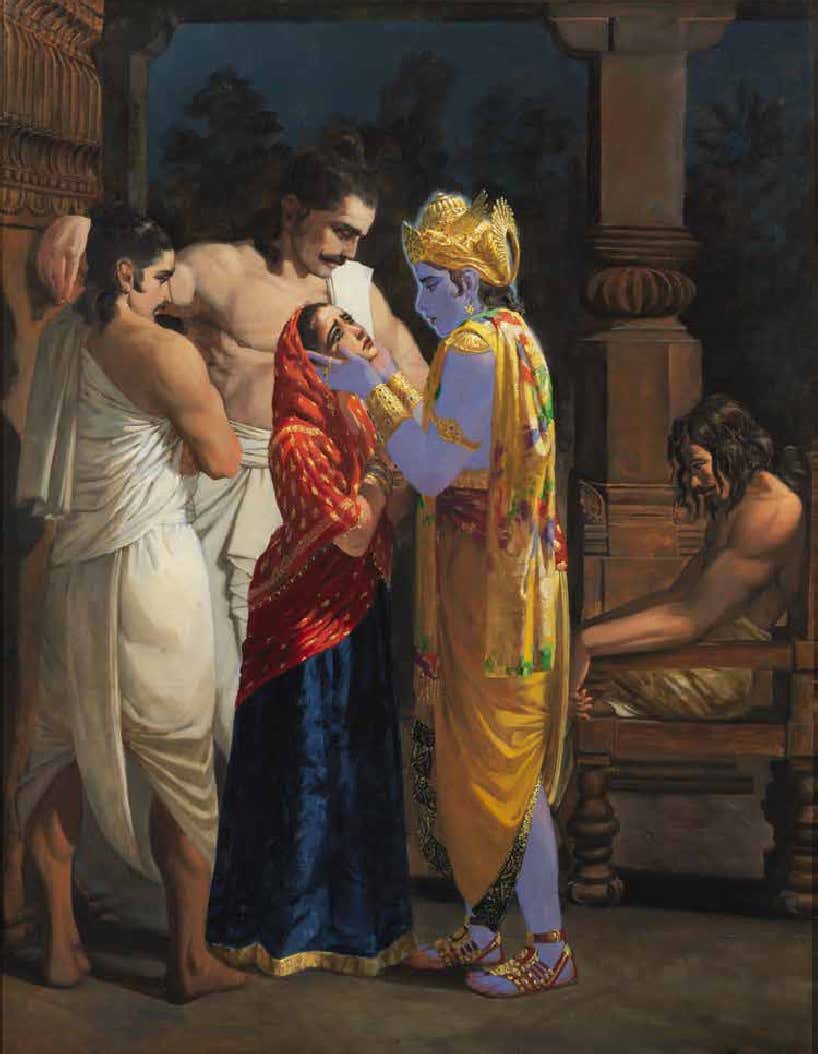
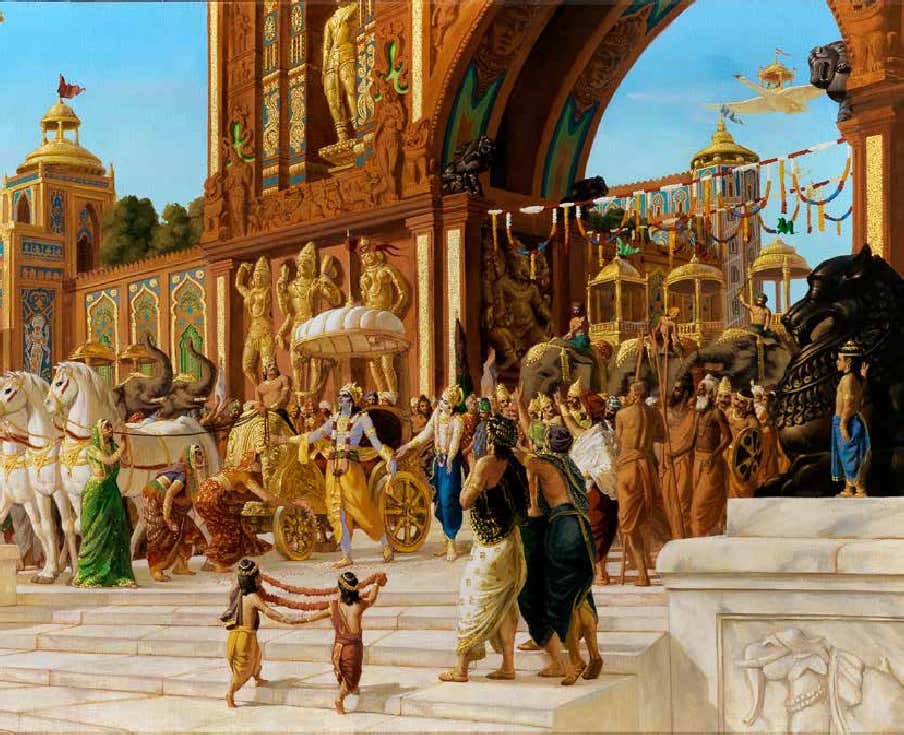
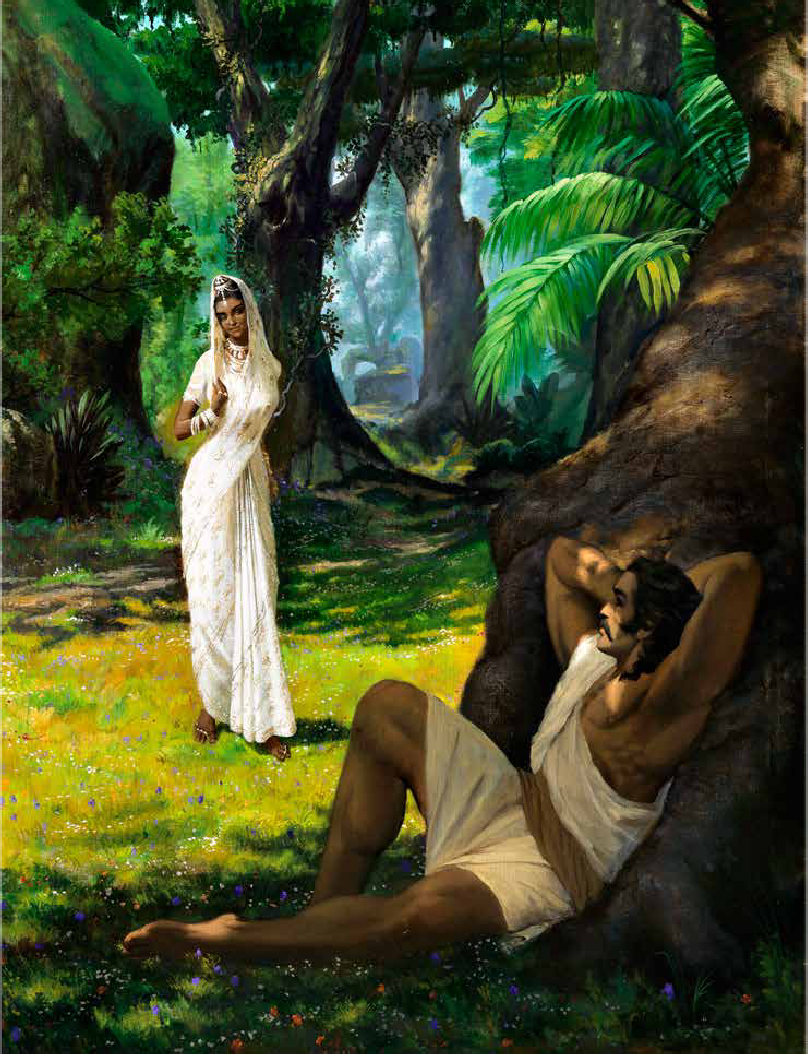
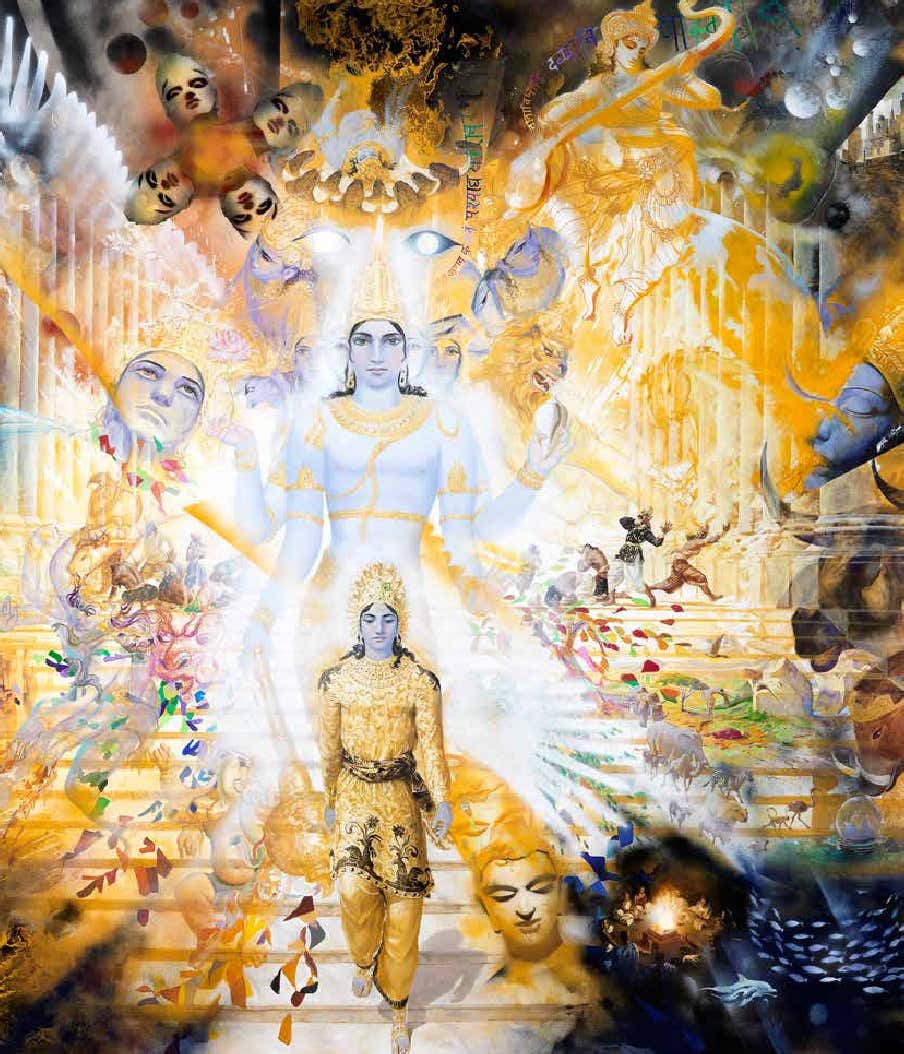
on this occasion, attaching here the marvellous paintings of Giampaolo Tomassetti, who dedicated 17 years of his life to studying & painting the Mahābhārata pictured:
Kṛṣṇa & Balarāma in Dvārakā (my favourite )
Kṛṣṇa advising the Pāṇḍavas
Draupadī meets Kuntī
Kuntī & Karṇa
Kṛṣṇa comforting Draupadī after ~ dice match & disrobing ~
Kṛṣṇa reveals his universal form (Govindarūpiṇī)
Kuntī & Sūrya
Kṛṣṇa, the Pāṇḍavas, Draupadī & Kuntī in Indraprastha
Bhīma & Hiḍimbī
Dvārakā


 amaryllis