Draupadī’s Question

The order of the stakes of the dice game in the Mahābhārata goes as follows:

1) Yudhiṣṭhira stakes and loses the Pāṇḍavas’ wealth, army, empire, throne, weapons
2) Yudhiṣṭhira stakes and loses the autonomy of his four younger brothers, and they are enslaved on the spot (and they submit to it)
3) Yudhiṣṭhira stakes and loses his own autonomy, rendering himself enslaved (and submitting to it himself)
4) lastly, Yudhiṣṭhira stakes and loses Draupadī’s autonomy. The Kauravas roar in excitement, and they send a servant to fetch Draupadī to the sabhā (the royal hall) so she can be enslaved publicly.

Draupadī is absent from the sabhā at the time the dice game unfolds, as she is in her private chambers, menstruating. The servant comes to her and announces the outcome of the dice game. She is told that she has been ordered to present herself as a servant before the Kuru dynasty. She refuses to go, and says she wants one question to be asked to Yudhiṣṭhira:

“Did you first lose yourself, or me?” (2.60.9)

The servant returns to the sabhā and asks Draupadī’s question to Yudhiṣṭhira, who remains silent. The Kauravas become enraged by what they perceive to be Draupadī’s defiance, and one of them, Duḥśāsana, goes to fetch her himself. When she still refuses to come, he grabs her by her hair, drags her to the court and molests her publicly.

However, Draupadī is unbent: she delivers an incredibly powerful speech in which she continuously asserts her independence, challenges and rejects the men’s claims to her freedom, questions and denies the validity of the dice game, and, ultimately, overturns its verdict. In this speech, she presents a series of arguments, and I will analyse each in a series of upcoming posts.

Her first argument is her first question, which infers that, even if Yudhiṣṭhira did have any authority over her status (which she later challenges and denies as well), he lost all authority which could have been argued that he exerted over her the moment he renounced his independence. One who is not their own master cannot be the master of someone else, and one who is dependent cannot impair another’s independence.

My Mahābhārata blog: https://www.tumblr.com/musingsonthemahabharata

IG: @musingsonthemahabharata. ❤️‍🔥

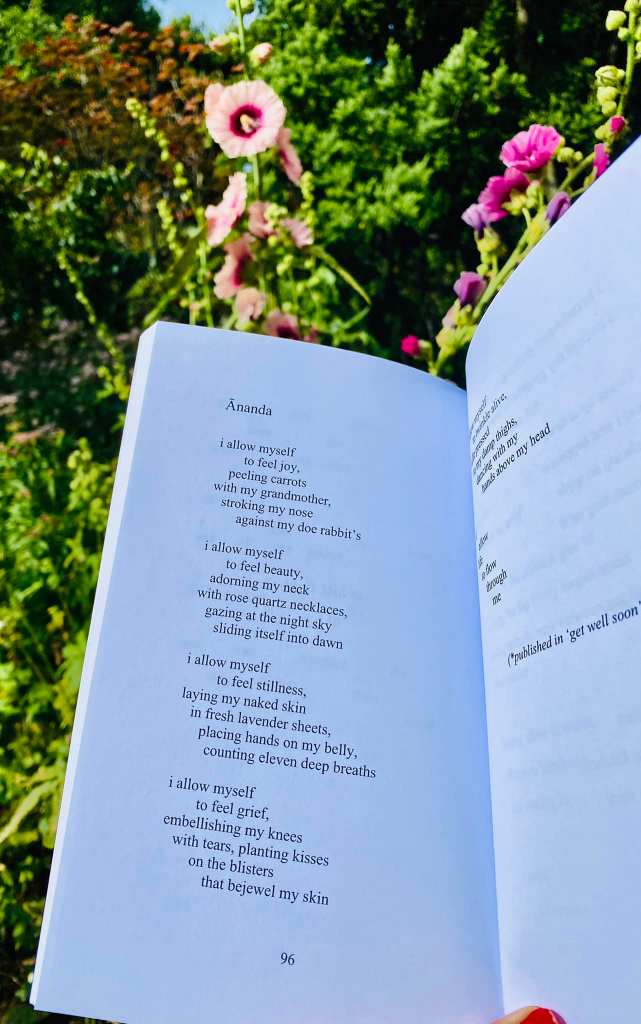
Ānanda

i allow myself
to feel joy,
peeling carrots
with my grandmother,
stroking my nose
against my doe rabbit’s

i allow myself
to feel beauty,
adorning my neck
with rose quartz necklaces,
gazing at the night sky
sliding itself into dawn

i allow myself
to feel stillness,
laying my naked skin
in fresh lavender sheets,
placing hands on my belly,
counting eleven deep breaths

i allow myself
to feel grief,
embellishing my knees
with tears, planting kisses
on the blisters
that bejewel my skin

i allow myself
to twinkle alive,
tulle pressed
to my damp thighs,
dancing with my
hands above my head

i
allow
life
to flow
through
me

🌷 poem from my poetry collection, “songs of youth”, the “at last, light: of joy” chapter. available on amazon: https://amzn.eu/d/0duef5g.

graduation | warwick MA :)

incredibly thrilled to have graduated from my second Master’s Degree awarded with a Distinction and with A+ on my final portfolios & dissertation. ❤️‍🔥

moving forward with the beautiful words spoken by Baroness Ashton, Warwick University’s first ever woman chancellor, as one of my precepts in life: assume that anyone you ever meet knows something you don’t. further, i was moved by two of our professors’ kind reminders to us, which i will share here.

first: yes, what we have achieved is great and we must celebrate it “wildly and loudly”; and yet, we must not be complacent and rest on our laurels. don’t stop; keep moving. there is always room for refinement, growth, expansion. of course, there is and there isn’t – as in, the whole is not separate from the parts, and the part is still the whole even if it appears part, as the Upaniṣads teach us. and yet; when the grasping to knowledge that comes from insecurity and self-loathing begins to stop… glimpses of the human potentiality that is never-ending yet whole begin to become accessible.

second: do not hoard knowledge. do not claim it as solely your own. share generously.

grateful our professors reminded us of our limitations. onward with enthusiasm and dedication to knowledge and to perfecting my craft.

finally… this is my third degree yet first awarding ceremony i have attended due to pandemic reasons and life circumstances, so i was especially excited to have this experience. 🥰

gratitude to my professors, supervisors, family, colleagues and friends. 🙏

espresso as sacrament | coffee explorations per the bittermatrix blueprint

curated espresso can unlock the bitter-sweet complex or the tikta madhur rasa, one of the six rasas or complexes of Āyurveda. i have written about this algorithm with reference to the astringency complex that can be accessed through single malt scotch, which triggers a process of systemic cleansing. similarly, accessing the bitter-sweet complex in its purity has significant impact: as explained by Dr. Sumit Kesarkar in the BitterMatrix foundational video, it pacifies the inflammatory parameters that occur when the system is overwhelmed or overloaded by hormones or metabolic waste that it cannot digest and cannot throw out.

image credit: Unsplash, Nathan Dumlao

i introduced espresso as a sacrament in my dinacaryā in spring last year, in what happened to be a period of extreme stress for me. notably, i didn’t introduce espresso because i was in a period of stress, and i did not begin exploring with a set target, the events just happened to align in this way sequentially. as i have previously shared on my social media, i have exhibited symptoms of mild ocd since childhood, which used to be triggered and intensified in periods of high stress.

this was the case in spring, as well; my system became overwhelmed while trying to process the stressful input i was receiving and my mind became prone to compulsions. although i was using mind-based techniques (such as REBT) and other tools to process and manage myself, it was only when espresso was coincidentally introduced that i was able to reach a baseline on top of which the mind-based techniques could function effectively, and on top of which my whisky explorations came as a most effective culmination.

the transmutation was definitely not easy nor an over-night one, yet i can confidently share that through the combination of these tools, themselves entwined with tools of sound and breath of experiential Tantra, my mental landscape is incredibly different than it was almost a year ago. in fact, i find that the tools are continuously rewiring it on an almost day to day basis, as experiential Tantra goes.

additionally, i have learned that incipient academic studies are being conducted on the effects that caffeine (espresso or dark coffee). additionally, i have learned that incipient academic studies are being conducted on the effects that caffeine (such as espresso or dark coffee) have on treating conditions such as ocd, which i’m very excited about. will share more about my own explorations and the BitterMatrix research, too.

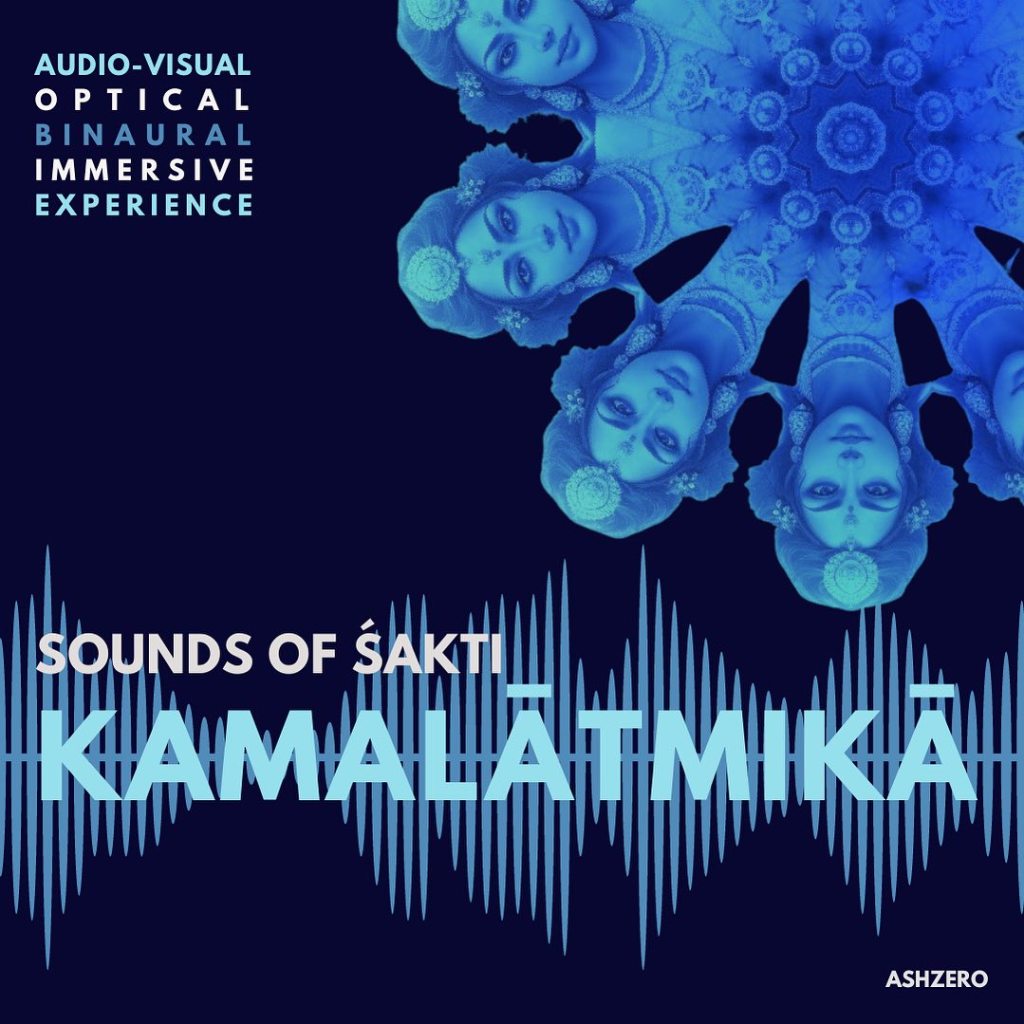
Sound Explorations: the Siddhāntas of Kamalātmikā and Bagalāmukhī {Collection of Algorithms} on the AshZero Platform

Kamalātmikā Siddhānta: documented entry date, 1st december 2023.

tomorrow marks three weeks of my second continuous sound exploration of the Kamalātmikā siddhānta (collection of algorithms) through @theashzero offering of Sounds of Śakti, for which @lensonearth created a series of sound containers (sensory or audio-visual blueprints) that aim to project as derivatives of the siddhānta of Veda & Tantra, in this expansion of bījā (seed) as layered on mātṛkā & Maheśvara sūtra.

in embarking on experimentation with another wavelength, i decided not to choose one consciously with the intention to not allow any bias inferred by my programmed sense projections to influence my decision process & ulterior experience. i therefore randomly clicked on a sound, and followingly listened to it every morning and every evening, generally 4-5 times each. in the morning, after drinking espresso as sacrament, in the evening, after imbibing single malt as sacrament.

although i aimed to approach this exploration with complete freshness & to renounce any prior knowledge or expectation, there was some linearity around having explored with one ‘different’ sound already. however, the awareness of another sound quickly faded. when listening, there was no ‘other’ sound i had explored with – the sound was complete in itself. the experiences that sprang from the sound were complete in themselves. further, it would be futile to try to compare my experiences with the two sounds – in fact, it would be futile to even try to compare my experiences with the same sound in-between themselves, as even in a round of listening consecutively to one, each listening was distinct yet not separate as well as complete, with the ear picking on different frequencies, the body absorbing it in unique sensorial ways.

in the first session of Sounds of Śakti, Dr. Sumit said that, although presented as a series, each Mahāvidyā is complete, and each session is complete. we approach them as a series only as a reference point, but there is no need to approach the Mahāvidyās as such if you connect with one in completeness. my recent sound exploration offered an experiential glimpse into this.

as a final observation that i aim to make without assigning validations of ‘good’ or ‘bad’ to the process, looking back to the last 7 weeks, i have spontaneously made very different or ‘new’ choices in the realm of resources / resourcefulness or ārtha, which the Kamalātmikā siddhānta taps into.

Bagalāmukhī Siddhānta: documented entry date, 29th of december 2023.

i have been exploring the siddhantā {collection of algorithms} of the Mahāvidyā Bagalāmukhī for about one month now, through audio-visual blueprints {sound & images encoded through the algorithm of varṇa – svara -vyañjana} & colour spectrum {that of the sky} for about one month now, stimulating my brain with these tools at dawn & dusk every day, and my experience has been one of synaesthesia.

synaesthesia occurs when input received by the system which is linearly correlated with one sense stimulates more than that one sense, or stimulates the sense that is not customarily associated with said input. for example, you look at an image, and you “hear” it; the most common experience of people who have synaesthesia is that of hearing colour. in fact, this is the case of a close friend, who sees letters as colours, and i documented her experience in an article written for Plic, o revista nine years ago. back then, i was relating to her experience as an abstract, almost esoteric one, and wrote about it as such; as a foreign curiosity. i thought that you were either born with this neurological make-up or you were not.

experimenting on the AshZero platform opened my senses to experiencing synaesthesia, and to therefore experiencing input (such as colour, sound & visuals) in a multi-faceted fashion that seeped into all five senses. it made me reflect that my initial postulation of “you either have it or you don’t” was a limited one, and such an opening of the senses rests on technicality rather than on abstraction, while the potential to do so, which ultimately is to tap into different parts of the brain that are closed to us due to the linearity we entrench ourselves in, exists in all of us.

tools created by: Dr. Sumit Kesarkar || platform: AshZero || offering: Sounds of Śakti || my friend who accepted to be the subject of my study years ago: @radatreispe ❤️‍🔥.

Image Credit: AshZero.

Her Name Was Sītā

I attended a screening of “Her Name Was Sītā” at Edinburgh University’s Centre for South Asian Studies last month, an incredible film by Heshani Sothiraj Eddleston that explores shame and the concept of female virtue, and how these can drive women to suicide through religious discourse and socio-cultural castigation.

Sītā, as a character, Goddess or symbol, is not addressed directly in the film except for in the title, but I would maintain that this initial evocation builds a framework to process the film in. Sītā, as a key figure of itihāsa (Sanskrit for “so it was”, a body of work that accounts past events / the history of the Hindu streams or Hindu universe, of which the Mahābhārata and the Rāmāyaṇa are central components), holds an emblematic position in the South Asian collective consciousness as an archetype of female virtue, sacrifice, female suffering and tragedy. Notably, I would maintain that this is a limiting association and that Sītā, as with any element of itihāsa, can be decoded in expansive ways that subsume and transcend those connotations.

Regardless, the associations are there, and there is power in that, as well as in a name; symbols and names such as Sītā and Draupadī hold in themselves potential to be approached as mediums through which we can understand gender programming, socio-cultural gender relations and the moral biases related to that. They therefore offer us the opportunity to deconstruct gendered conditioning; however, unfortunately, we generally do not take the leap to do so, and instead become further embroiled in contractions such as our identification with gender through the very tools that could free us.

Final note — the film shook me in many ways, would recommend watching it!

The stunning artwork credit: Kristina Ooo.

on writing as an act of transcendence

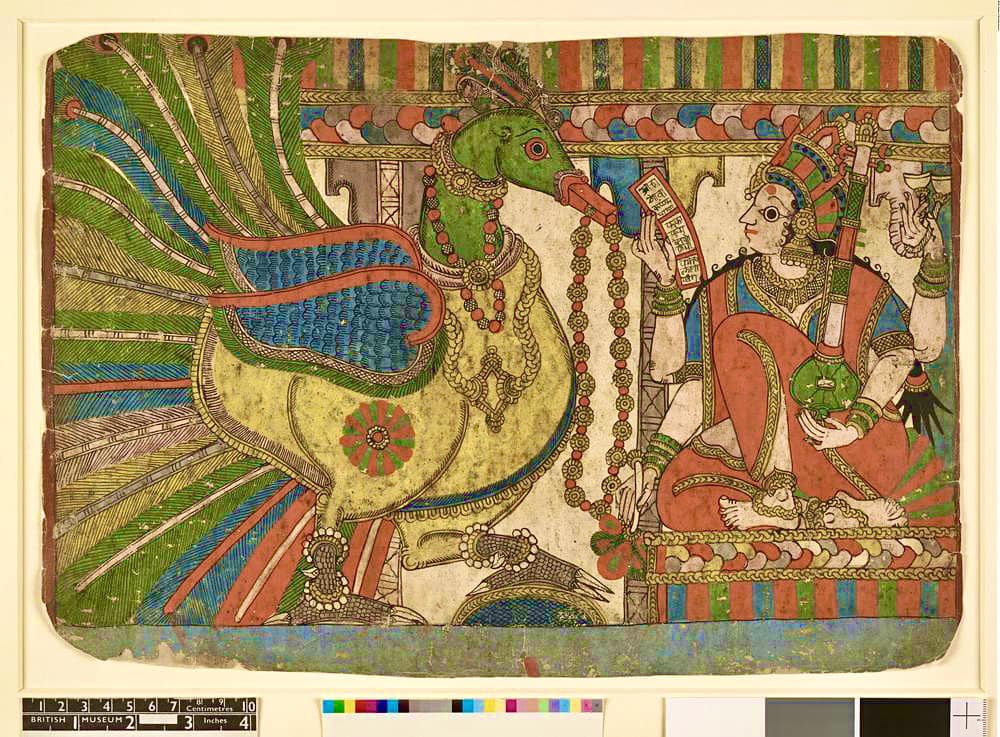
the beautiful image is a painting of Sarasvatī that belongs to a set of sixty which chronologically depict a tale told in the Mahābhārata (as well as in the Mārkaṇḍeya Purāṇa and in the Śrīmad Devībhāgavata), that of King Hariścandra. this painting is one of two beginning the set, and it depicts the invocation of Sarasvatī, the Goddess of knowledge, speech and poetry, who is invoked as the flow of (and to flow the) words and wisdom of the telling. Gaṇeśa is invoked, as well.

in a seminar i recently went to, we discussed sacred texts, and the invocation of Gods & Goddesses in their openings – the muse in the Iliad, the deities in the Sanskrit texts etc. it made me reflect on writing as an inherently transcendental act. as in, it is not you who writes (or creates etc). it is being written through you, and it is therefore futile to take ownership for it.

as a ‘writer’, i oftentimes read my work and feel as if it was written by someone else. of course, my biases seep in (in editing, especially), but if i fully connect, the experience is that of it being written through me, and not by me.

i understand the invocation of the muses and Goddesses to reflect, in part, this understanding: that the act of creation subsumes and transcends the self or ego, even if only momentarily. that in creating, we tap into and open pathways within that we usually do not access customarily, when we are so entrenched in our sense of self that the energy can only flow in one way (that of sustaining our identity and the patterns which construct it). in creating, the energy can be freed to flow in new or in more ways. this is how i understand the surrendering to the muse or to one’s art that is so lauded by poets. 🦢

Khaliya: birthday poem

the sun in my mind aging by one
the tinkle of golden anklets calling from the forest of monal
the blood of my womb coalescing into bruised grass
the clouds of silk blushing against my cheeks
the burn of my skin drying before the unforgiving light
the sound of my shame vibrating in my chest
the cold untangling my fingers’ grasp on fears seeded into me as child

i
sometimes wish i was satisfied by easy
by swinging my feet over the white picket fence holding hands with perfect suitability
but the fire in my belly scorches
and i know i’m not

i
sometimes wish to rest
but the fire in my belly scorches
and i know i have to keep moving

🏔 Khaliya, from my birthday poem. 🤎

welcoming the cold in the Himālayas

braving and welcoming the cold! 🏔 last year in the Himālayas, i was bundled up in dozens of layers, and sought with my all to be as warm and comfortable as possible (which, looking back, was a futile attempt regardless!). this year, i challenged myself to wear as minimal clothes as i could (although i did succumb to the puffer jacket at times!).

the downside of the controlled environments many of us are blessed to live in (meaning, those of us who have access to amenities such as hot water, AC etc) is that we become complacent and scarcely exposed to external stimuli; and, it is by exposing ourselves to such external stimuli and by bearing through that stress that expansion occurs.

the reason why most inspirational stories of transformation occur when a stressor is introduced (be it a harsh environment or an uncomfortable situation) is because of this – willingly subjecting ourselves to discomfort and to new stimuli increases resilience and opens new pathways in the mind through which the ways we perceive and engage with life are refined and transformed.

and, there is no need to travel across the world to do it! we cling to comfort (as well as to our patterns) on a moment to moment basis. i have found that a small change (such as cold showers or introducing oneself in a situation which our programming craves to avoid) can cause wonders. here’s to challenging ourselves & letting go of comfort 💥

#theashzeroexperience

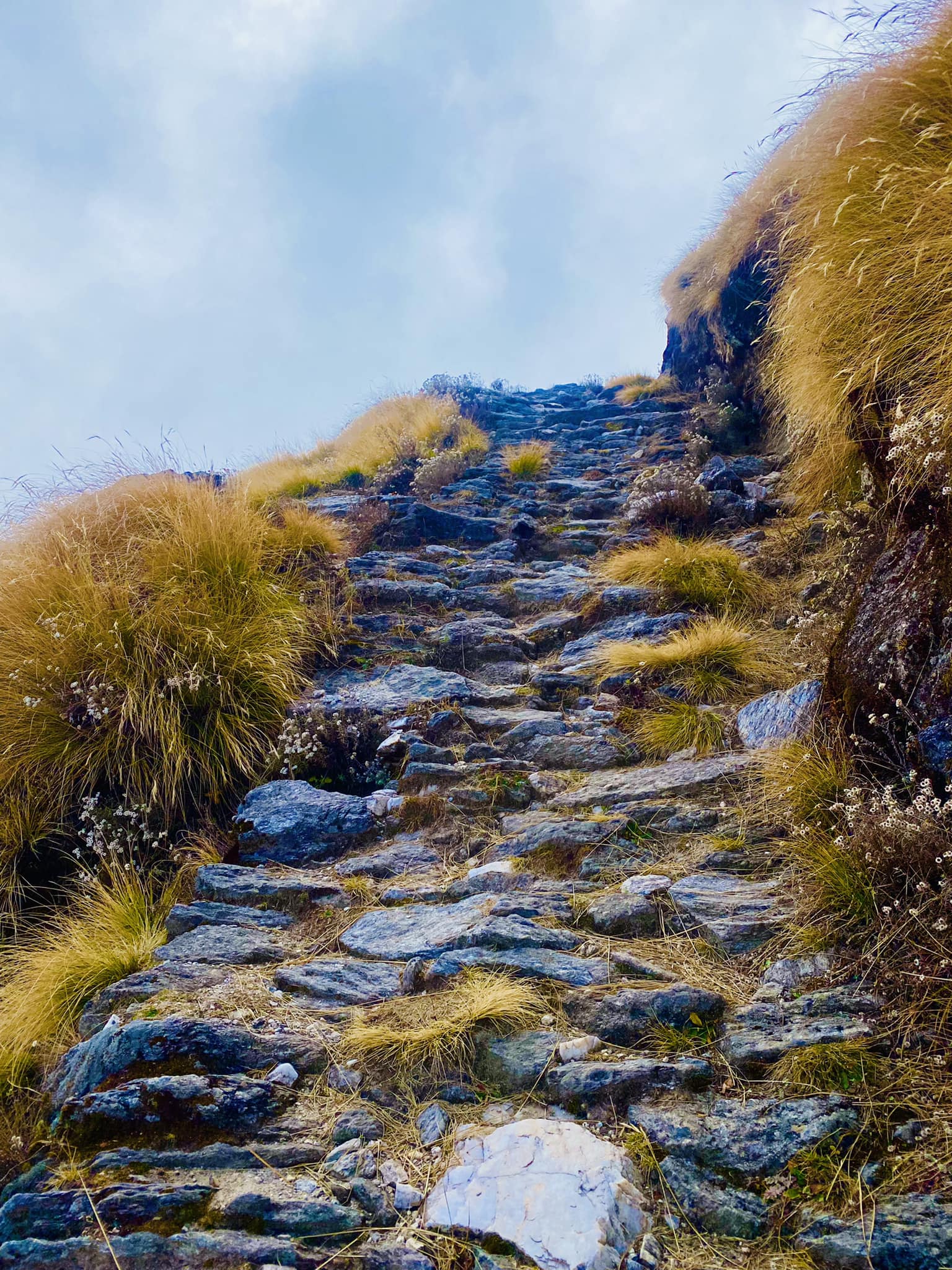
25 in the Himālayas

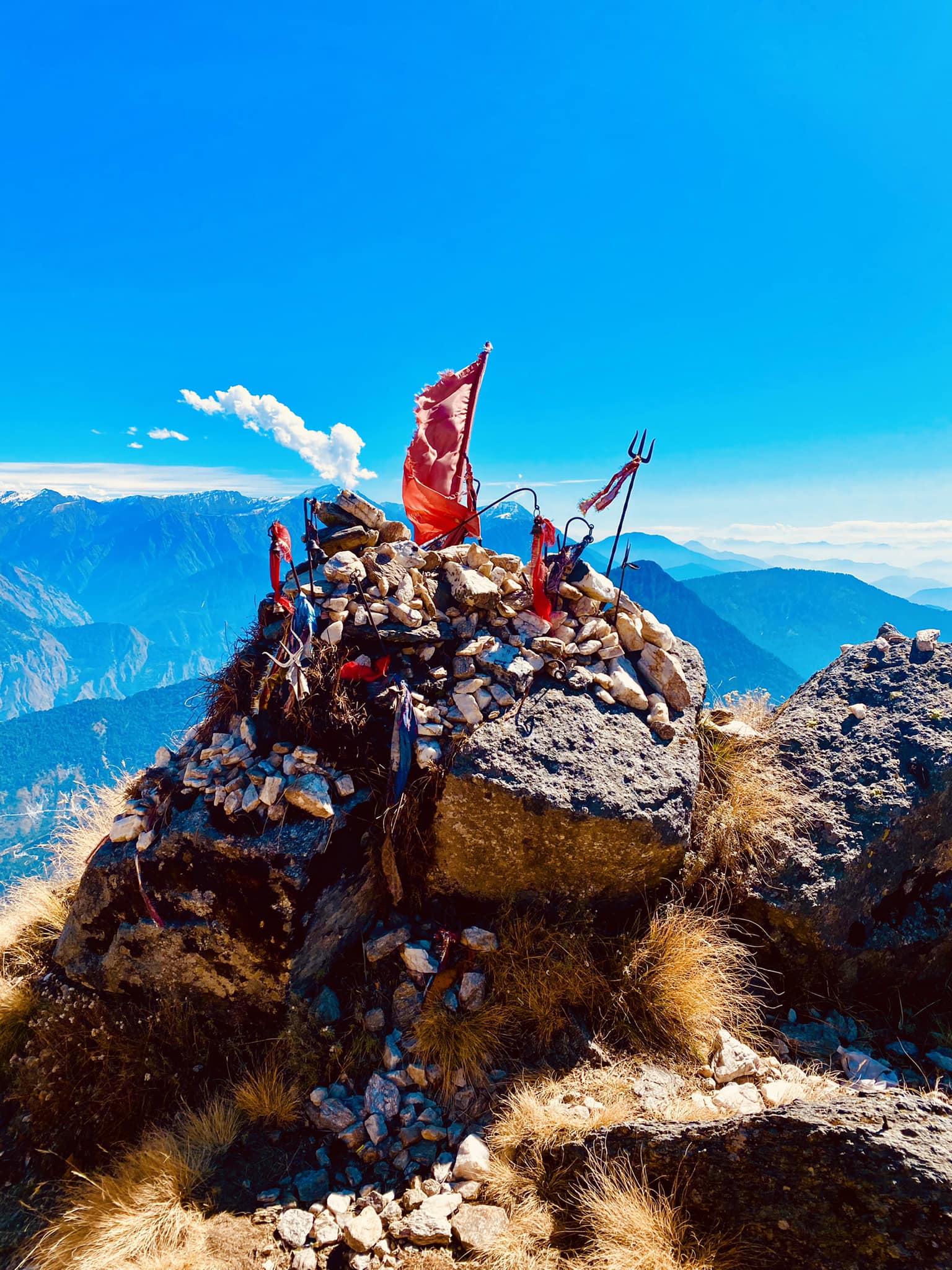
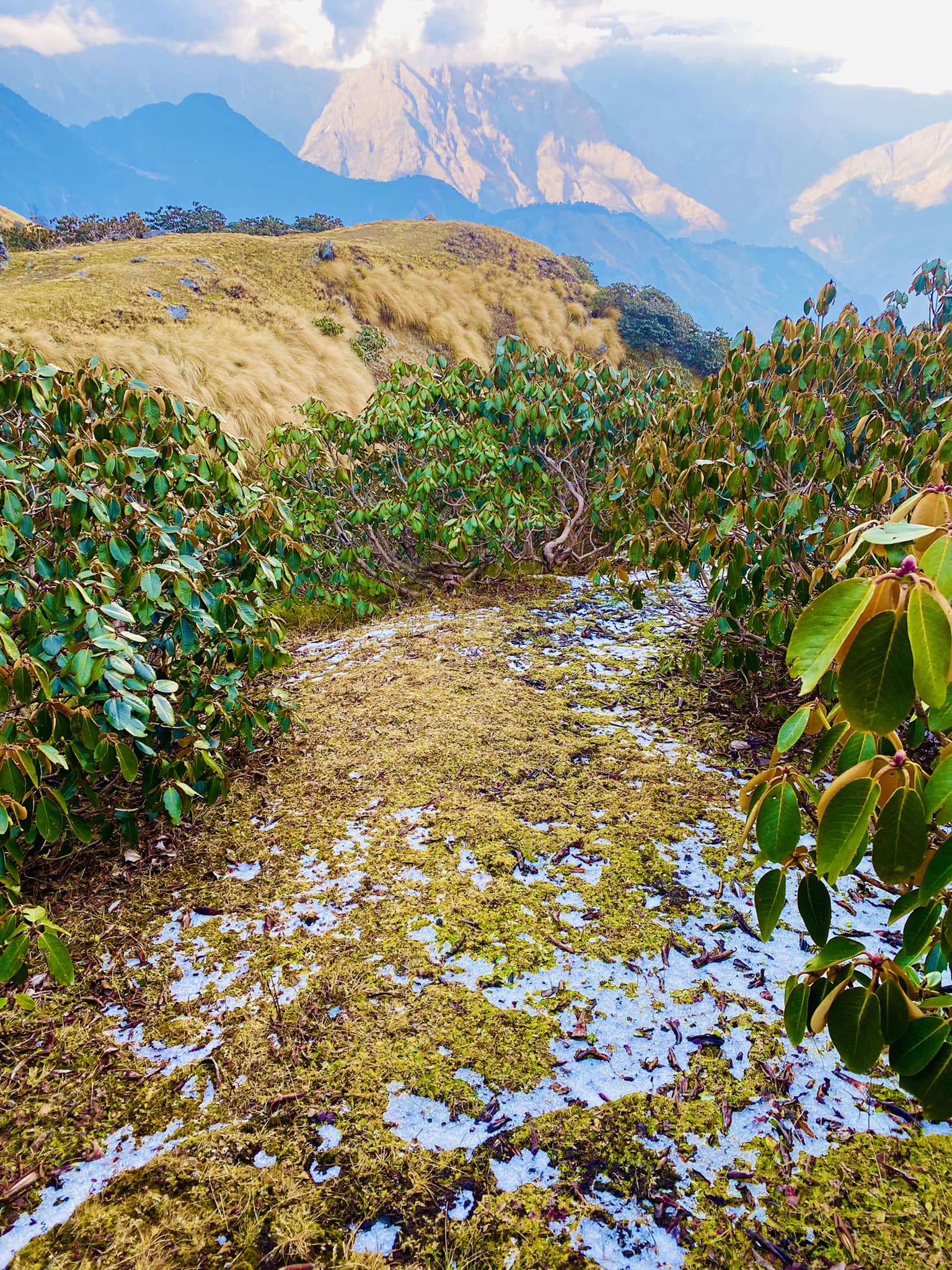
i turned 25 in the Himālayas, on the resplendent Khaliya trek, and camped in a remote meadow that can only be described as the land of the apasāras. ❤️‍🔥

hiking, i reflected on 24, which was the year of the great heartbreak: of fierce grace. the path burned through what i had worshipped as truth and held most dear, and violently pushed me to transform.

on last year’s pilgrimage to the Himālayas, i had prayed on a trek to Gomukh: “free me. i will do whatever it takes.” when the whatever it took came, it was not what i had imagined, and it broke my heart. i had thought i had known heartbreak, but all paled before the pain of facing the untruths i had clung to under the name of God. seeing through your own deceptions is a harsh business.

as the projections i had built my spiritual life around began crumbling, i was left feeling disillusioned, and i was tempted to renounce my search for God. one of the darkest nights of the soul of 24 was one of doubt, in which i doubted everything. i bitterly cursed my trust, and felt repulsed by the dynamics of modern spirituality. i reasoned, if such power dynamics can be built on spiritual teachings, then the teachings must be false.

and yet my intuition, which i had cut myself off from, arose gently; a tiny voice silently telling me that the truth i was seeking does exist. it is pulsing underneath the mirage. my intuition told me not to close myself. to trust the play and uncover the teachings. to keep moving and follow the energy.

diving deep into disillusionment paradoxically opened my system to increasing expansion as well as to a love of an encompassing nature that i had not tasted before.

followingly, one thing i have experienced, is this: freedom rests in autonomy on the spiritual path. the teachings, the dimensions of God, such as the Mahāvidyās, the Devas and Devīs, are real – only not in the way we tend to think about them and not in the way they are taught in modern spirituality. you have to experience them for yourself. you are intrinsically worthy of it. keep moving. ❤️‍🔥

my motto for 25 is: whatever it takes. ❤️‍🔥