The Question of Suffering in the Mahābhārata: “The Battle You Must Now Wage is with Your Mind”

I have been asked on Tumblr how the Mahābhārata answers to the question of suffering (is suffering important? why? how?). First, this is an amazing question which hadn’t occurred to me to ask myself in relation to the Mbh, so I’m grateful for this prompt.

Second, I wouldn’t say that the Mahābhārata distinguishes suffering as important, but it does establish that it exists. All its characters undergo extreme suffering: from sexual assault to losing and grieving children, beloveds, friends, subjects. No character is spared from grief, and, in this, suffering is established as an inevitable reality of the human experience.

However, as scholar Emily Hudson argues in her book “Disorienting Dharma: Ethics and the Aesthetics of Suffering in the Mahābhārata”, there is another dimension the epic offers to the question of suffering, which is that of confronting it. Confronting suffering “involves cultivating a clear sense of the factors that contribute to human misery” (p.33) which the epic, I join Hudson in maintaining, equates with “the quality of one’s mind (manas)” or “intelligence (buddhi)”.

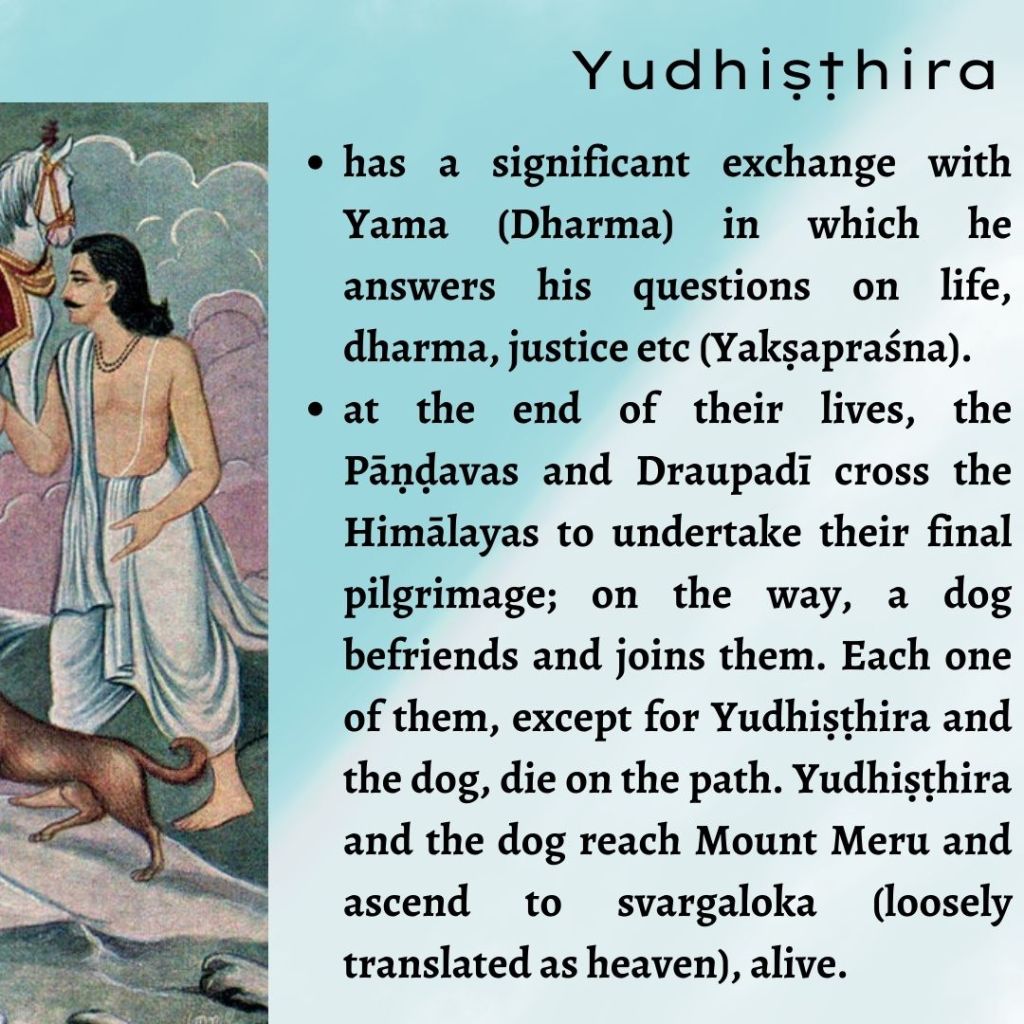
In a significant scene that occurs in the aftermath of the war, Yudhiṣṭhira, crippled by guilt and loss, refuses to rule, and wishes to renounce the world and his responsibilities in an effort to both punish himself and escape his pain. Kṛṣṇa, Draupadī and the other four Pāṇḍavas each give individual speeches to Yudhiṣṭhira in which they attempt to convince him that he cannot do so, that he has a duty to uphold, and, most fascinatingly, that the intensity of his suffering is derived from a misunderstanding of reality.

Most beautifully, Yudhiṣṭhira is told by Kṛṣṇa and Bhīma that “the battle he now must wage is the one with his mind (manas)” and he is to accept the impermanence of existence (Hudson, p.33; Mbh; 12.16.21-25; 14.12.1-14).

My understanding of this exchange is that, suffering will come. However, the extent to which we suffer is dictated by the clarity of our perception. One will naturally grieve death and loss and experience sorrow; however, the narratives we create around these emotions or experiences will dictate whether we remain stuck in them, or whether we welcome them as transitory states that experience themselves through us.

Just as Yudhiṣṭhira falls to his grief, yet picks himself up and rules, so can we.

Many thanks again to the Tumblr user from London who asked this question – if anyone has any other question, please, all are welcome here! Receiving questions from different perspectives is helping me see the epic in new ways in which my mind might not take me on. 😊

Painting: The Destruction of the Yādavas. Unknown artist – do let me know if you know the artist!

Ph.D. Update!

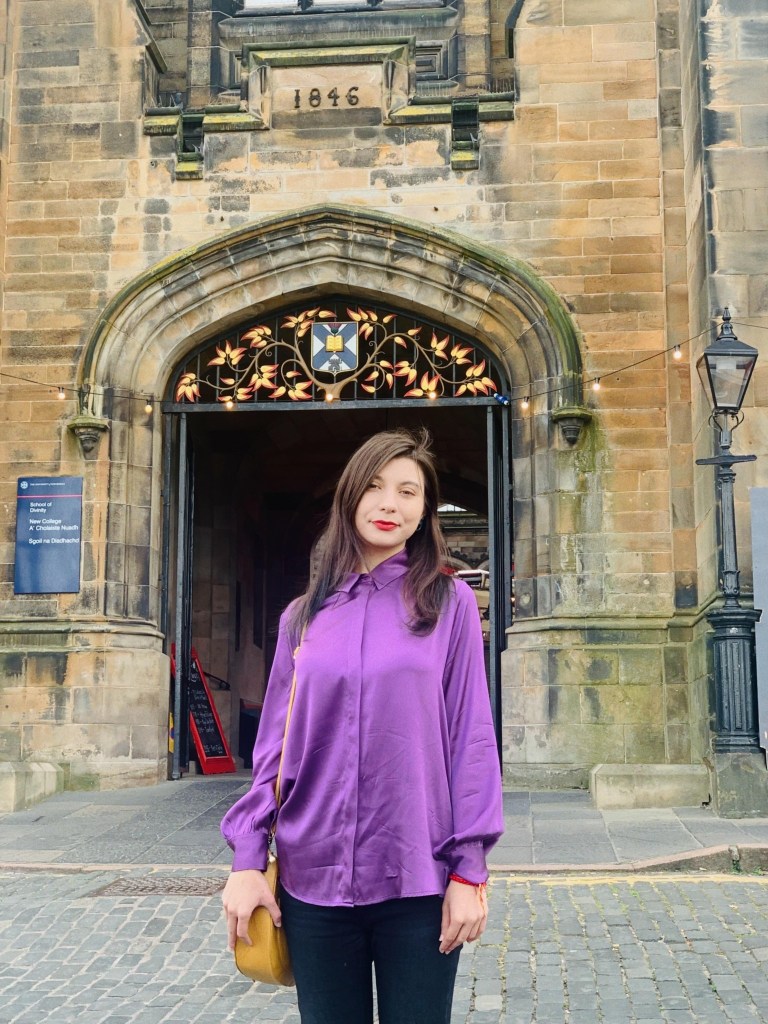
I am incredibly honoured and moved to share that I am being awarded the Edinburgh Doctoral College scholarship of the School of Divinity and will be commencing my Ph.D. at Edinburgh University in September with full funding for my research, and with a thesis entitled (as of now!) “The Goddess’s Descent to Earth: In Dialogue with the Reimaginations of the Mahābhārata’s Draupadī”. I am extremely grateful to Professors Mark Harris, Alison Jack and to the board of the School of Divinity for believing in my work. There were times when I was close to not believing in it myself, but the love for the work has pulled me to keep moving forward even in the greatest moments of doubt. More exactly, the love has grown to be greater – and, to be honest, more interesting – than my doubt or uncertainties about myself, which are less exciting to follow than the mysteries that are to be uncovered.

Once, a teacher of mine shared that, if you quiet the mind and listen to your depths, you will be able to feel a thread, a glimmer – pulling you to where and how life wants to move through you. Where that is, as well as getting there, could seem unattainable by way of reason or logic, but the thread will pull you through in ways unimaginable to your perception, with its current limitations and insecurities. This has been my experience, as well.

Follow the thread. Let the love for your work guide you and pave your path. 💜

I Am Become Death, the Destroyer of the Worlds: On Oppenheimer and the Bhagavadgītā

Now I am become Death, the destroyer of the worlds.

*Note, a more accurate translation is:

I am Time, the destroyer of all; I have come to consume the world.

BG: 11:32; trans. Eknath Easwaran.

Sometime ago, I was involved in a discussion about whether it was blasphemous for Oppenheimer to have quoted from the Bhagavadgītā upon seeing the explosion triggered by the atomic bomb he constructed. I was of the opinion that it was not. The opposing view was that Kṛṣṇa’s demolition was one of divine nature, whereas Oppenheimer’s manmade atomic bomb was not. Whereas, in this perspective, Kṛṣṇa’s violence and destruction were justified through Kṛṣṇa’s inherent divinity, Oppenheimer’s humanness disfigured his destruction with greed and impunity.

This comment rested at the back of my mind while I watched Oppenheimer the other night, and the film solidified my view.

I would maintain that, to one adhering to a non-dual outlook, there is no separation between Kṛṣṇa’s violence in the Bhagavadgītā (or, more accurately, in the Mahābhārata) and Oppenheimer’s manmade, humane violence. Violence is violence, and divinity (or Consciousness) is inherent in the fabric of that, as it is in all that is. The genius of Oppenheimer’s brain which created such a formidable and terrible invention functions on the same patterns that enable and are Kṛṣṇa’s destruction. There is nothing more inherently divine in death by astras (supranatural weapons controlled and imbued by mantras central to the Kurukṣetra war) than death by atomic bomb.

Not only do I argue that it was not blasphemous for Oppenheimer to quote the BG and internalise his work through its prism (and, incidentally, is blasphemy anything but a dual social construct? Can Consciousness be blasphemous of itself?), but I argue that this is exactly how the Bhagavadgītā is lived in direct experience. The Bhagavadgītā and the Mahābhārata are not lifeless ancient texts that are only accessible or relevant in an esoteric, abstract realm. The BG and the Mbh are lived here and now, from a moment to moment unfolding. I would maintain that we cannot pick and choose what we like from these texts or what aligns to our morals (such as teachings on goodness) and disregard the rest — or take it metaphorically. The last parvas of the Mbh are incredibly violent and include gory descriptions of war, and the BG occurs on the battlefield of said war. This, in my view, does not signify that the texts glorify violence — no more than they glorify any other aspect of creation. It is a sign that violence exists as a natural development of the triadic cycle of creation (creation — preservation — destruction), and it is a manifestation of Consciousness.

The Bhagavadgītā coming alive to Oppenheimer upon witnessing his own potential for destruction is a testament to the BG’s existence in the collective consciousness as an expression of truth, pulsing and flowering for the one who expands their individual consciousness enough to tap into it and to allow it to manifest through themselves.

Referencing the Mahābhārata

you can watch the videos i have created on this topic here: https://www.instagram.com/musingsonthemahabharata/

recommendations for abridged and unabridged translations of the Mahābhārata, as well as reading and referencing tips 🤍.

to reiterate the last point i made in my video first, i would like to accentuate that those of us who rely on translations and are inhibited by the language barrier are already working with a diluted version of the Mbh; it is for this reason that it is exceptionally important to work with the best and most authentic translation that is accessible for us, especially if we are scholars. in this, we can ensure that we are not perpetuating any misunderstanding or false information in the world. 🤍

🔱 unabridged translations:

🔱 for the first five parvas – J. A. B. van Buitenen | for the remaining books of war – Clay Sanskrit Library | these are exquisite, elegant, all-encompassing, and delicious works of translation.

additionally, i use the abridged translation created by John D. Smith and published by Penguin Classics as a handbook or manual to find my way through the unabridged versions when i write papers. this is extremely efficient for referencing – a compass or map to guide you through the verses. i expand on this in the video, and will additionally create a separate video about how to reference the Mbh.

🔱 the recommendations i have shared have been given to me by my amazing MA supervisor from Lancaster University, Dr. Brian Black, who instilled within me the love for the Mahābhārata in academia, and supported me through my research and my PhD application process. in my opinion, he is one of the most dedicated and passionate contemporary researchers of the Mbh, and i am most grateful to him. his book, ‘In Dialogue with the Mahābhārata’, is a fantastic work of research. read more here: https://www.routledge.com/In…/Black/p/book/9780367547271

🔱 TIPS:
for those unfamiliar with this epic, i would recommend they begin with an abridged retelling. note: a retelling, and not a translation (John D. Smith’s abridged work would be considered a translation as it follows the epic poem verse by verse). retellings are easier to digest! the Mbh is vast and can be overwhelming, so use the retellings to

familiarise yourself with the characters and with their narrative arcs, and, when you feel familiar enough with the Mbh’s universe, move onto the unabridged versions.

please be aware that, due to the nature of reproducing an epic poem in prose, most retellings include errors, omissions or interpolations. hold these lightly while you read through and also hold in your awareness that the author might have taken many liberties. use the unabridged versions to correct and reorientate yourself within the universe. this is how i started my own journey with it 😊

demonstrating how to reference the Mbh

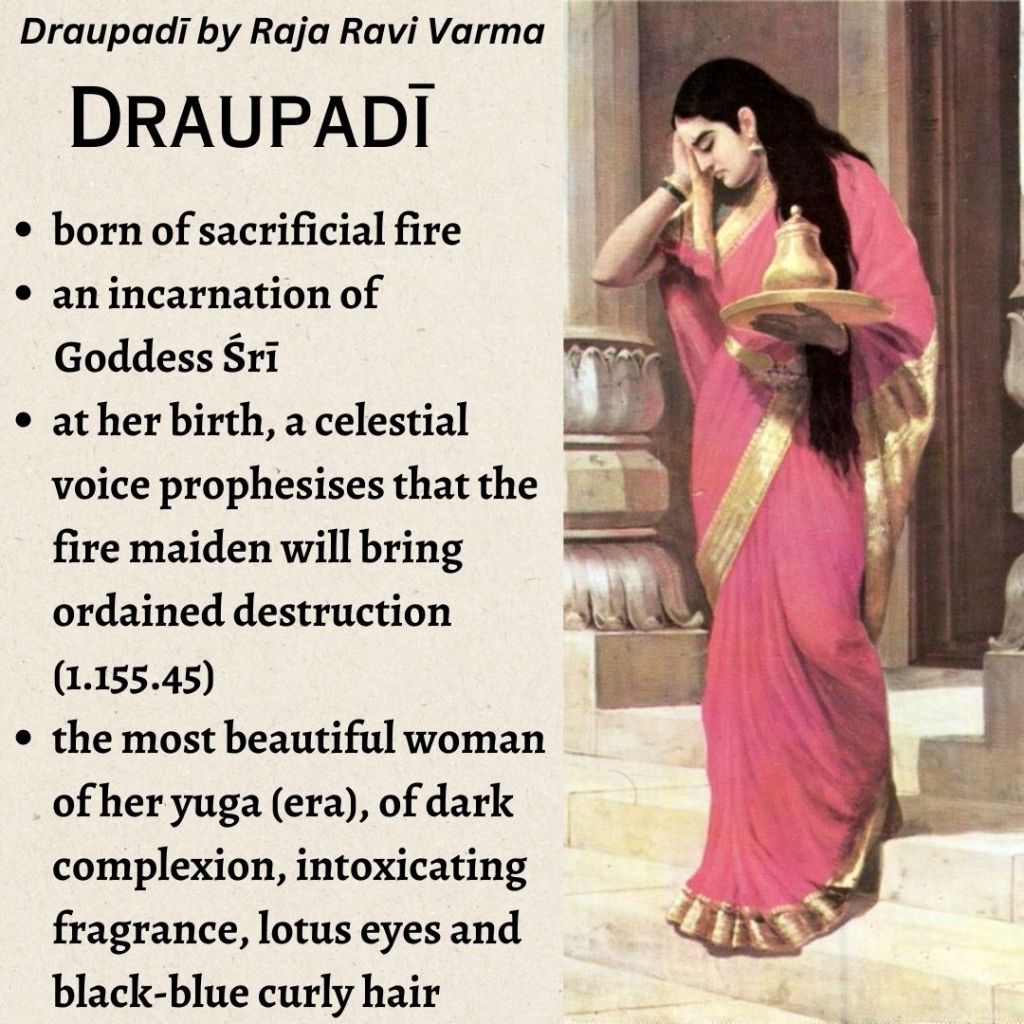
a thorough Mahābhārata reference consists of three parts: the number of the parva in which the event in question takes place in, the number of its corresponding verse, and the number of the secondary verse. in have created a video in which i am demonstrating how to most efficiently reference the Mbh by utilising the abridged and unabridged translations with the example of Draupadī’s birth from fire (1.155.45).

note the difference in detailed expansion between the two versions, and the importance of continuously referring to the unabridged translations:

abridged: “A beautiful, dark girl emerged from the altar, and the voice proclaimed that she was destined to accomplish the purpose of the Gods by annihilating the Kṣatriyas. [She was] named Kṛṣṇā (Draupadī).”

*Kṛṣṇā means She of Dark Complexion.

unabridged: “Thereupon a young maiden arose from the center of the altar, the well-favored and beautiful Daughter of the Pañcālas, heart-fetching, with a waist shaped like an altar. She was dark, with eyes like lotus petals, her hair glossy black and curling – a lovely Goddess who had chosen a human form. The fragrance of blue lotuses waited from her to the distance of a league, the shape she bore was magnificent, and no one was her peer on earth. And over the full-hipped maiden as soon as she was born the disembodied voice spoke: ‘Superb among women, the Dark Woman shall lead the Kṣatriyas to their doom. The fair-waisted maiden shall in time accomplish the purpose of the Gods, and because of her, great danger shall arise for the Kṣatriyas.’ Hearing this, all the Pañcālas roared like a pride of lions and earth was unable to hold them so full of joy”.

this might seem as an over-scholarly topic, but much of the written material you are going to encounter on the Mbh will include this, and i find it relevant to have a framework for it. 🤍

musings on the Mahābhārata series: introduction

The Mahābhārata is a love of my life, and one of my main research interests – as well as the subject matter of my upcoming PhD thesis! for awhile now, i have been reflecting on how to meaningfully share about the Mbh on my social media platforms. generally, i would say that there are two main approaches to the Mbh in contemporary discourse: one is the academic and scholarly approach, which, although i both adore and adhere to, i find to be largely inaccessible and limited to the academic niche. the second, which seeps more into contemporary discourse, i find to be a moralistic, religious outlook. although i consider both approaches to be valid and needed in society, i believe that what is missing is more intimate, personal sharing about the Mbh. i, for one, am not in love with the Mbh purely out of intellectual curiosity. for me, The Mahābhārata is alive; it exists within me and within the collective consciousness as a mirror to our own thought processes and individual universes. i would therefore like to challenge myself past my usual scholarly approach and share earnestly about what it means for me to immerse myself in this marvellous epic. for instance, what does it mean for me as a modern woman to read about Draupadī’s disrobing; how can i understand myself better through her character?

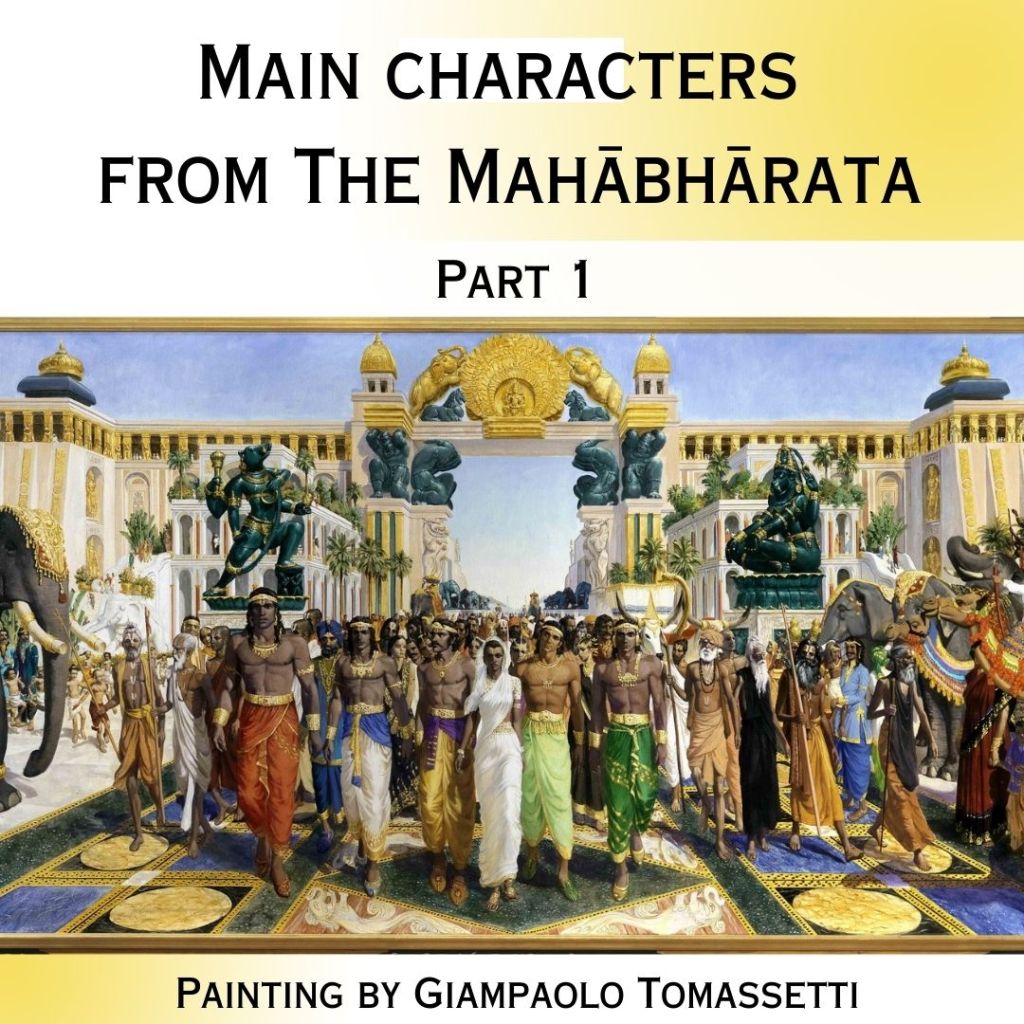
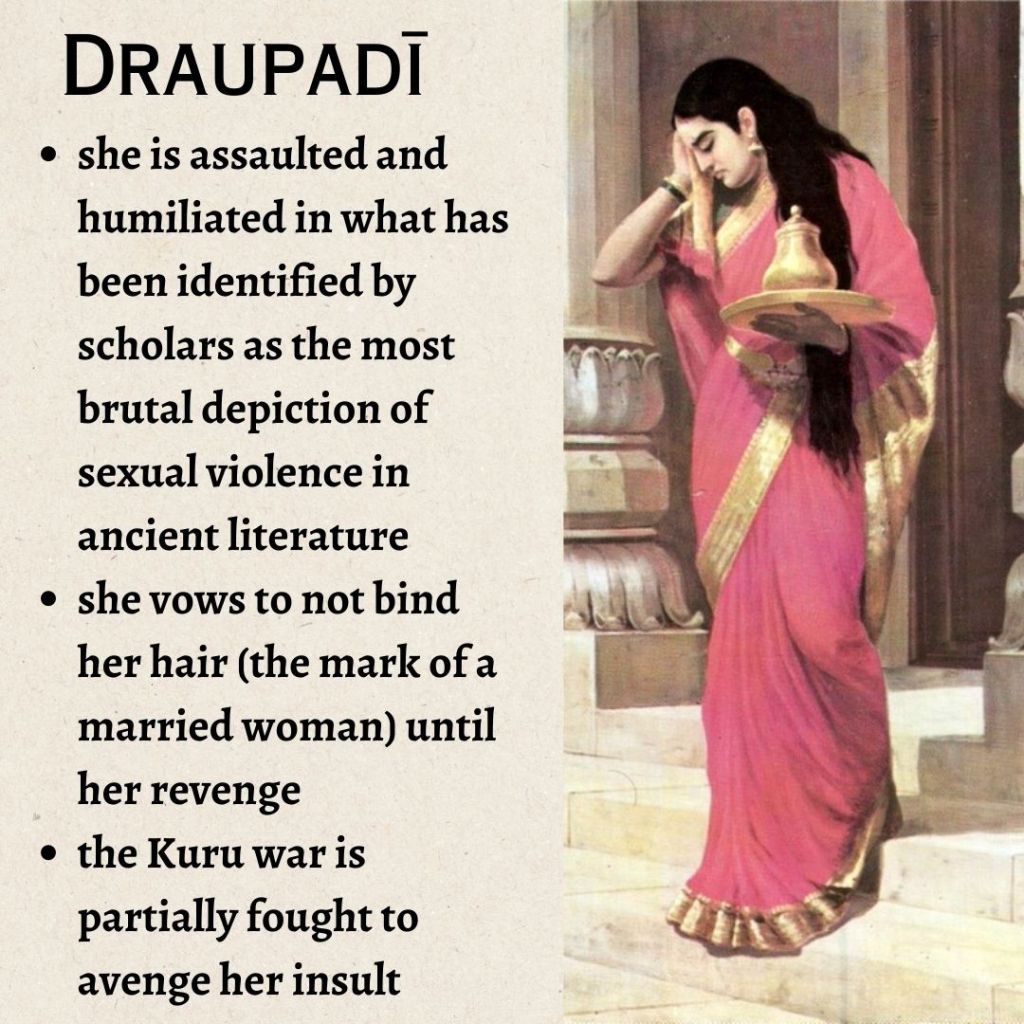
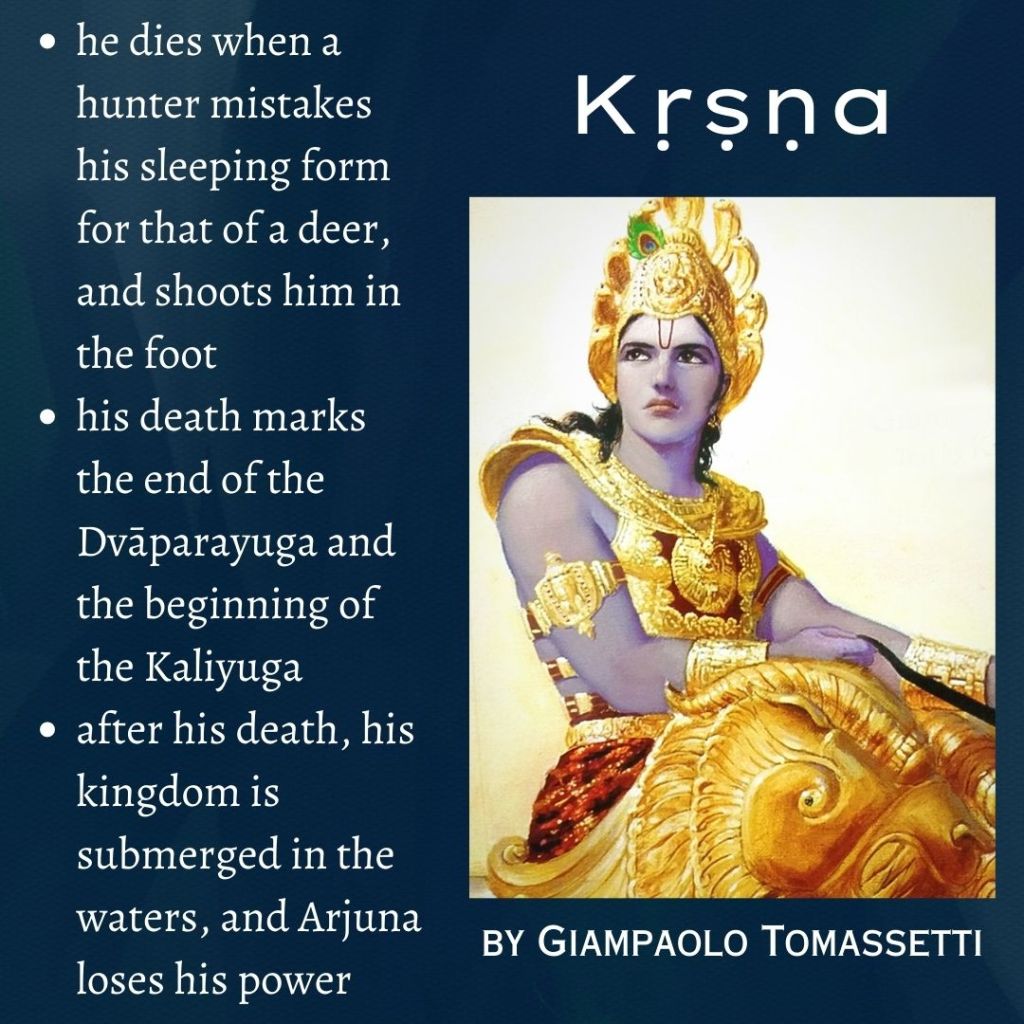
to ground these discussions more, i will create infographics about the plot, the historical context & main characters (created more out of love for the Mbh than for these discussions, to be honest!).

very excited for this and am looking forward to establishing myself further in the epic’s framework through this interactive approach! 🖤

to begin with,

WHY THE MAHĀBHĀRATA?

a question any scholar should ask themselves, i would argue, is why? why is my research relevant, why should i conduct this research in the first place, and how can it answer to questions of the present?

today, i am going to answer to this question with regards to the Mahābhārata. why should we care about an ancient epic poem? first of all, because the Mbh is not a dead, lifeless piece of literature. i would argue, and this is one of the main claims i will construct in my phd thesis, that the Mbh is ever-fluid and ever-changing. throughout centuries, there have been countless of retellings of the epic, each bearing differences, interpolations. does this mean that they are invalid? i would maintain that they are very much valid, and the continuous changes shaping and re-shaping the epic come as a result of its aliveness: it is alive, pulsing in the collective consciousness. in this full aliveness, the Mbh is moulded by society and culture as they evolve, acting as a mirror.

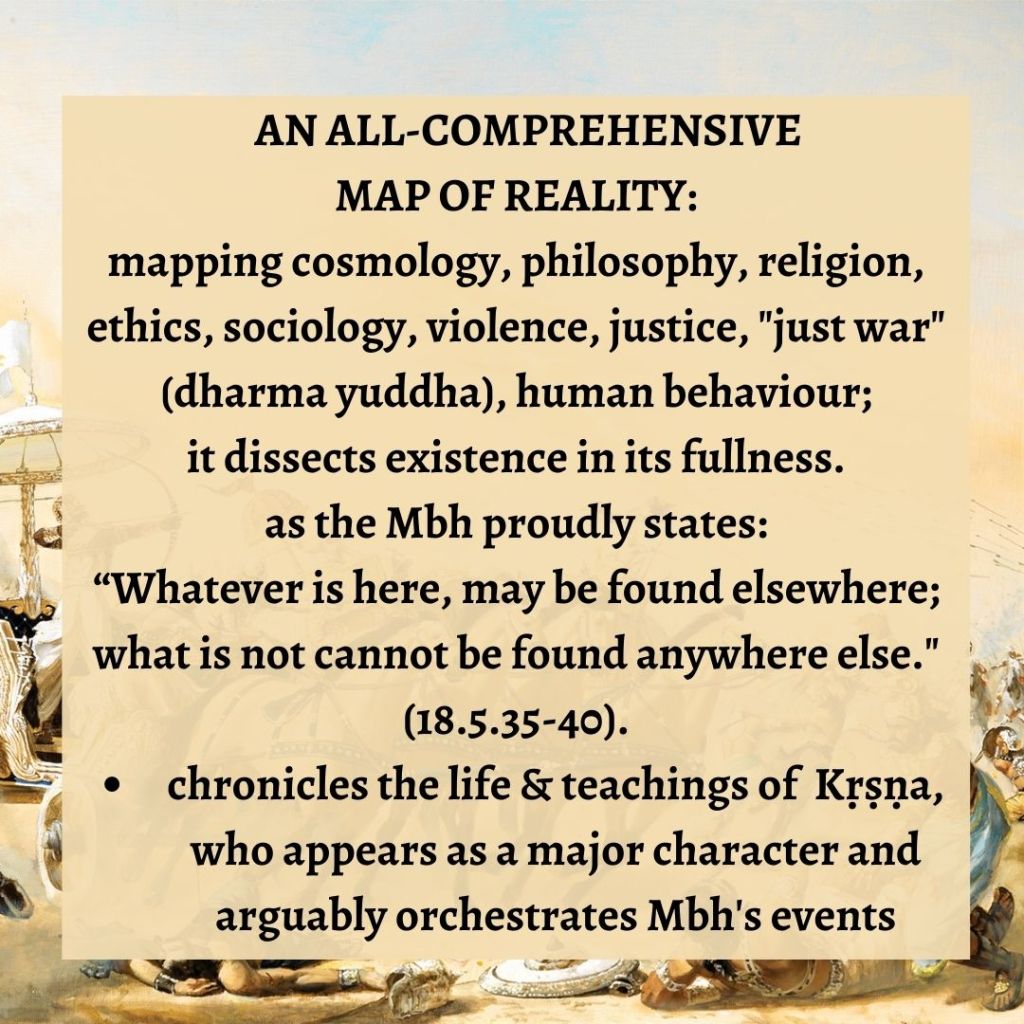
on the other hand, the Mahābhārata in itself proudly states that what you can find in it, you can find anywhere else, but you cannot find anywhere what does not exist in the Mbh; there is nothing that it does not address. in this, it tells us that it contains all answers and questions we can have – albeit in a very abstract and cryptic manner. for instance, it contains futuristic themes (for its time of creation), such as IVF and AI, and it addresses themes which are very relevant to the present day: religious violence, women’s rights, ethics. it answers to all questions we can have about the human condition; as although times are ever-changing, the human experience always remains the same, or so i would maintain: the questions we ask ourselves at their core remain the same, although the experience will be manifested or expressed differently at surface level. the Mbh thus contains inexhaustive areas of self-exploration and opportunities to understand ourselves and the world. 🌌

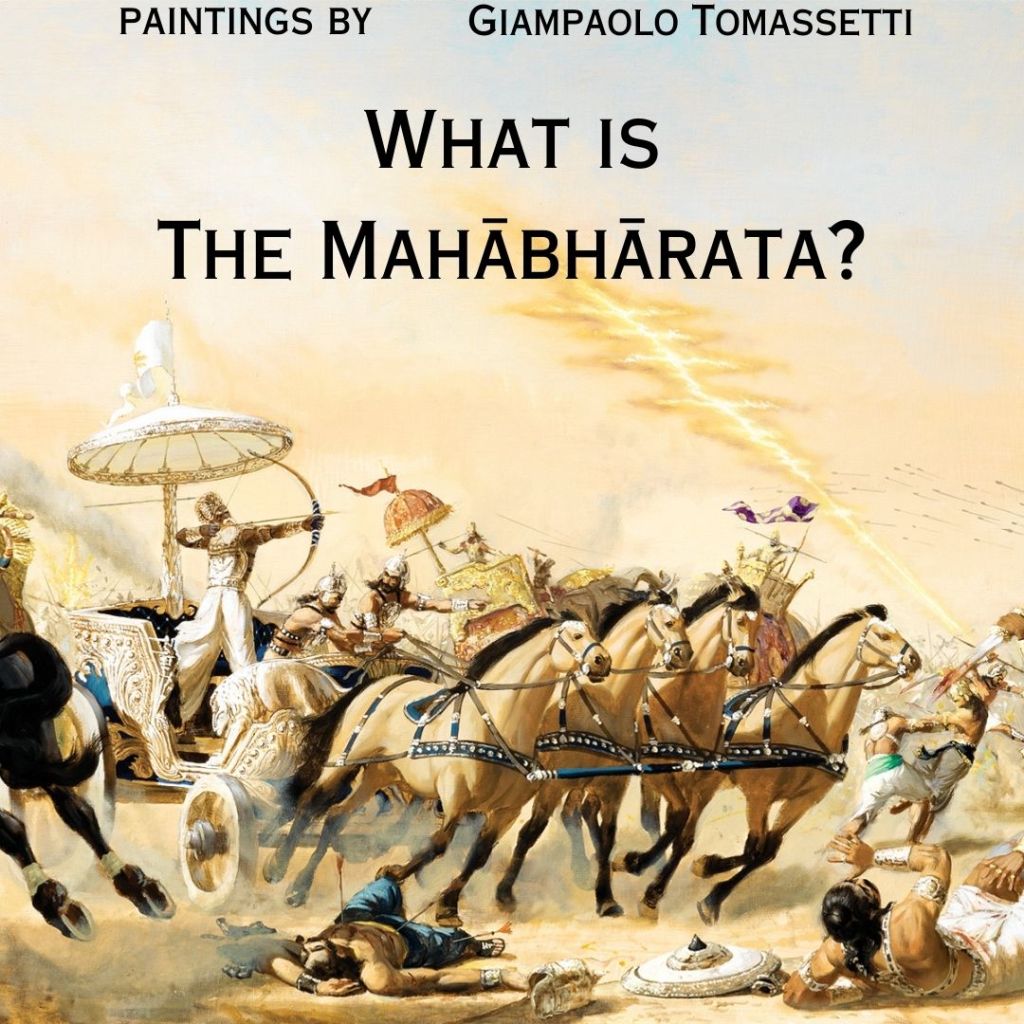
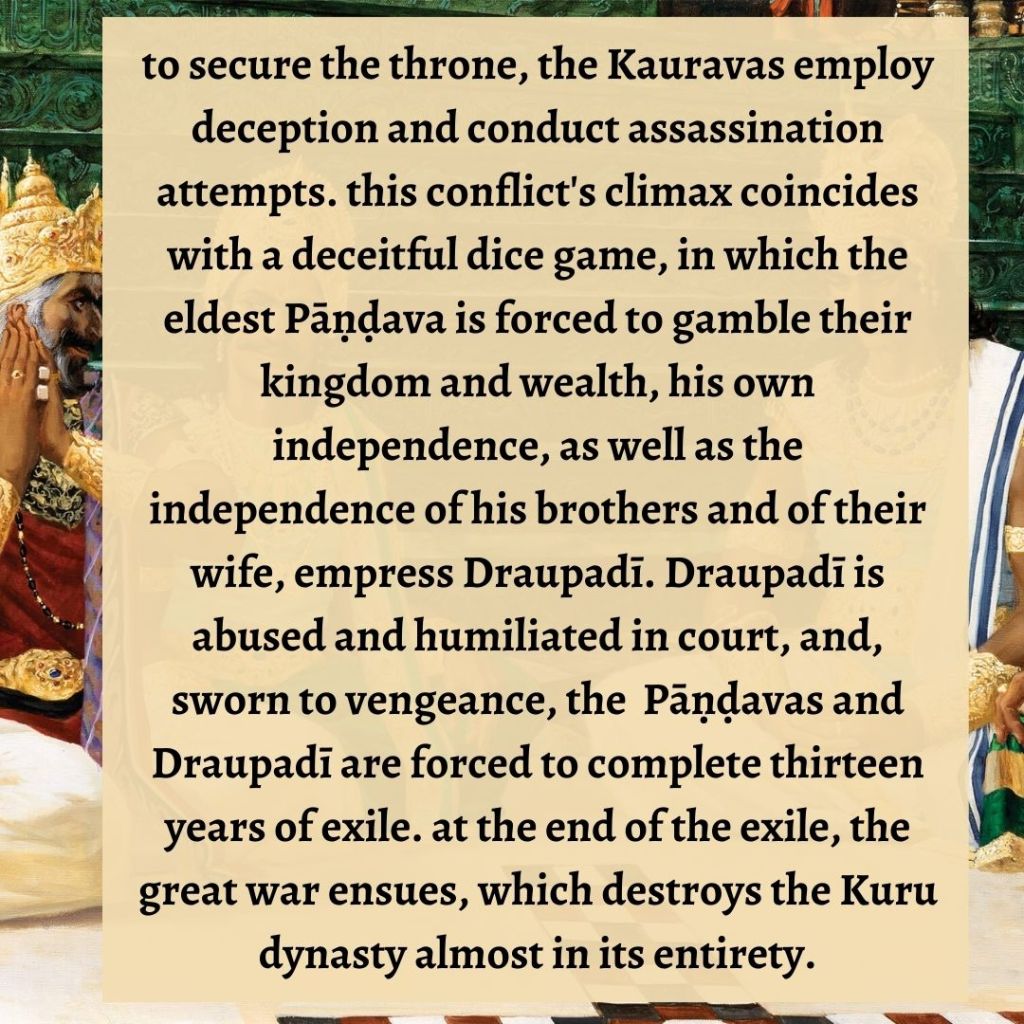
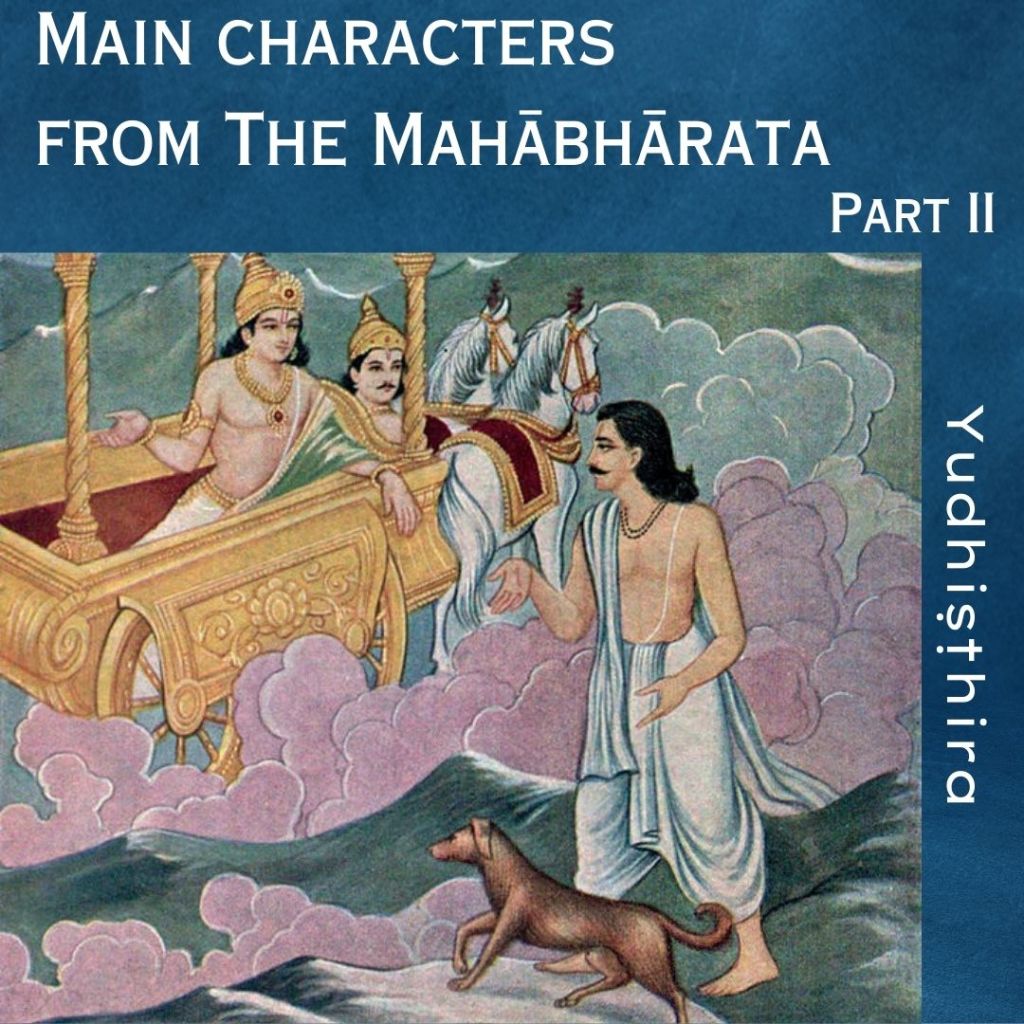
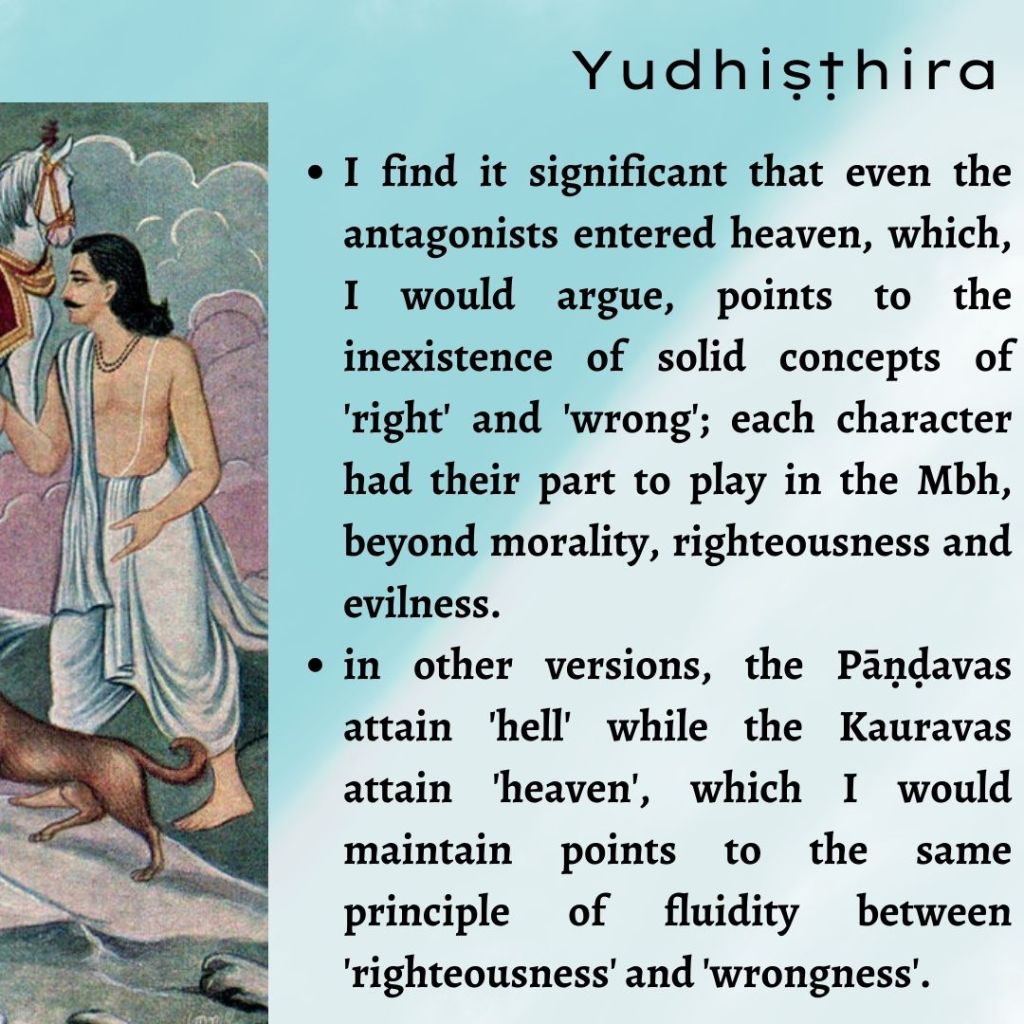
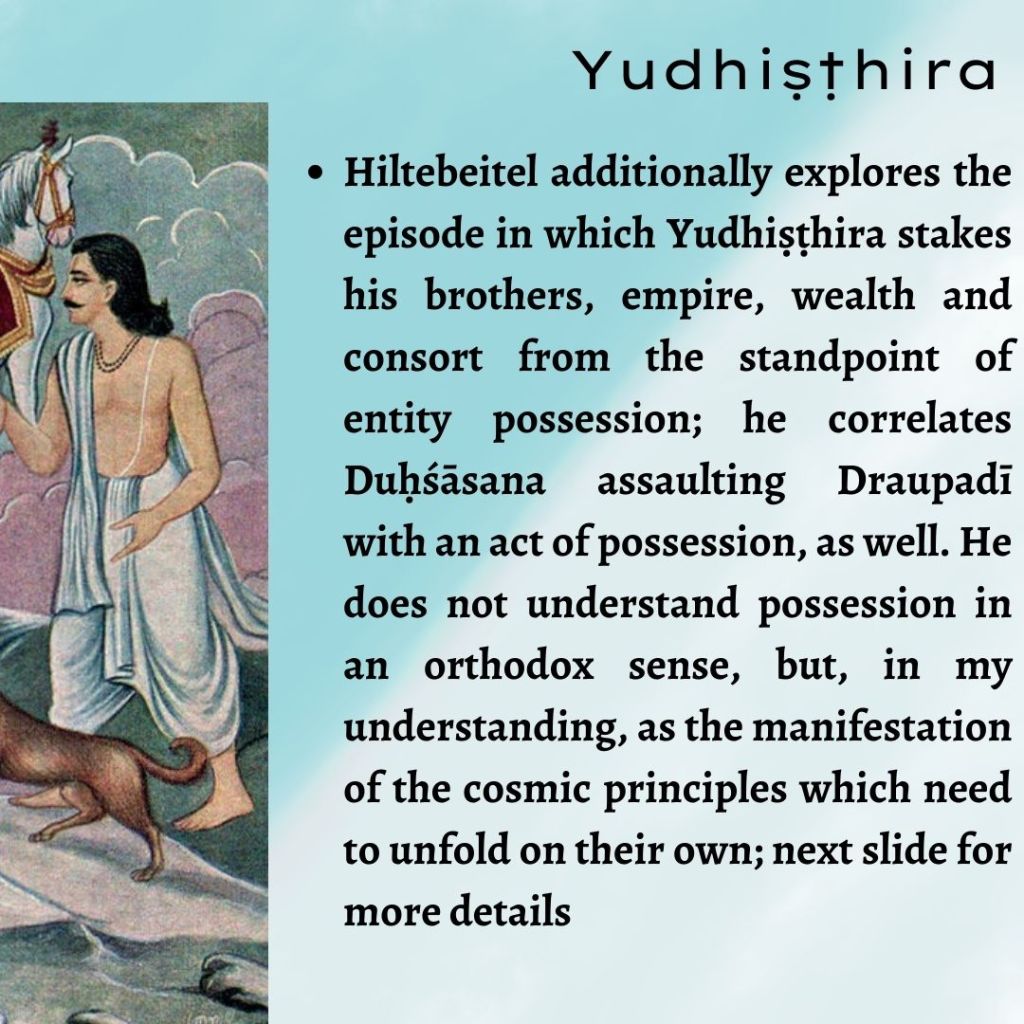
101 on the Mbh – infographics below! (parts 1, 2, 3… of many!)

watch my videos here in which i speak in length about the topics mentioned above: https://www.instagram.com/musingsonthemahabharata/

She dances me to her call | bhakti poem by Téa Nicolae

in the depths of my being, She dances me to her call:

“come to me. I want all of you, my child. no part of you is too dark, too gritty, too cruel for me. I claim all of you.”

Māiyā! your waves carry your call and roll it against my chest. i seek you with my breath, eyes, hands, and knees. my lungs seek you like they seek air.

Ya Devī! soothing her tears,

Kṛṣṇa told Pāñcālī

that just as you, Śrī Gaṅgā, hold and wash all pollutions yet are ever-pristine,

so does the fallen empress remain untainted by her shame.

aches bathed in your luster,

i plead:

take all of me, Devī.

leave nothing of me behind.

establish me in knowing

that despite my wrongs, fears and corruptions, i, too,

your fragment in the microcosm,

remain unmarred.

may the holy flow of your untamed waters

sweeten the harshness i bear towards myself and the world

soften the rigid corners straining my being

loosen the knots hindering you from coursing within me.

Śrī Mātre Namaḥ. 🙏

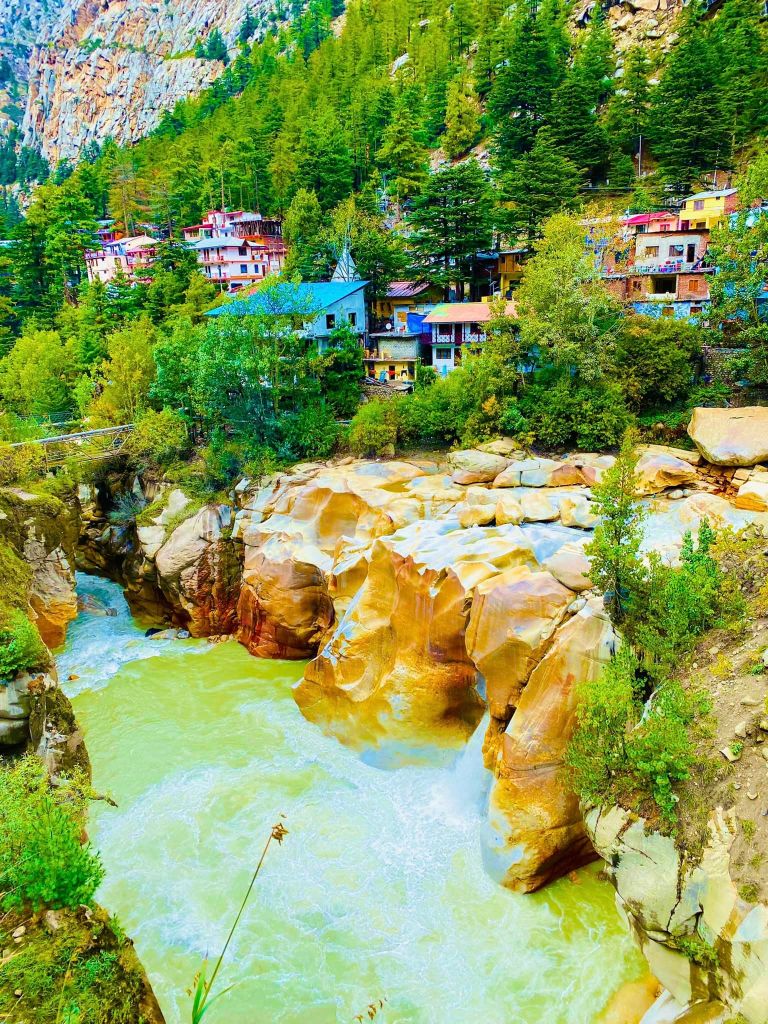
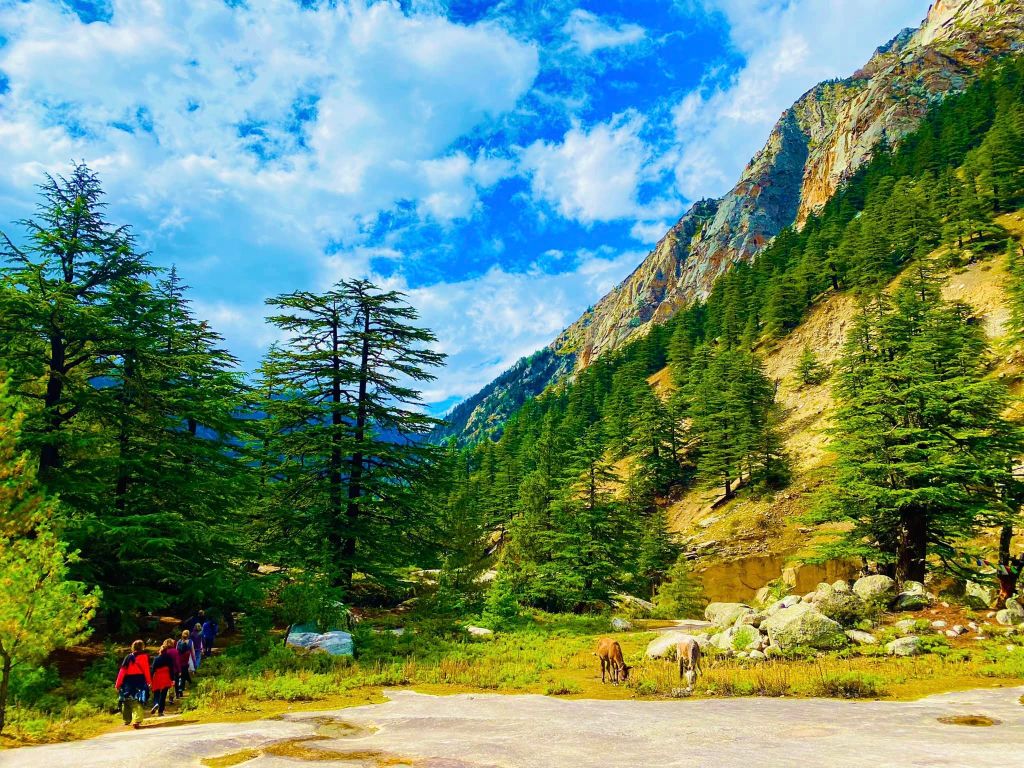
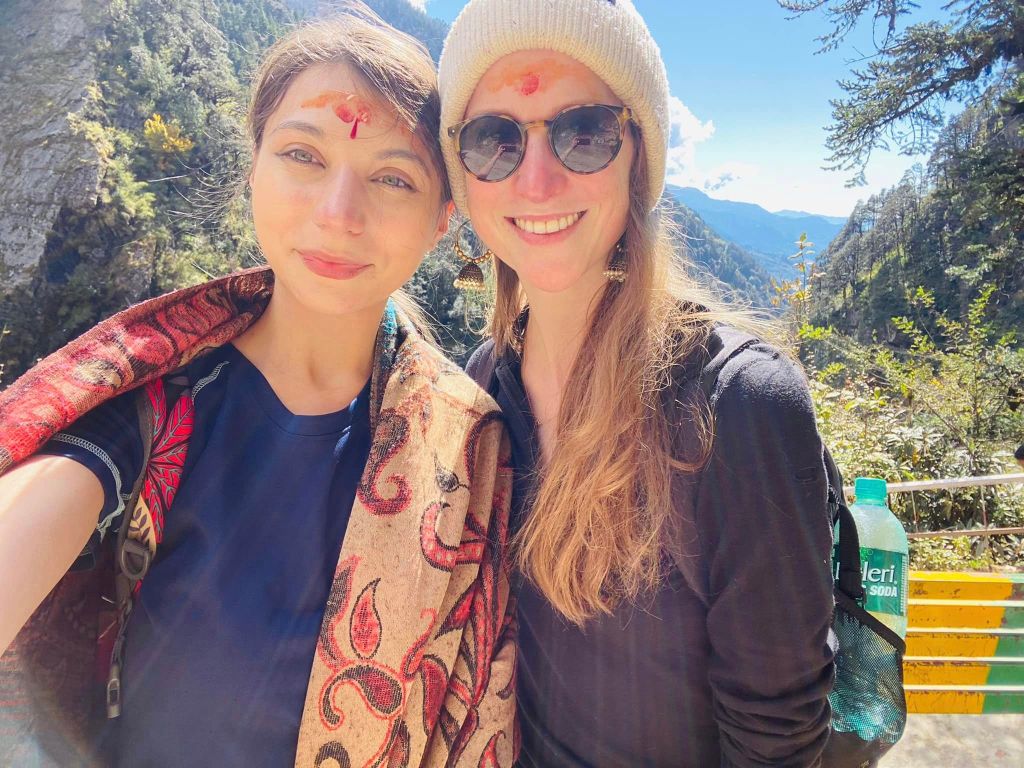
photos: before & after bathing in the waters of Śrī Gaṅgā in the auspicious Gangotri. Śabda Yātra. 🙏 the blessing of blessings. 💙

The Call of the Himalayas

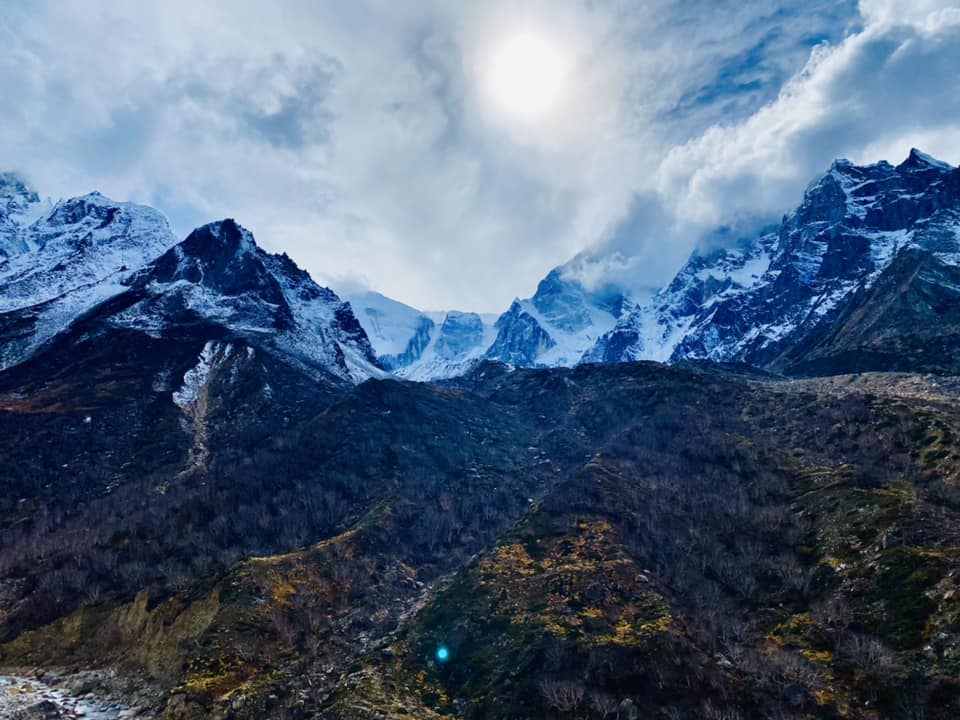
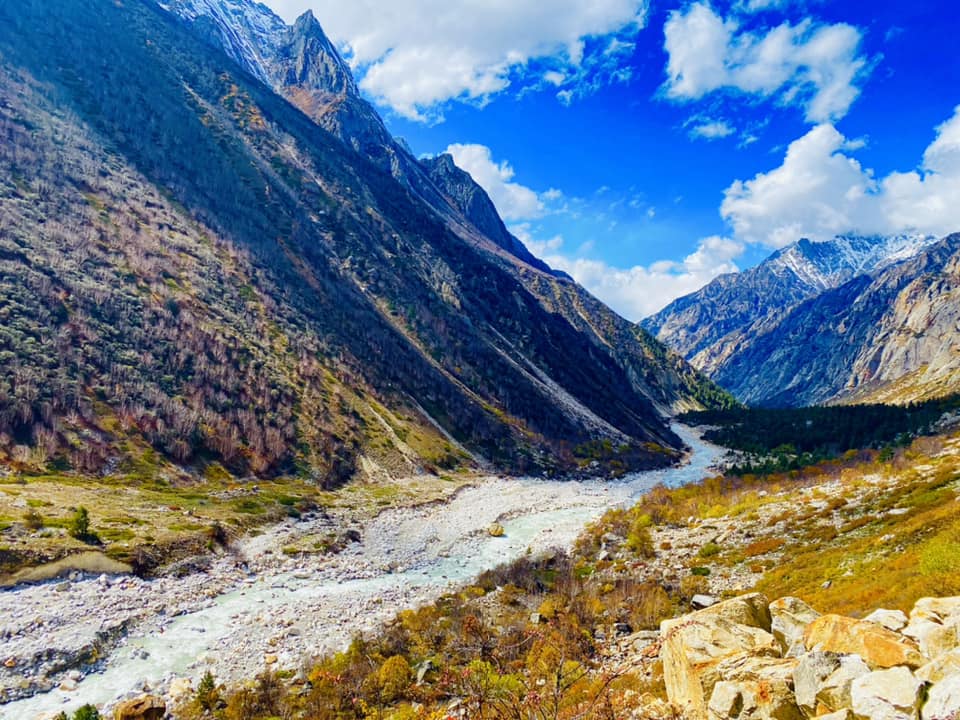
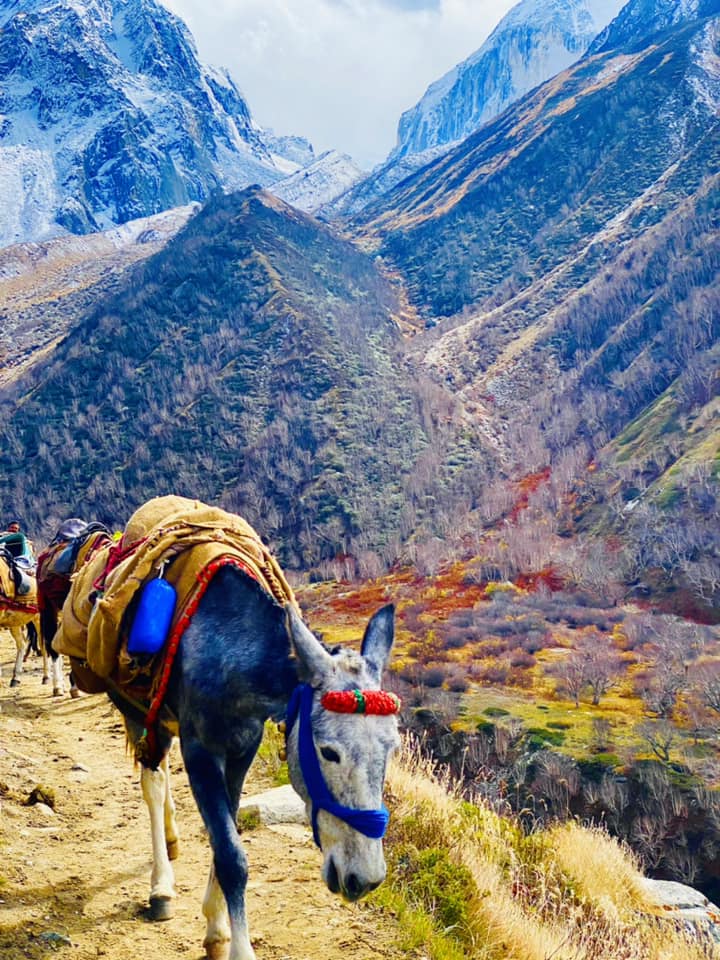
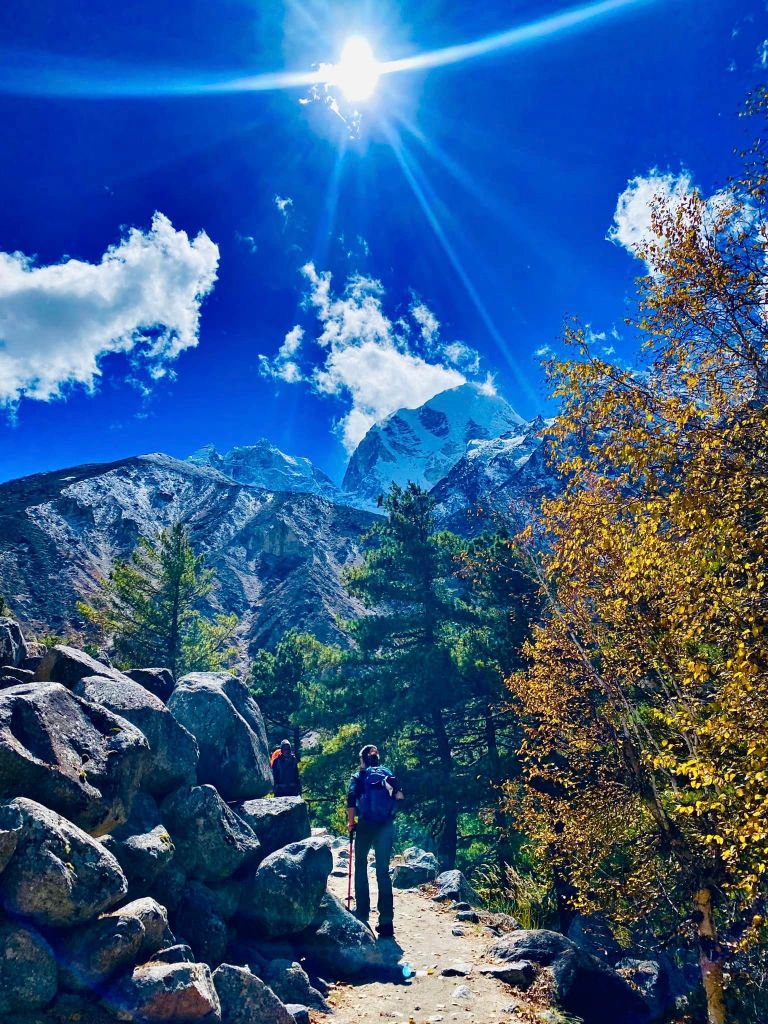
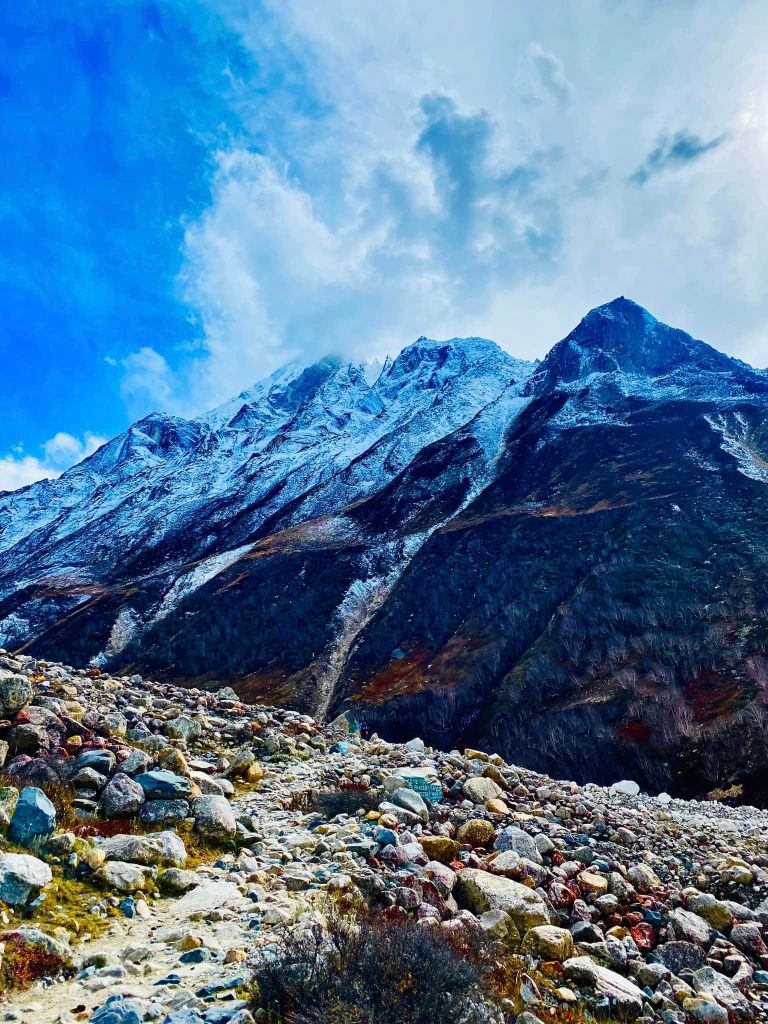
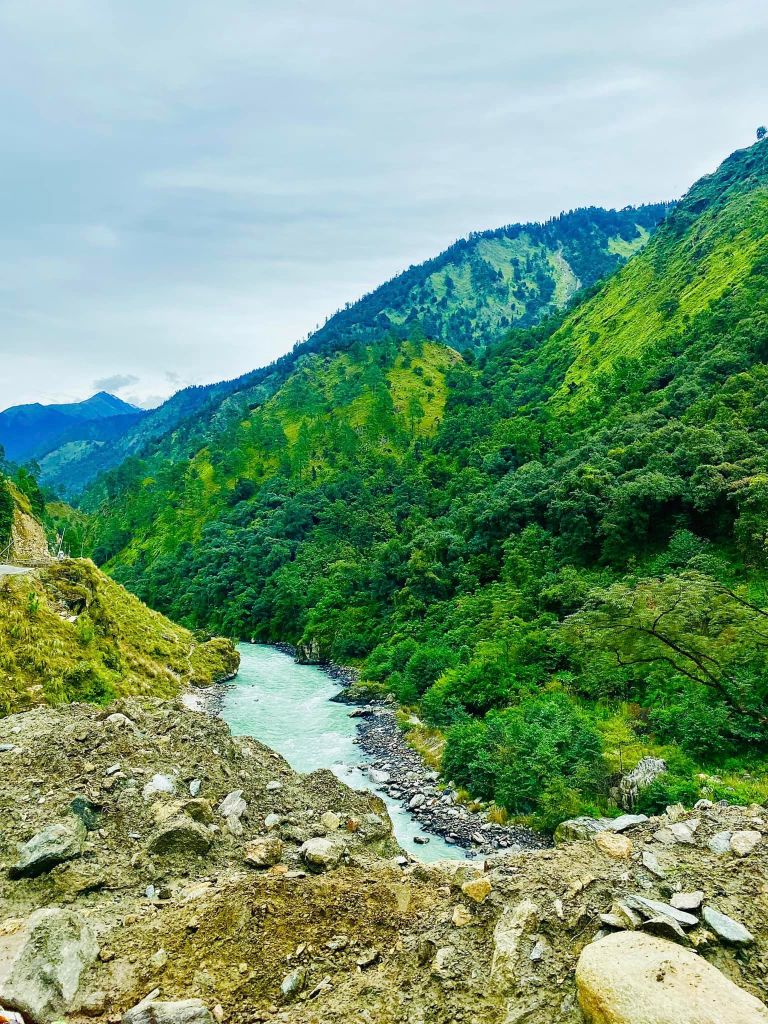
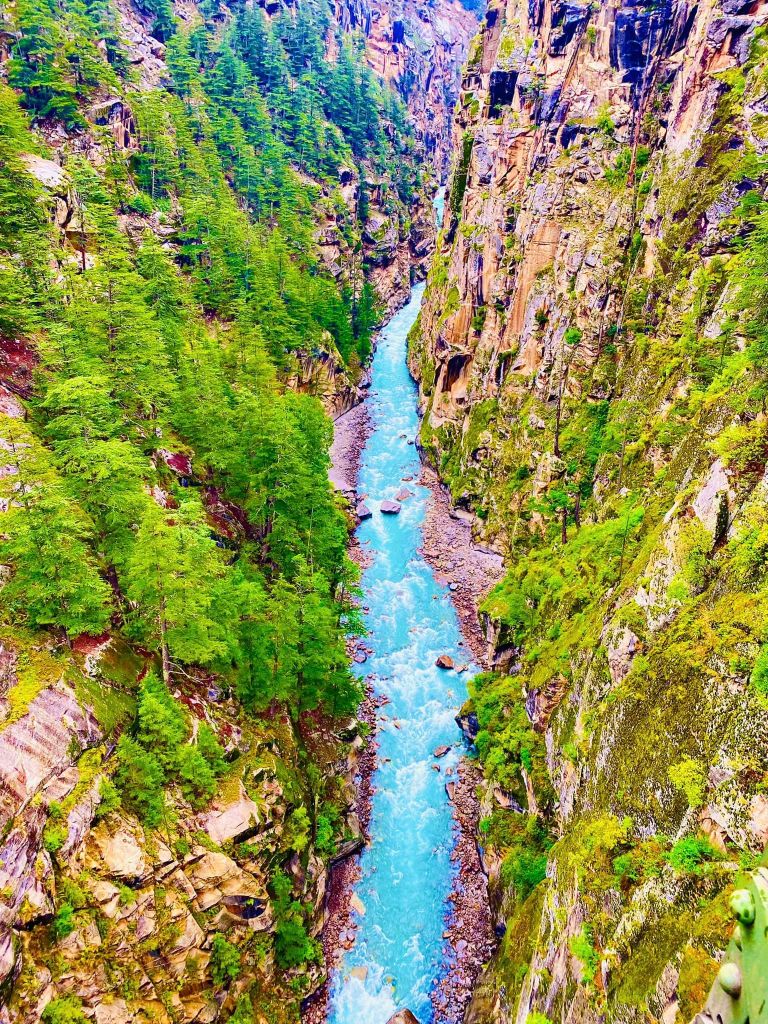
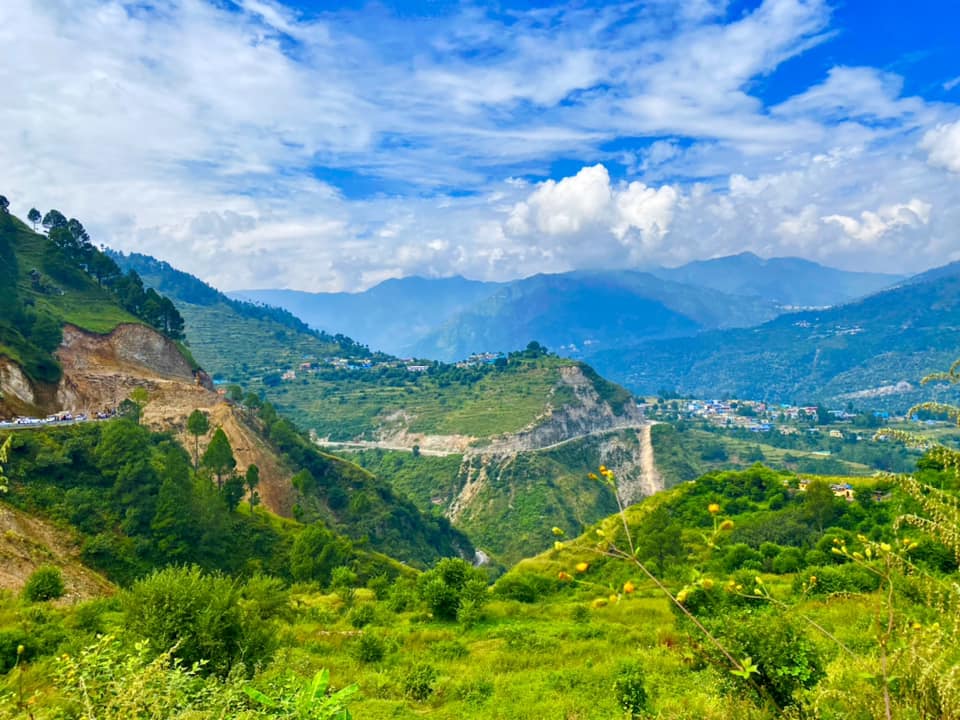
by Mahārājñī’s grace, my dream of India came true! 🥲 for five years, it has been an ardent wish of mine to see these lands. the answer to the call of the Himalayas came as a magnificent and expansive yātra which began in Rishikesh and traversed Uttarkashi, Gangotri, Bhojbasa, Gomukh, Barkot, Yamunotri. we trailed and trekked the mountains in worship of Devī in her forms as Śrī Gaṅgā & Śrī Yamunā. it was a journey of cellular transformation: explosive insights, breath-taking beauty, moving softness, immersion in the love and flow of Gaṅgā Devī.

most miraculously, we completed the arduous and most fulfilling trek of 36 km from Gangotri to Gomukh, the source of the Holy Gaṅgā, in two intense & magical days! 💙 i have never felt more alive than on this trail, immersed in the hum of Devī Gaṅgā and held in the lap of the mountains. every step taken was a challenge to my self-imposed limitations and ideas of myself – of who i am, of what i can do and achieve. every step taken taught me resilience and determination, as well as showed me that my strength springs from my longing. it has been most sacred to complete this trail and to come to be at the Source with my saṅgha. imbibing in Her exquisite vibrations, we worshipped Her through pūjā. we breathed, we smiled, we cried. i will remember this experience for the rest of my life with all the gratitude & awe my being can muster.

Śrī Mātre Namaḥ! Har Har Mahādeva! Hare Hare Gaṅge!!!

what is more, in Gangotri, we hiked to a cave where it is said that Draupadī and the Pāṇḍavas spent time while on exile, and had the fortune to meet the sādhu who has been living there, entrenched in tapasya. ♥️ i have felt the Mahābhārata vibrantly coming alive for me on our yātra; from being at Gaṅgā Devī’s feet, arguably the precursor of the Mbh’s unfolding, to reaching Yamunā Devī, whose shores welcomed Ambā, who burned herself on a pyre at Yamunā’s banks to gain Lord Śiva’s boon… these mystical lands are unparalleled in beauty, significance, power and history.

Draupadī’s Speech, Vastrāharaṇa: A Collaborative and Experimental Audio-translation

Fragment of a collaborative and experimental audio-translation of Draupadī’s speech following Vastrāharaṇa (The Attempted Disrobing of the Empress) in modern retellings of the epic. This excerpt follows the 2013 rendition of the Mahābhārat. It was created in the module ‘The Practice of Literary Translation’ of the Warwick Writing Programme with Sumithreyi Sivapalan. 🙂

Draupadī:

Touch me not, Queen Mother Kuntī.

I will get besmirched.

I am no longer your daughter-in-law.

I am no longer your sons’ wife.

I am no longer the bride of the Kuru dynasty.

Now I am without husband, without name, without dynasty.

I am the fire that burns in the furnace. I am purity itself,

yet I feed on what is impure.

Today, in this sabhā, I have cried the tears of the women who walked this Earth.

Queen Mother Kuntī, Great Queen Gandharī, if you wish to save yourselves, renounce this sabhā and leave. Because this palace hall will break today.

I am no longer a human being. I am death, only death. I am the death of all the vile men present in this unjust sabhā today.

My curse is that, at this very moment…

Gandharī:

No, Draupadī. Do not curse. Do not curse! Forgive them. Forgive us. I beg you, forgive us!

Draupadī:

My curse is forgiveness in itself, Great Queen. If I have to punish, let it be in this lifetime. Every moment, they will suffer the agony of hell. Their pain will know no end.

Gandharī:

No, my daughter. The woman who gives life cannot give death.

In taking one’s own life, one annihilates the body. In taking another’s life, one destroys the soul.

Destroying the soul is self-annihilation.

In your anger, do not act like these men!

Draupadī:

It is a woman’s duty to cleanse the house, and it is a woman’s duty to purify it. It is a woman’s duty, as well, to cleanse this world.

Indeed,

only a woman can purify the Earth. I curse (that)…

still and edit i created of Pooja Sharma as Draupadī. the most fantastic performance of the fireborn heroine!

Warwick Writing Programme and Mahābhāratam Diaries

i have officially completed my first year of the Warwick Writing Programme ✅! 🥰! it has been absolutely delightful. 🤍🙏 my gratitude to my professors for guiding me on working on my first collection of bhakti poetry, in researching devotional literature & in translating from sanskrit, as well as from my mother-tongue. 🤍


it was so much fun to venture into freelance writing & to work with my colleagues on different projects – a highlight of this year has been a collaborative audio-translation of my beloved Draupadī’s imposing speech from the Mahābhārata created with Sumithreyi Sivapalan! it is always a joy to work on anything Mbh-related, but it truly is an honour to collaborate with someone equally enamoured with itihāsa! 🙏


you can read a sneak peek here:
https://teanicolae.com/2022/06/18/draupadis-speech-vastraharaṇa-a-collaborative-and-experimental-audio-translation/

indeed, what i adore about academia is the opportunity to meet and connect with people with similar (or identic!) research interests! it truly is so enriching to discuss your research with someone as equally passionate about it as as you, and these discussions unmistakably propel each of you towards greater growth and understanding. in my case, it has been one of the greatest gifts to meet someone as madly infatuated with the Mahābhārata as me!

it wasn’t until meeting my colleague Sumithreyi that i realised how much i had longed to dissect the Mbh with a fellow lover of this magnificent epic, and I can wholeheartedly say that the insights we shared together refined my understanding of the intricacies of its narrative – a narrative so grand that it undoubtedly humbles anyone who dares to venture in it. thank you, dear sakhī! here’s to continuously learning and to emptying our cup of the arrogance of knowing.

pics: all smiles after 7 hours of editing work for the Warwick Anthology 2022!

Warwick Anthology and Re-introduction

#Repost @thewarwickanthology with @make_repost
・・・
Introducing the Team of Warwick Anthology 2022: Florilegium! 

Meet Téa Nicolae! Téa is a marketing co-head and an editor of this year’s anthology. She joined the Warwick Writing Programme to delve deeper into poetry and literary translation.

Téa is a poetess and a scholar-practitioner. She writes devotional (bhakti) poetry and her research interests are Śāktism, Mahābhārata and non-dual philosophy.

Téa holds a BA in Film and Creative Writing and an MA in Philosophy and Religious Studies from Lancaster University. She is studying oral-practice traditions enrich her writings with the insights, delight and fervour unearthed only through practice.