Draupadī and the Dharma of Women

“Strī” translates from Sanskrit as “woman”, while “dharma” is a complex principle with manifold meanings, in this context bearing the significance of “duty”; in simple terms, it refers to an individual conduct that contributes to harmony in a greater framework, be it societal or cosmological.

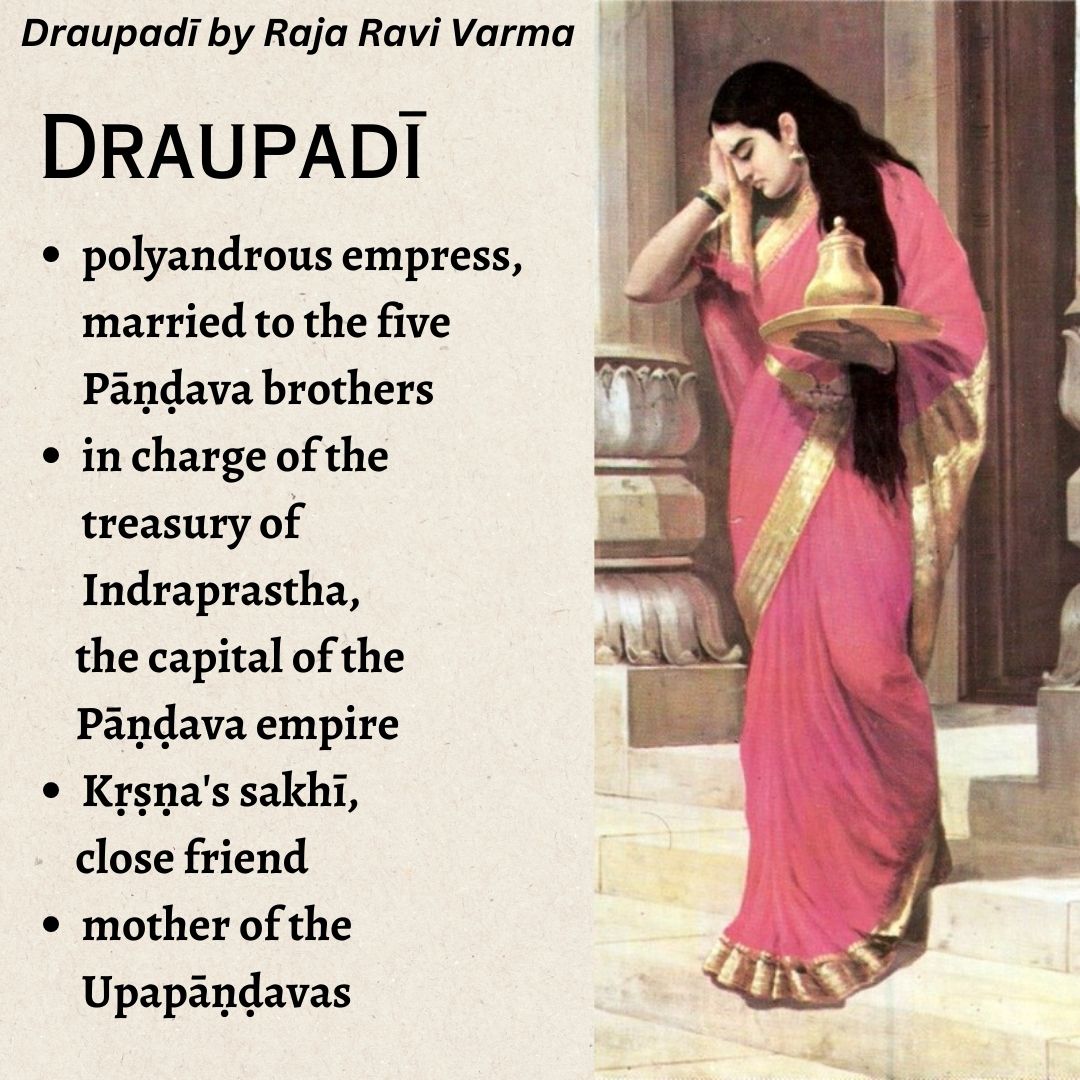
Draupadī is lauded in the Critical Edition of the Mbh several times as being the epitome of strī-dharma, of the dharma of women. (2.62.20; 2.63.25-30; 2.64). Interestingly, she is most intensely praised as such after she angrily (yet elegantly!) questions the men of the royal court and demands justice, being anything but meek and demure. I would argue that this showcases that in the Mahābhārata voicing oneself and standing up for oneself are considered responsibilities belonging to the dharma of women.

To nuance this even more, Eknath Easwaran, an eminent translator of the Bhagavadgītā, highlights that, etymologically, the term “dharma” can be traced back to the root ‘dhri’, which means ‘to support, hold up, or bear’; “dharma” therefore translates as “that which supports”, and Draupadī’s conduct therefore supports both society and cosmology.

In the Sanskrit Mbh, Kṛṣṇa does not appear in the sabhā (royal hall) at the time of Draupadī’s attempted disrobing, and no direct mention of him is made during this episode. In a conversation with Dr. Brian Black, a Mbh researcher whom I had the honour to have as my MA supervisor, we talked about the implication of this, which is that Draupadī’s adherence to strī-dharma appears to be that which shields her. A question that could arise here could be whether there is a contradiction between the Critical Edition and modern renderings of the Mahābhārata, with Draupadī being shielded by her dharma as opposed to by Kṛṣṇa.

For me there is no contradiction.

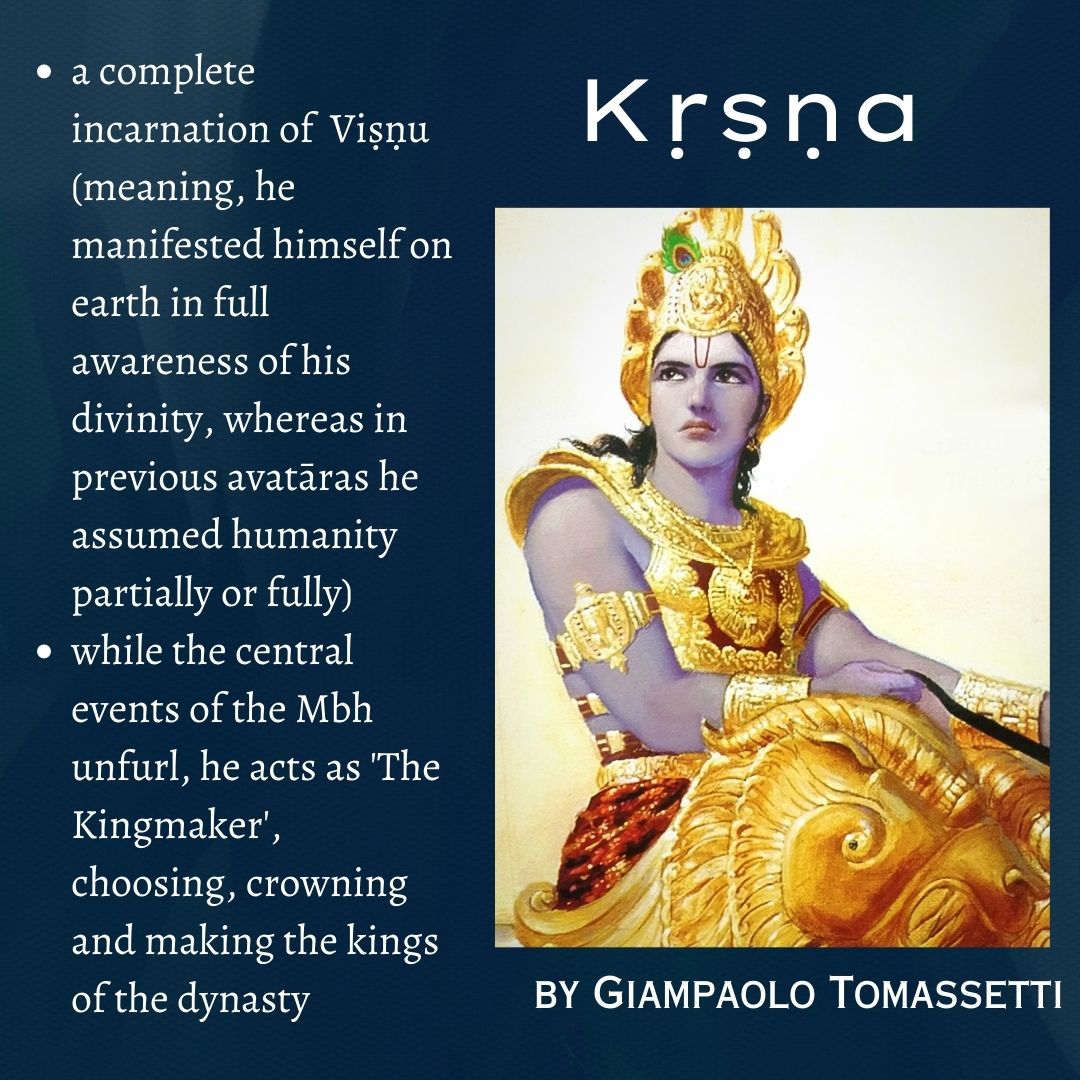
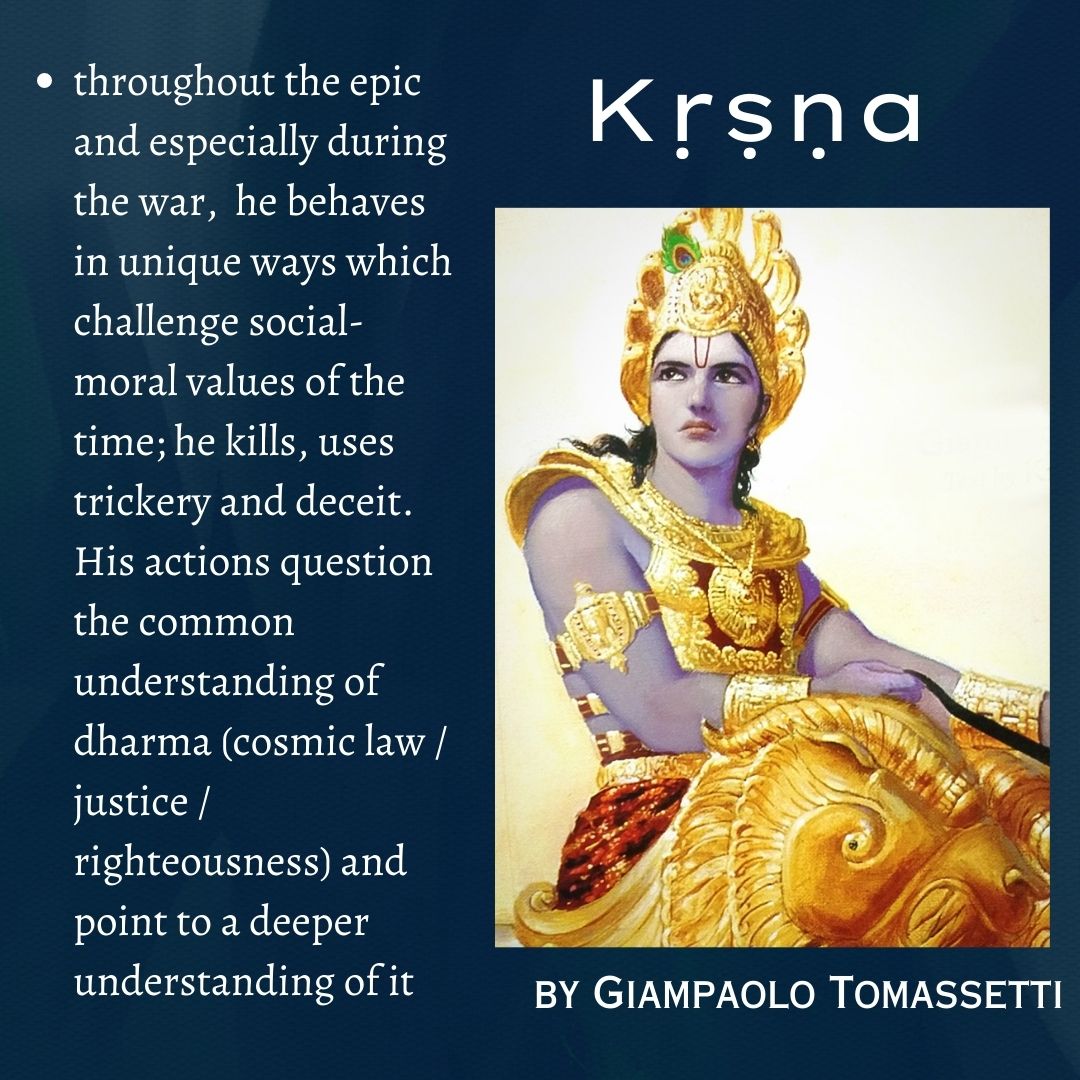
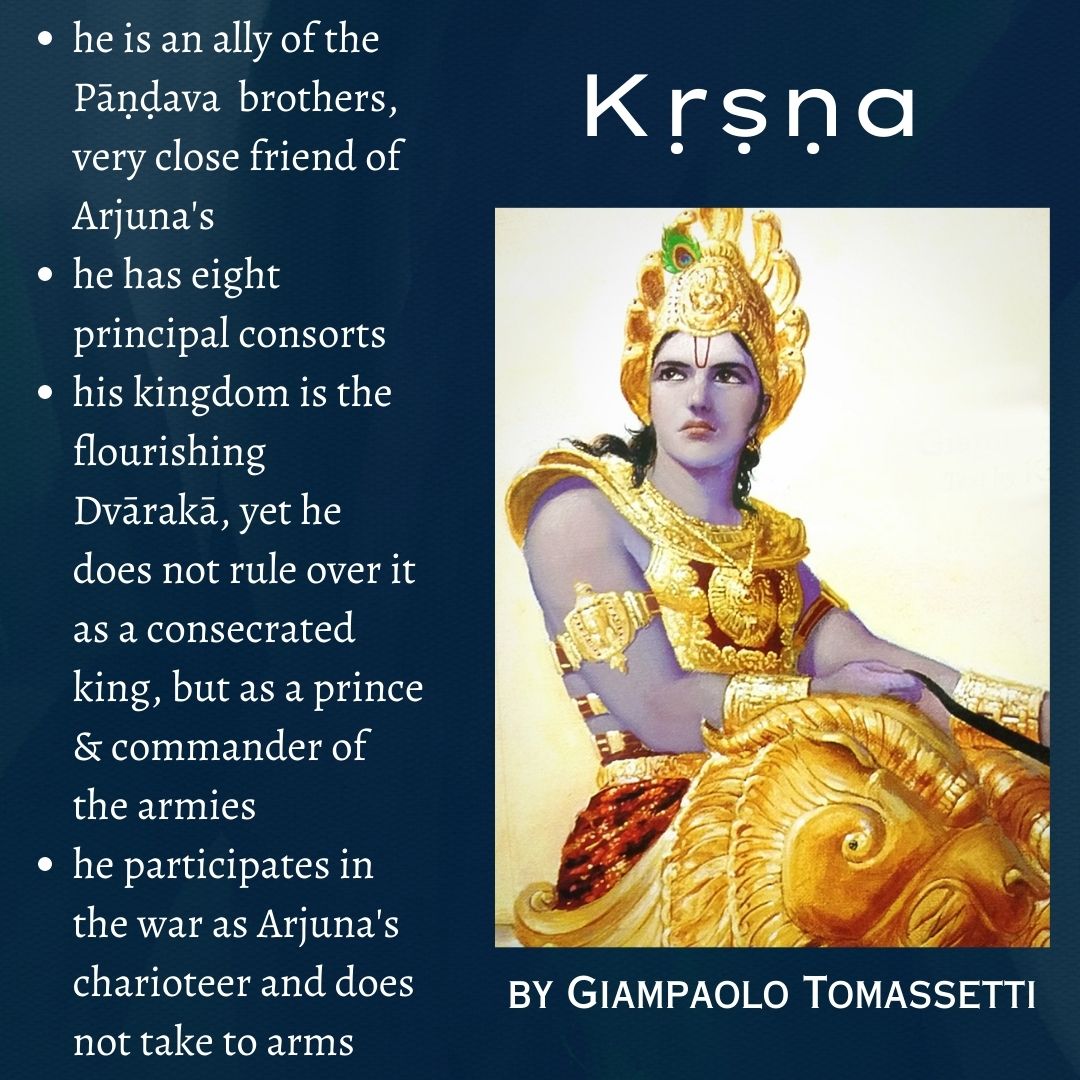
Kṛṣṇa in the Bhagavadgītā establishes himself as ‘the eternal dharma’ (14.27); and so, Kṛṣṇa is all dharmas, including strī-dharma. We tend to associate Kṛṣṇa with a fully-fledged incarnation; but he is beyond that. I would maintain that, as the divine principle, he exists in Draupadī’s consciousness and in her actions as dharma (and not only!). The latter renditions, for me, in which he is physically there, only bring forth in tangible projections the internal process extending Draupadī’s consciousness.

I will write more about strī-dharma as it appears in the Mbh. ❤️‍🔥

You can find me on IG: @musingsonthemahabharata

and on Tumblr: https://www.tumblr.com/musingsonthemahabharata

Painting: Jadurani Dasi, 1986.

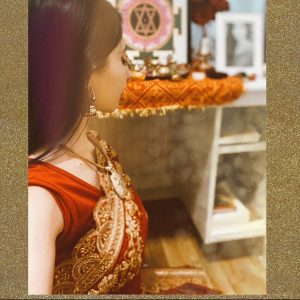
Kṛṣṇa and Draupadī Discuss Karma

One of my favourite interpolations from modern tellings of the Mahābhārata is a conversation between Draupadī and Kṛṣṇa that occurs after Draupadī’s sexual assault and attempted disrobing by the Kauravas.

Clutching his feet, Draupadī sobs: “Govind, why? Why did this happen to me? What sins did I commit? I am reaping the fruit of which actions of mine?”

Picking her up and caressing her hair, Arya tells her: “What happened was neither because of your ‘bad’ karma, nor did you reap the fruit of your past actions. It was the Kauravas who reaped the fruit of their past actions by engaging in such a grave misdeed. Sakhī, this is the meaning of karma.”

“But I am the one experiencing agony, Govind.”

“Then relinquish it, Sakhī. Although what happened was not the result of your ‘bad’ karma, the way you transform following these events will be your karma.”

This is such a beautiful and profound exchange which offers rich nuances to the teaching of karma. Oftentimes, when events we perceive as terrible happen to us, we create a story of unworthiness around them; we wonder if we are being punished, if the root cause is our evilness, if God or the universe are rejecting or dooming us. A question that rests on these lines that is often asked would be the common: “why do bad things happen to good people”. A first layer to this, in my view, is a deconstruction of ‘bad’ and ‘good’ as solid concepts. The second layer is the understanding that any event ‘just’ happens aleatorily, rises and falls, and karma is not a simplistic cause-effect reaction.

Karma encapsulates, in my understanding, the ingrained patterns held within us through which we act, react, and process the world around us and the events that occur in our lives. There is freedom from karma in finding new ways of reacting, engaging, processing.

Finally, a significant teaching encased in this interpolation is that the way someone treats us, ultimately, is a reflection of their karma (ingrained patterns), and not a reflection of our ingrained patterns. We cannot control another’s patterns, but we can aim to understand and rewire ours accordingly.

The magnificent art: @beauty_of_art_aditi 💙

My musings on the Mbh – IG: https://www.instagram.com/musingsonthemahabharata/
Tumblr: https://www.tumblr.com/musingsonthemahabharata

Glimpses in the Nature of Reality in the Mahābhārata

Something I find fascinating about the Critical Edition of the Mahābhārata is that the characters sporadically move from addressing Kṛṣṇa as an embodied mortal (as their friend, cousin, son-in-law etc) to addressing him as the Godhead; as Viṣṇu, as the Supreme Being, and as Īśvara. The succession of change between the modes of address can sometimes even happen on the same page, at a distance of a few lines. The veil is lifted, and the characters see through Kṛṣṇa’s illusion, and, through that, they become immersed in the nature of Reality; the veil promptly drops back, and God is lost.

An argument for this could be that the divine modes of address are interpolations, a theory being that Kṛṣṇa became identified with Viṣṇu only in later renditions of the Mahābhārata. While this could be true at the level of historical analysis of the epic, for me, there is a subtler teaching encased here: how all of us, without exception, glimpse into the nature of Reality as we move through life, yet we perpetually proceed to return to becoming engrossed in the superimpositions we project upon Reality; and the dance continues. From Truth to dream, from dream to Truth. It is quite endearing, really. What committed and imaginative dreamers we are! 💙

Adyashanti once talked about how one inadvertently glimpses truth; it is, after all, inescapable as it is our nature; the trick is not forgetting / losing the glimpse.

Gorgeous artwork of Kṛṣṇa: Awedict.

Draupadī’s Disrobing: Menstruation as Purification and the Price of Blood

In response to the article about Draupadī’s disrobing that I shared yesterday, Jim beautifully questioned whether the act of violence spurred from limited views around nudity and if it would have been avoided if nudity was perceived differently in that society (if it was common, seen as sacred or normal). This was a very rich ground of contemplation for me, and the reflections I have had are the following:

First, I would like to establish that Draupadī was not wearing a sari when her attempted disrobing took place. She was wearing a single cloth which covered her body through which she was menstruating, which was the custom at the time. It can be deduced through various references toward her appearance found throughout the Mbh that, outside of the timeframe of her menses period, she did not customarily wear an upper garment, so her breasts were uncovered. At the time of her attempted disrobing, she was wearing more clothes that she usually was. The men had already seen part of her body which they wanted to disrobe. There are scholars who argue that she was not wearing a single cloth at the time of her disrobing and she was instead wearing both an upper garment and a lower garment. I would argue that this is irrelevant, as the point still remains that her breasts were covered, and they usually were not.

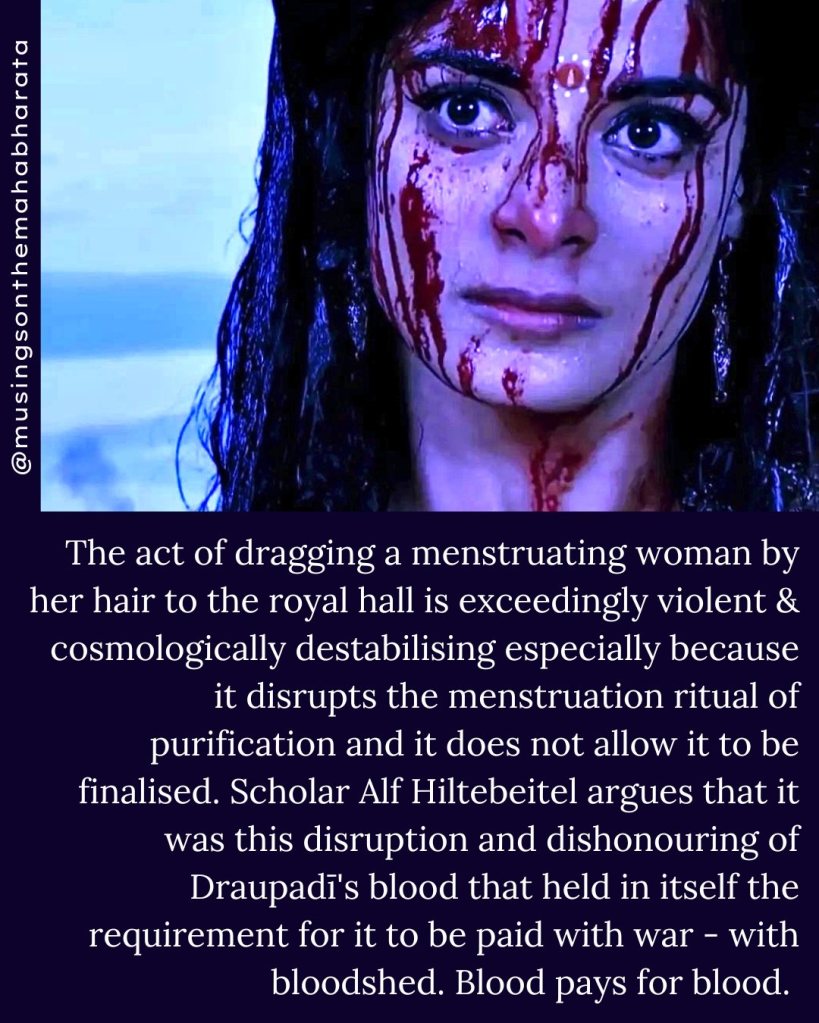
Second, I would maintain that, the disrobing episode, as most acts of sexual violence, was more about power than about sex or nudity, and that the key factor here, lost in so many adaptations, was not the attempted disrobing & possible nudity, it was the fact that Draupadī was menstruating, and she was brought to the royal hall in a stained garment through which she was free-bleeding. Menses was / is considered a period of purification. The act of dragging a menstruating woman by her hair to the royal hall – who, as I priorly mentioned, was wearing more clothes than usually – is exceedingly violent & cosmologically destabilising especially because it disrupts the menstruation ritual of purification and it does not allow it to be finalised. Further, hair in itself is a symbol of sexual power for a woman. Duśāsana grabbing Draupadī’s hair is an attempt to curb her sexual power and own her sexuality.

Draupadī bleeds in the hall and leaves Hastinapura bleeding through her clothes. Scholar Alf Hiltebeitel argues that it was the dishonouring of her blood that held in itself the requirement for it to be paid with war; with bloodshed. In the cosmological cycle, blood pays for blood.

The Kauravas wanted to humiliate, own and disempower Draupadī; nudity was one of the means to get there, along with disturbing her purification rituals, not the end goal. However, one could argue that in a society in which nudity was seen as sacred the intention to humiliate wouldn’t have arisen in that openness or expansion of consciousness – but maybe it would have just taken a different form and found different means.

Photo: Pooja Sharma as Draupadī, bathed in the blood of her principal offender. The cosmological cycle is finalised. 

references on Draupadī, the symbols of menstruation as purification and hair as female sexual power: https://press.uchicago.edu/…/book/chicago/C/bo3626877.html

IS THE MAHĀBHĀRATA MISOGYNISTIC?

various feminist scholars have accused the Mbh of misogyny and of not expressing the female experience in depth, claims which i would heavily disagree with. i will unpack my arguments in further videos, but the angle that i want to present today is related to my previous video, in which i talked about how all perspectives are contained within the Mbh, and it itself states so. i would like to offer the perspective of the Mbh being a dialogue, which i learned while studying with Dr. Brian Black at Lancaster University during my postgraduate degree.

🌸 what kind of dialogue? between its characters, between different ways of life, different perspectives, between us, the audience, and the epic itself; it does not have an inherent opinion on the characters presented there: everything we learn is from someone’s perspective, either the narrator of a particular story, or the way characters relate to each other. so, are there misogynistic perspectives in the Mbh presented by certain characters? yes; as, similarly, there are misogynistic takes in the world today. the Mbh is more like a neutral observer, i would say; it does not uphold certain views, it merely documents them and invites you to contemplate them, absorb or challenge them.

because dialogue relies on context, it is very important to understand the context of an event in question to understand its nuances.

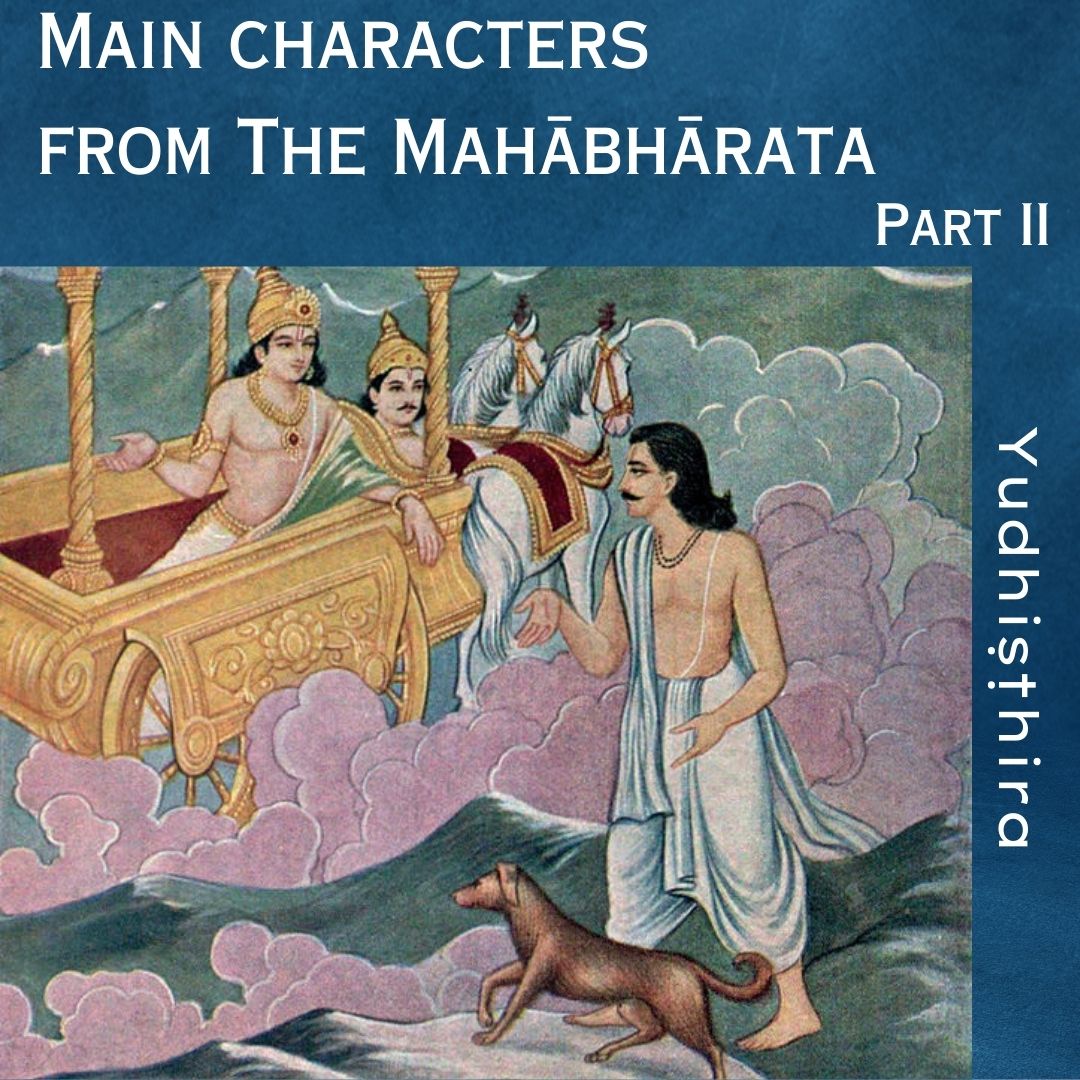
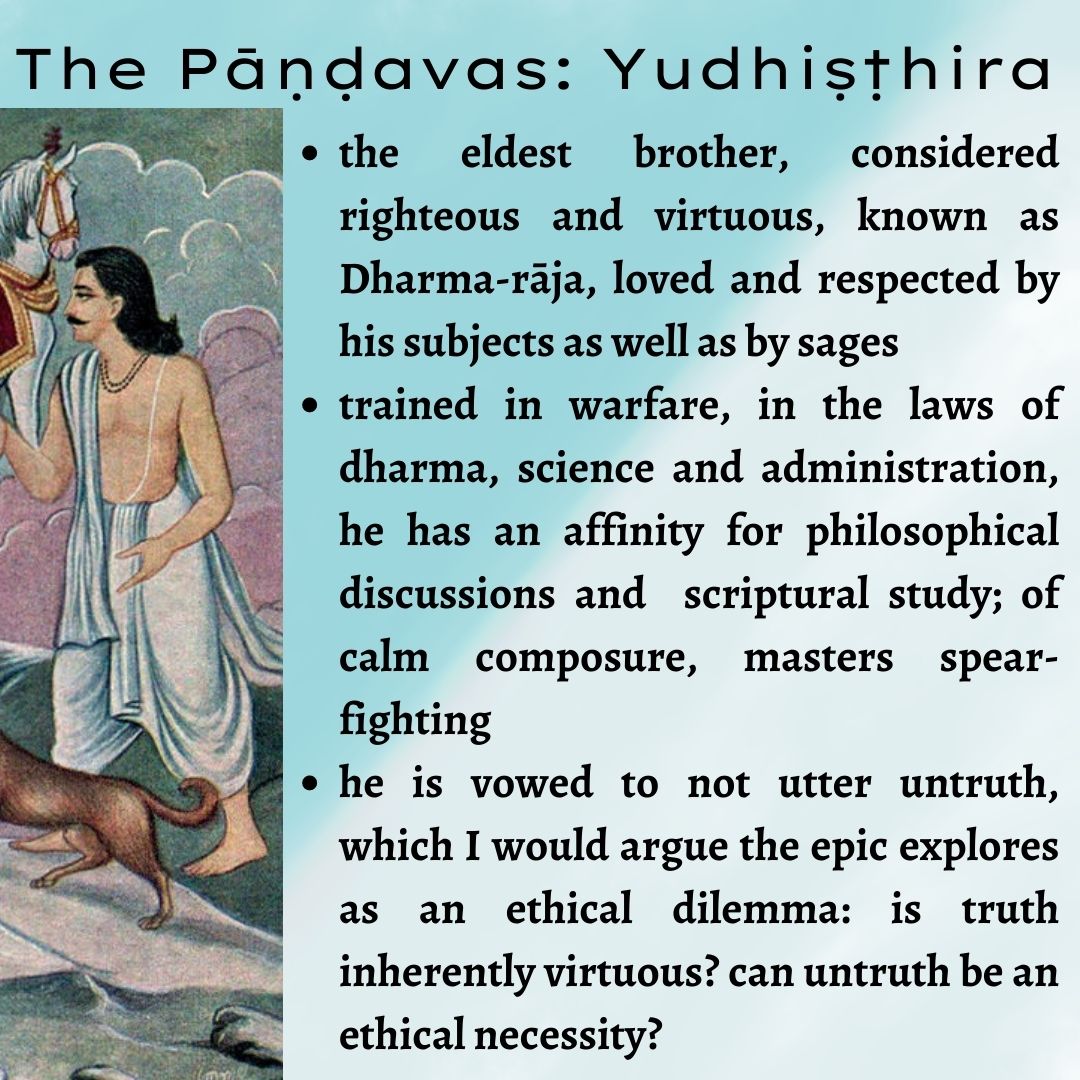
to demonstrate this, i will use an episode from the Mbh in which Yudhiṣṭhira expresses a misogynistic comment. this happens in the 13th parva; in a conversation with Bhīṣma, Yudhiṣṭhira asks him in an exasperated manner, why are women so deceitful and hard to please? (13.39) context: the war ends, and Draupadī’s sons are unlawfully slaughtered during a night raid. Yudhiṣṭhira faints when he hears the news of his dead son and nephews, then asks Nakula to bring Draupadī to the camp, lamenting that yet another sorrow would fall upon his beloved. Nakula brings a grieving Draupadī, who lashes out at Yudhiṣṭhira and aggressively congratulates him on winning the war and on becoming emperor, the undertone of this being: at what cost? (10.11) additionally, Yudhiṣṭhira is hit by a revelation from Kuntī, his mother, which greatly disturbs him; later on, an exasperated Yudhiṣṭhira asks this question to Bhīṣma. 

now, is Yudhiṣṭhira misogynistic? i would say no; in fact, he later praises Draupadī’s merits and speaks highly of other women. is this contradictory? i would also say no; i think this episode showcases a very humane moment between two characters found in a moment of crisis, in which their children were murdered, and they express their pain by lashing out irrationally. in my view, it showcases how messy and multifaceted we are as humans, which, for me, is one of the great beauties of the Mbh. 💗

pt. 2: on authorship

an argument several scholars have put forward is that the Mbh tells stories of men, and it has been written by men, for men. i would maintain that the first part of this claim can easily be deconstructed through the stories of incredibly empowered and empowering female characters such as Draupadī or Sulabhā.


although authorship of the Mbh has been indeed given to sage Vyāsa, the fluid nature of the epic, with many interpolations and changes made to its structure and with contributions which are anonymous in nature, has led scholars to claim that these changes were created by men, and, in this, the Mbh cannot properly encapsulate or express the female experience because women did not write it.

i will present a simple counterargument, emergent from discussions with Dr. Brian Black and my colleagues during a seminar at Lancaster University; more accurately, a question: how can we know this with certainty? how can we know that women did not contribute to the changes and interpolations that emerged in this epic?


i personally find it quite reductionistic and simplistic to automatically assume that women did not write these stories, or contribute to, for example, the creation of Draupadī’s narrative arc; i think this is exactly an assumption that could be misogynistic in itself, one stemming from a projection of women’s silence, namely to assume that such a great epic, which has shaped and moulded the culture in south asia, has not had any female contribution.

i would ask, why is this the automatic assumption that we make? 😊

listen to me speak more on these two subjects on my TikTok or on my IG account dedicated to my research: @musingsonthemahabharata.

Musings on the Mahābhārata: Part II

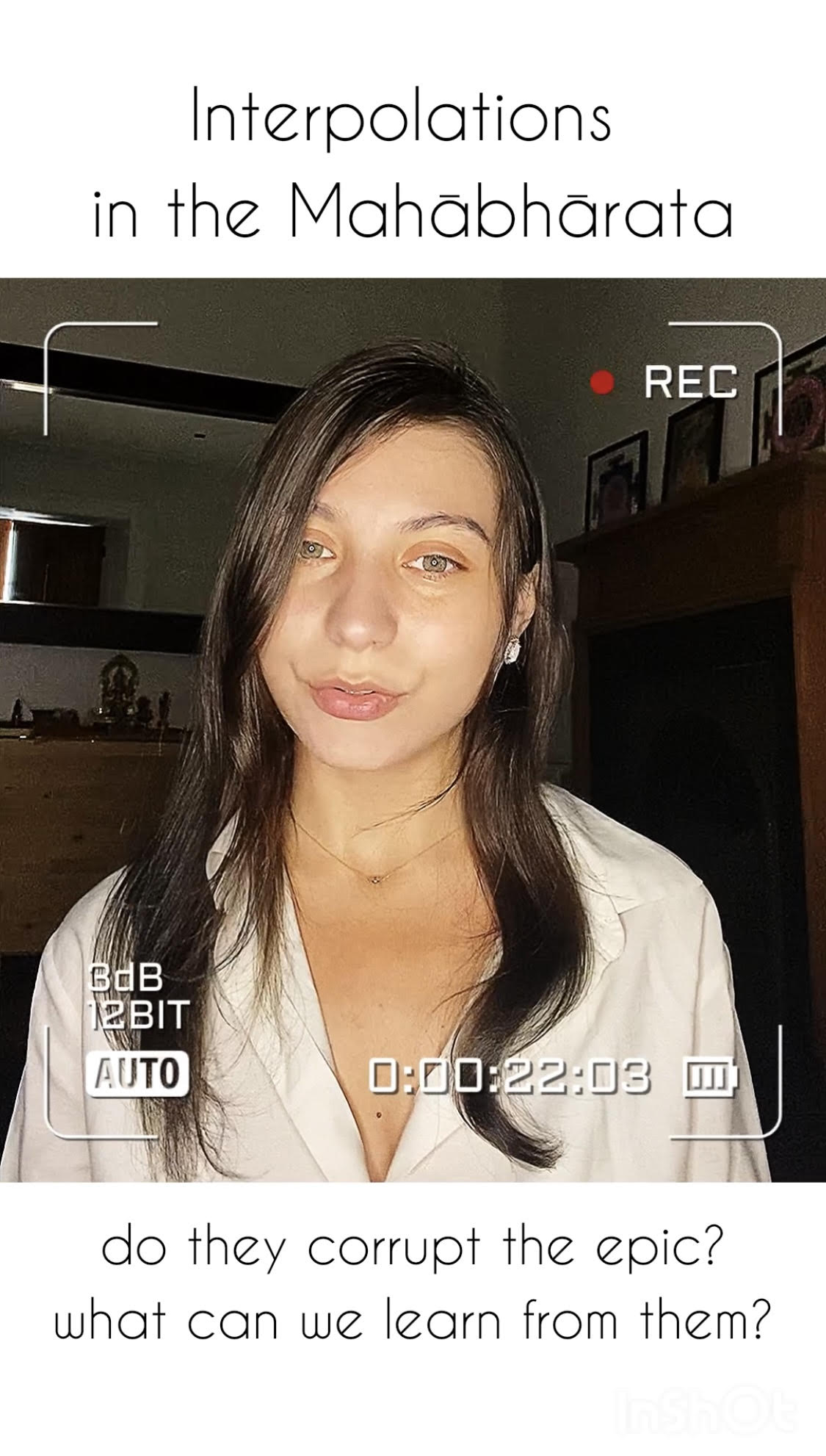
so, did Draupadī laugh at Duryodhana in the Palace of Illusions and did she insult Karṇa at her svayaṃvara? no. neither of these events appear in the critical edition of the Mahābhārata, and they are considered interpolations coming from uncertain sources.

how do we relate to these, however – considering that they are now completely imbued in the South Asian collective consciousness?

devoid of frustration! we relate to them in a way that is devoid of frustration. 😁 this is my first answer because i used to be very frustrated with interpolations, especially with those that, in my view, vilified Draupadī in any way. inquiring into my intense reactivity triggered by these led me on a rich introspective process, in which, first, i questioned the depths of my identification as a woman to Draupadī’s character (will write more on this in the future!). second, i began questioning how important it is for the Mahābhārata to remain intact in popular culture and in retellings, and if these interpolations corrupt the epic. one of the conclusions that i have reached, which i will expand on in my PhD thesis, is that these interpolations and retellings can teach us about how society has progressed through time, and can teach us about what moves us as humans, and about the ways we continuously try to make meaning and to find reflections of ourselves in the external world. for instance, interpolations that might vilify Draupadī’s character, in my view, can pinpoint to blind spots in society which can uncover latent misogyny, whereas interpolations which glorify Karṇa can pinpoint to people’s identification with his particular character, which to many represents a symbol of class struggle. in this, i believe there is much to uncover; as scholars, and i have been guilty of this, we usually tend to dismiss interpolations, and i would maintain that we lose a lot by doing so. because everything is valid, and i would argue that every single retelling can teach us more about the ways in which this epic is actually lived, and comes alive for people. 🖤

did Draupadī’s disrobing ‘really’ happen?

yes, as in, it appears in the critical edition, and it is not considered an interpolation. there have been scholars who have argued for Draupadī’s disrobing to be recognised as an interpolation (one scholar in particular) but their claims have been rebuked.

however, i do not want to talk about the validity or invalidity of these arguments, but, as a follow-up to my previous video, i want to briefly discuss what i find most fascinating about these debates on interpolations, which is that i think they mirror back to us our own possible blind spots and our biases as researchers. this is a great generalisation, but i have noticed that people who are more drawn to argue for Draupadī’s disrobing being recognised as an interpolation might be more dismissive of the female experience as a whole in academia or in various strands of literature, whereas, for those of us belonging on the other side of the spectrum, our blind spots might be being too entrenched in validating the female experience or in being overfocused on it, and i count myself in this category. i believe there is worth to blind spots, though – i think they can be important or can work to our advantage in relative terms, in the same way overattachment to our own research can – in the sense that, both can provide fuel for our work as well as solidify belief in it – so, nothing is good or bad, no binary thinking here! 😁 but, i do think that this can be a very fruitful area for contemplation for each of us, in which we could question our overattachment to a particular argumentative thread. what can be mirrored back to us through it? for instance, i find that a lot of my attachment to certain narrative threads can mirror back to me my attachment to my female identity; which, again, if channelled properly, can be great fuel, but i do find it important for me to hold it in my awareness and deconstruct it internally if not externally through the means of, for example, an academic paper.

how everything can be great fuel for inner work – even academic research! 🤍

the grief of women: reflections on Strī Parva

spent today absorbed in the père lachaise cemetery, and one of the things i was struck most by was seeing the many sculptures of female figures towering over tombs: almost all tearful or in distress. it made me think of Strī Parva, “The Book of Women” from the Mahābhārata, which exclusively focuses on portraying women’s grief and tears, who break upon seeing their men & sons slaughtered on the battlefield in the aftermath of the war. one of the distressed female characters, queen Gāndhārī, lashes out at Kṛṣṇa and accuses him of murder, declaring that he could have stopped the war as he is both omniscient & ever-powerful.

Kṛṣṇa rejects her blame and retorts that he cannot override the cosmic laws. he himself is subjected to them; the massacre was ordained, no one is exempt from death, and the cycle of life is definitive.

my understanding of this exchange is: he is not telling her that she should not grieve or that her grief is “wrong”; he merely offers her the opportunity to place it in a larger context and to use her distress to understand deeper herself as well as the web of nature / existence / cosmology. there is no one to blame or resent or victimise; life unfolds as is. and,

even what we understand as ‘negative’ feelings therefore can be utilised as a stimulus for self-reflection. i myself have spent a lot of time simmering in grief without considering what it could teach me, so this particular scene is very profound for me.

and, how beautiful is Kṛṣṇa’s revelation that he himself is subjected to the cosmic laws once incarnated! will elaborate on this in a future article or post 😊

*my retelling of this dialogue is not based exclusively on the critical edition but also on its variations, as this is one of the instances in which i find referring to multi-versions valuable.

photos: some of my favourite sculptures seen in the cemetery!