my second MA in Poetry & Literary Translation

my second Master’s Degree is officially COMPLETE!! 🥳💖 these past two years at Warwick University were a rich immersion in the art of poetry & in the practice of literary translation. milestones achieved have been:

☁️ completing my dissertation, entitled “Rendering Sacred Texts: Ethics and the Question of Untranslatability”, in which i explored the practice of translating sacred texts and the intricate issues it presents in the field of translation studies, mainly posed by the dilemma that is the hypothesis of an intrinsically sacred quality to languages such as Sanskrit or Latin. i argued that in the case of non-dual traditions, the subsequent question, of whether translation would defile the text, is incongruent with the philosophy & cosmology the text is rooted in. i used the Lalitāsahasranāma, a central hymn of Śrīvidyā, as a case-study.

☁️ conducting my poetic research centred on bhakti or devotional poetry, a genre of Indian poetry which worships the Divine as the Beloved. i worked on two bhakti collections: “odes to the Monsoon One” and “the Monsoon One and the pilgrim”, which explore a woman’s mystical journey. written as a response to the lingering legacy of female exclusion from spirituality that is present literature, the poetry rebels against misogynistic religious texts thematically, through female-centred imagery deifying the demonised body, through the subversion of elements of oppression such as motifs of marriage. the Divine is worshipped in my poems as a lover. i argued that for as long as remnants of a religious culture exclusive of women persist in South Asian literature and practice, for so long will bhakti poetry be needed for devotional rebuttal.

more on this soon! i am hoping for these to be published in 2024 or 2025. 🤍

i extend my gratitude to my extraordinary professors: my supervisors Dr. Jodie Kim & Rosalind Harvey; Professor David Morley, as well as Dr. Chantal Wright, who generously & expertly encouraged and guided me, as well as expressed genuine interest in my work – interest which i especially appreciated when my work took unconventional routes! 🙏

as this chapter ends, a new one at Edinburgh begins! 🥰 onward!

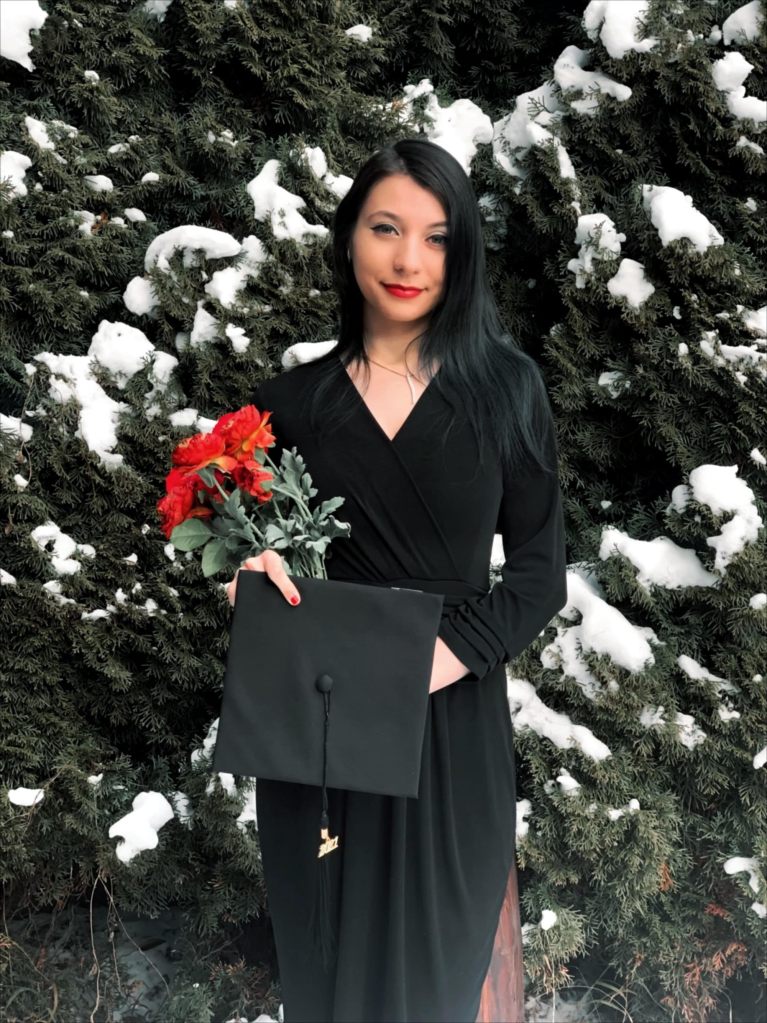
winter graduation, my research and dissertation

♥️ happy to be graduating with a distinction in my first master’s degree! 

♥️ what a transformative journey this MA has been – i would not lightly call my last year at lancaster university life-changing! my studies in Indian philosophy and literature, with an emphasis on the exquisite Mahābhāratam, combined with my wondrous immersion in oral practice traditions at Śabda Institute, have radically challenged and changed my perception of both myself and the world, and introduced me to so much beauty, wisdom and wonder.

the pressing longing to * know * that had been hounding me since my teens, it was for * this *. i often joke that it feels as if i wasn’t living before – only dreaming! 

grateful to my supervisor, Dr. Brian Black, who guided me in my research and introduced me to the Mahābhārata and its complexities, and incredibly grateful to my beloved teacher, Dr. Kavitha Chinnaiyan, whose teachings are the foundation of all that i do; i am so fortunate that my studies at Śabda Institute enrich my academic writing with the insights, delight and fervour that are only accessible to practitioners.

lifetimes of refinement to go!

🌺 with the occasion of graduating from my master’s, taking a trip down memory lane to revisit the dearest pieces i worked on during my MA, namely “Feminine Dimensions of ‘God’: The Deification of Mahābhāratam’s Tragic Heroine”, “The Western Revival of Goddess Worship” & “The Question of Religious Violence in the Mahābhārata“.
🌺 my first paper explored the richness of the non-dual concept of ‘God’ by addressing the intricate worship of Draupadī, the Mahābhārata’s enigmatic female character – whose tragic and distinct storyline establishes her as a multifaceted heroine: a devoted wife; a caring mother; an abused and vindictive woman; a polyandrous empress; an avatāra of the Goddess; the Supreme Parāśakti, the all-pervading absolute reality herself; the celestial Śrī. i argued that, through the worship of an abused & vengeful woman, her devotees are deifying the entirety of the human experience. this piece has been my heart and soul, as my love for the fireborn Yājñasenī Draupadī knows no bounds. ♥️
🌺 my second essay employed a discourse rooted in psychoanalysis, and was centred on the therapeutic values Goddess archetypes hold for the traumatised female psyche + commented on the ramifications of the phenomenon of religious revival in a secular age.
🌺 my third paper deconstructed the hypothesis of the existence of instigation to religious violence in the Mahābhārata – but this perhaps deserves a post of its own, so some other time. ♥️
current situation is incessant editing, and i am hopeful that in 2022 they will feel ready for publication. cannot wait to share my findings.
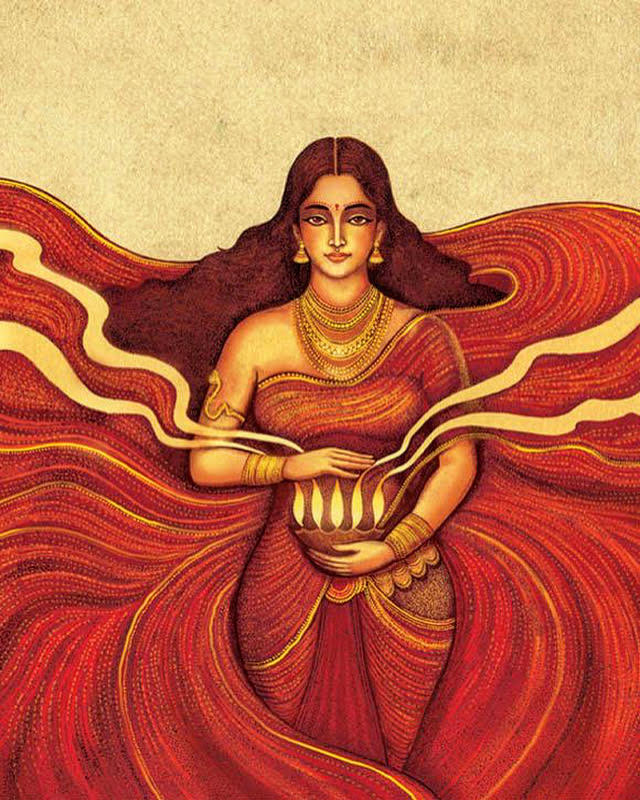
image: “The Flaming Tresses of Draupadī” by Onkar Fondekar, for the illustration of the cover of the book of the same name written by Veerappa Moily, Rupa Publications. ♥️

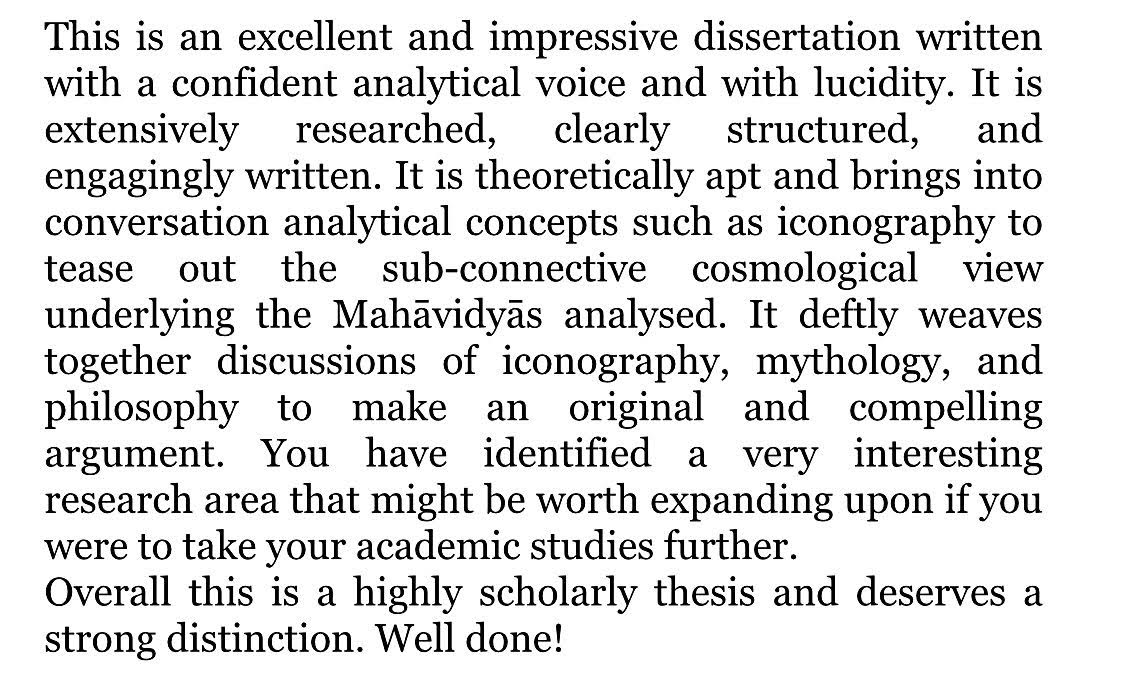
finally, attaching below the praise i received for my MA dissertation, which i plan to publish one day:

“This is an excellent and impressive dissertation written with a confident analytical voice and with lucidity. It is extensively researched, clearly structured, and engagingly written. It is theoretically apt and brings into conversation analytical concepts such as iconography to tease out the sub-connective cosmological view underlying the Mahāvidyās analysed. It deftly weaves together discussions of iconography, mythology, and philosophy to make an original and compelling argument. You have identified a very interesting research area that might be worth expanding upon if you were to take your academic studies further.

Overall this is a highly scholarly thesis and deserves a strong distinction. Well done!”