the flow of knowledge

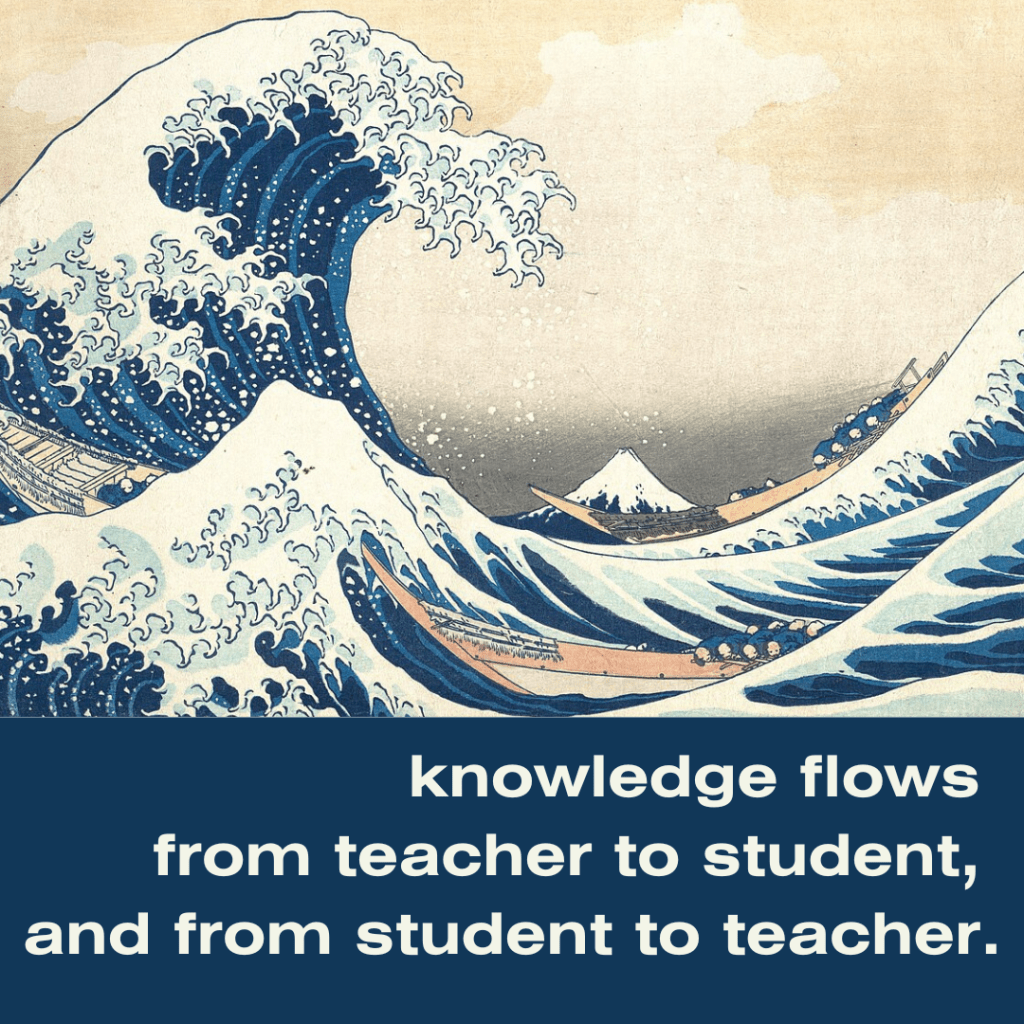
knowledge flows from teacher to student, and from student to teacher.

at the beginning of my academic journey, i was continuously surprised by the way the majority of our professors engaged with me and my colleagues; not only did they genuinely express interest in our opinions, but they also valued our input, ensured the openness of dialogue between us, and consistently encouraged us to become independent in thought and in writing. the learning environment i had been exposed to until then, namely secondary education in my home country, had been completely different: it had been one of strict hierarchy, in which plurality of thought was not existent, and in which the minds and experiences of students were not valued. it took me awhile to become used to – well, being valued, and to valuing my input myself.

i remember one particular exchange i had with a professor of mine, in which i expressed my understanding of one subject and proceeded to reflexively dismiss it by cloaking it in the “i am just a student, and who am i to say anything about this” garb. my professor stopped me and said something along the lines of: “yes, we are just people. but that doesn’t mean our contributions can’t be meaningful.”

the first week of my Ph.D. was similar: professors consistently reminded me and my colleagues that we are more than students, and they see us as valuable members of a research community that works together. they encouraged us to renounce our inhibitions, and to think, write and act as such.

it has become exceedingly important for me in my journey to be in such learning environments in which, past the roles of students and teachers that we play, there is an understanding of the flow of knowledge, which, in my view, would be limiting to think of as flowing rigidly in only one direction. knowledge flows from teacher to student, but also from student to teacher, and from student to student. i believe that to cut oneself off from receiving the flow from any source because of preconceived ideas of how it flows, and who to learn from, is a great loss.

sometime ago, i had a great conversation with my dear friend Avi Sato about how these same principles of knowledge flow apply in the area of spirituality as well, nuance which had long eluded me. 
my second MA in Poetry & Literary Translation

my second Master’s Degree is officially COMPLETE!! 🥳💖 these past two years at Warwick University were a rich immersion in the art of poetry & in the practice of literary translation. milestones achieved have been:

☁️ completing my dissertation, entitled “Rendering Sacred Texts: Ethics and the Question of Untranslatability”, in which i explored the practice of translating sacred texts and the intricate issues it presents in the field of translation studies, mainly posed by the dilemma that is the hypothesis of an intrinsically sacred quality to languages such as Sanskrit or Latin. i argued that in the case of non-dual traditions, the subsequent question, of whether translation would defile the text, is incongruent with the philosophy & cosmology the text is rooted in. i used the Lalitāsahasranāma, a central hymn of Śrīvidyā, as a case-study.

☁️ conducting my poetic research centred on bhakti or devotional poetry, a genre of Indian poetry which worships the Divine as the Beloved. i worked on two bhakti collections: “odes to the Monsoon One” and “the Monsoon One and the pilgrim”, which explore a woman’s mystical journey. written as a response to the lingering legacy of female exclusion from spirituality that is present literature, the poetry rebels against misogynistic religious texts thematically, through female-centred imagery deifying the demonised body, through the subversion of elements of oppression such as motifs of marriage. the Divine is worshipped in my poems as a lover. i argued that for as long as remnants of a religious culture exclusive of women persist in South Asian literature and practice, for so long will bhakti poetry be needed for devotional rebuttal.

more on this soon! i am hoping for these to be published in 2024 or 2025. 🤍

i extend my gratitude to my extraordinary professors: my supervisors Dr. Jodie Kim & Rosalind Harvey; Professor David Morley, as well as Dr. Chantal Wright, who generously & expertly encouraged and guided me, as well as expressed genuine interest in my work – interest which i especially appreciated when my work took unconventional routes! 🙏

as this chapter ends, a new one at Edinburgh begins! 🥰 onward!
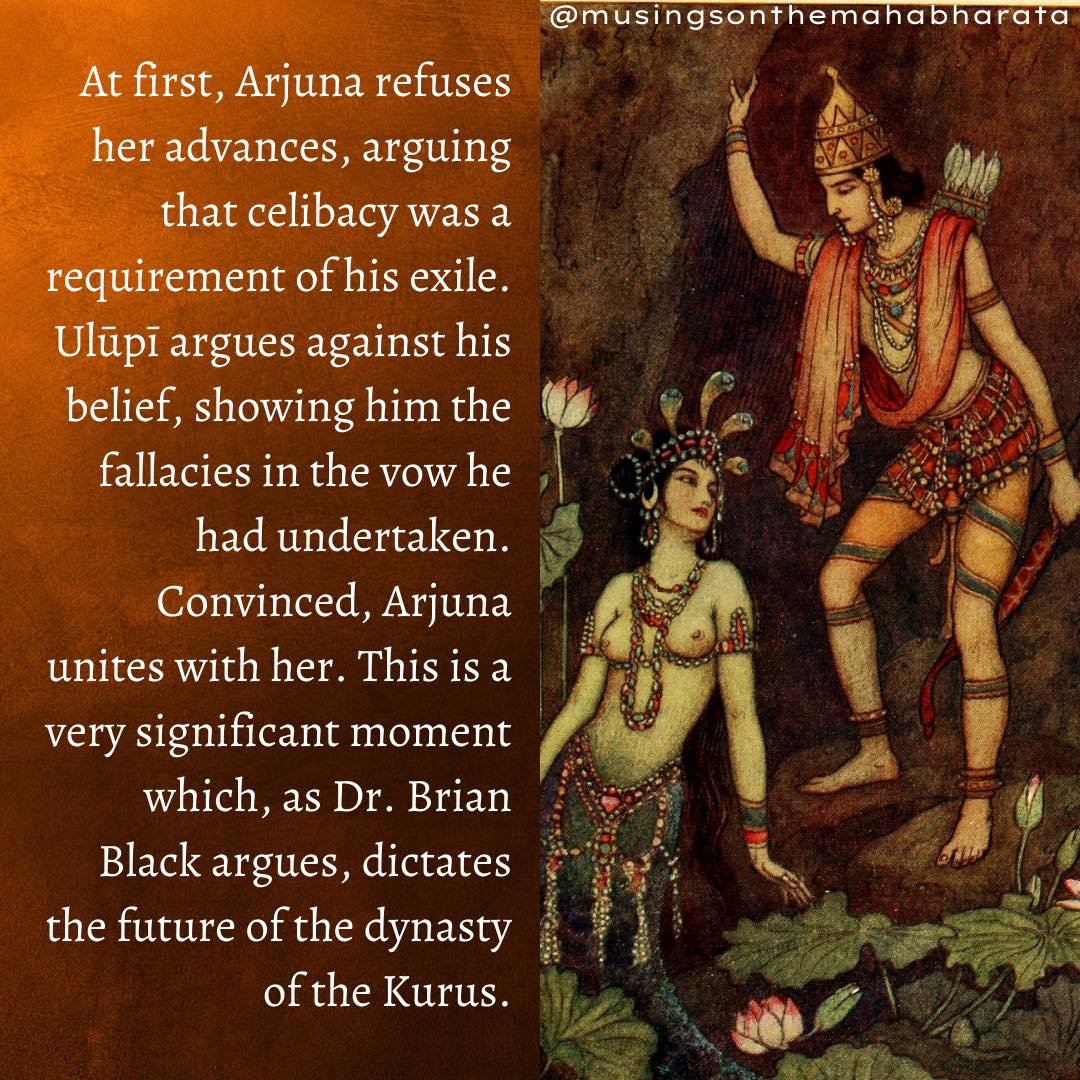
Draupadī’s Disrobing: Menstruation as Purification and the Price of Blood

In response to the article about Draupadī’s disrobing that I shared yesterday, Jim beautifully questioned whether the act of violence spurred from limited views around nudity and if it would have been avoided if nudity was perceived differently in that society (if it was common, seen as sacred or normal). This was a very rich ground of contemplation for me, and the reflections I have had are the following:

First, I would like to establish that Draupadī was not wearing a sari when her attempted disrobing took place. She was wearing a single cloth which covered her body through which she was menstruating, which was the custom at the time. It can be deduced through various references toward her appearance found throughout the Mbh that, outside of the timeframe of her menses period, she did not customarily wear an upper garment, so her breasts were uncovered. At the time of her attempted disrobing, she was wearing more clothes that she usually was. The men had already seen part of her body which they wanted to disrobe. There are scholars who argue that she was not wearing a single cloth at the time of her disrobing and she was instead wearing both an upper garment and a lower garment. I would argue that this is irrelevant, as the point still remains that her breasts were covered, and they usually were not.

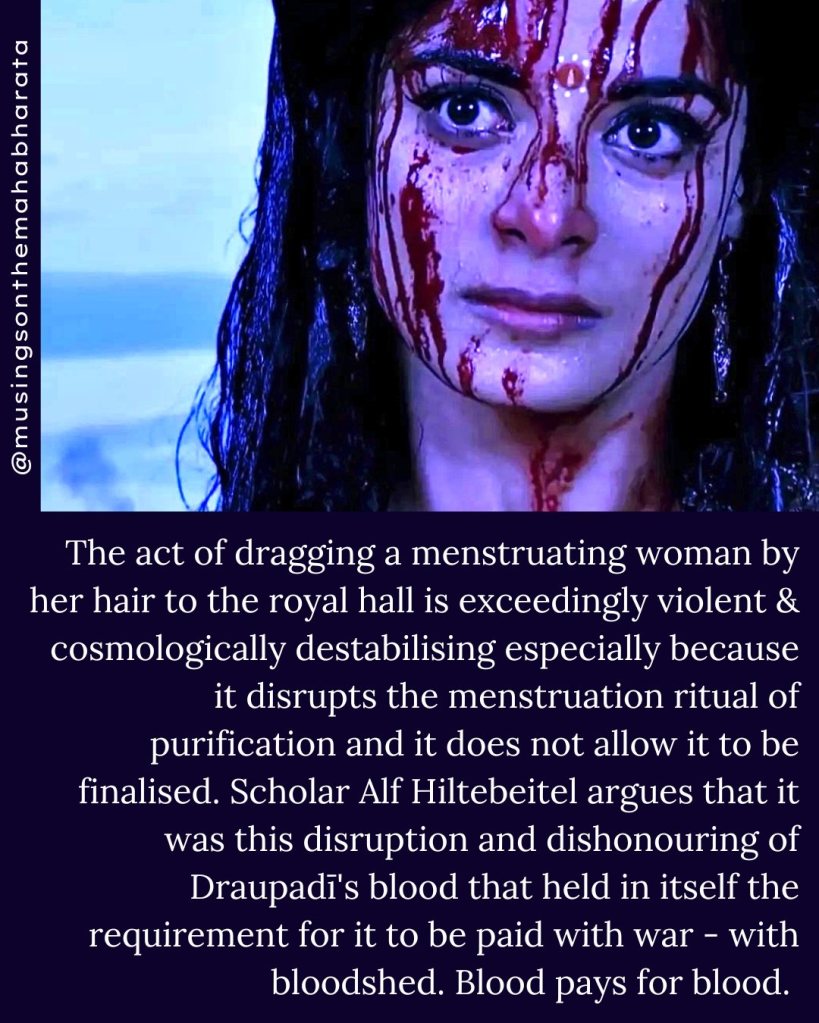
Second, I would maintain that, the disrobing episode, as most acts of sexual violence, was more about power than about sex or nudity, and that the key factor here, lost in so many adaptations, was not the attempted disrobing & possible nudity, it was the fact that Draupadī was menstruating, and she was brought to the royal hall in a stained garment through which she was free-bleeding. Menses was / is considered a period of purification. The act of dragging a menstruating woman by her hair to the royal hall – who, as I priorly mentioned, was wearing more clothes than usually – is exceedingly violent & cosmologically destabilising especially because it disrupts the menstruation ritual of purification and it does not allow it to be finalised. Further, hair in itself is a symbol of sexual power for a woman. Duśāsana grabbing Draupadī’s hair is an attempt to curb her sexual power and own her sexuality.

Draupadī bleeds in the hall and leaves Hastinapura bleeding through her clothes. Scholar Alf Hiltebeitel argues that it was the dishonouring of her blood that held in itself the requirement for it to be paid with war; with bloodshed. In the cosmological cycle, blood pays for blood.

The Kauravas wanted to humiliate, own and disempower Draupadī; nudity was one of the means to get there, along with disturbing her purification rituals, not the end goal. However, one could argue that in a society in which nudity was seen as sacred the intention to humiliate wouldn’t have arisen in that openness or expansion of consciousness – but maybe it would have just taken a different form and found different means.

Photo: Pooja Sharma as Draupadī, bathed in the blood of her principal offender. The cosmological cycle is finalised. 

references on Draupadī, the symbols of menstruation as purification and hair as female sexual power: https://press.uchicago.edu/…/book/chicago/C/bo3626877.html

on the banks of Gaṅgā | Kṛṣṇa Janmāṣṭamī poem

on the banks of Gaṅgā

you held me all night, my Lord
unseen to the eye,
your grace, a lover’s touch, wrapped my skin
unheard to the ears,
your name, my japa, vibrated through my braincells

Monsoon One, do you long for me as fully as i long for you?
do you call on me as ardently as i call on you?
you do, don’t you, my Lord?
i am not alone in this quest

for every step i take towards you,
you take two towards me
for every tear i spill in yearning for you,
you ignite vīrya in my skin tissue
for every test of yours that i fail,
you yank me freer of delusion

i see it now, Hari.
you have been pulling me
by my hair and hands to you.
it was all you. it was always all you.

if i run to you as fast as my legs can take me,
will you meet me halfway?

you will, won’t you, my Lord?

🦚 Happy Kṛṣṇa Janmāṣṭamī! 🙏 poem from my upcoming collection “the Monsoon One and the pilgrim”. 💛

IS THE MAHĀBHĀRATA MISOGYNISTIC?

various feminist scholars have accused the Mbh of misogyny and of not expressing the female experience in depth, claims which i would heavily disagree with. i will unpack my arguments in further videos, but the angle that i want to present today is related to my previous video, in which i talked about how all perspectives are contained within the Mbh, and it itself states so. i would like to offer the perspective of the Mbh being a dialogue, which i learned while studying with Dr. Brian Black at Lancaster University during my postgraduate degree.

🌸 what kind of dialogue? between its characters, between different ways of life, different perspectives, between us, the audience, and the epic itself; it does not have an inherent opinion on the characters presented there: everything we learn is from someone’s perspective, either the narrator of a particular story, or the way characters relate to each other. so, are there misogynistic perspectives in the Mbh presented by certain characters? yes; as, similarly, there are misogynistic takes in the world today. the Mbh is more like a neutral observer, i would say; it does not uphold certain views, it merely documents them and invites you to contemplate them, absorb or challenge them.

because dialogue relies on context, it is very important to understand the context of an event in question to understand its nuances.

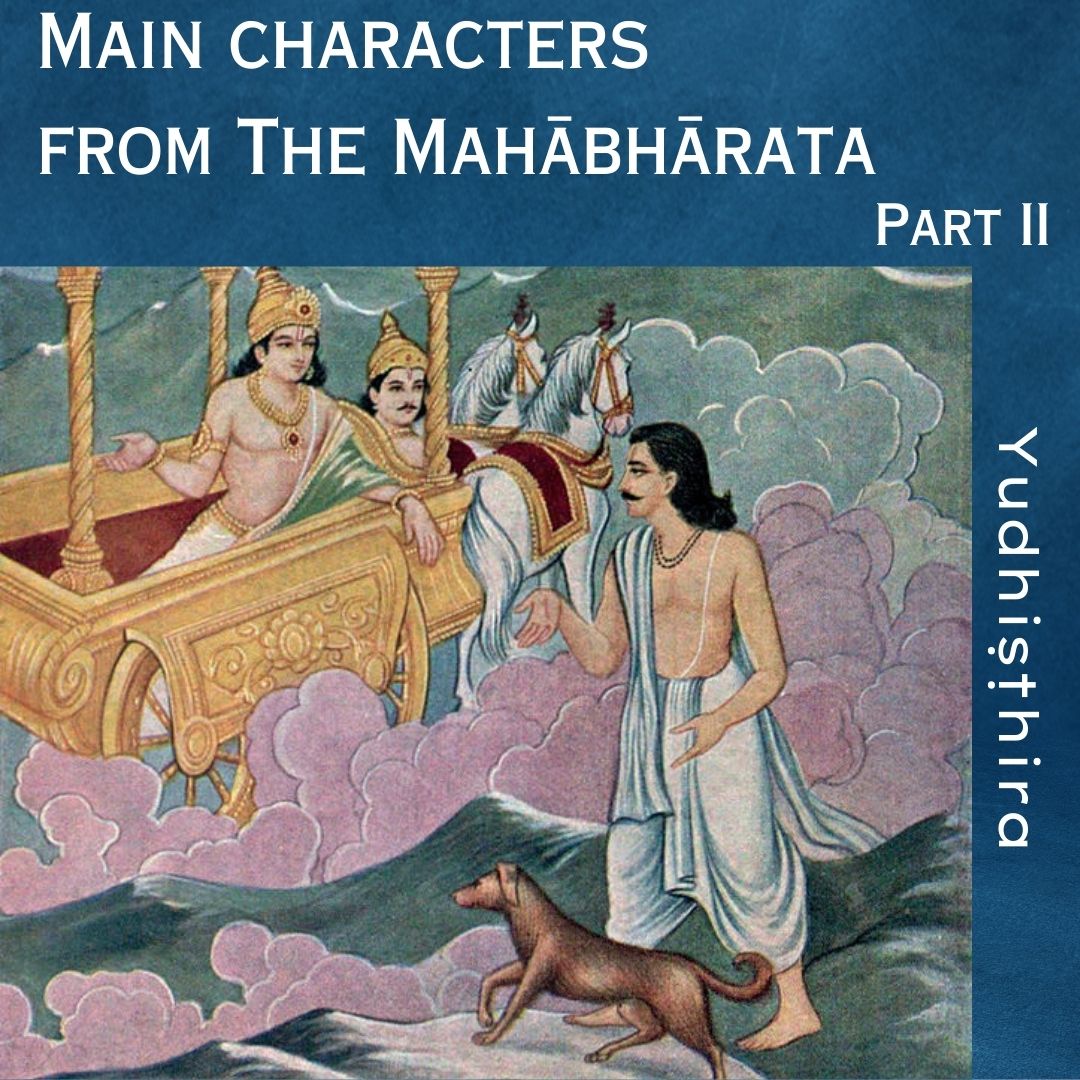
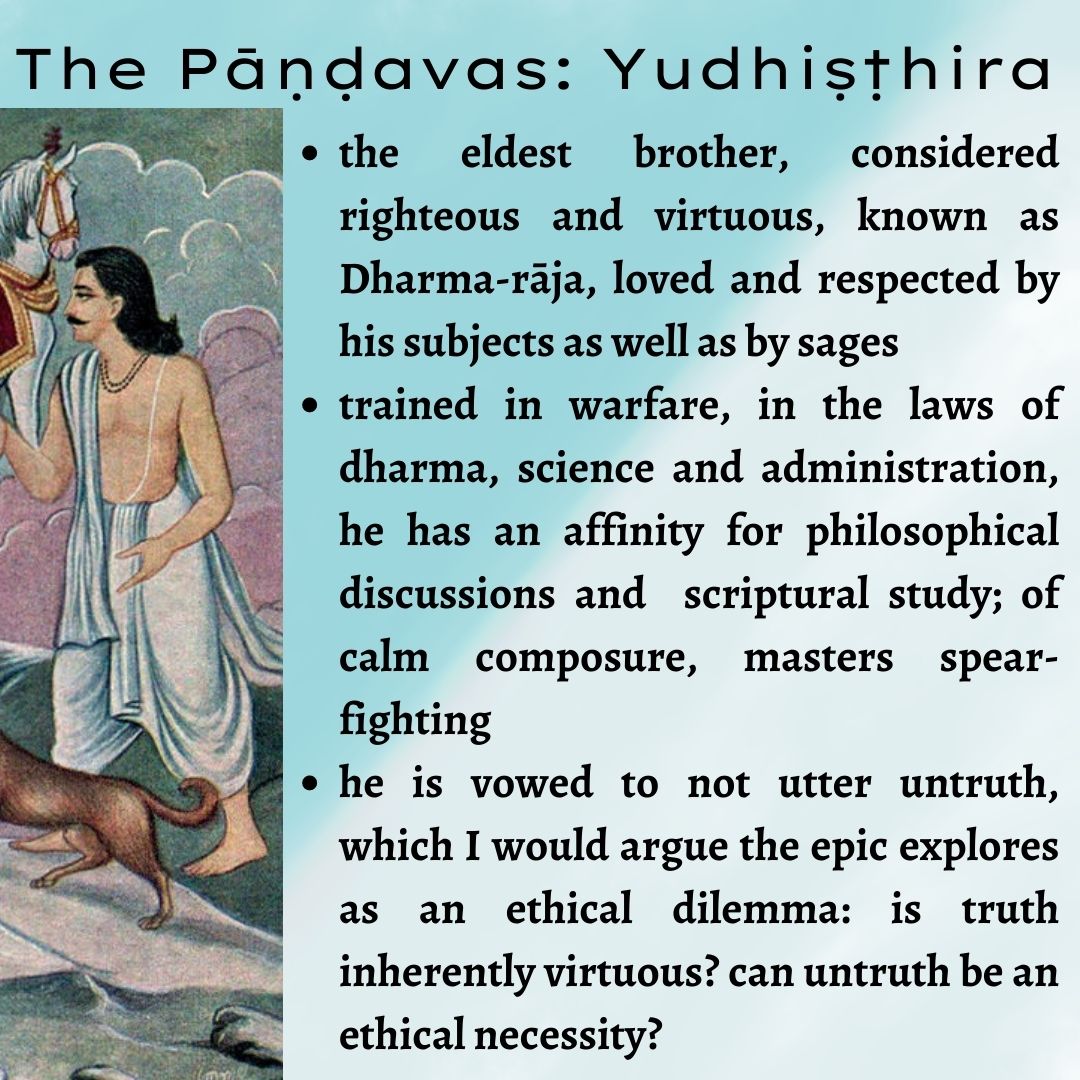
to demonstrate this, i will use an episode from the Mbh in which Yudhiṣṭhira expresses a misogynistic comment. this happens in the 13th parva; in a conversation with Bhīṣma, Yudhiṣṭhira asks him in an exasperated manner, why are women so deceitful and hard to please? (13.39) context: the war ends, and Draupadī’s sons are unlawfully slaughtered during a night raid. Yudhiṣṭhira faints when he hears the news of his dead son and nephews, then asks Nakula to bring Draupadī to the camp, lamenting that yet another sorrow would fall upon his beloved. Nakula brings a grieving Draupadī, who lashes out at Yudhiṣṭhira and aggressively congratulates him on winning the war and on becoming emperor, the undertone of this being: at what cost? (10.11) additionally, Yudhiṣṭhira is hit by a revelation from Kuntī, his mother, which greatly disturbs him; later on, an exasperated Yudhiṣṭhira asks this question to Bhīṣma. 

now, is Yudhiṣṭhira misogynistic? i would say no; in fact, he later praises Draupadī’s merits and speaks highly of other women. is this contradictory? i would also say no; i think this episode showcases a very humane moment between two characters found in a moment of crisis, in which their children were murdered, and they express their pain by lashing out irrationally. in my view, it showcases how messy and multifaceted we are as humans, which, for me, is one of the great beauties of the Mbh. 💗

pt. 2: on authorship

an argument several scholars have put forward is that the Mbh tells stories of men, and it has been written by men, for men. i would maintain that the first part of this claim can easily be deconstructed through the stories of incredibly empowered and empowering female characters such as Draupadī or Sulabhā.


although authorship of the Mbh has been indeed given to sage Vyāsa, the fluid nature of the epic, with many interpolations and changes made to its structure and with contributions which are anonymous in nature, has led scholars to claim that these changes were created by men, and, in this, the Mbh cannot properly encapsulate or express the female experience because women did not write it.

i will present a simple counterargument, emergent from discussions with Dr. Brian Black and my colleagues during a seminar at Lancaster University; more accurately, a question: how can we know this with certainty? how can we know that women did not contribute to the changes and interpolations that emerged in this epic?


i personally find it quite reductionistic and simplistic to automatically assume that women did not write these stories, or contribute to, for example, the creation of Draupadī’s narrative arc; i think this is exactly an assumption that could be misogynistic in itself, one stemming from a projection of women’s silence, namely to assume that such a great epic, which has shaped and moulded the culture in south asia, has not had any female contribution.

i would ask, why is this the automatic assumption that we make? 😊

listen to me speak more on these two subjects on my TikTok or on my IG account dedicated to my research: @musingsonthemahabharata.

Musings on the Mahābhārata: Part II

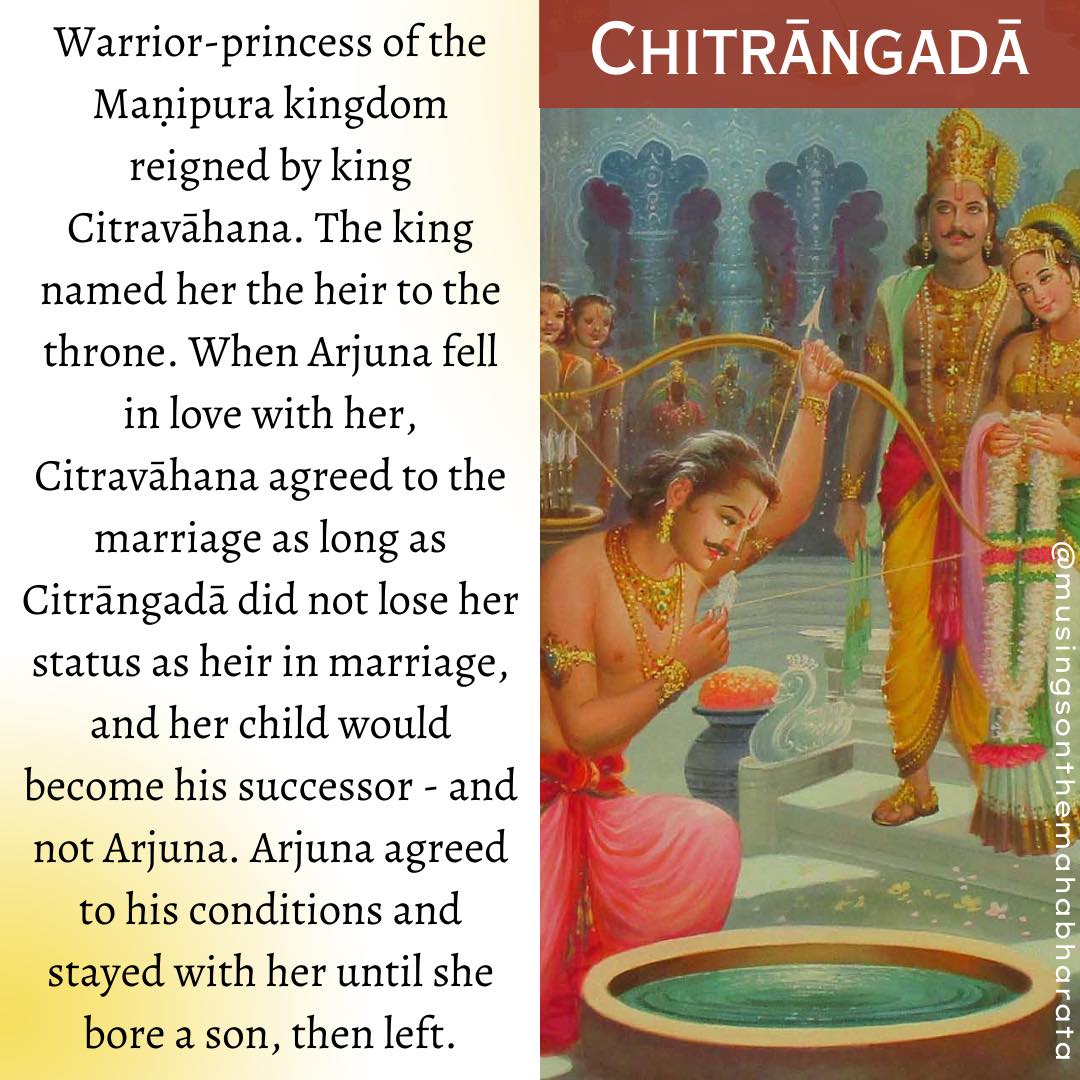
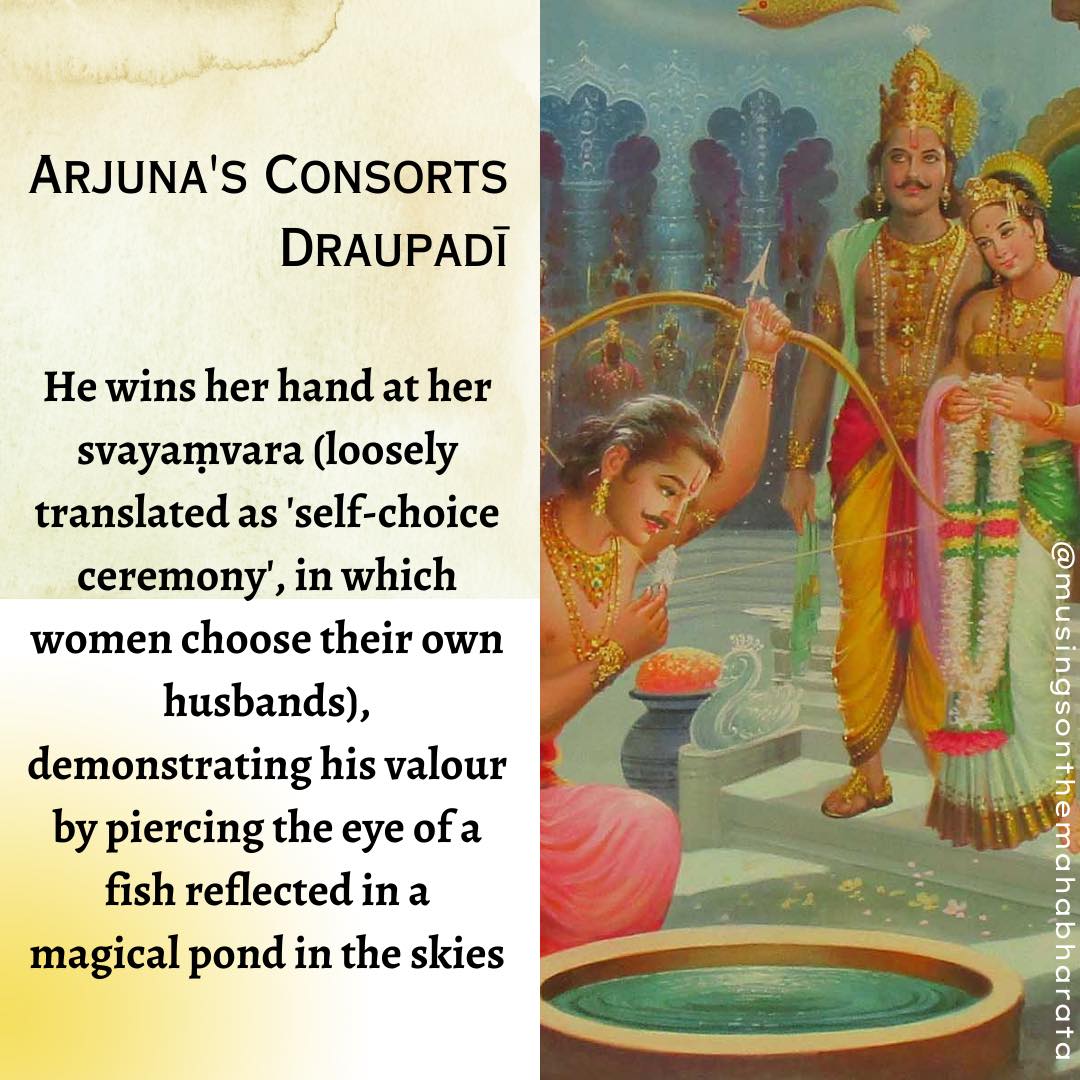
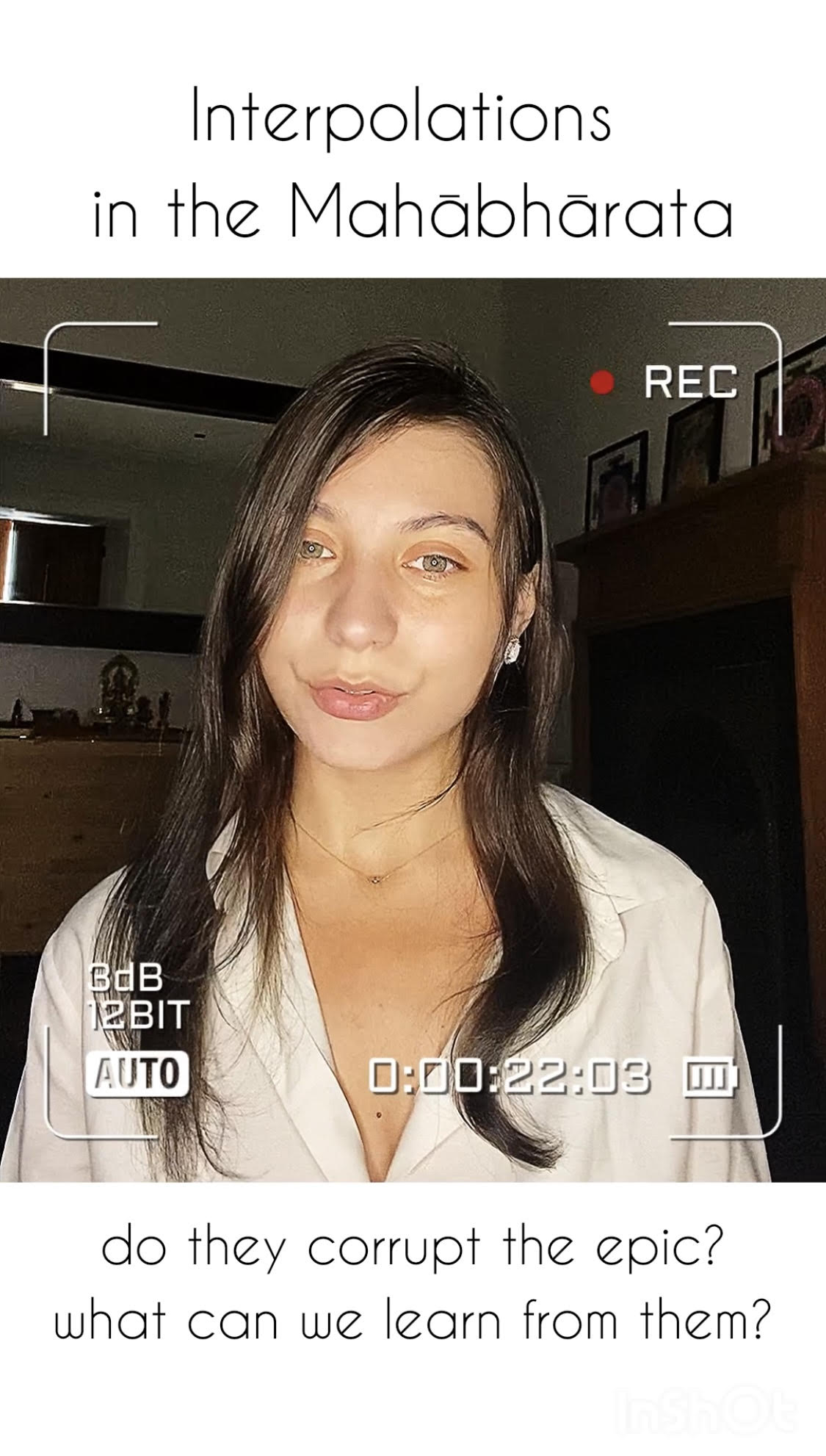
so, did Draupadī laugh at Duryodhana in the Palace of Illusions and did she insult Karṇa at her svayaṃvara? no. neither of these events appear in the critical edition of the Mahābhārata, and they are considered interpolations coming from uncertain sources.

how do we relate to these, however – considering that they are now completely imbued in the South Asian collective consciousness?

devoid of frustration! we relate to them in a way that is devoid of frustration. 😁 this is my first answer because i used to be very frustrated with interpolations, especially with those that, in my view, vilified Draupadī in any way. inquiring into my intense reactivity triggered by these led me on a rich introspective process, in which, first, i questioned the depths of my identification as a woman to Draupadī’s character (will write more on this in the future!). second, i began questioning how important it is for the Mahābhārata to remain intact in popular culture and in retellings, and if these interpolations corrupt the epic. one of the conclusions that i have reached, which i will expand on in my PhD thesis, is that these interpolations and retellings can teach us about how society has progressed through time, and can teach us about what moves us as humans, and about the ways we continuously try to make meaning and to find reflections of ourselves in the external world. for instance, interpolations that might vilify Draupadī’s character, in my view, can pinpoint to blind spots in society which can uncover latent misogyny, whereas interpolations which glorify Karṇa can pinpoint to people’s identification with his particular character, which to many represents a symbol of class struggle. in this, i believe there is much to uncover; as scholars, and i have been guilty of this, we usually tend to dismiss interpolations, and i would maintain that we lose a lot by doing so. because everything is valid, and i would argue that every single retelling can teach us more about the ways in which this epic is actually lived, and comes alive for people. 🖤

did Draupadī’s disrobing ‘really’ happen?

yes, as in, it appears in the critical edition, and it is not considered an interpolation. there have been scholars who have argued for Draupadī’s disrobing to be recognised as an interpolation (one scholar in particular) but their claims have been rebuked.

however, i do not want to talk about the validity or invalidity of these arguments, but, as a follow-up to my previous video, i want to briefly discuss what i find most fascinating about these debates on interpolations, which is that i think they mirror back to us our own possible blind spots and our biases as researchers. this is a great generalisation, but i have noticed that people who are more drawn to argue for Draupadī’s disrobing being recognised as an interpolation might be more dismissive of the female experience as a whole in academia or in various strands of literature, whereas, for those of us belonging on the other side of the spectrum, our blind spots might be being too entrenched in validating the female experience or in being overfocused on it, and i count myself in this category. i believe there is worth to blind spots, though – i think they can be important or can work to our advantage in relative terms, in the same way overattachment to our own research can – in the sense that, both can provide fuel for our work as well as solidify belief in it – so, nothing is good or bad, no binary thinking here! 😁 but, i do think that this can be a very fruitful area for contemplation for each of us, in which we could question our overattachment to a particular argumentative thread. what can be mirrored back to us through it? for instance, i find that a lot of my attachment to certain narrative threads can mirror back to me my attachment to my female identity; which, again, if channelled properly, can be great fuel, but i do find it important for me to hold it in my awareness and deconstruct it internally if not externally through the means of, for example, an academic paper.

how everything can be great fuel for inner work – even academic research! 🤍

my hands are still warm | songs of youth by téa nicolae

my hands are still warm

from when you held them between yours.

i was cold,

and ached to be

smart and pretty.

i wondered if you could see right through me,

and veiled my cheeks in my hair.

i see right through me.

written at 18 years old. 🖤 when i read the last line, the chorus of the song ‘the archer’ rings in my head, most specifically the ache in “can you see right through me? they see right through me. i see right through me.” what i would tell my 18-year-old self now is, you can’t see through you yet. what you think you see is an antagonised & subdued version of yourself. few people can see through others, and those who can, have met themselves so deeply that they will meet you in corners you don’t know you have yet. 🖤
you can read the poems i wrote in my teenage years in my collection songs of youth 🖤 

{amazon u.k.: https://amzn.eu/d/0duef5g}

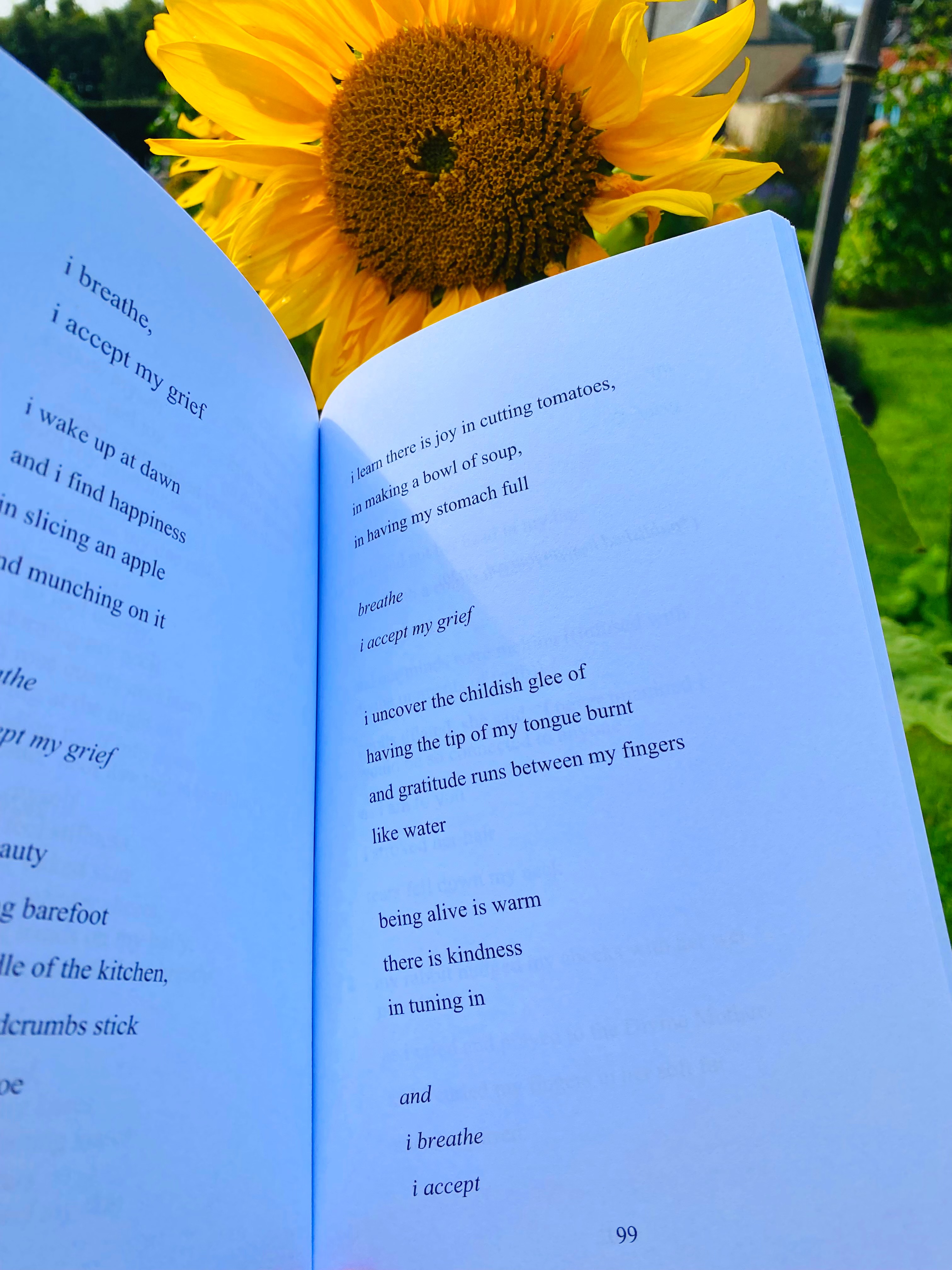
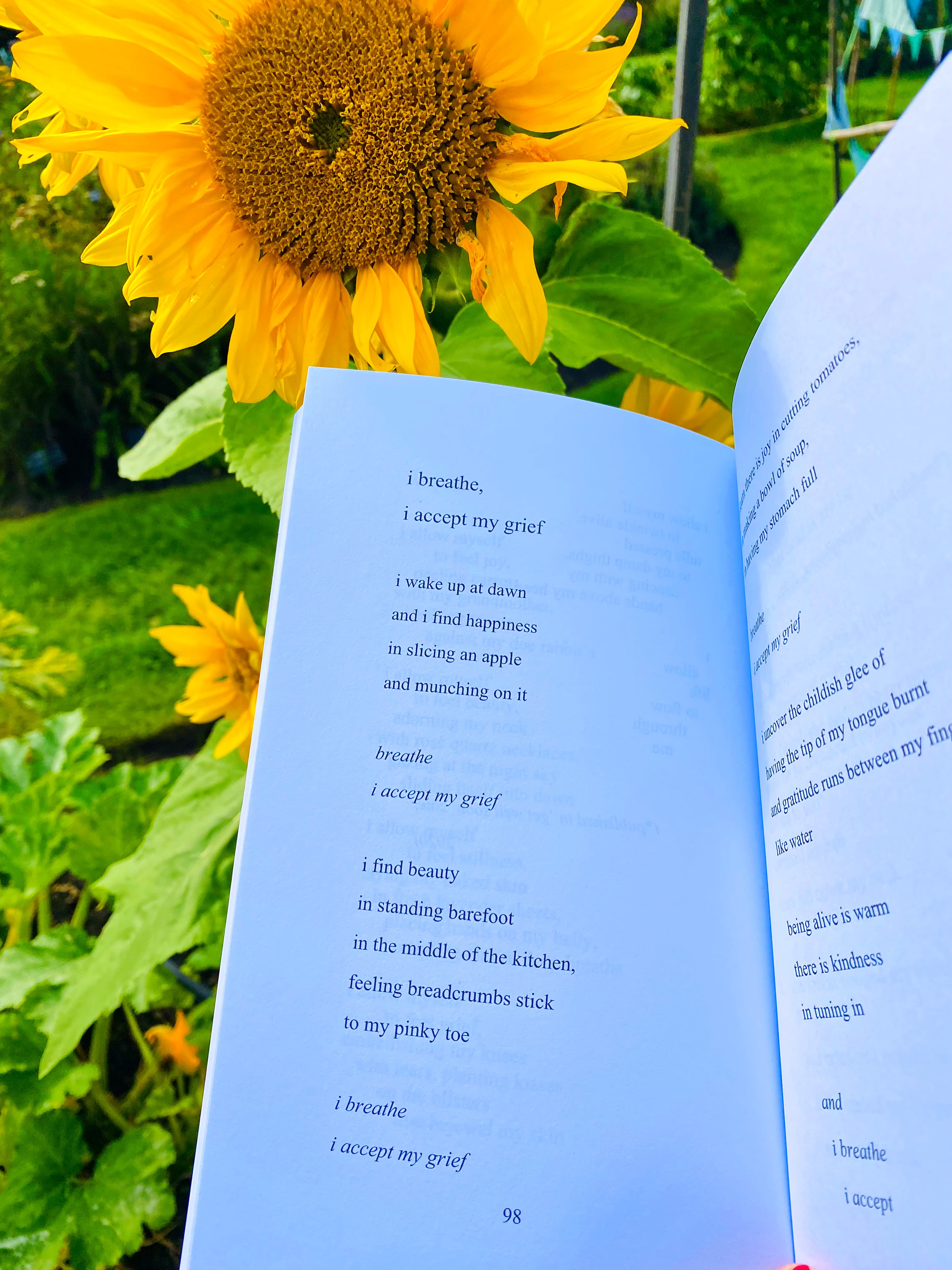
i breathe, i accept my grief by téa nicolae | songs of youth

i wake up at dawn
and i find happiness
in slicing an apple
and munching on it


𝘣𝘳𝘦𝘢𝘵𝘩𝘦
𝘪 𝘢𝘤𝘤𝘦𝘱𝘵 𝘮𝘺 𝘨𝘳𝘪𝘦𝘧


i find beauty
in standing barefoot in the middle of the kitchen,
feeling breadcrumbs stick
to my pinky toe
𝘪 𝘣𝘳𝘦𝘢𝘵𝘩𝘦
𝘪 𝘢𝘤𝘤𝘦𝘱𝘵 𝘮𝘺 𝘨𝘳𝘪𝘦𝘧
i learn there is joy in cutting tomatoes,
in making a bowl of soup,
in having my stomach full


𝘣𝘳𝘦𝘢𝘵𝘩𝘦
𝘪 𝘢𝘤𝘤𝘦𝘱𝘵 𝘮𝘺 𝘨𝘳𝘪𝘦𝘧


i uncover the childish glee of
having the tip of my tongue burnt
and gratitude runs between my fingers like water
being alive is warm
there is kindness
in tuning in
and


𝘪 𝘣𝘳𝘦𝘢𝘵𝘩𝘦
𝘪 𝘢𝘤𝘤𝘦𝘱𝘵
𝘮𝘺 𝘨𝘳𝘪𝘦𝘧. ☼


from “at last, light: of joy”, the third section of my “songs of youth”. 🌻
{amazon u.k.: https://amzn.eu/d/0duef5g}

originally published in scan journal.

on dark academia and the ivory tower

the darkest side of academia that the dark academia genre exhibits to me is the ivory tower. the superiority complex. the snobbery. deluding yourself that you are superior to other human beings because of your accumulated information, information used as justification to behave with contempt.

i’ve recently read the brilliant The Secret History by Donna Tartt, a staple book of the dark academia genre, and what marked me was the contempt with which the exceptionally intelligent group of main characters treated everything: from the people around them to technological advancements and innovations in any field which was not theirs (namely, the classics).

i’ve been contemplating that, personally, i am not interested in knowledge that cuts me off from the world. i am interested in knowledge that enhances every facet of my experience of the world. i am interested in knowledge that deepens my connection to myself and to the people i encounter. the moment knowledge instils a sense of superiority, elitism, and exclusivity, to me that is not knowledge. that is a trap of the illusion of knowledge.

the trap will come, and i’ve seen it in me plenty: at our core, we are meaning-making machines and our identity is built on separation, comparison and rejection. the mind will feed into the making of identity any information it gathers. but ultimately we are not slaves to it. when the allure of superiority peeks its head, it can be deconstructed – not from a place of fear or shame, but from a place of understanding and gentleness. that is knowledge to me. what excludes that, to me, is accumulation of information.

i love reading dark academia books because they mirror back to me my ingrained patterns (such as fascination with exclusivity; exclusive teachings, teachers such as Julian Morrow – writing an article on him at the moment!) & the many traps paving the / my way.