thrilled to have finally gotten my undergraduate dissertation printed & bound – a tangible copy to celebrate its one year anniversary! 
 taking a moment to gush: my final year as an undergrad was so very precious to me, as it represented the first big leap i took with my writing. dissertation-wise, i wanted to focus on what Richard Leonard calls “the mystical gaze” of cinema: cinema’s arguably innate fascination with the esoteric that enables the viewer to encounter the transcendent. although my supervisor advised me that it could be a tricky topic, i felt curiously pulled to it and decided to trust my gut – and so, my dissertation addressed the archaic imagery emerging in commercial cinema as seen through a Jungian gaze & argued that cinematic archetypes unveil layers of the psyche.
while i immersed myself in mystical Jungian realms, esotericism concomitantly trickled into my poetry modules. i stepped out of my comfort zone & compiled a collection of occult poetry for my final year portfolio: the poems centred on constructing a numinous female gaze that coloured the experience of transcendental states.
it was magical to delve into the otherworldly and to construct my very own lyrical cosmos, which resulted in deep awe of our internal psychological processes. i grew, and, most importantly, i had fun! it turned out to be my most mature & appreciated work at that time, while i myself realised that what had been missing in my approach was passion! i was playing safe with my writing, unwilling to pursue what truly interested me out of fear. the fear made my writing & myself stale, dry of wonder or juiciness – which are two things i’ve become committed to seeking in all that i do. thank you, sleepless dissertation nights, for this! here’s to piercing through the fear & to taking big scary beautiful leaps!

God(dess) knows we need them!


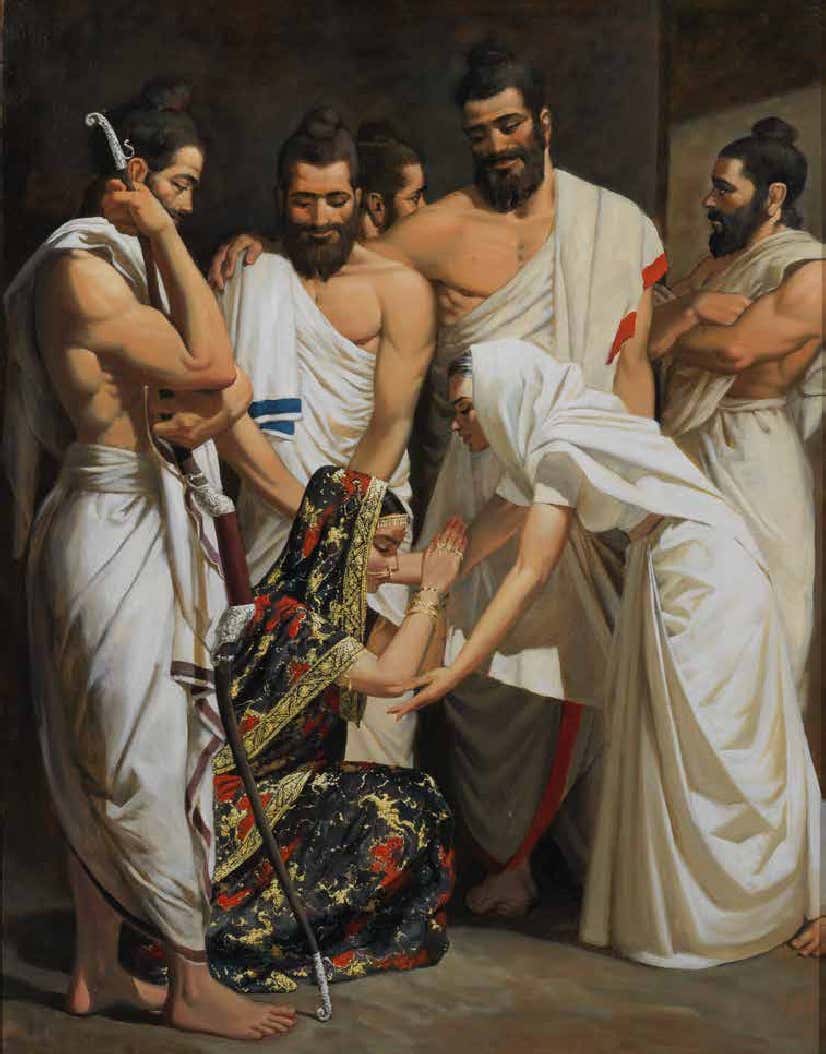
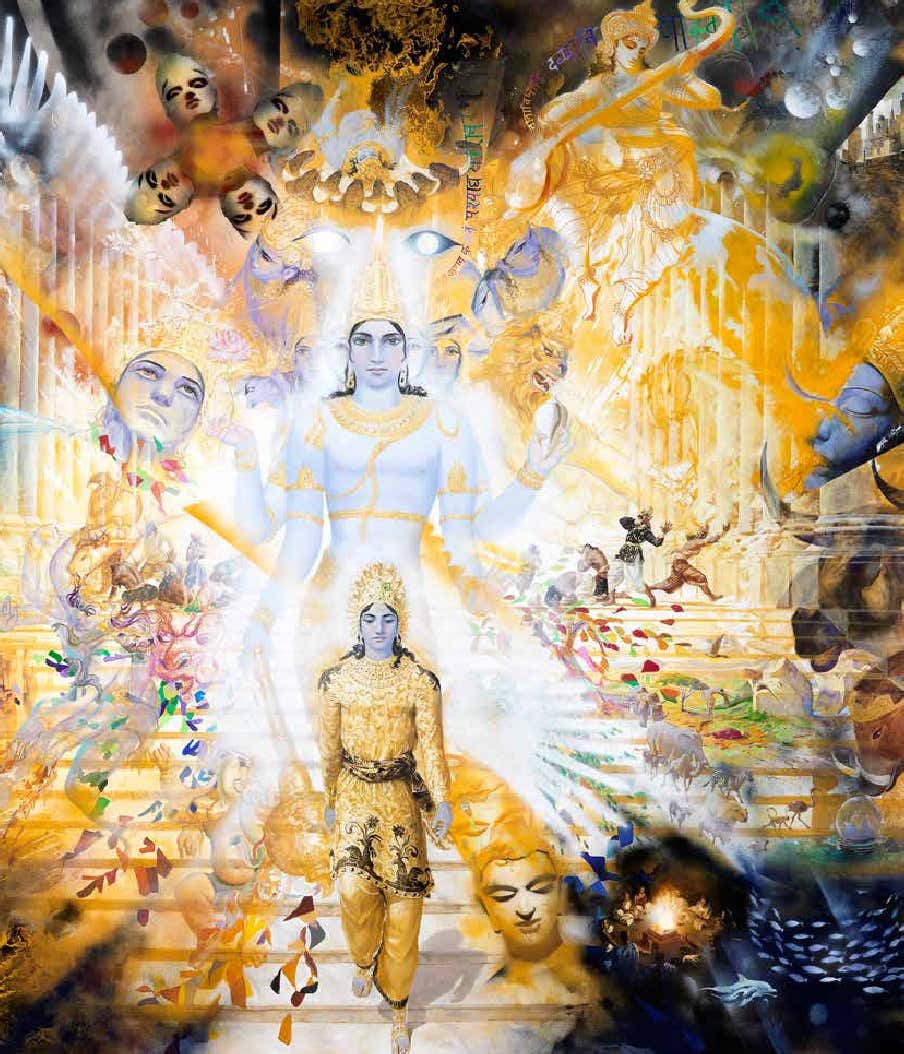
 pictured: my favourite sequence of the Kurukṣetra War & one of my favourite paintings – beloved Kṛṣṇa attacking Bhīṣma, while Arjuna pleads. the epic’s verses are hauntingly beautiful:
 Filled with wrath, the great lord of Yoga jumped from the chariot. The mighty Kṛṣṇa of immeasurable splendour, the Lord of the Universe, roared like a lion. With eyes red as copper from rage and with his bare arms alone as weapons, he rushed towards Bhīṣma, desirous of slaying him. Now, with a whip in hand, Kṛṣṇa splits the universe itself with his tread. Robed in yellow silk, and himself dark as the lapis lazuli, Janārdana looked as beautiful as a mass of clouds charged with lightning. With a loud roar, the bull of Madhu’s race impetuously darted towards Bhīṣma. Beholding him of eyes like lotus petals, Bhīṣma addressed Govinda: “Come, come, O thou of eyes of lotus. I am yours.”
 !
! additionally, i’m excited to be completing my first independent study, an exploration of issues of purity & impurity in non-dual philosophy, and to be undertaking a small research project into consumer spirituality and the relentless commodification that comes with it.