The Question of Suffering in the Mahābhārata: “The Battle You Must Now Wage is with Your Mind”

I have been asked on Tumblr how the Mahābhārata answers to the question of suffering (is suffering important? why? how?). First, this is an amazing question which hadn’t occurred to me to ask myself in relation to the Mbh, so I’m grateful for this prompt.

Second, I wouldn’t say that the Mahābhārata distinguishes suffering as important, but it does establish that it exists. All its characters undergo extreme suffering: from sexual assault to losing and grieving children, beloveds, friends, subjects. No character is spared from grief, and, in this, suffering is established as an inevitable reality of the human experience.

However, as scholar Emily Hudson argues in her book “Disorienting Dharma: Ethics and the Aesthetics of Suffering in the Mahābhārata”, there is another dimension the epic offers to the question of suffering, which is that of confronting it. Confronting suffering “involves cultivating a clear sense of the factors that contribute to human misery” (p.33) which the epic, I join Hudson in maintaining, equates with “the quality of one’s mind (manas)” or “intelligence (buddhi)”.

In a significant scene that occurs in the aftermath of the war, Yudhiṣṭhira, crippled by guilt and loss, refuses to rule, and wishes to renounce the world and his responsibilities in an effort to both punish himself and escape his pain. Kṛṣṇa, Draupadī and the other four Pāṇḍavas each give individual speeches to Yudhiṣṭhira in which they attempt to convince him that he cannot do so, that he has a duty to uphold, and, most fascinatingly, that the intensity of his suffering is derived from a misunderstanding of reality.

Most beautifully, Yudhiṣṭhira is told by Kṛṣṇa and Bhīma that “the battle he now must wage is the one with his mind (manas)” and he is to accept the impermanence of existence (Hudson, p.33; Mbh; 12.16.21-25; 14.12.1-14).

My understanding of this exchange is that, suffering will come. However, the extent to which we suffer is dictated by the clarity of our perception. One will naturally grieve death and loss and experience sorrow; however, the narratives we create around these emotions or experiences will dictate whether we remain stuck in them, or whether we welcome them as transitory states that experience themselves through us.

Just as Yudhiṣṭhira falls to his grief, yet picks himself up and rules, so can we.

Many thanks again to the Tumblr user from London who asked this question – if anyone has any other question, please, all are welcome here! Receiving questions from different perspectives is helping me see the epic in new ways in which my mind might not take me on. 😊

Painting: The Destruction of the Yādavas. Unknown artist – do let me know if you know the artist!

throes by téa nicolae | songs of youth

you

spilled ice cream on my sundress

and swayed me to rock ballads

i

reminded you of spring

and faded in the summer breeze

we

had a common affinity

for boys with smudged eyes dressed in pretty skirts singing scratchy songs about loves lost to heroin

you

were my stained musician

i

was your absentminded poetess

we

were seeking to destroy ourselves

for throes of applause and tastes of success

you

did.

i

was one step before the chasm

when stratospheric glooms parted.

i

suddenly knew

that my quill did not have to be my ruin.

i

suddenly saw

that i could create beauty.

Contemplations on the Modern Spiritual Landscape

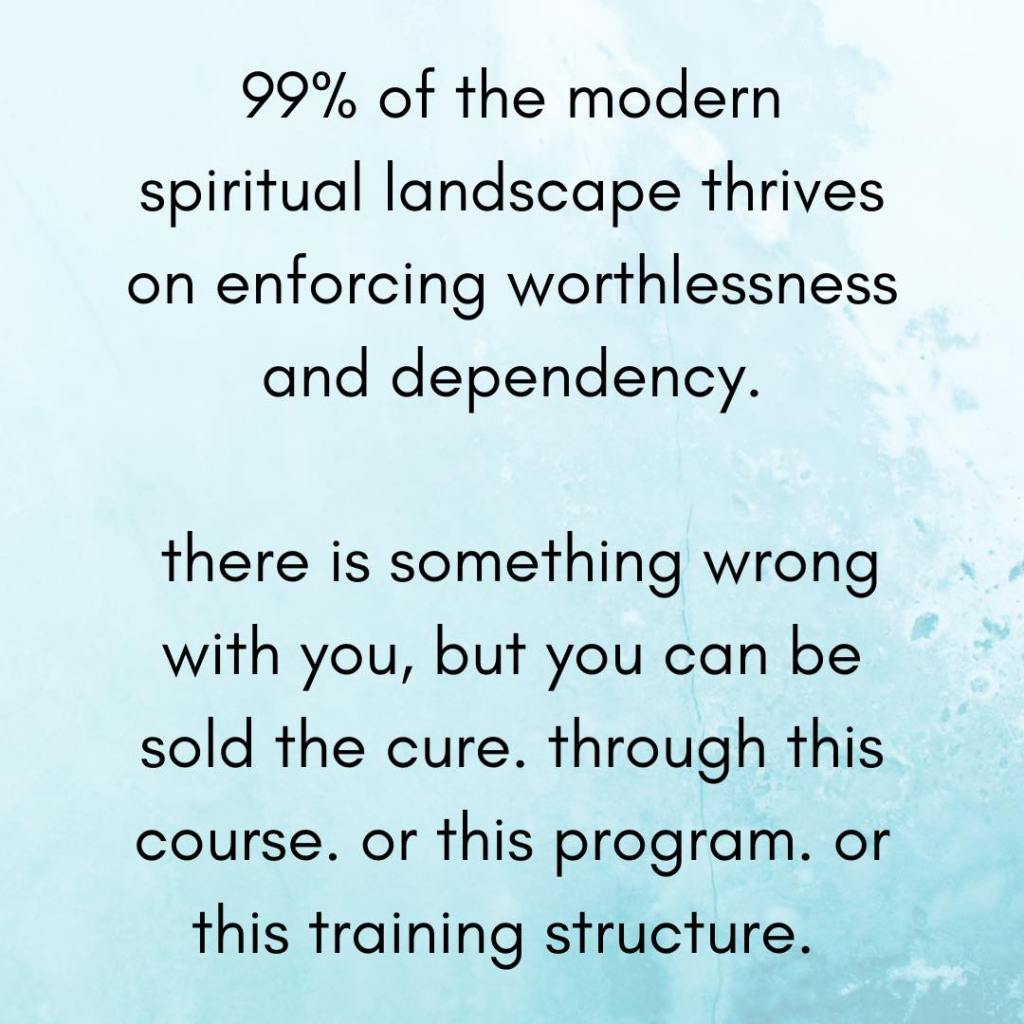
99% of the modern spiritual landscape thrives on enforcing worthlessness and dependency. there is something wrong with you, but you can be sold the cure. through this course. or this program. or this training structure.

this paradigm is packaged masterfully in esotericism and sanskrit terminology, with beacons of validatory hope offered that keep you hooked in a dopamine loop of hope: God loves you; you are God — which will mean nothing to you as long as your intrinsic experience of yourself continues to be one of absolute worthlessness.

once you are stuck in worthlessness while having access to no real tools to actually break through it, the reassuring promises of divine love or wholeness will act only as reinforcers of the one constant underlining message, which will continue to be, you are not worthy.

and because you are so excruciatingly insecure, you will believe it, and strive to become worthy. you will be cruel to yourself. you will give away your autonomy. you will beat yourself up for feeling anger or misalignment. for not being “surrendered”. for making what you fear are mistakes. you will compare yourself to others, you will become dependent on others. you will mistrust yourself. you will repress yourself.

you will think that the experience is anywhere but here, in you.

don’t fall for it.

only you can liberate yourself.

God is here and now.

Barbie Mini-Review: Sweet yet an Encapsulation of the Deficiencies of Pop-Feminism

Sweet, energetic, and entertaining, Greta Gerwig’s Barbie is a delightfully camp blockbuster that I thoroughly enjoyed. The cinematography is excellent, the colour palette is perfect, and the actors are a treat. However, I did find its feminist thesis to be lacking. Although I acknowledge that the film is in itself a comedy which does not aim to solve social justice and functions primarily as entertainment, it still does construct a social, feminist commentary, which is why I found it fitting to utilise as a stimulus for analysing the deficiencies of pop-feminism culturally, as well as within myself.

Barbie offers its female characters the space and opportunity to muse on their condition and on the pains of being a woman, such as the contradictions of having to be extraordinary (attractive, successful, loving, kind, assertive) and yet contained, the ideal being achieving or conforming to a personal excellence that concomitantly is appeasing, controllable and tameable; yet never too much — not too powerful, nor too intimidating or destabilising.
A message of: Shine, but do not shine too much.

In my personal journey, I have recently been reflecting on my self-punishing tendencies and on my self-images of having to always be kind, never angered or envious, and, while watching Barbie, I was moved listening to the monologues of the female characters, and saw more clearly how much of my own ruptures in my identity are the legacy of having been conditioned and socialised as female growing up.

“I’m just so tired of watching myself and every single other woman tie ourselves into knots so that people will like us.” America Ferrera as Gloria in Barbie.

Indeed, I have found that men are less likely to have intense hang-ups around emotions such as anger, as it is viewed as more acceptable for them to express it. However, this binary contracts all gendered expressions, as male conditioning stereotypically also rejects its own emotional range of vulnerability and openness.

The human condition is such that we all are continuously split and stretched within between who we think we should be and who we truly are. We perpetually hide, repress, contort, and harm ourselves to mould into ideals and images which we innocently construct by absorbing various messages from society, culture, history. The Barbies are given the chance to see through the mirage of constriction, the Kens are not (which, in part, saddened me), however, neither fully glimpse through into the ultimate bondage: that of the gendered self.

To successfully break through the suffering caused by female conditioning, a deconstruction of the very concept of femaleness as a rigid reality must ultimately occur — along with a deep dive into gender as a construct, both which are unfortunately glossed over in Barbie, and, on a greater scale, in pop-feminism. In my understanding, complete liberation cannot be achieved while still operating in the gender binary, which is to be dismantled within in order to open to freedom from all self-images, internal conflicts and constrictions.

Barbie both delighted me with its vibrancy, playfulness and beauty, and also reminded me that, as a woman myself, I must push through myself more for my liberation.

My arguments are based on the work of feminist philosophers such as Simone de Beauvoir (see: The Second Sex), as well as on the precepts of non-dual ‘Eastern’ philosophy.

God is not the socio-moral norms of religion

God is not the socio-moral norms of religion. the socio-moral norms of religion are historical remnants of a time in which religion ruled society and culture and were means to both regulate and ensure harmony (eg. don’t harm another precept) or control and subjugate in the instances in which abuses of power occurred.

you won’t find God by adhering to archaic socio-moral norms belonging to scriptures from centuries ago. it might seem as an evident statement, but i have recently been struck by how insidious dichotomies of morality run inside of me, despite the fact that i adhere to a non-dual view (tldr on non-duality: the belief in one absolute, genderless, formless consciousness that pervades and is all that is).

having seen how deeply remnants of morality are sown into me, i have been reflecting on: where has my obsessive streak of wanting to be a good person come from? from a subconscious understanding that it is in that morality that i will find God. what is my tendency to beat myself up rooted in whenever i do something which i perceive to be a mistake? in a fear that i would not find God in my so-called wretchedness. where does shame come from, with an emphasis on the shame that continues to shroud my connection to my sexuality? from internalising shame around sexuality as a ‘sin’, a wanton nail in the coffin that would ensure my perpetual disconnection to God.

God is beyond virtue and sin.

the other day, i told myself: damn it, use your intellect. no matter the fairytale story conjured about a higher power, how could that higher power ever punish, reject or be angered with me, or with anyone for the matter?

i was engaged in particularly unvirtuous-ly considered behaviour recently when it hit me, i feel so loved and accepted by God right now, and i am – inherently. and i don’t have to do anything else rather than be myself to be loved or accepted. note: it might seem contradictory to assign the wilfulness of love & acceptance to the non-dual understanding of consciousness, but it’s one of those contradictions that somehow just ‘is’ and i feel like can’t be explained. the love is there. 💙

The Internal Freedom of the Mahābhārata’s Fire-born Heroine

Perhaps one of the most jarring episodes of the Mahābhārata, the disrobing of Draupadī has been etched to my mind since my first introduction to the epic. The story of the Mahābhārata’s fire-born heroine goes as follows: the empress Draupadī, an incarnation of the celestial Śrī, is violently dragged to the royal court after her husbands, the Pāṇḍavas, are enslaved through deceit. Draupadī is tearful, menstruating, and the Pāṇḍavas’ offenders, the Kauravas, attempt to enslave her. However, she fiercely debates them and proclaims her freedom. Enraged by her rebuttal, the Kauravas decide to disrobe her. When they mercilessly begin to pull her clothing, Draupadī’s garment endlessly unfolds, and she remains clothed — by what is presumed to be the grace of Lord Kṛṣṇa.
My fascination with Draupadī first began as awe of the female endurance she embodies. As a woman myself, I deeply identified with her pains, and found our sufferings to mirror each other. In my reflections, my being melded with her character, whom I felt connected to through the thread of shared female experience. I found comfort in her triumph. As I continued mulling over her story, I became inexplicably moved by the imposing testament of devotion that is showcased in her tale; in most renditions of the Mahābhārata, Draupadī, while being abused, earnestly prays to her dearest friend, confidant, and God, Kṛṣṇa, who, out of boundless compassion, answers to her calls and envelops her in his grace. It is a touching picture: as the men of the court hang their heads in shame, bound in silence and inaction by their royal vows, Draupadī, deserted by all, is shielded by her devotion to Kṛṣṇa — and her devotion is enough.
However, my greatest personal and transformational shift has occurred when, with my beloved guru’s guidance, I was able to deconstruct the tale of Draupadī’s anguish in order to delve deeper into the teaching encased in it. Before doing so, there was slight anxiousness in my heart: there was self-doubt, and there were questions; Draupadī had been ‘saved’ through her devotion, but would I be? Would I be saveable or worthy?
Indeed, my mistake had been not delving deeper into the teaching encased in Draupadī’s anguish by remaining stuck at the level of storytelling. The liberating conclusion I have reached is that, in truth, whether the empress’s garment endlessly expanded or not is irrelevant. The teaching veiled in Draupadī’s disrobing is that she was untouchable because she was internally free. The horror she was subjected to did not shake her internal freedom, nor did it dismantle her devotion. Throughout it all, she was rooted in her love for Kṛṣṇa, and immersed in her independent power. As she says in a recent rendition: “You cannot make me your slave because I do not allow it. Independence lies within me; it is not a piece of clothing you can snatch.” All along, the question was not whether I would have been saved; it was whether I could unearth Draupadī’s fearlessness in myself.
The Mahābhārata’s fire-born heroine has taught me that freedom lies within me. It is not given to me by others, and it cannot be taken from me. My freedom is married to my devotion, and my heart holds the keys to both.


This article has been published in the second volume of Śabda Magazine.

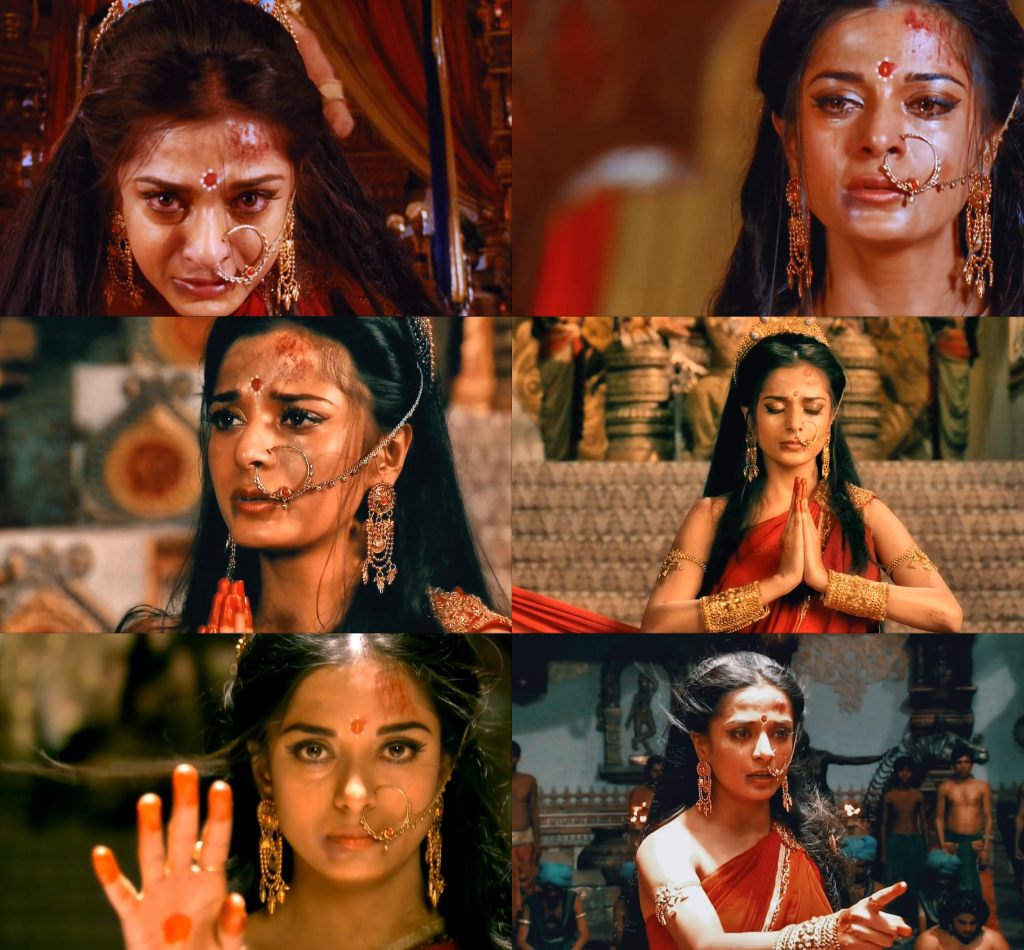
Collage I made of Pooja Sharma as Draupadī in the 2013 Mahābhārat. Although the TV series presents many distortions, her brilliant, fiery performance makes viewing it a joy for me.