on writing as an act of transcendence

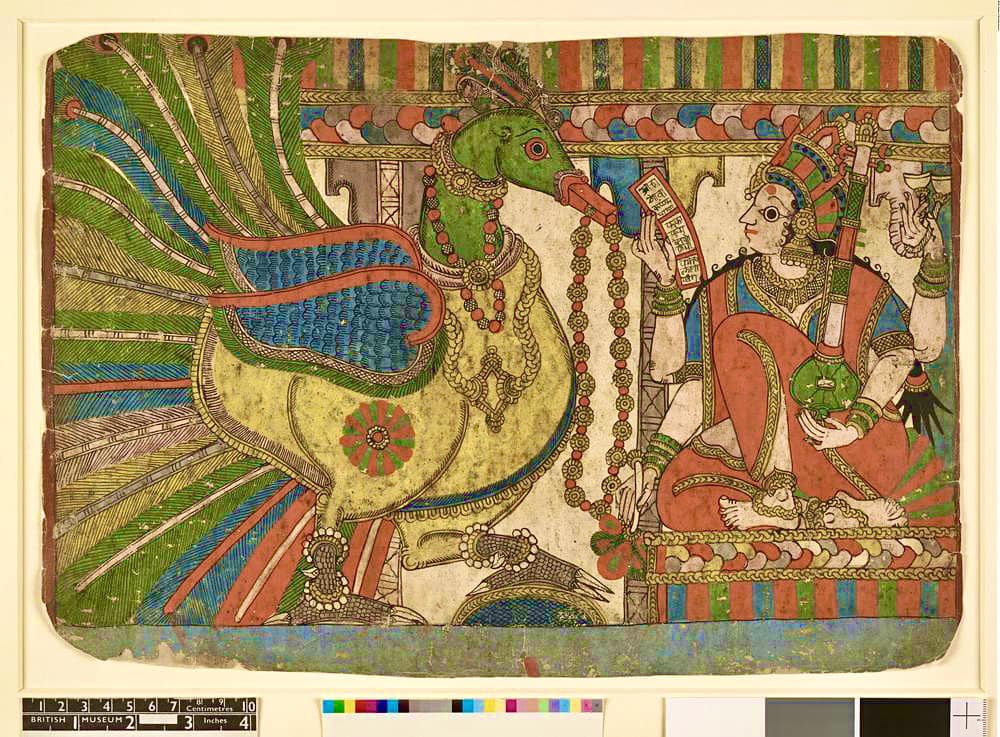
the beautiful image is a painting of Sarasvatī that belongs to a set of sixty which chronologically depict a tale told in the Mahābhārata (as well as in the Mārkaṇḍeya Purāṇa and in the Śrīmad Devībhāgavata), that of King Hariścandra. this painting is one of two beginning the set, and it depicts the invocation of Sarasvatī, the Goddess of knowledge, speech and poetry, who is invoked as the flow of (and to flow the) words and wisdom of the telling. Gaṇeśa is invoked, as well.

in a seminar i recently went to, we discussed sacred texts, and the invocation of Gods & Goddesses in their openings – the muse in the Iliad, the deities in the Sanskrit texts etc. it made me reflect on writing as an inherently transcendental act. as in, it is not you who writes (or creates etc). it is being written through you, and it is therefore futile to take ownership for it.

as a ‘writer’, i oftentimes read my work and feel as if it was written by someone else. of course, my biases seep in (in editing, especially), but if i fully connect, the experience is that of it being written through me, and not by me.

i understand the invocation of the muses and Goddesses to reflect, in part, this understanding: that the act of creation subsumes and transcends the self or ego, even if only momentarily. that in creating, we tap into and open pathways within that we usually do not access customarily, when we are so entrenched in our sense of self that the energy can only flow in one way (that of sustaining our identity and the patterns which construct it). in creating, the energy can be freed to flow in new or in more ways. this is how i understand the surrendering to the muse or to one’s art that is so lauded by poets. 🦢
Draupadī and the Dharma of Women

“Strī” translates from Sanskrit as “woman”, while “dharma” is a complex principle with manifold meanings, in this context bearing the significance of “duty”; in simple terms, it refers to an individual conduct that contributes to harmony in a greater framework, be it societal or cosmological.

Draupadī is lauded in the Critical Edition of the Mbh several times as being the epitome of strī-dharma, of the dharma of women. (2.62.20; 2.63.25-30; 2.64). Interestingly, she is most intensely praised as such after she angrily (yet elegantly!) questions the men of the royal court and demands justice, being anything but meek and demure. I would argue that this showcases that in the Mahābhārata voicing oneself and standing up for oneself are considered responsibilities belonging to the dharma of women.

To nuance this even more, Eknath Easwaran, an eminent translator of the Bhagavadgītā, highlights that, etymologically, the term “dharma” can be traced back to the root ‘dhri’, which means ‘to support, hold up, or bear’; “dharma” therefore translates as “that which supports”, and Draupadī’s conduct therefore supports both society and cosmology.

In the Sanskrit Mbh, Kṛṣṇa does not appear in the sabhā (royal hall) at the time of Draupadī’s attempted disrobing, and no direct mention of him is made during this episode. In a conversation with Dr. Brian Black, a Mbh researcher whom I had the honour to have as my MA supervisor, we talked about the implication of this, which is that Draupadī’s adherence to strī-dharma appears to be that which shields her. A question that could arise here could be whether there is a contradiction between the Critical Edition and modern renderings of the Mahābhārata, with Draupadī being shielded by her dharma as opposed to by Kṛṣṇa.

For me there is no contradiction.

Kṛṣṇa in the Bhagavadgītā establishes himself as ‘the eternal dharma’ (14.27); and so, Kṛṣṇa is all dharmas, including strī-dharma. We tend to associate Kṛṣṇa with a fully-fledged incarnation; but he is beyond that. I would maintain that, as the divine principle, he exists in Draupadī’s consciousness and in her actions as dharma (and not only!). The latter renditions, for me, in which he is physically there, only bring forth in tangible projections the internal process extending Draupadī’s consciousness.

I will write more about strī-dharma as it appears in the Mbh. ❤️‍🔥

You can find me on IG: @musingsonthemahabharata

and on Tumblr: https://www.tumblr.com/musingsonthemahabharata

Painting: Jadurani Dasi, 1986.

Glimpses in the Nature of Reality in the Mahābhārata

Something I find fascinating about the Critical Edition of the Mahābhārata is that the characters sporadically move from addressing Kṛṣṇa as an embodied mortal (as their friend, cousin, son-in-law etc) to addressing him as the Godhead; as Viṣṇu, as the Supreme Being, and as Īśvara. The succession of change between the modes of address can sometimes even happen on the same page, at a distance of a few lines. The veil is lifted, and the characters see through Kṛṣṇa’s illusion, and, through that, they become immersed in the nature of Reality; the veil promptly drops back, and God is lost.

An argument for this could be that the divine modes of address are interpolations, a theory being that Kṛṣṇa became identified with Viṣṇu only in later renditions of the Mahābhārata. While this could be true at the level of historical analysis of the epic, for me, there is a subtler teaching encased here: how all of us, without exception, glimpse into the nature of Reality as we move through life, yet we perpetually proceed to return to becoming engrossed in the superimpositions we project upon Reality; and the dance continues. From Truth to dream, from dream to Truth. It is quite endearing, really. What committed and imaginative dreamers we are! 💙

Adyashanti once talked about how one inadvertently glimpses truth; it is, after all, inescapable as it is our nature; the trick is not forgetting / losing the glimpse.

Gorgeous artwork of Kṛṣṇa: Awedict.

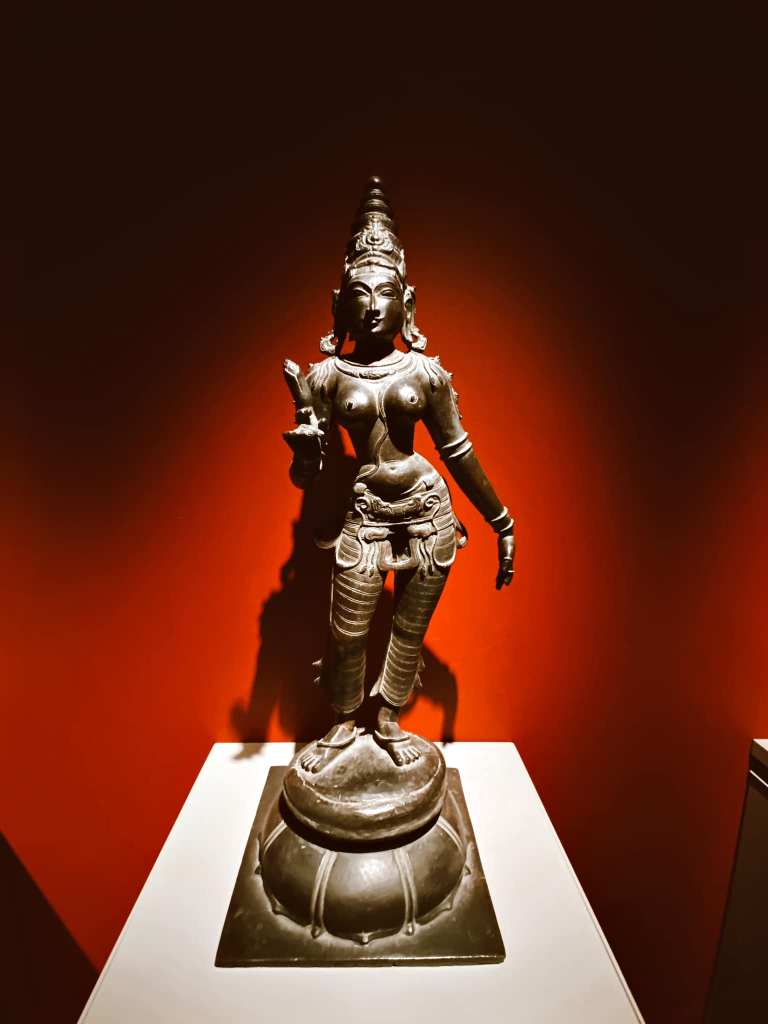
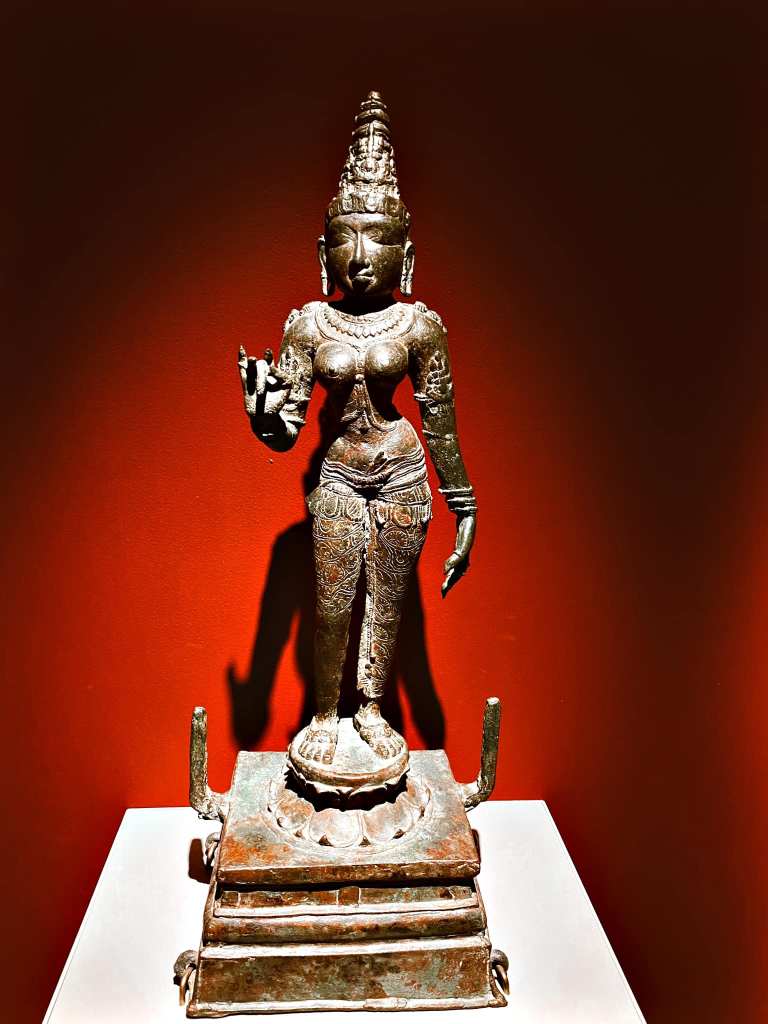
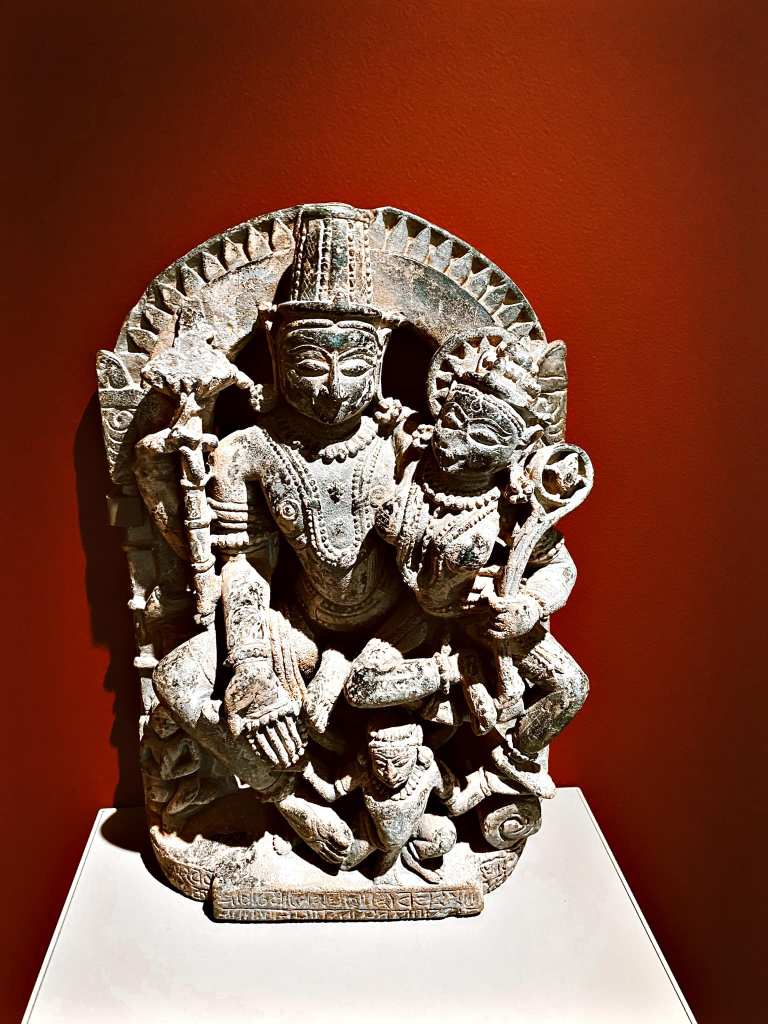
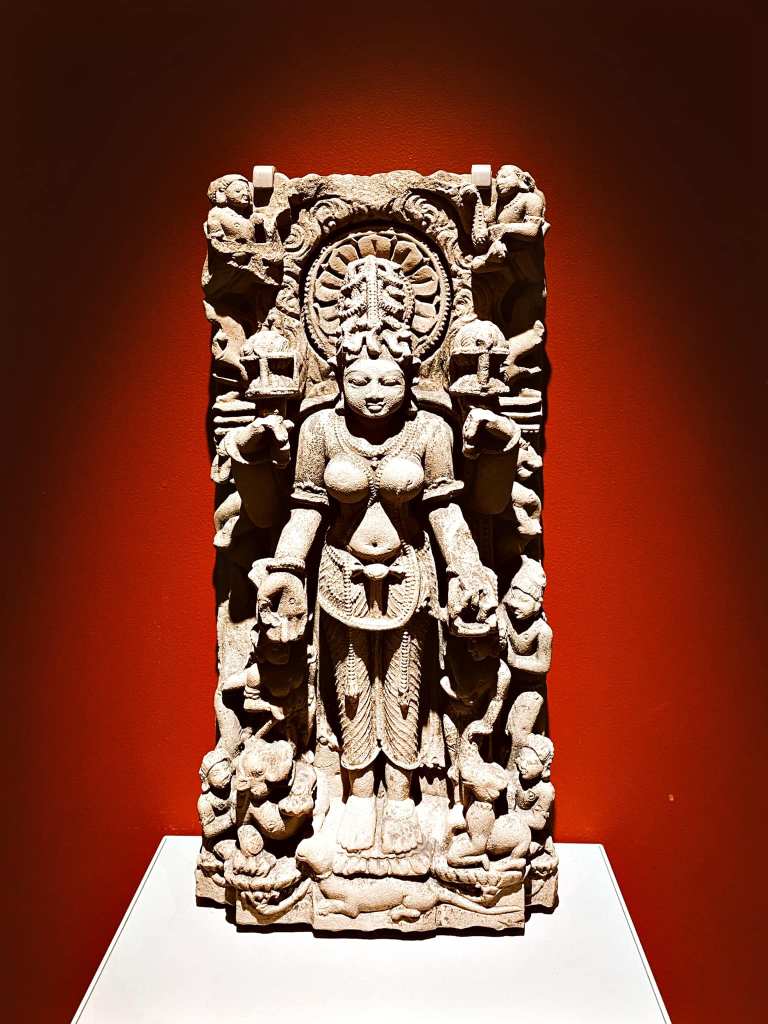
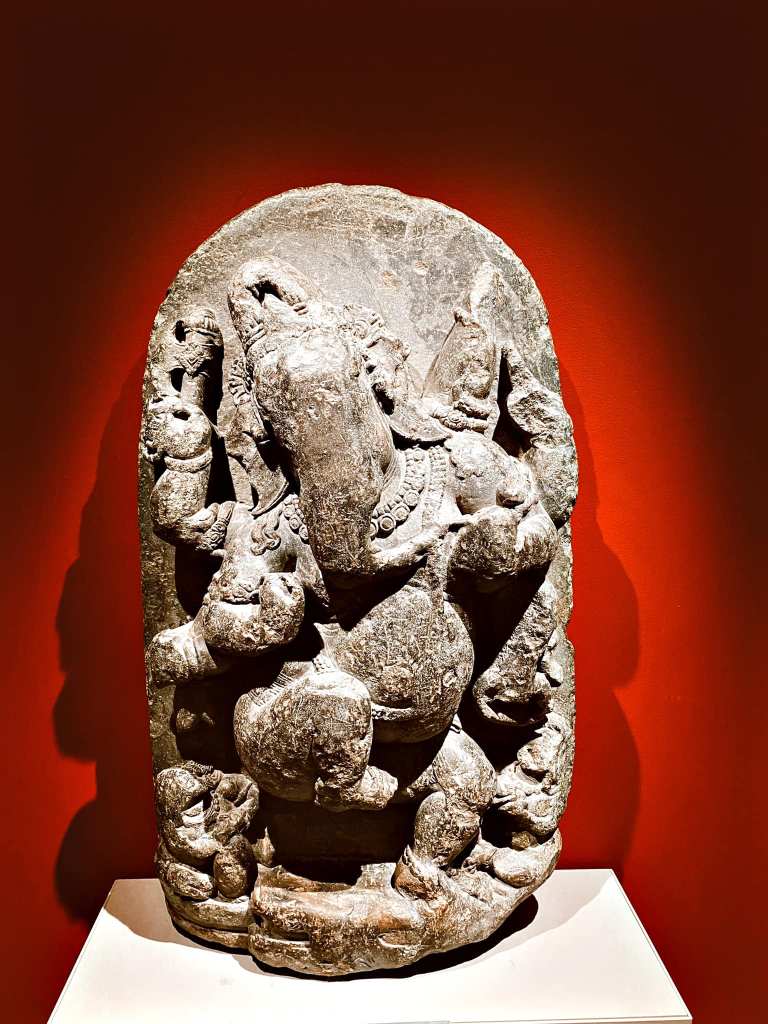
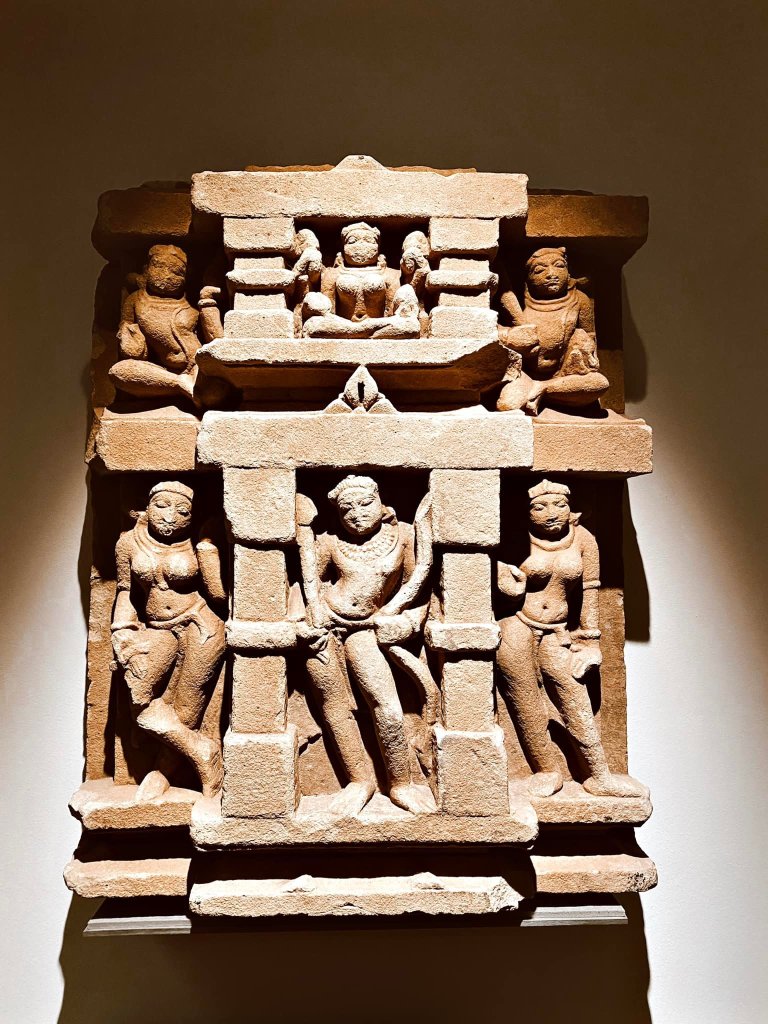
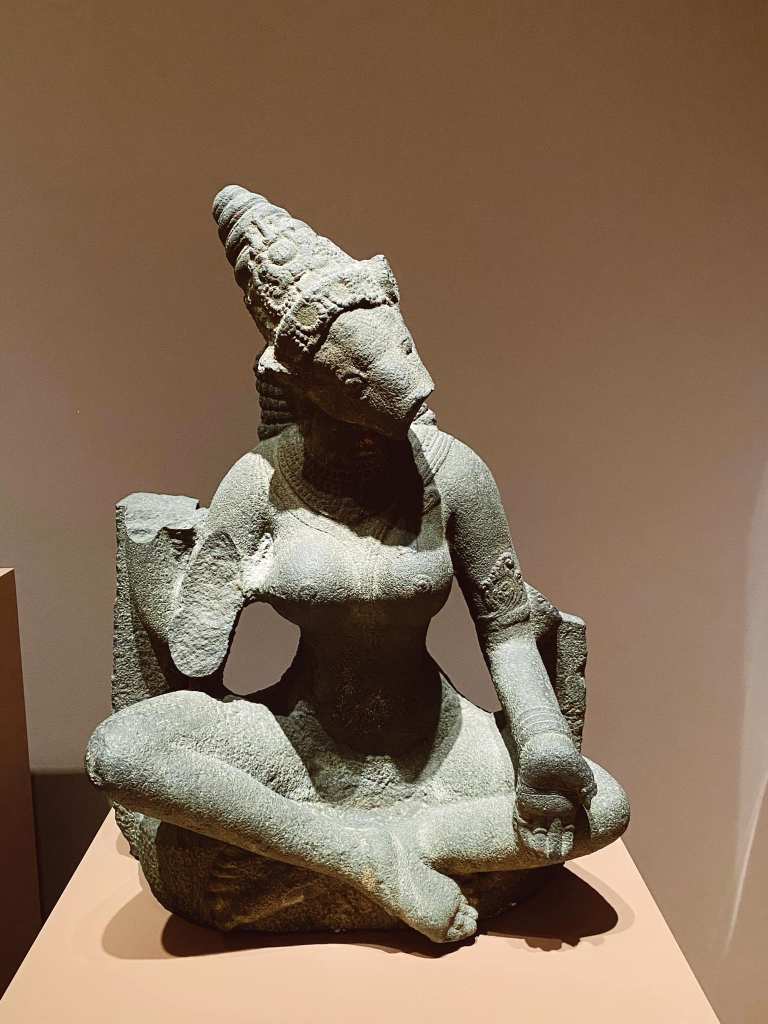
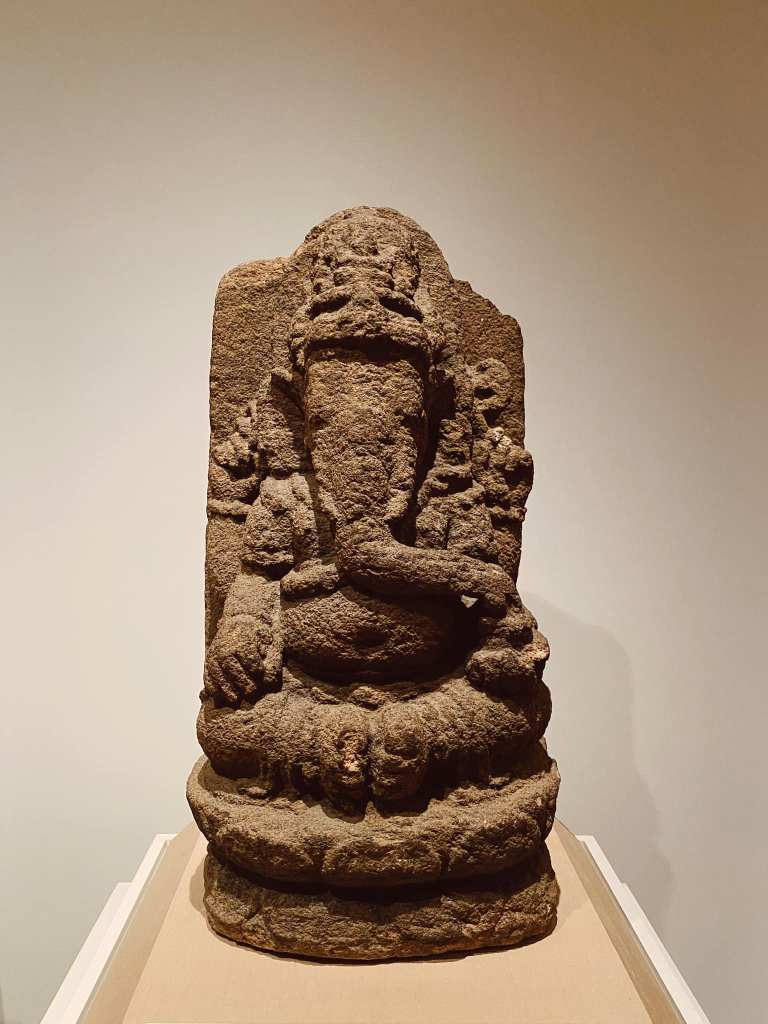
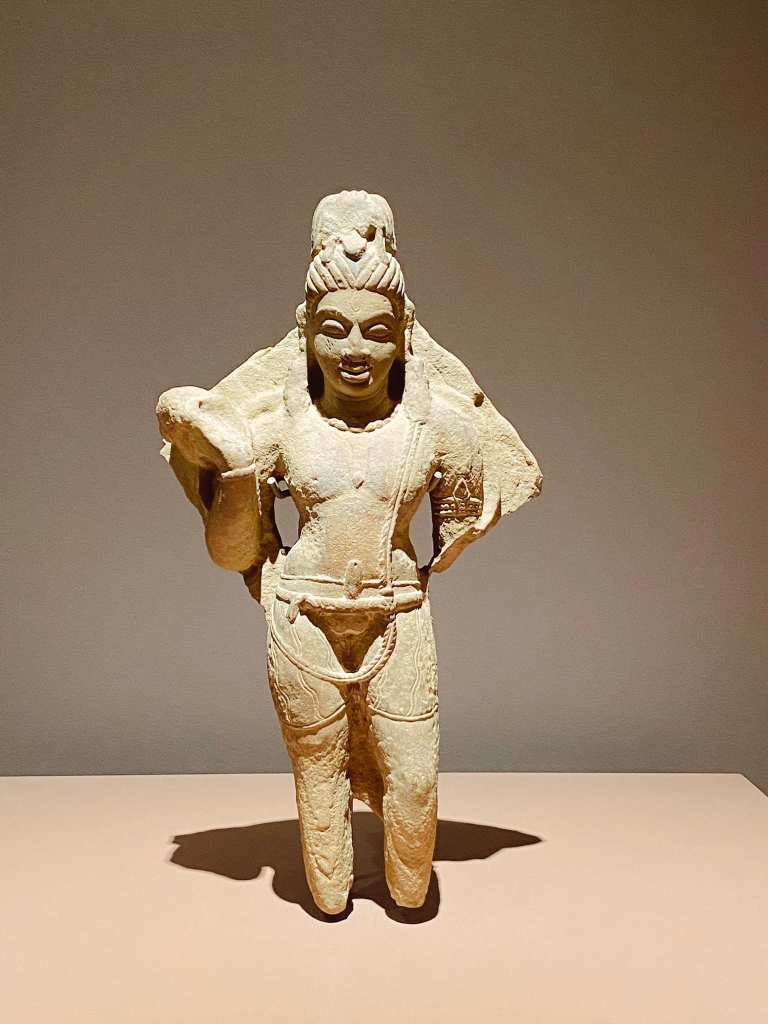
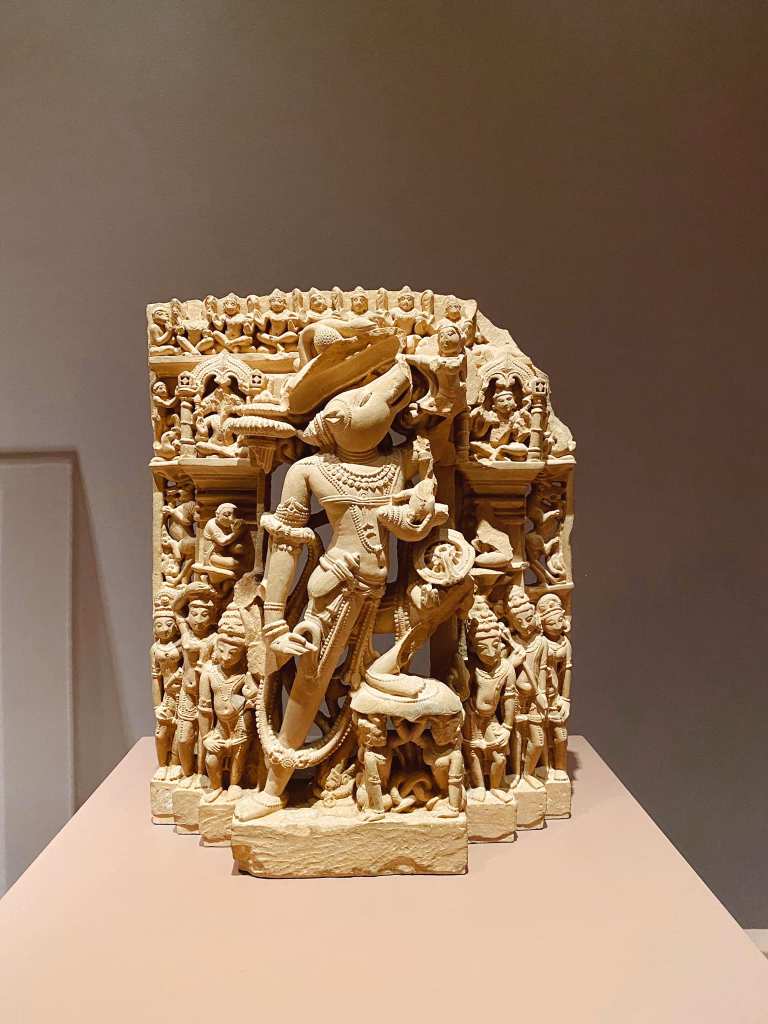
ecstatic sculptures of the Devīs & the Devas at the Ashmolean Museum, Oxford

ecstatic sculptures of the Devīs & the Devas at the Ashmolean Museum, Oxford, one of the oldest museums in the world! 🤍 awe!

pictured:

• Śiva & Pārvatī tenderly embracing each other (alternatively titled ‘Umā-Maheśvara).

• Pārvatī as the enthralling Gaurī. Mahārājñī!

• the beautiful Pārvatī making the kaṭakahasta gesture

• Viṣṇu ruling with his śakti, Lakṣmī, seated on his lap as her throne (alternatively titled Lakṣmī-Nārāyaṇa)

• the radiant Goddess Siddhā holding lotuses

• victorious Durgā slaying Mahiṣāsura

• dancing Ganeśa

• yet another depiction of Durgā slaying Mahiṣāsura

• two sculptures of the enrapturing Viṣṇu

• Viṣṇu birthed as Rāma

Path to Devī: Detroit, UMMA & the Siri Jyoti Pūjā

i have had the great fortune to visit the United States for the very first time to be with my saṅgha, and, during my trip, i had the opportunity to visit UMMA. i was mesmerised by its South Asian collection! not only are the sculptures magnificent in their precision and beauty, but their descriptive texts are poetry. attaching excerpts below. ♥️

1. Durgā on her lion mount

“In caves and temples, in metal and stone, artists captured the ferocious energy of the Goddess as revealed in her heroic victory [over Mahiṣāsura]. Here, her quiet grace signifies her boundless strength. Her round breasts and belly push forth from beneath her skin, indicating the distinctly feminine force behind her awesome capacities.”

2. Vārāhī

“She is boar-headed, and her rear hands would have held signature weapons. She has taut, youthful flesh and full breasts, signifying fecundity. Her crossed legs form a cradle, offering a tender sanctuary.”

3. Devī

4. Śiva as Bhairava

“Śiva’s sensuous pose and levity communicate liberation as a result of contemplating death in lone wanderings through vast cemeteries.”

5. Pot-bellied Ganeśa, endearing and gentle

6. Viṣṇu

“There is an intimate relationship between the God’s body and his sculptural surroundings: two arms are embedded in the plane behind him, while two project forward, echoing the curved bell of his hips. A garland unites the planes of carving in an elliptical halo, framing his body for the gaze of his devotees.”

7. Śiva

“Here, he is shown in his role as the divine ascetic or yogi, unclad but for an animal skin about his loins, with matted hair piled high on his head.”

8. Viṣṇu as Varaha

“The body of Viṣṇu’s boar-headed incarnation, Varaha, forges a diagonal bolt through this sculpture. His right foot is planted decisively at the corner of its projecting base; his left is flexed for leverage on a lotus pedestal. Against these rooting forces, his body surges upward, culminating in an acutely raised snout”.

days of sweetness, study, laughter & wonder spent in retreat in Detroit! days of belonging, of returning home.

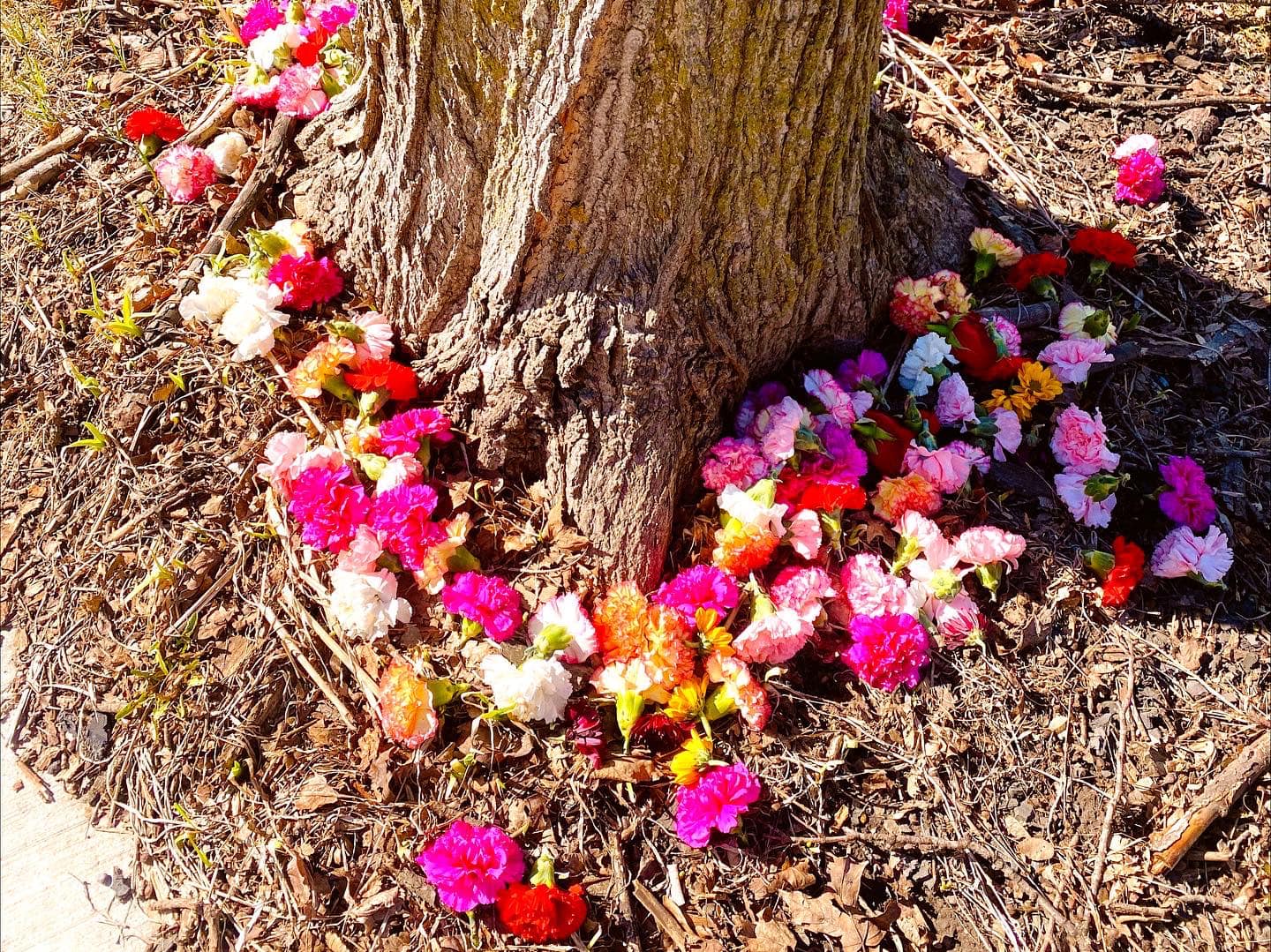
finally… an ode to the Siri Jyoti Pūjā! it is difficult to imagine a more beautiful way to spend my first day in the United States than by attending the Siri Jyoti Pūjā (“the wealth of light”, pūjā designed by Śrī Amṛtananda Natha Sarasvatī), conducted by my beloved teacher. ❤️♥️❤️ to have offered my poetry to Devī & Nārāyaṇa within this pūjā has been most precious… overflowing!

“to sing and dance through the Śrī Cakra”… (Śrī Vidyā Trust)

The Siri Jyoti Pūjā, which translates as “wealth of light”, is an exceedingly auspicious ritual designed by Śrī Amṛtananda Natha Sarasvatī, affectionately known as Guruji. The Pūjā is described by the Śrī Vidyā Trust of Devipuram as a group ritual that is performed to the Śrīcakra, which opens one to the immense benefits of performing the cakra pūjā within: “Doing this enables us to enjoy life, sing, and dance through it.”