amaryllis (/ˌæməˈrɪlɪs/[1]) – bears the name of the shepherdess in virgil's pastoral eclogues. it stems from the greek ἀμαρύσσω (amarysso), meaning "to sparkle", and it is rooted in "amarella" for the bitterness of the bulb. the common name, "naked lady", comes from the plant's pattern of flowering that blooms when the foliage dies. in the victorian language of flowers, it means "radiant beauty".
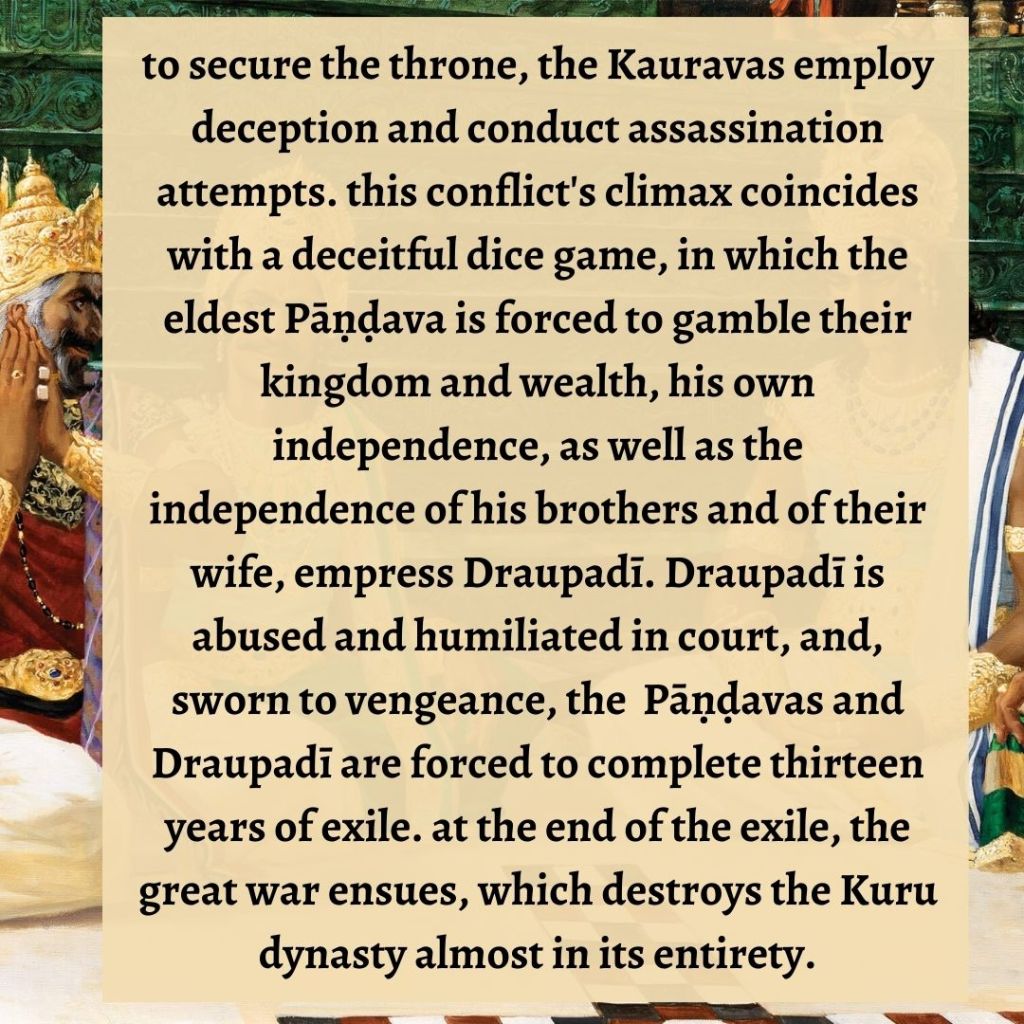
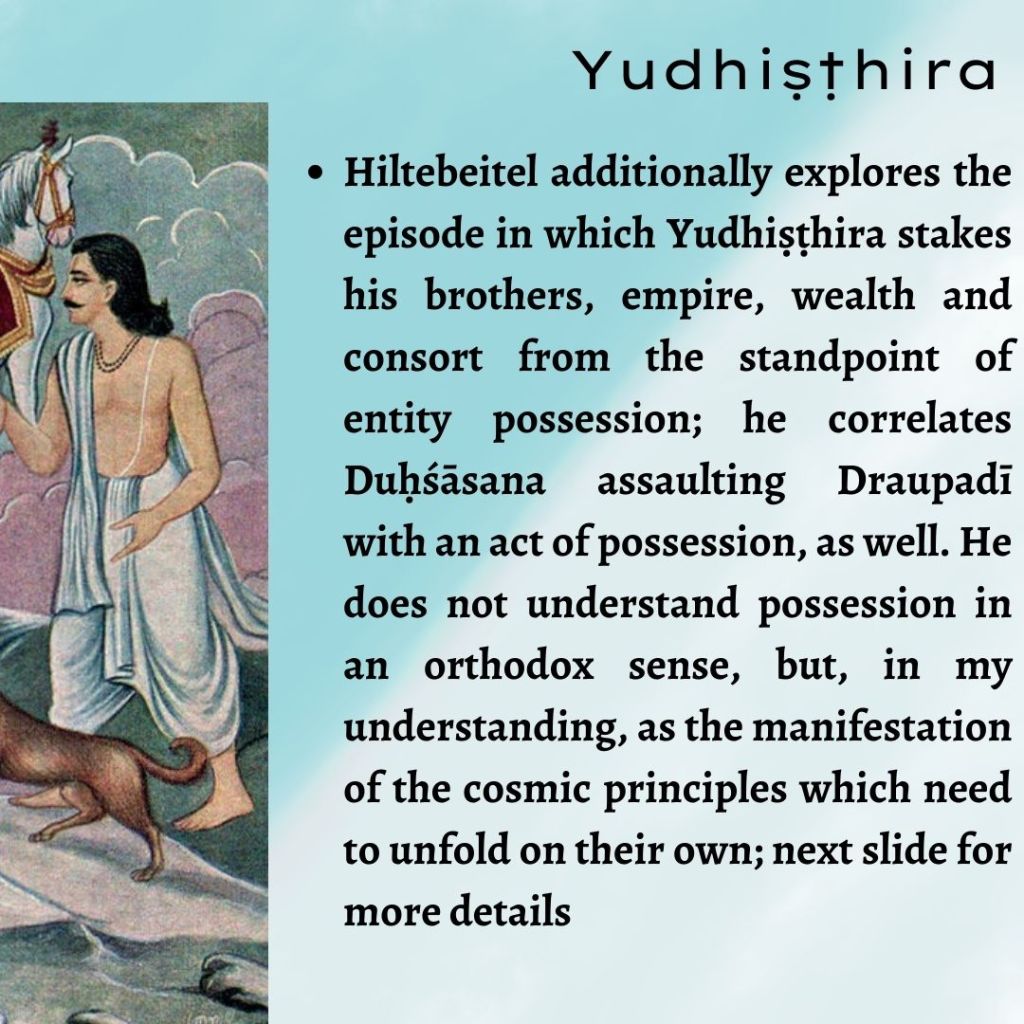
The order of the stakes of the dice game in the Mahābhārata goes as follows:
1) Yudhiṣṭhira stakes and loses the Pāṇḍavas’ wealth, army, empire, throne, weapons 2) Yudhiṣṭhira stakes and loses the autonomy of his four younger brothers, and they are enslaved on the spot (and they submit to it) 3) Yudhiṣṭhira stakes and loses his own autonomy, rendering himself enslaved (and submitting to it himself) 4) lastly, Yudhiṣṭhira stakes and loses Draupadī’s autonomy. The Kauravas roar in excitement, and they send a servant to fetch Draupadī to the sabhā (the royal hall) so she can be enslaved publicly.
Draupadī is absent from the sabhā at the time the dice game unfolds, as she is in her private chambers, menstruating. The servant comes to her and announces the outcome of the dice game. She is told that she has been ordered to present herself as a servant before the Kuru dynasty. She refuses to go, and says she wants one question to be asked to Yudhiṣṭhira:
“Did you first lose yourself, or me?” (2.60.9)
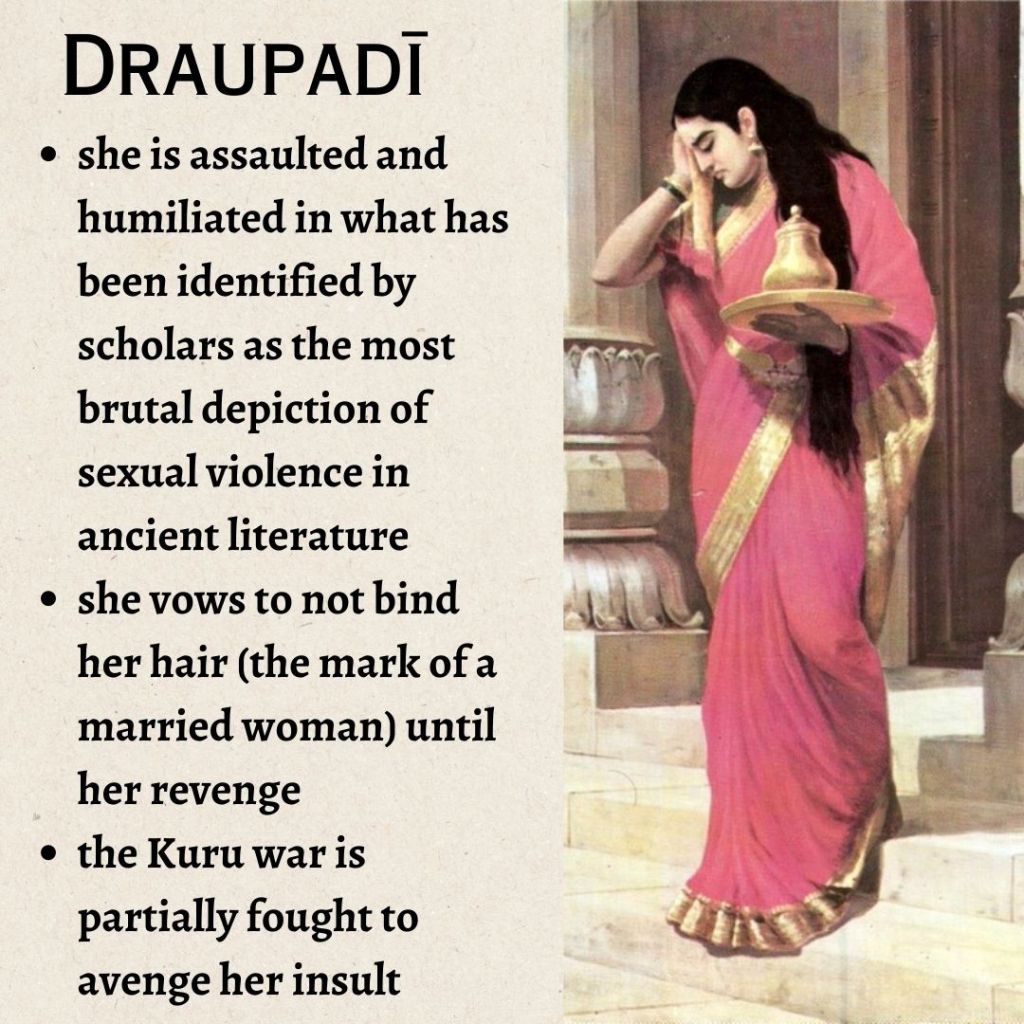
The servant returns to the sabhā and asks Draupadī’s question to Yudhiṣṭhira, who remains silent. The Kauravas become enraged by what they perceive to be Draupadī’s defiance, and one of them, Duḥśāsana, goes to fetch her himself. When she still refuses to come, he grabs her by her hair, drags her to the court and molests her publicly.
However, Draupadī is unbent: she delivers an incredibly powerful speech in which she continuously asserts her independence, challenges and rejects the men’s claims to her freedom, questions and denies the validity of the dice game, and, ultimately, overturns its verdict. In this speech, she presents a series of arguments, and I will analyse each in a series of upcoming posts.
Her first argument is her first question, which infers that, even if Yudhiṣṭhira did have any authority over her status (which she later challenges and denies as well), he lost all authority which could have been argued that he exerted over her the moment he renounced his independence. One who is not their own master cannot be the master of someone else, and one who is dependent cannot impair another’s independence.
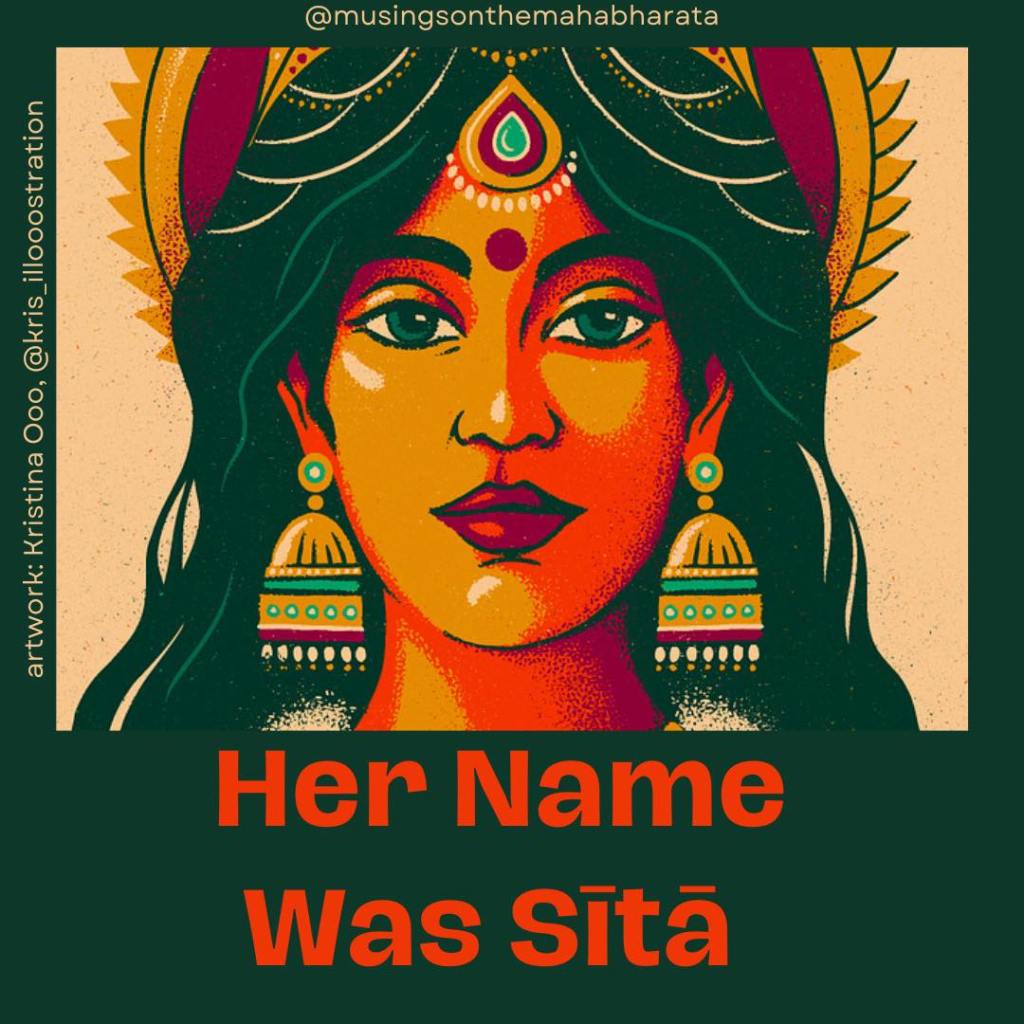
I attended a screening of “Her Name Was Sītā” at Edinburgh University’s Centre for South Asian Studies last month, an incredible film by Heshani Sothiraj Eddleston that explores shame and the concept of female virtue, and how these can drive women to suicide through religious discourse and socio-cultural castigation.
Sītā, as a character, Goddess or symbol, is not addressed directly in the film except for in the title, but I would maintain that this initial evocation builds a framework to process the film in. Sītā, as a key figure of itihāsa (Sanskrit for “so it was”, a body of work that accounts past events / the history of the Hindu streams or Hindu universe, of which the Mahābhārata and the Rāmāyaṇa are central components), holds an emblematic position in the South Asian collective consciousness as an archetype of female virtue, sacrifice, female suffering and tragedy. Notably, I would maintain that this is a limiting association and that Sītā, as with any element of itihāsa, can be decoded in expansive ways that subsume and transcend those connotations.
Regardless, the associations are there, and there is power in that, as well as in a name; symbols and names such as Sītā and Draupadī hold in themselves potential to be approached as mediums through which we can understand gender programming, socio-cultural gender relations and the moral biases related to that. They therefore offer us the opportunity to deconstruct gendered conditioning; however, unfortunately, we generally do not take the leap to do so, and instead become further embroiled in contractions such as our identification with gender through the very tools that could free us.
Final note — the film shook me in many ways, would recommend watching it!
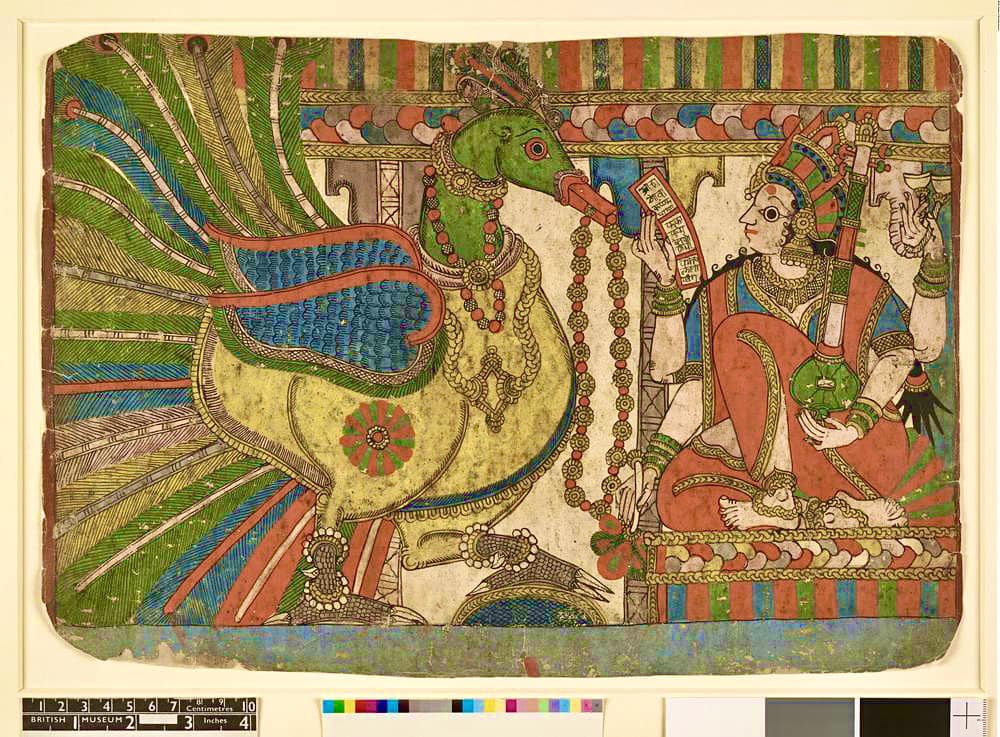
the beautiful image is a painting of Sarasvatī that belongs to a set of sixty which chronologically depict a tale told in the Mahābhārata (as well as in the Mārkaṇḍeya Purāṇa and in the Śrīmad Devībhāgavata), that of King Hariścandra. this painting is one of two beginning the set, and it depicts the invocation of Sarasvatī, the Goddess of knowledge, speech and poetry, who is invoked as the flow of (and to flow the) words and wisdom of the telling. Gaṇeśa is invoked, as well.
in a seminar i recently went to, we discussed sacred texts, and the invocation of Gods & Goddesses in their openings – the muse in the Iliad, the deities in the Sanskrit texts etc. it made me reflect on writing as an inherently transcendental act. as in, it is not you who writes (or creates etc). it is being written through you, and it is therefore futile to take ownership for it.
as a ‘writer’, i oftentimes read my work and feel as if it was written by someone else. of course, my biases seep in (in editing, especially), but if i fully connect, the experience is that of it being written through me, and not by me.
i understand the invocation of the muses and Goddesses to reflect, in part, this understanding: that the act of creation subsumes and transcends the self or ego, even if only momentarily. that in creating, we tap into and open pathways within that we usually do not access customarily, when we are so entrenched in our sense of self that the energy can only flow in one way (that of sustaining our identity and the patterns which construct it). in creating, the energy can be freed to flow in new or in more ways. this is how i understand the surrendering to the muse or to one’s art that is so lauded by poets. 🦢
“Strī” translates from Sanskrit as “woman”, while “dharma” is a complex principle with manifold meanings, in this context bearing the significance of “duty”; in simple terms, it refers to an individual conduct that contributes to harmony in a greater framework, be it societal or cosmological.
Draupadī is lauded in the Critical Edition of the Mbh several times as being the epitome of strī-dharma, of the dharma of women. (2.62.20; 2.63.25-30; 2.64). Interestingly, she is most intensely praised as such after she angrily (yet elegantly!) questions the men of the royal court and demands justice, being anything but meek and demure. I would argue that this showcases that in the Mahābhārata voicing oneself and standing up for oneself are considered responsibilities belonging to the dharma of women.
To nuance this even more, Eknath Easwaran, an eminent translator of the Bhagavadgītā, highlights that, etymologically, the term “dharma” can be traced back to the root ‘dhri’, which means ‘to support, hold up, or bear’; “dharma” therefore translates as “that which supports”, and Draupadī’s conduct therefore supports both society and cosmology.
In the Sanskrit Mbh, Kṛṣṇa does not appear in the sabhā (royal hall) at the time of Draupadī’s attempted disrobing, and no direct mention of him is made during this episode. In a conversation with Dr. Brian Black, a Mbh researcher whom I had the honour to have as my MA supervisor, we talked about the implication of this, which is that Draupadī’s adherence to strī-dharma appears to be that which shields her. A question that could arise here could be whether there is a contradiction between the Critical Edition and modern renderings of the Mahābhārata, with Draupadī being shielded by her dharma as opposed to by Kṛṣṇa.
For me there is no contradiction.
Kṛṣṇa in the Bhagavadgītā establishes himself as ‘the eternal dharma’ (14.27); and so, Kṛṣṇa is all dharmas, including strī-dharma. We tend to associate Kṛṣṇa with a fully-fledged incarnation; but he is beyond that. I would maintain that, as the divine principle, he exists in Draupadī’s consciousness and in her actions as dharma (and not only!). The latter renditions, for me, in which he is physically there, only bring forth in tangible projections the internal process extending Draupadī’s consciousness.
I will write more about strī-dharma as it appears in the Mbh.
One of my favourite interpolations from modern tellings of the Mahābhārata is a conversation between Draupadī and Kṛṣṇa that occurs after Draupadī’s sexual assault and attempted disrobing by the Kauravas.
Clutching his feet, Draupadī sobs: “Govind, why? Why did this happen to me? What sins did I commit? I am reaping the fruit of which actions of mine?”
Picking her up and caressing her hair, Arya tells her: “What happened was neither because of your ‘bad’ karma, nor did you reap the fruit of your past actions. It was the Kauravas who reaped the fruit of their past actions by engaging in such a grave misdeed. Sakhī, this is the meaning of karma.”
“But I am the one experiencing agony, Govind.”
“Then relinquish it, Sakhī. Although what happened was not the result of your ‘bad’ karma, the way you transform following these events will be your karma.”
This is such a beautiful and profound exchange which offers rich nuances to the teaching of karma. Oftentimes, when events we perceive as terrible happen to us, we create a story of unworthiness around them; we wonder if we are being punished, if the root cause is our evilness, if God or the universe are rejecting or dooming us. A question that rests on these lines that is often asked would be the common: “why do bad things happen to good people”. A first layer to this, in my view, is a deconstruction of ‘bad’ and ‘good’ as solid concepts. The second layer is the understanding that any event ‘just’ happens aleatorily, rises and falls, and karma is not a simplistic cause-effect reaction.
Karma encapsulates, in my understanding, the ingrained patterns held within us through which we act, react, and process the world around us and the events that occur in our lives. There is freedom from karma in finding new ways of reacting, engaging, processing.
Finally, a significant teaching encased in this interpolation is that the way someone treats us, ultimately, is a reflection of their karma (ingrained patterns), and not a reflection of our ingrained patterns. We cannot control another’s patterns, but we can aim to understand and rewire ours accordingly.
In response to the article about Draupadī’s disrobing that I shared yesterday, Jim beautifully questioned whether the act of violence spurred from limited views around nudity and if it would have been avoided if nudity was perceived differently in that society (if it was common, seen as sacred or normal). This was a very rich ground of contemplation for me, and the reflections I have had are the following:
First, I would like to establish that Draupadī was not wearing a sari when her attempted disrobing took place. She was wearing a single cloth which covered her body through which she was menstruating, which was the custom at the time. It can be deduced through various references toward her appearance found throughout the Mbh that, outside of the timeframe of her menses period, she did not customarily wear an upper garment, so her breasts were uncovered. At the time of her attempted disrobing, she was wearing more clothes that she usually was. The men had already seen part of her body which they wanted to disrobe. There are scholars who argue that she was not wearing a single cloth at the time of her disrobing and she was instead wearing both an upper garment and a lower garment. I would argue that this is irrelevant, as the point still remains that her breasts were covered, and they usually were not.
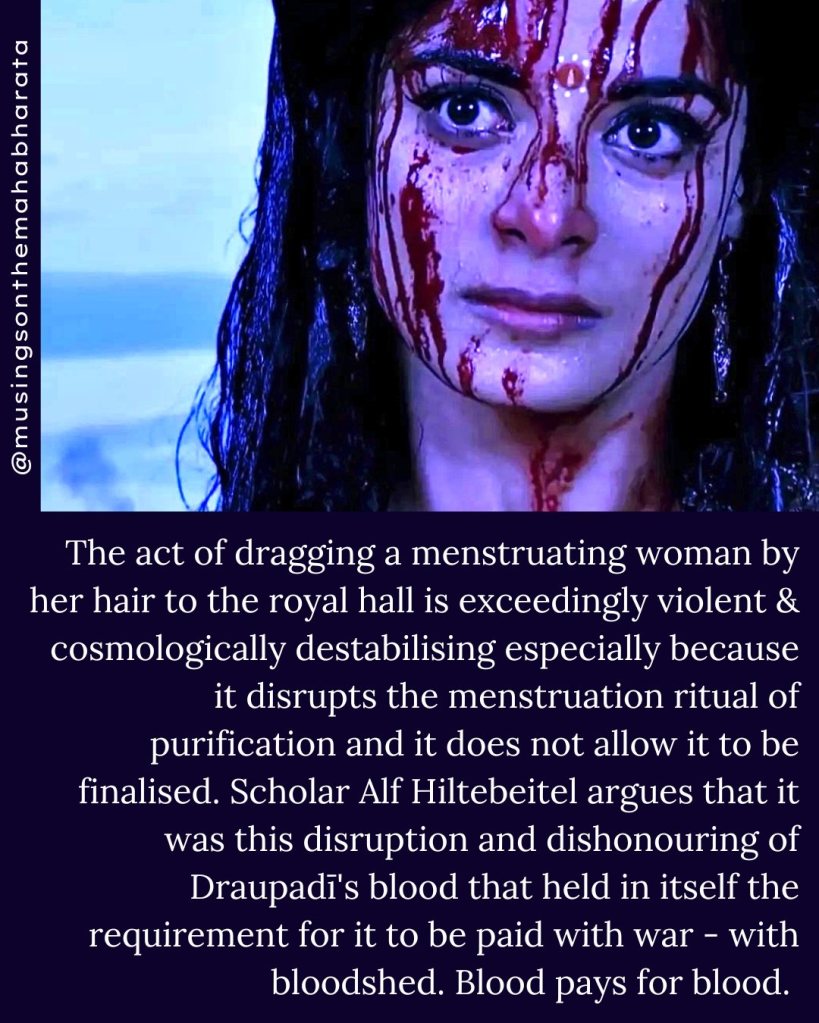
Second, I would maintain that, the disrobing episode, as most acts of sexual violence, was more about power than about sex or nudity, and that the key factor here, lost in so many adaptations, was not the attempted disrobing & possible nudity, it was the fact that Draupadī was menstruating, and she was brought to the royal hall in a stained garment through which she was free-bleeding. Menses was / is considered a period of purification. The act of dragging a menstruating woman by her hair to the royal hall – who, as I priorly mentioned, was wearing more clothes than usually – is exceedingly violent & cosmologically destabilising especially because it disrupts the menstruation ritual of purification and it does not allow it to be finalised. Further, hair in itself is a symbol of sexual power for a woman. Duśāsana grabbing Draupadī’s hair is an attempt to curb her sexual power and own her sexuality.
Draupadī bleeds in the hall and leaves Hastinapura bleeding through her clothes. Scholar Alf Hiltebeitel argues that it was the dishonouring of her blood that held in itself the requirement for it to be paid with war; with bloodshed. In the cosmological cycle, blood pays for blood.
The Kauravas wanted to humiliate, own and disempower Draupadī; nudity was one of the means to get there, along with disturbing her purification rituals, not the end goal. However, one could argue that in a society in which nudity was seen as sacred the intention to humiliate wouldn’t have arisen in that openness or expansion of consciousness – but maybe it would have just taken a different form and found different means.
Photo: Pooja Sharma as Draupadī, bathed in the blood of her principal offender. The cosmological cycle is finalised.
recommendations for abridged and unabridged translations of the Mahābhārata, as well as reading and referencing tips 🤍.
to reiterate the last point i made in my video first, i would like to accentuate that those of us who rely on translations and are inhibited by the language barrier are already working with a diluted version of the Mbh; it is for this reason that it is exceptionally important to work with the best and most authentic translation that is accessible for us, especially if we are scholars. in this, we can ensure that we are not perpetuating any misunderstanding or false information in the world. 🤍
🔱 unabridged translations:
🔱 for the first five parvas – J. A. B. van Buitenen | for the remaining books of war – Clay Sanskrit Library | these are exquisite, elegant, all-encompassing, and delicious works of translation.
additionally, i use the abridged translation created by John D. Smith and published by Penguin Classics as a handbook or manual to find my way through the unabridged versions when i write papers. this is extremely efficient for referencing – a compass or map to guide you through the verses. i expand on this in the video, and will additionally create a separate video about how to reference the Mbh.
🔱 the recommendations i have shared have been given to me by my amazing MA supervisor from Lancaster University, Dr. Brian Black, who instilled within me the love for the Mahābhārata in academia, and supported me through my research and my PhD application process. in my opinion, he is one of the most dedicated and passionate contemporary researchers of the Mbh, and i am most grateful to him. his book, ‘In Dialogue with the Mahābhārata’, is a fantastic work of research. read more here: https://www.routledge.com/In…/Black/p/book/9780367547271
🔱 TIPS: for those unfamiliar with this epic, i would recommend they begin with an abridged retelling. note: a retelling, and not a translation (John D. Smith’s abridged work would be considered a translation as it follows the epic poem verse by verse). retellings are easier to digest! the Mbh is vast and can be overwhelming, so use the retellings to
familiarise yourself with the characters and with their narrative arcs, and, when you feel familiar enough with the Mbh’s universe, move onto the unabridged versions.
please be aware that, due to the nature of reproducing an epic poem in prose, most retellings include errors, omissions or interpolations. hold these lightly while you read through and also hold in your awareness that the author might have taken many liberties. use the unabridged versions to correct and reorientate yourself within the universe. this is how i started my own journey with it 😊
demonstrating how to reference the Mbh
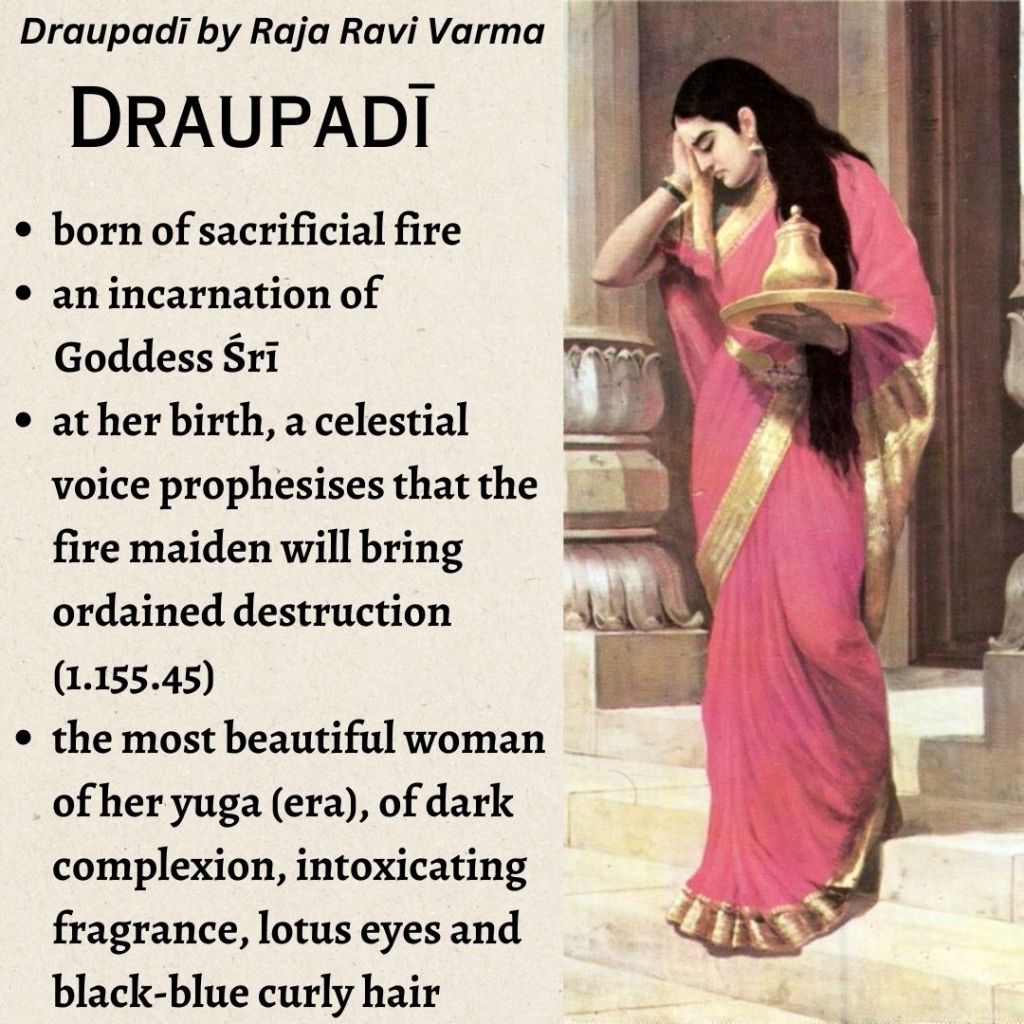
a thorough Mahābhārata reference consists of three parts: the number of the parva in which the event in question takes place in, the number of its corresponding verse, and the number of the secondary verse. in have created a video in which i am demonstrating how to most efficiently reference the Mbh by utilising the abridged and unabridged translations with the example of Draupadī’s birth from fire (1.155.45).
note the difference in detailed expansion between the two versions, and the importance of continuously referring to the unabridged translations:
abridged: “A beautiful, dark girl emerged from the altar, and the voice proclaimed that she was destined to accomplish the purpose of the Gods by annihilating the Kṣatriyas. [She was] named Kṛṣṇā (Draupadī).”
*Kṛṣṇā means She of Dark Complexion.
unabridged: “Thereupon a young maiden arose from the center of the altar, the well-favored and beautiful Daughter of the Pañcālas, heart-fetching, with a waist shaped like an altar. She was dark, with eyes like lotus petals, her hair glossy black and curling – a lovely Goddess who had chosen a human form. The fragrance of blue lotuses waited from her to the distance of a league, the shape she bore was magnificent, and no one was her peer on earth. And over the full-hipped maiden as soon as she was born the disembodied voice spoke: ‘Superb among women, the Dark Woman shall lead the Kṣatriyas to their doom. The fair-waisted maiden shall in time accomplish the purpose of the Gods, and because of her, great danger shall arise for the Kṣatriyas.’ Hearing this, all the Pañcālas roared like a pride of lions and earth was unable to hold them so full of joy”.
this might seem as an over-scholarly topic, but much of the written material you are going to encounter on the Mbh will include this, and i find it relevant to have a framework for it. 🤍
The Mahābhārata is a love of my life, and one of my main research interests – as well as the subject matter of my upcoming PhD thesis! for awhile now, i have been reflecting on how to meaningfully share about the Mbh on my social media platforms. generally, i would say that there are two main approaches to the Mbh in contemporary discourse: one is the academic and scholarly approach, which, although i both adore and adhere to, i find to be largely inaccessible and limited to the academic niche. the second, which seeps more into contemporary discourse, i find to be a moralistic, religious outlook. although i consider both approaches to be valid and needed in society, i believe that what is missing is more intimate, personal sharing about the Mbh. i, for one, am not in love with the Mbh purely out of intellectual curiosity. for me, The Mahābhārata is alive; it exists within me and within the collective consciousness as a mirror to our own thought processes and individual universes. i would therefore like to challenge myself past my usual scholarly approach and share earnestly about what it means for me to immerse myself in this marvellous epic. for instance, what does it mean for me as a modern woman to read about Draupadī’s disrobing; how can i understand myself better through her character?
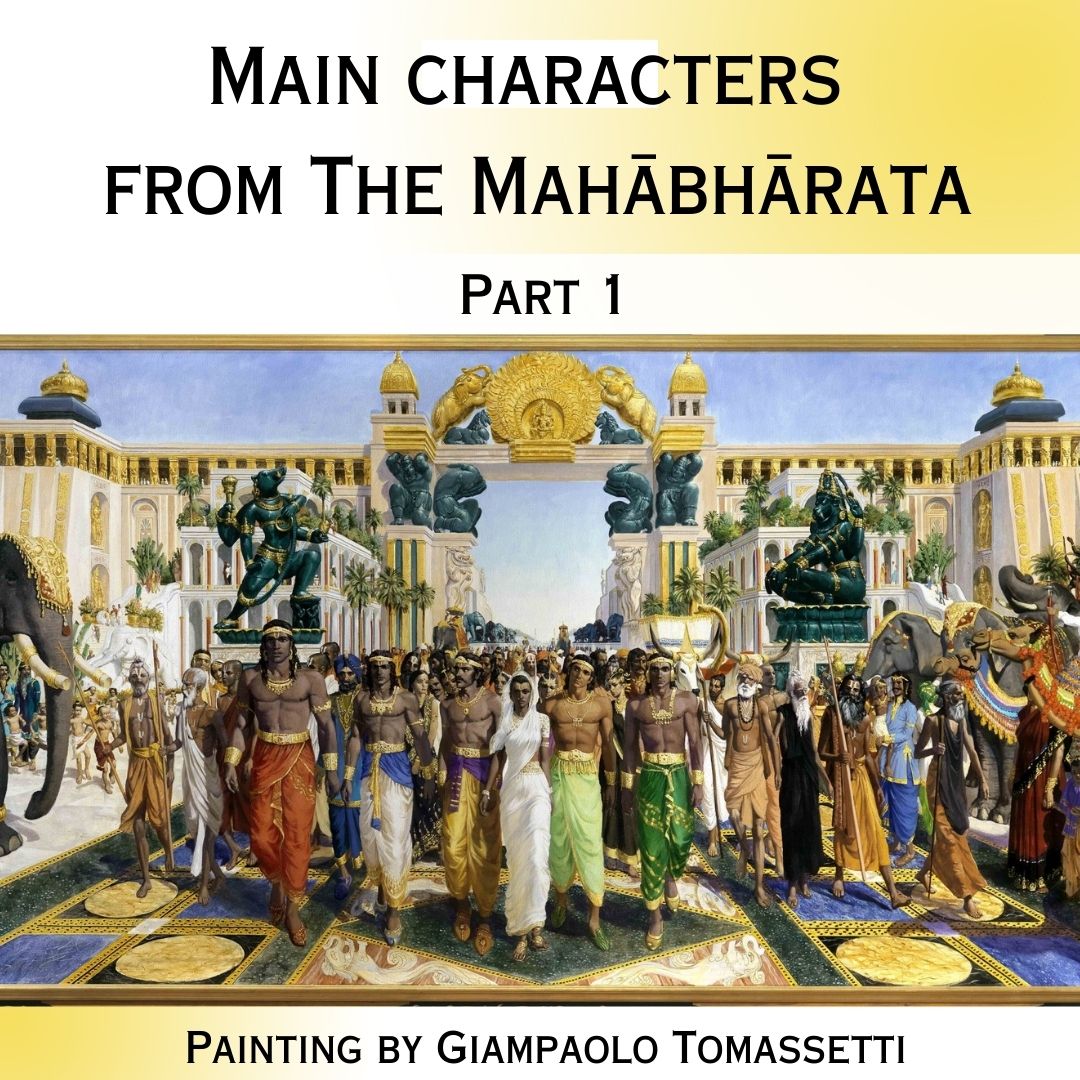
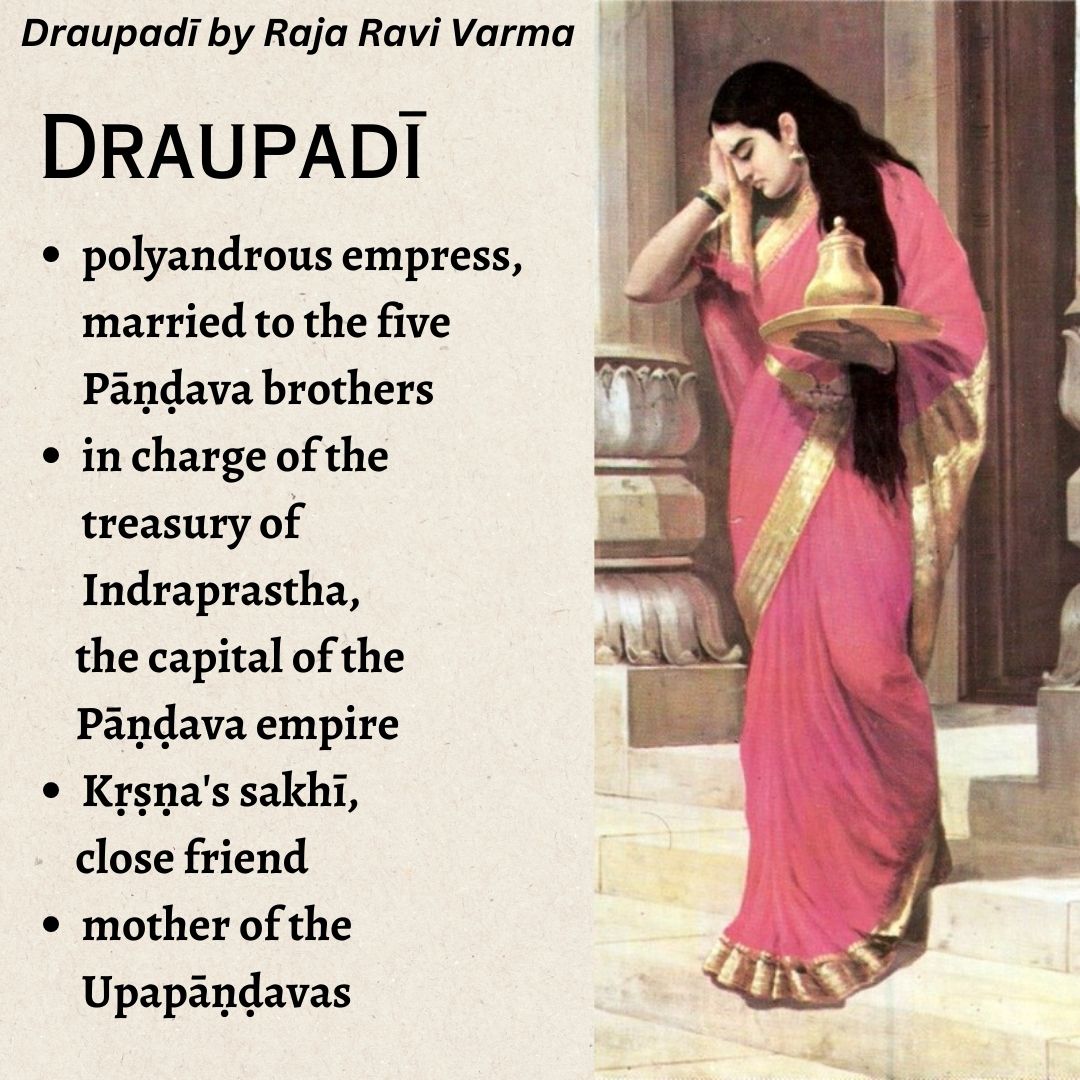
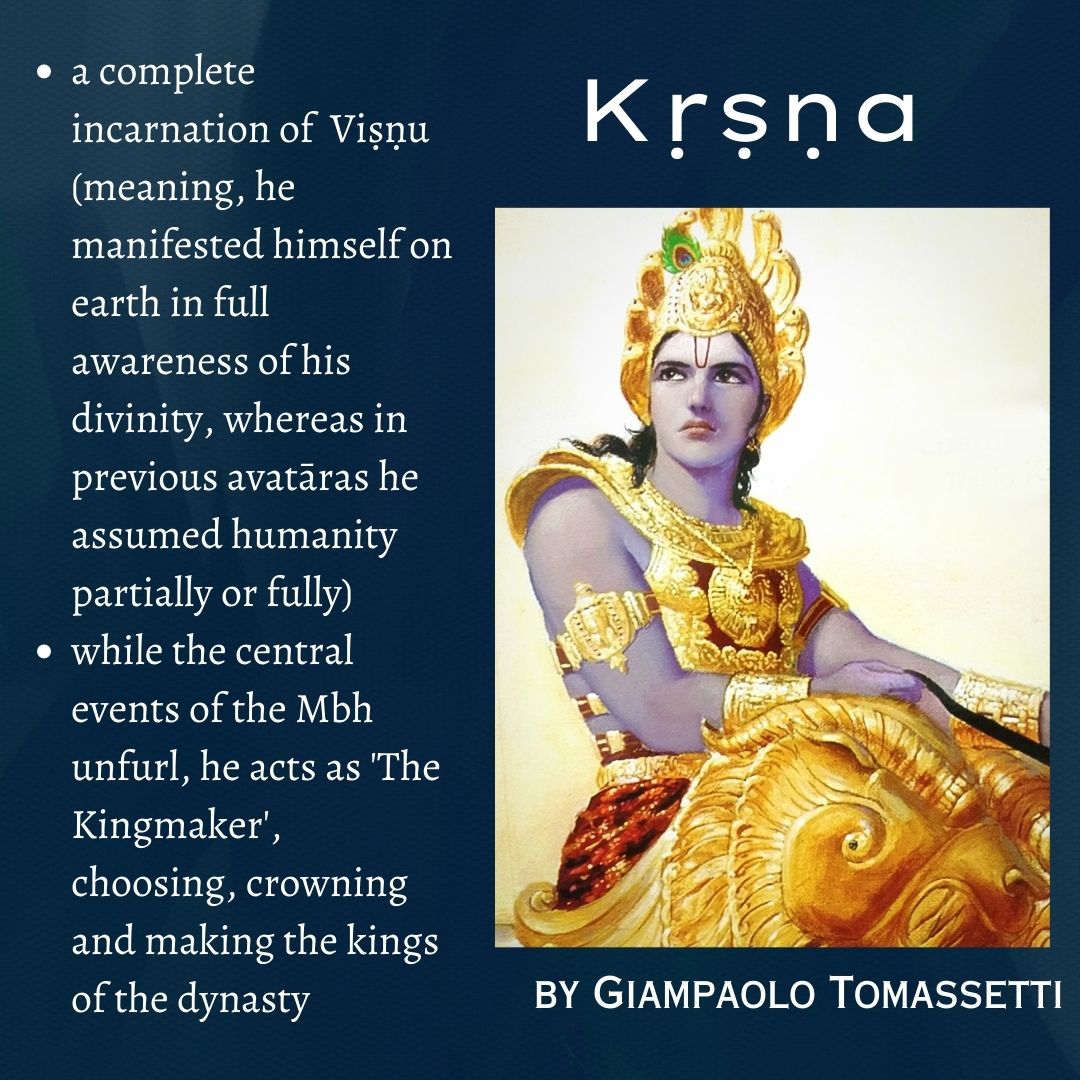
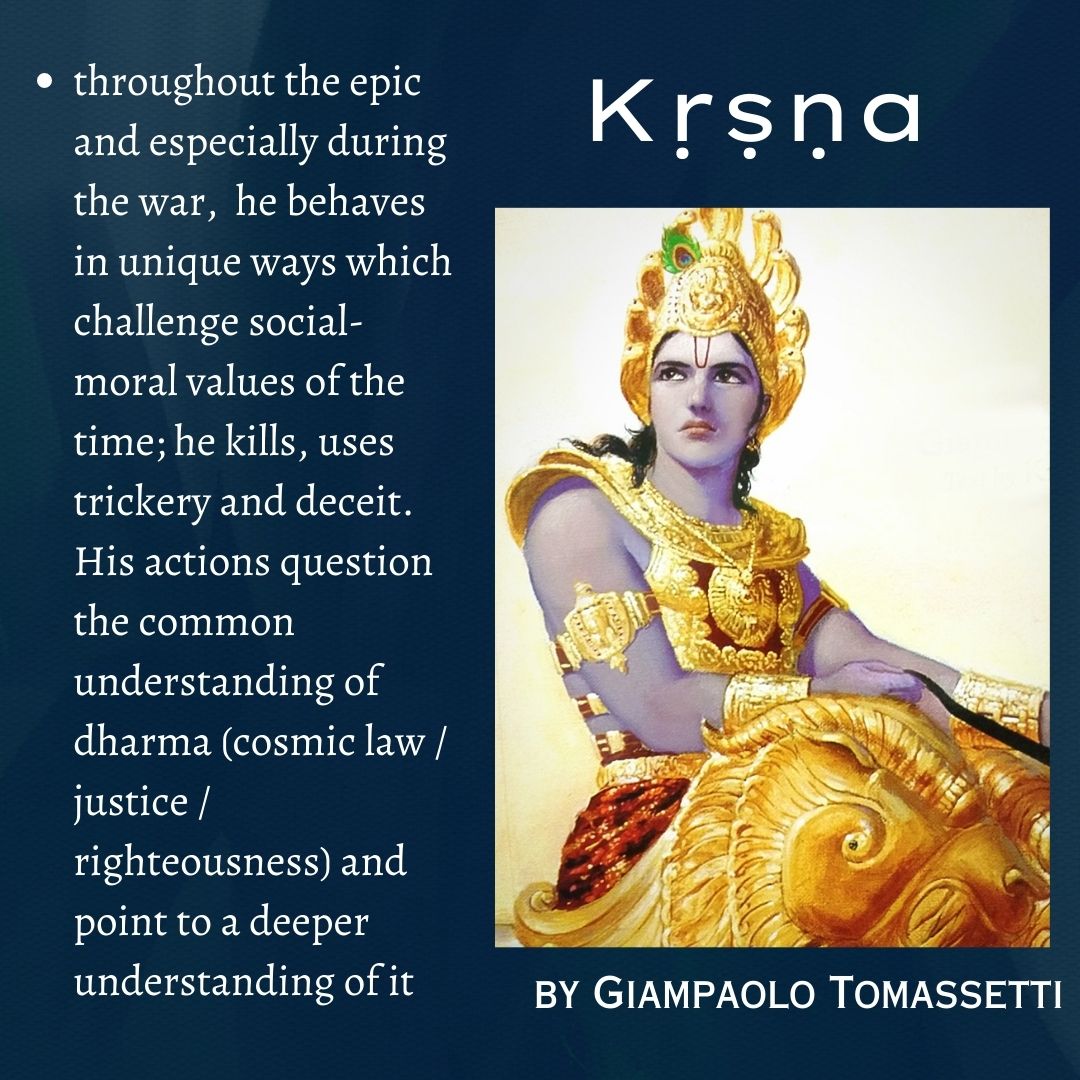
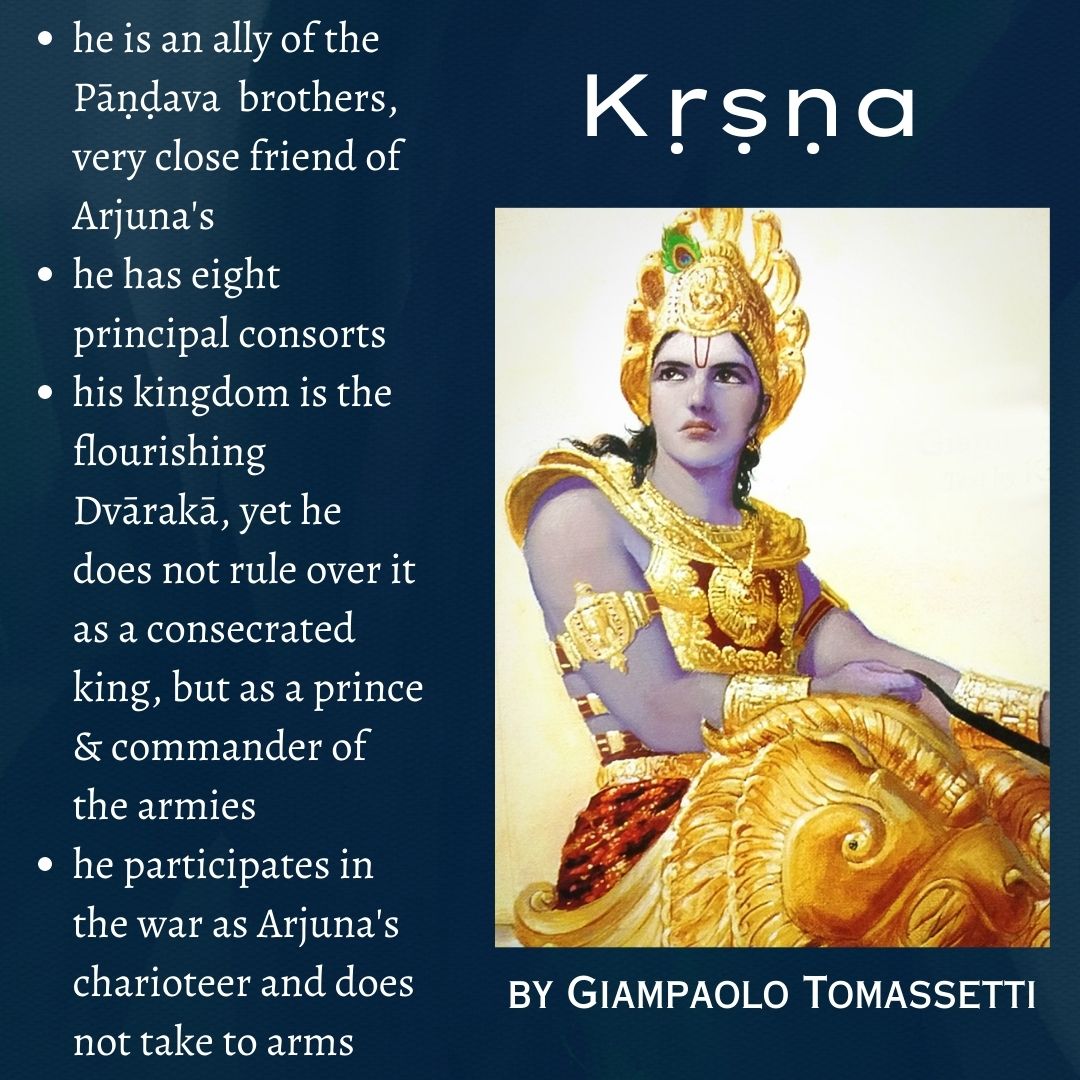
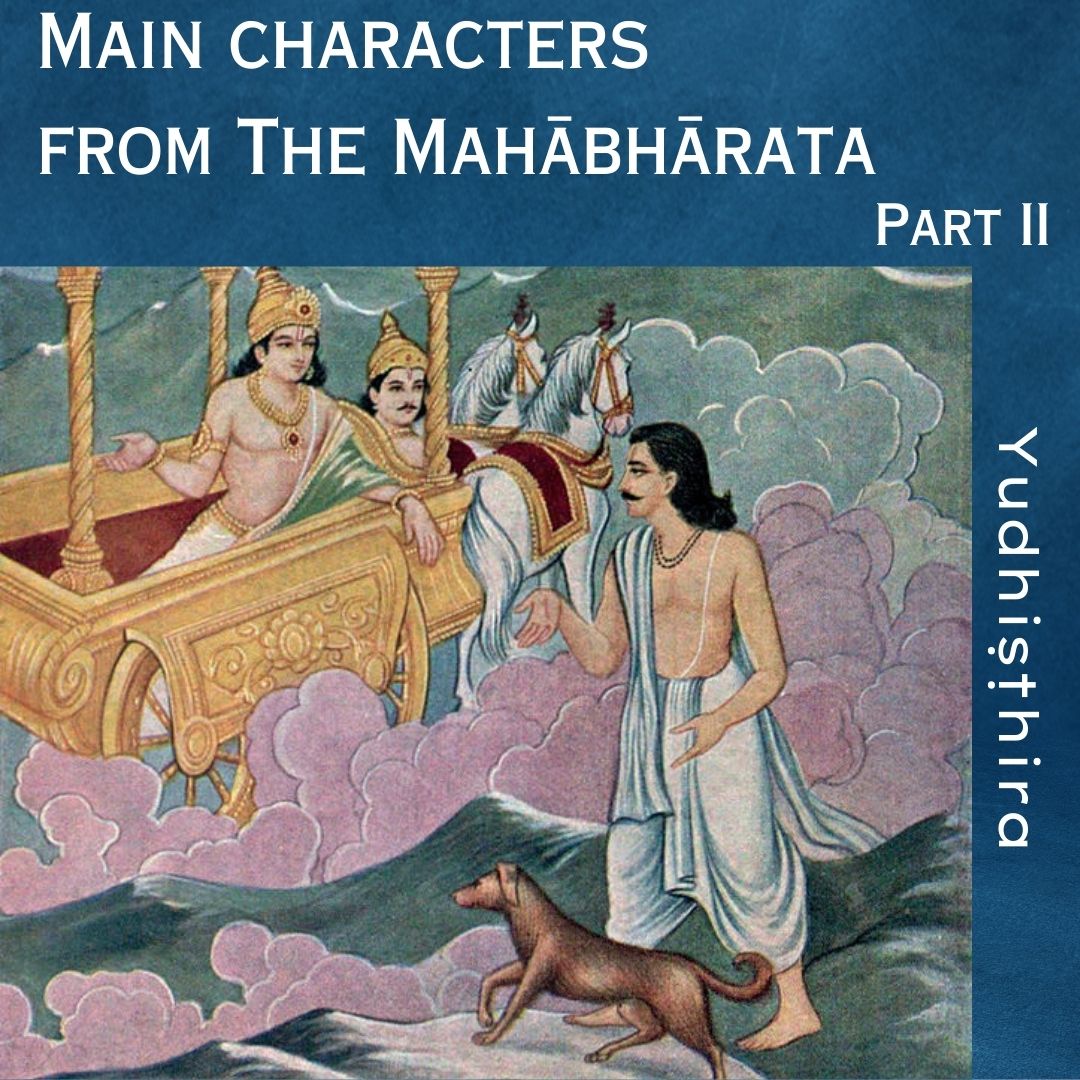
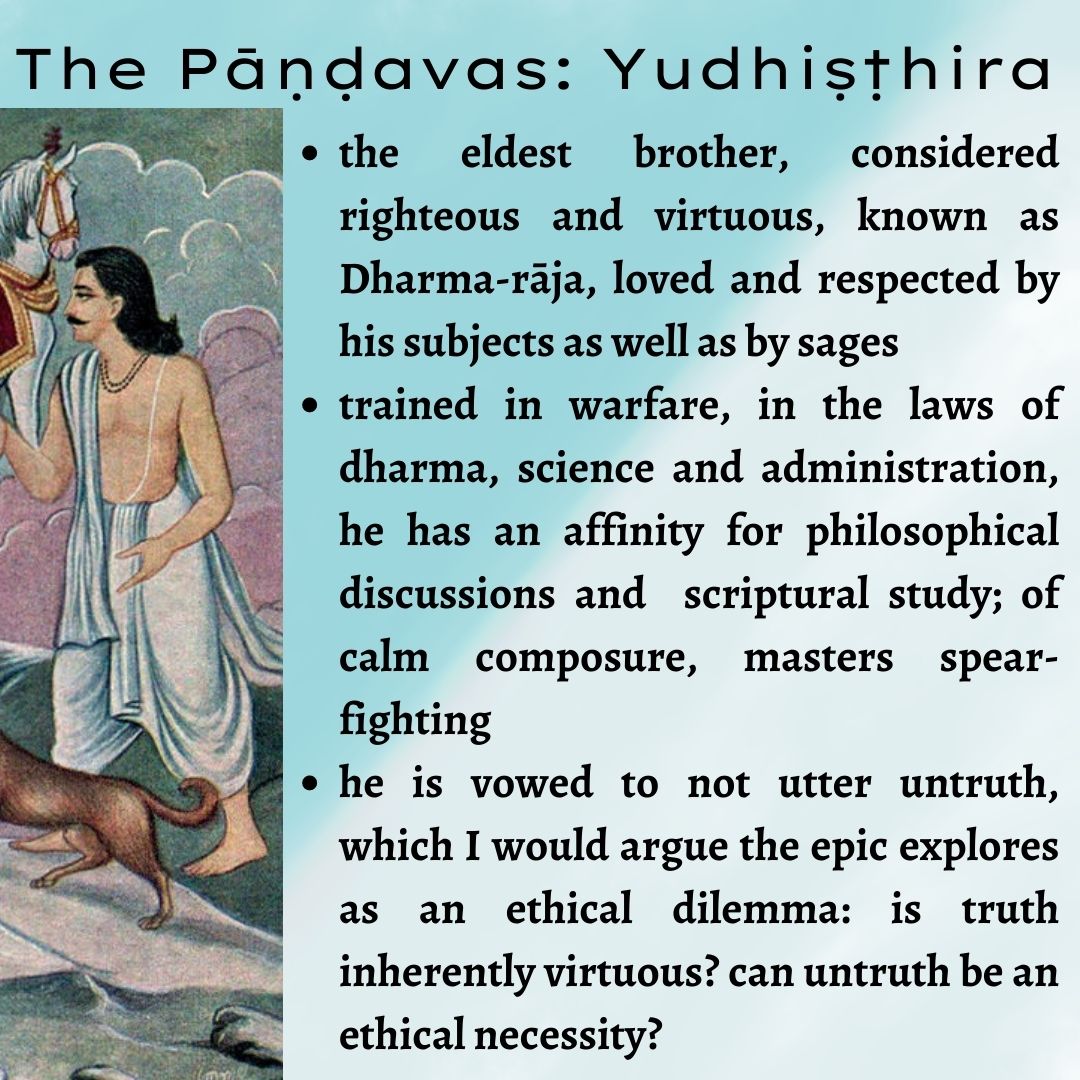
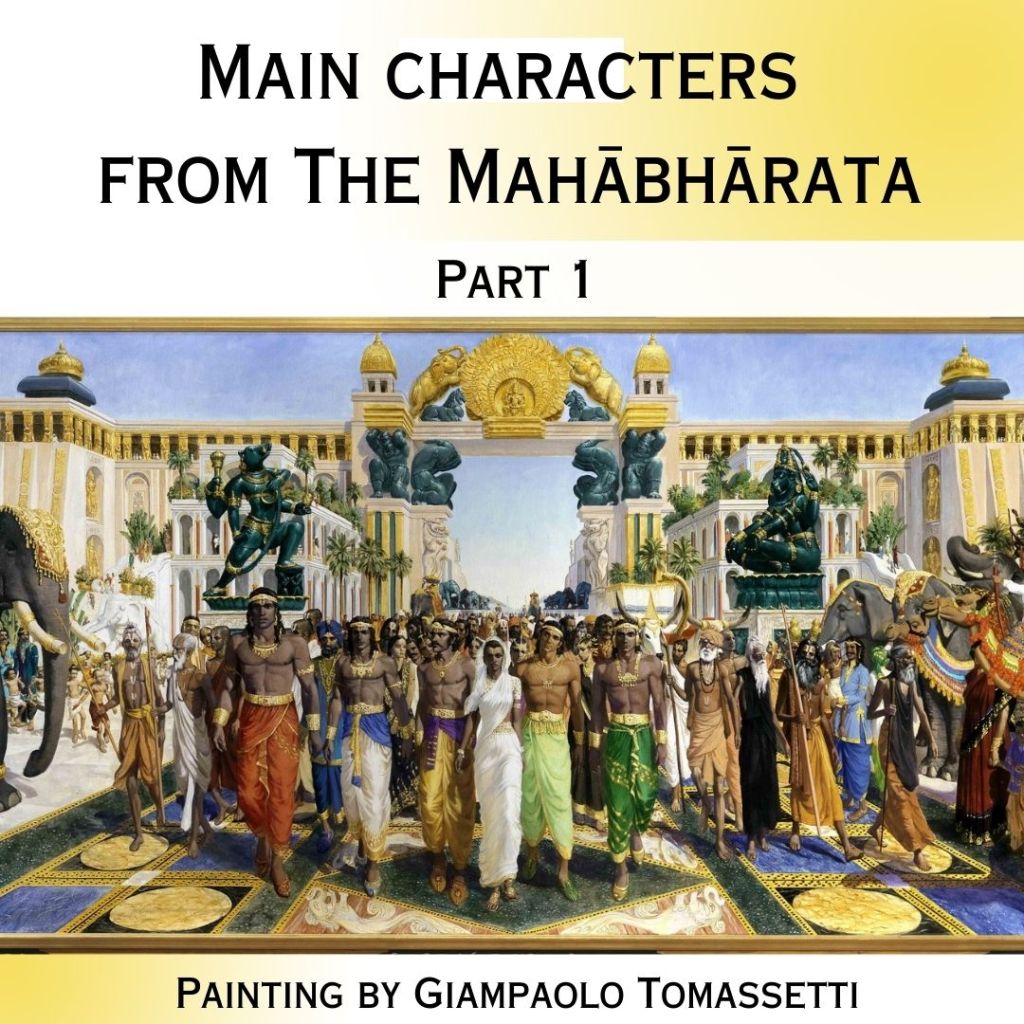
to ground these discussions more, i will create infographics about the plot, the historical context & main characters (created more out of love for the Mbh than for these discussions, to be honest!).
very excited for this and am looking forward to establishing myself further in the epic’s framework through this interactive approach!
to begin with,
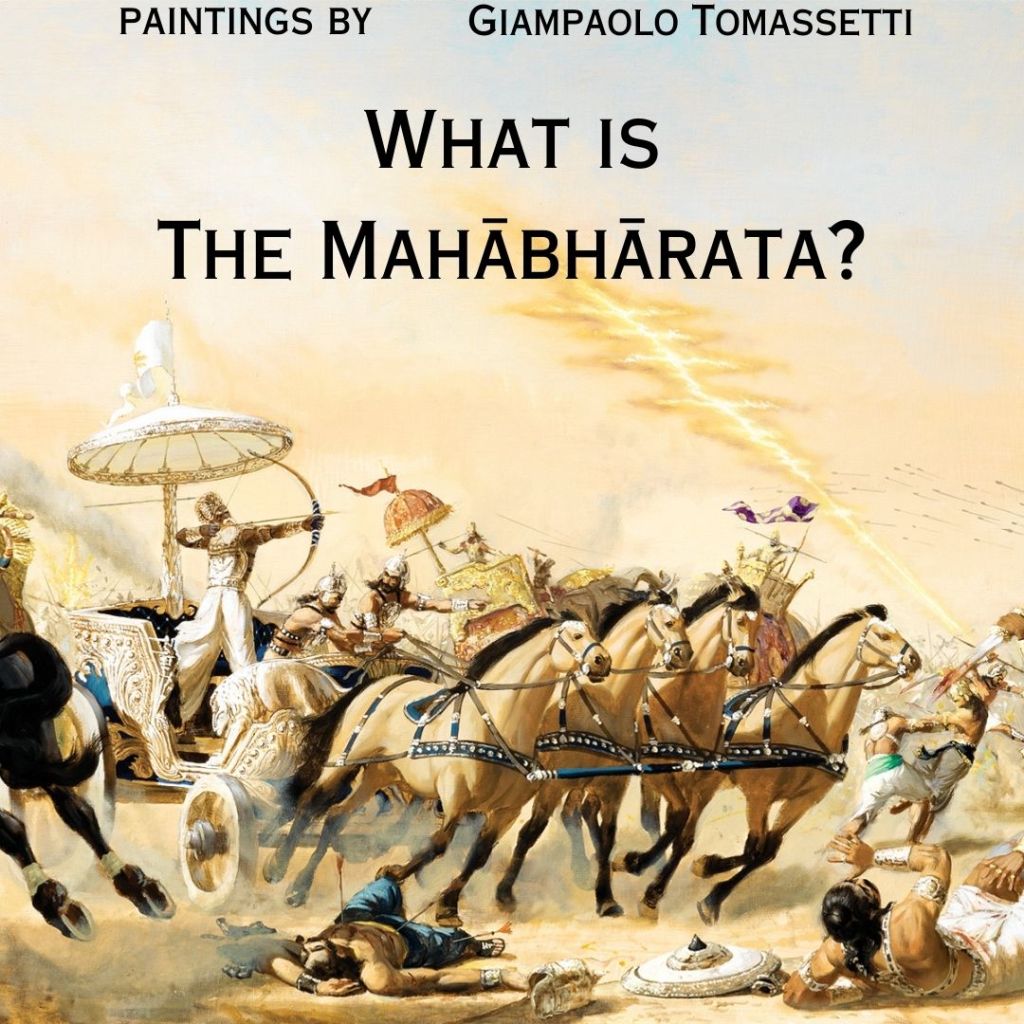
WHY THE MAHĀBHĀRATA?
a question any scholar should ask themselves, i would argue, is why? why is my research relevant, why should i conduct this research in the first place, and how can it answer to questions of the present?
today, i am going to answer to this question with regards to the Mahābhārata. why should we care about an ancient epic poem? first of all, because the Mbh is not a dead, lifeless piece of literature. i would argue, and this is one of the main claims i will construct in my phd thesis, that the Mbh is ever-fluid and ever-changing. throughout centuries, there have been countless of retellings of the epic, each bearing differences, interpolations. does this mean that they are invalid? i would maintain that they are very much valid, and the continuous changes shaping and re-shaping the epic come as a result of its aliveness: it is alive, pulsing in the collective consciousness. in this full aliveness, the Mbh is moulded by society and culture as they evolve, acting as a mirror.
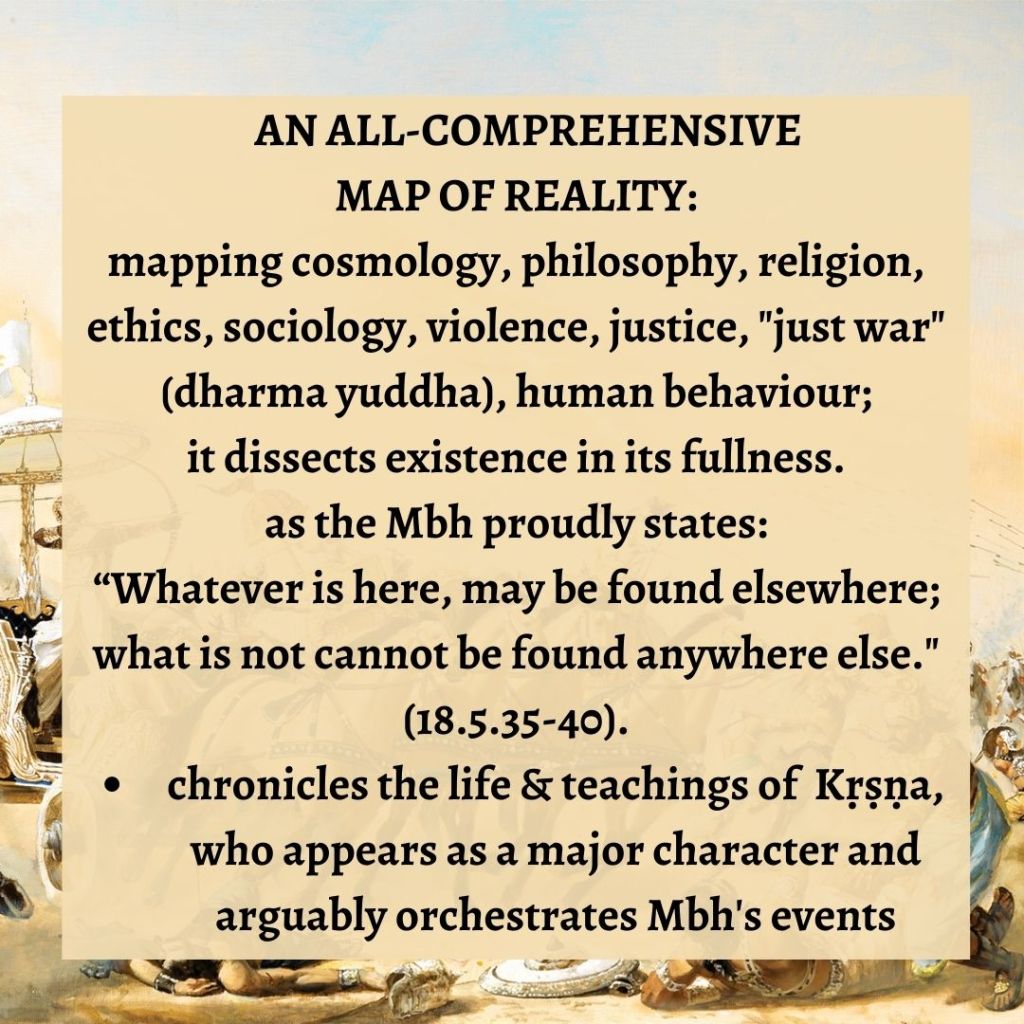
on the other hand, the Mahābhārata in itself proudly states that what you can find in it, you can find anywhere else, but you cannot find anywhere what does not exist in the Mbh; there is nothing that it does not address. in this, it tells us that it contains all answers and questions we can have – albeit in a very abstract and cryptic manner. for instance, it contains futuristic themes (for its time of creation), such as IVF and AI, and it addresses themes which are very relevant to the present day: religious violence, women’s rights, ethics. it answers to all questions we can have about the human condition; as although times are ever-changing, the human experience always remains the same, or so i would maintain: the questions we ask ourselves at their core remain the same, although the experience will be manifested or expressed differently at surface level. the Mbh thus contains inexhaustive areas of self-exploration and opportunities to understand ourselves and the world.
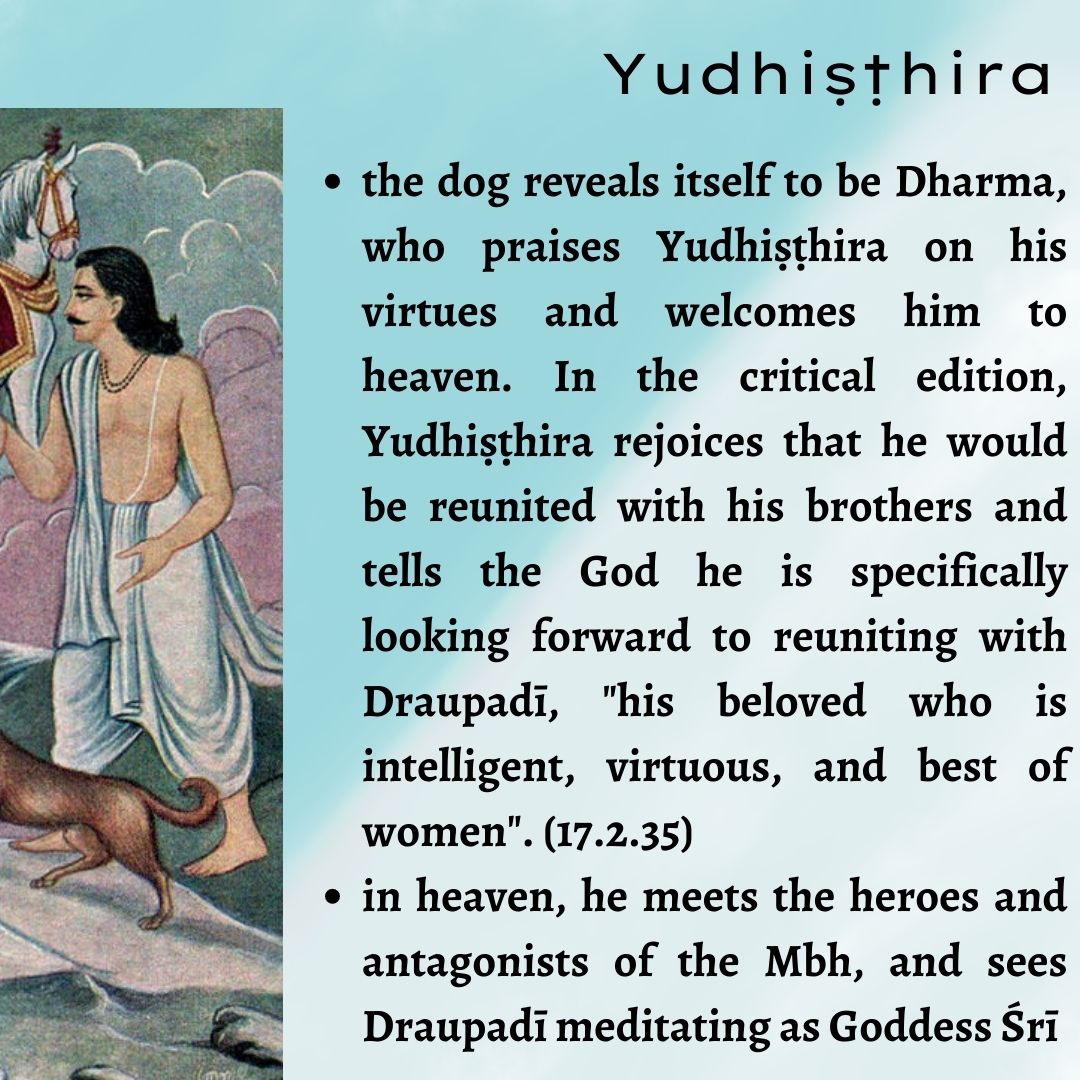
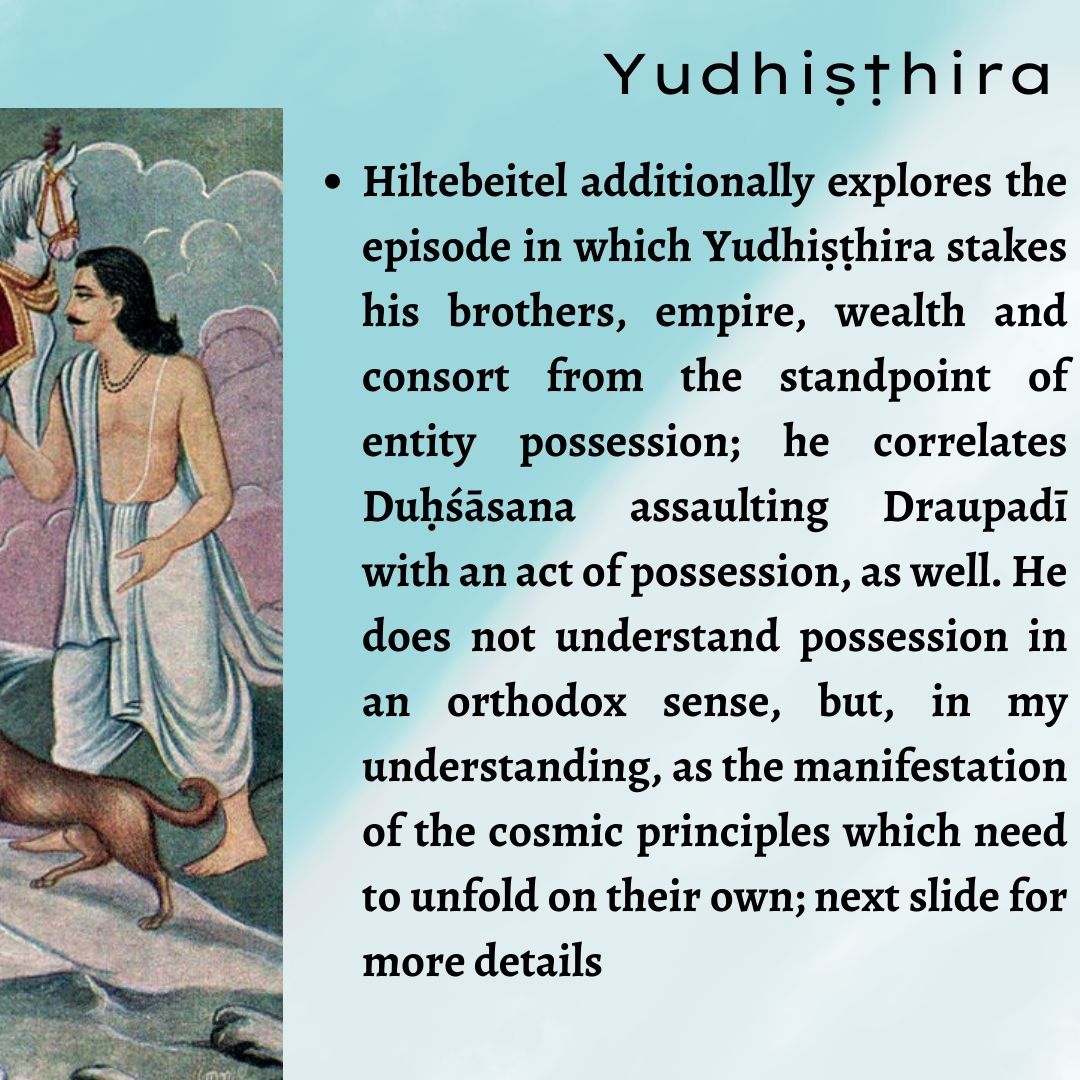
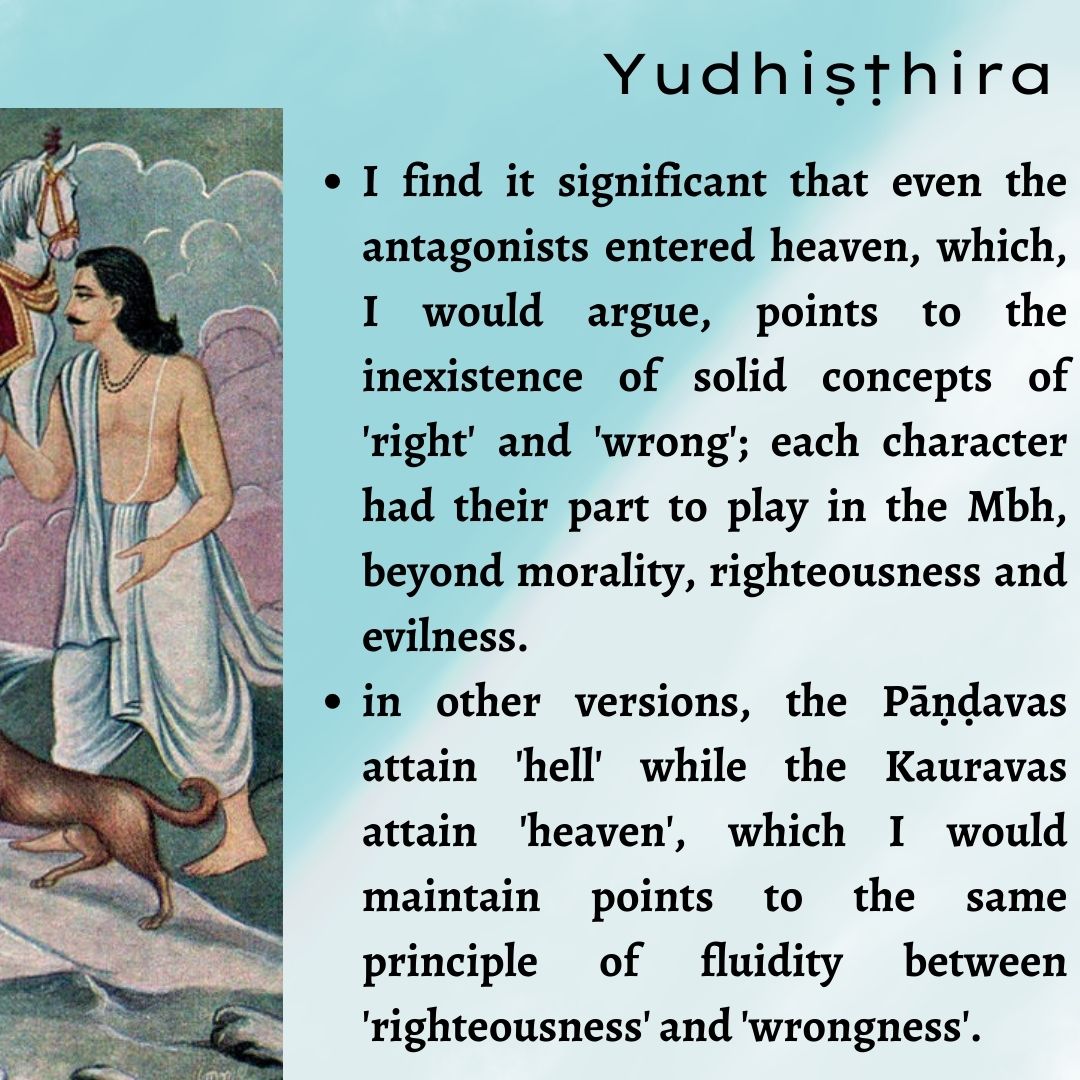
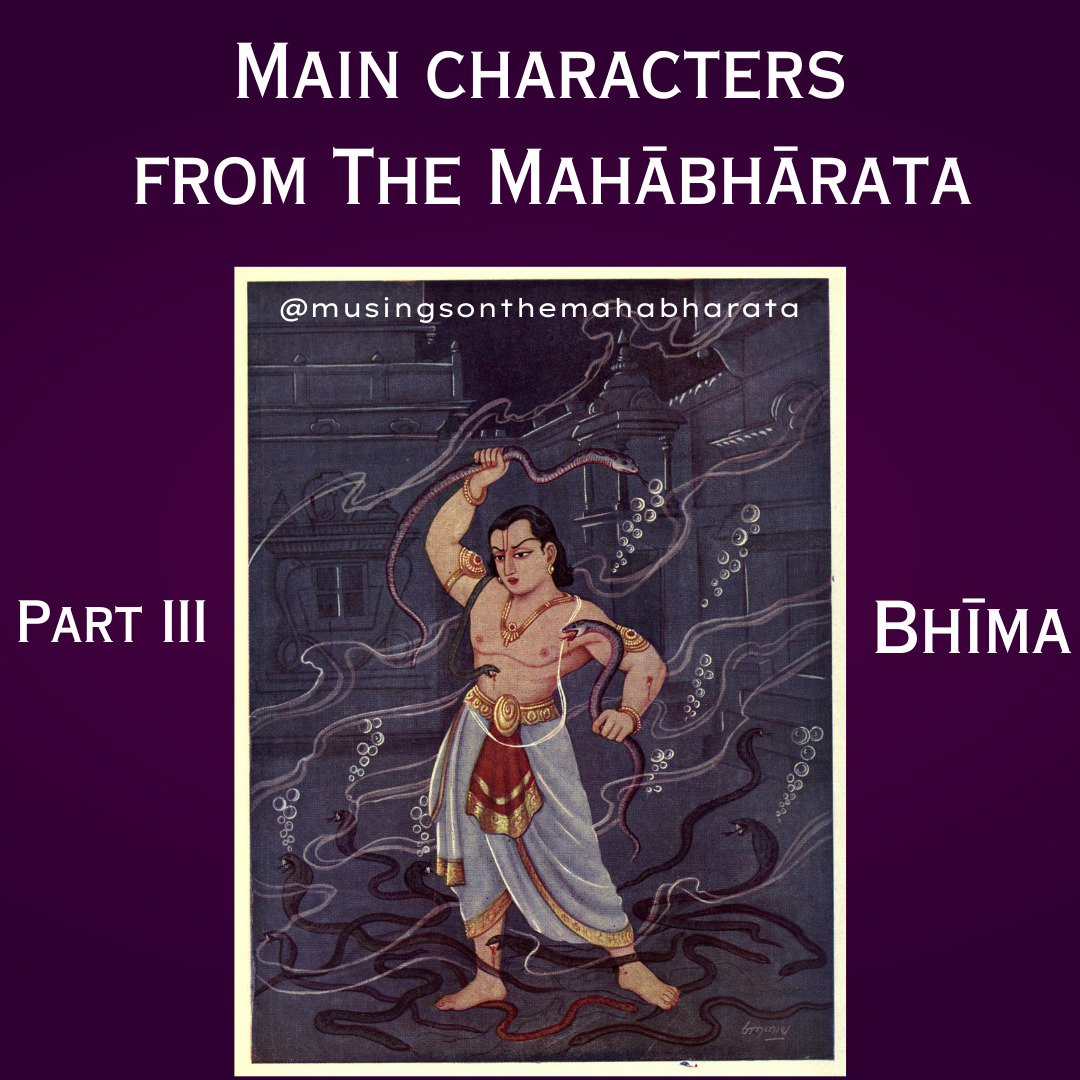
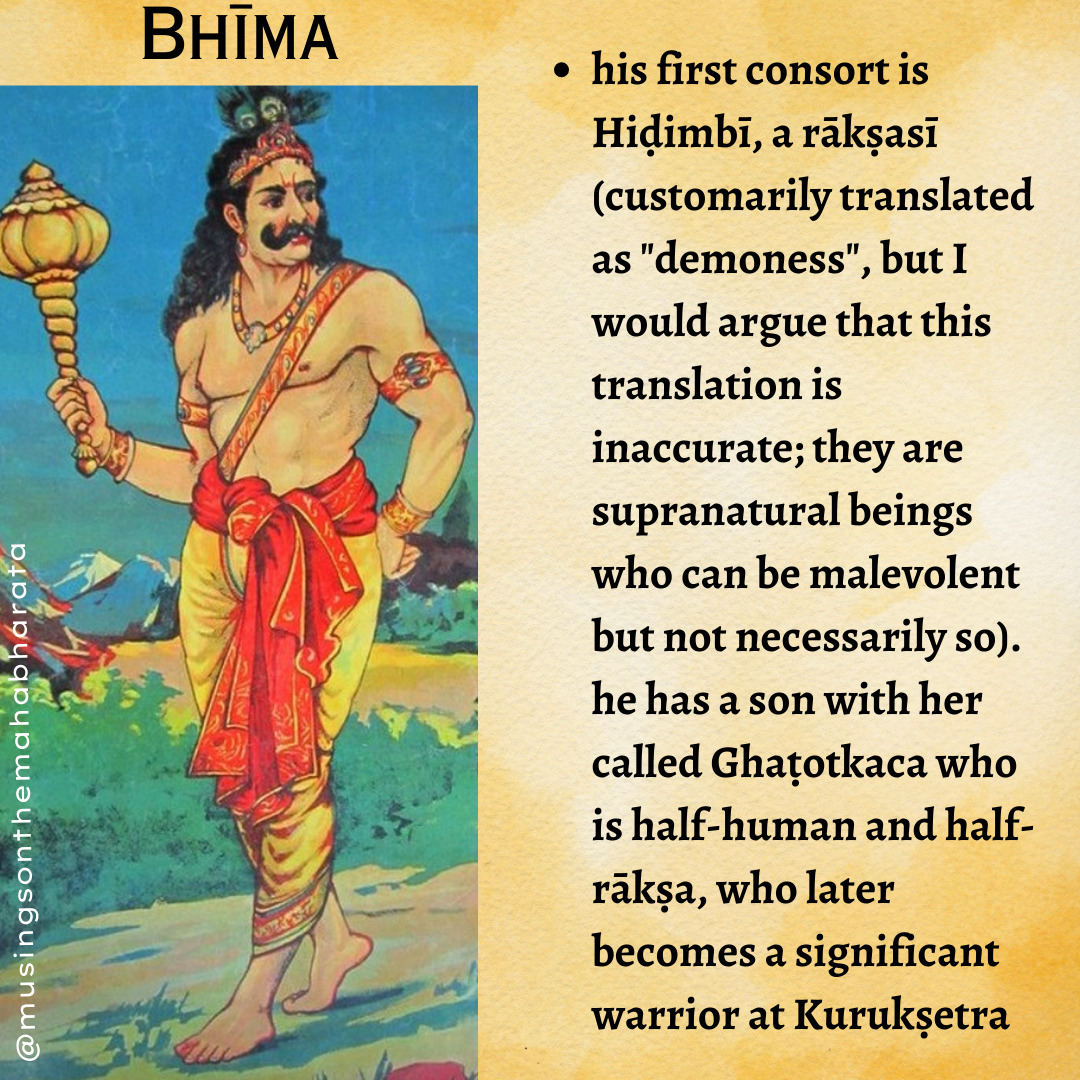
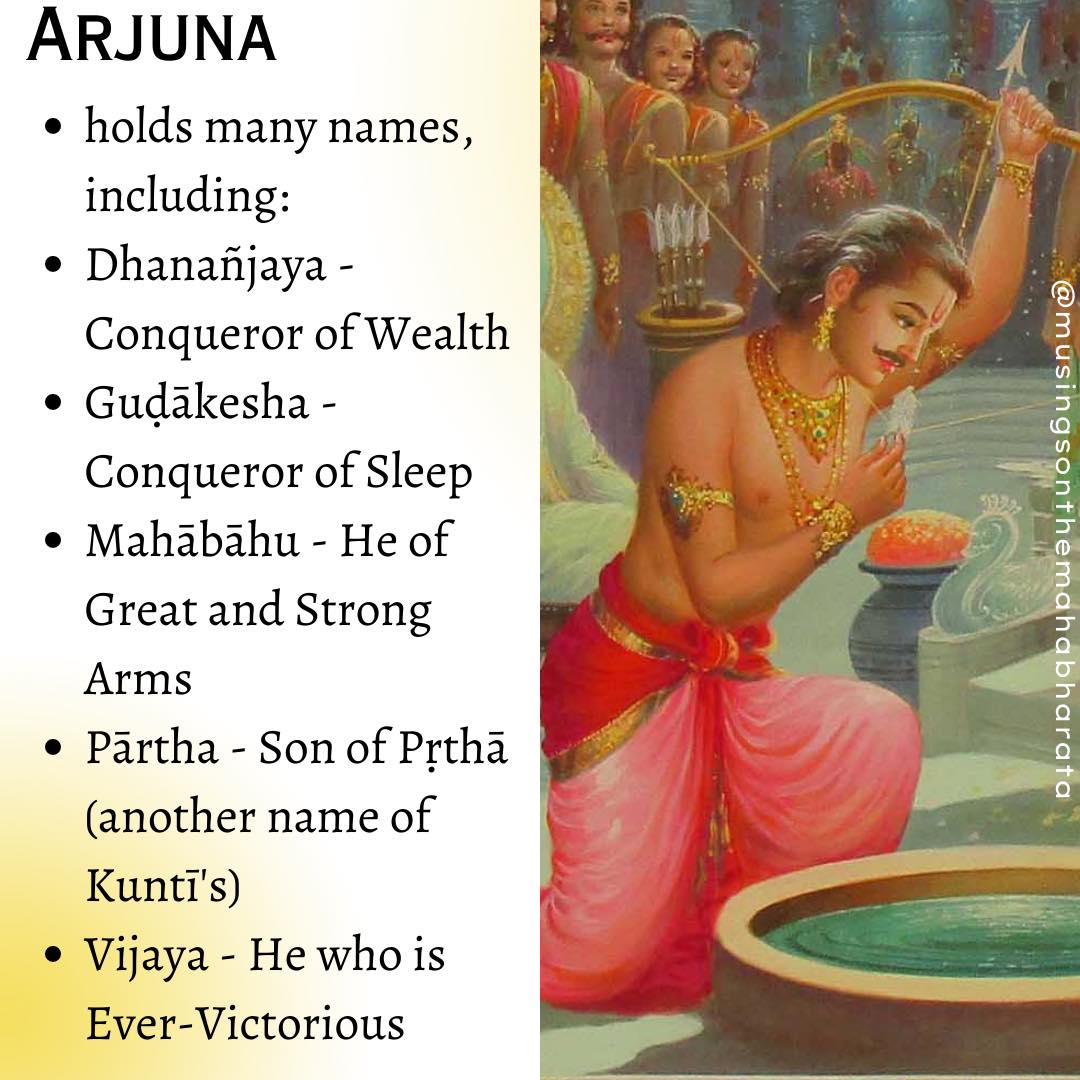
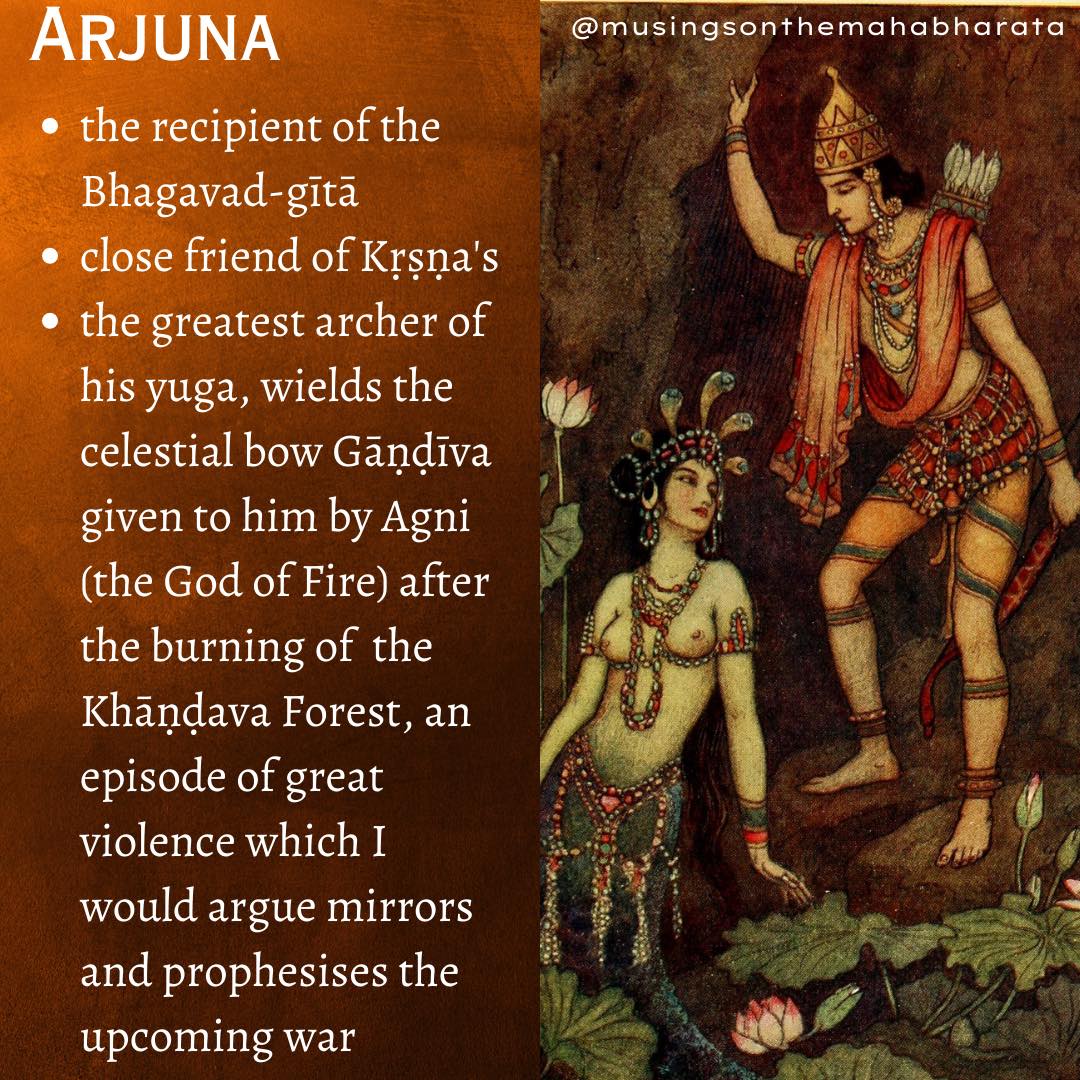
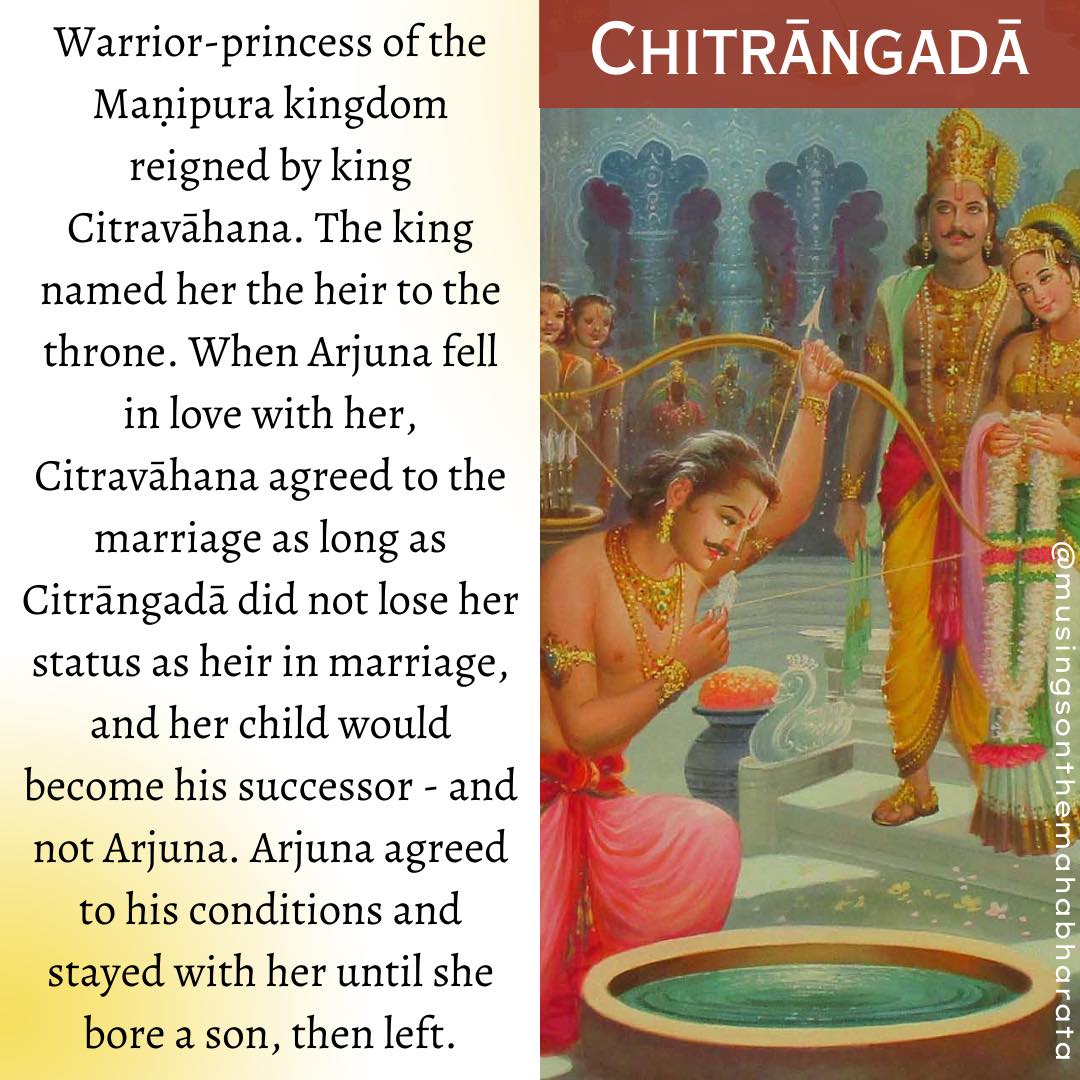
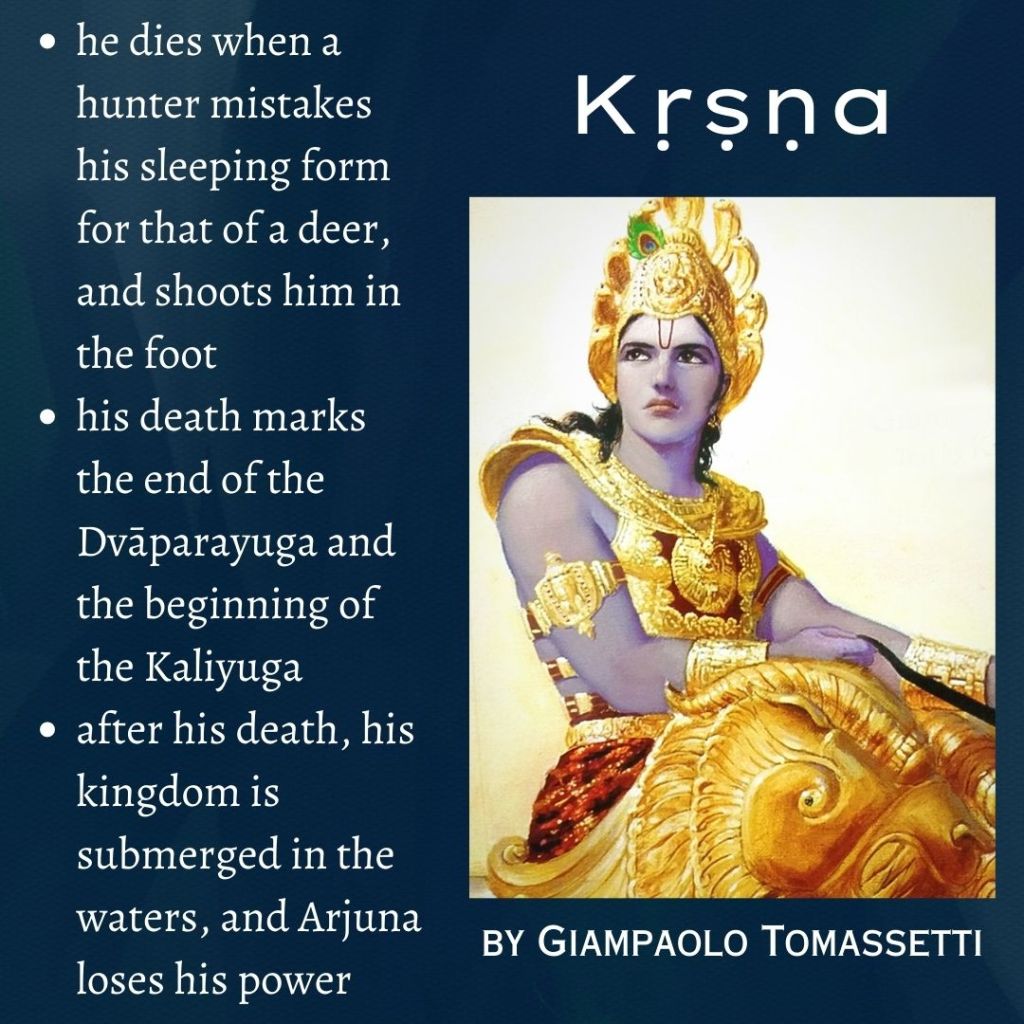
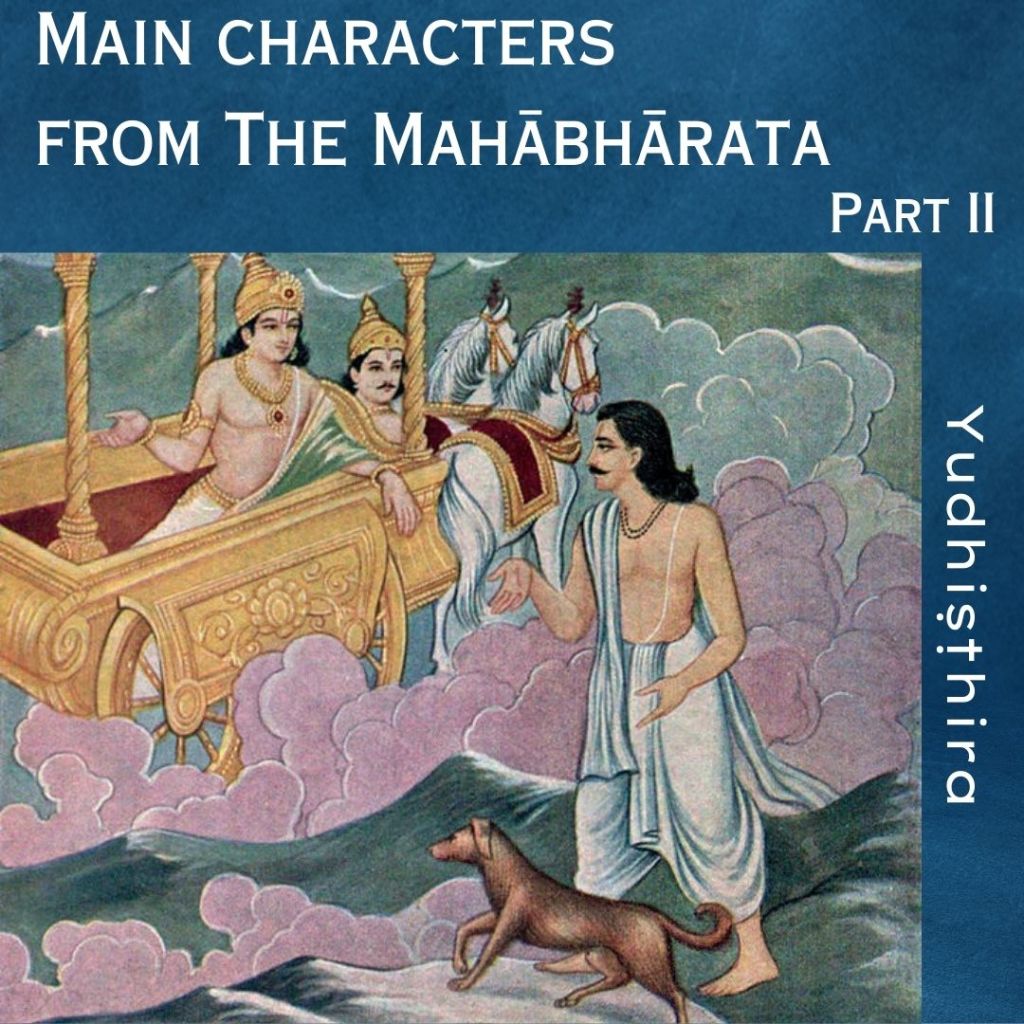
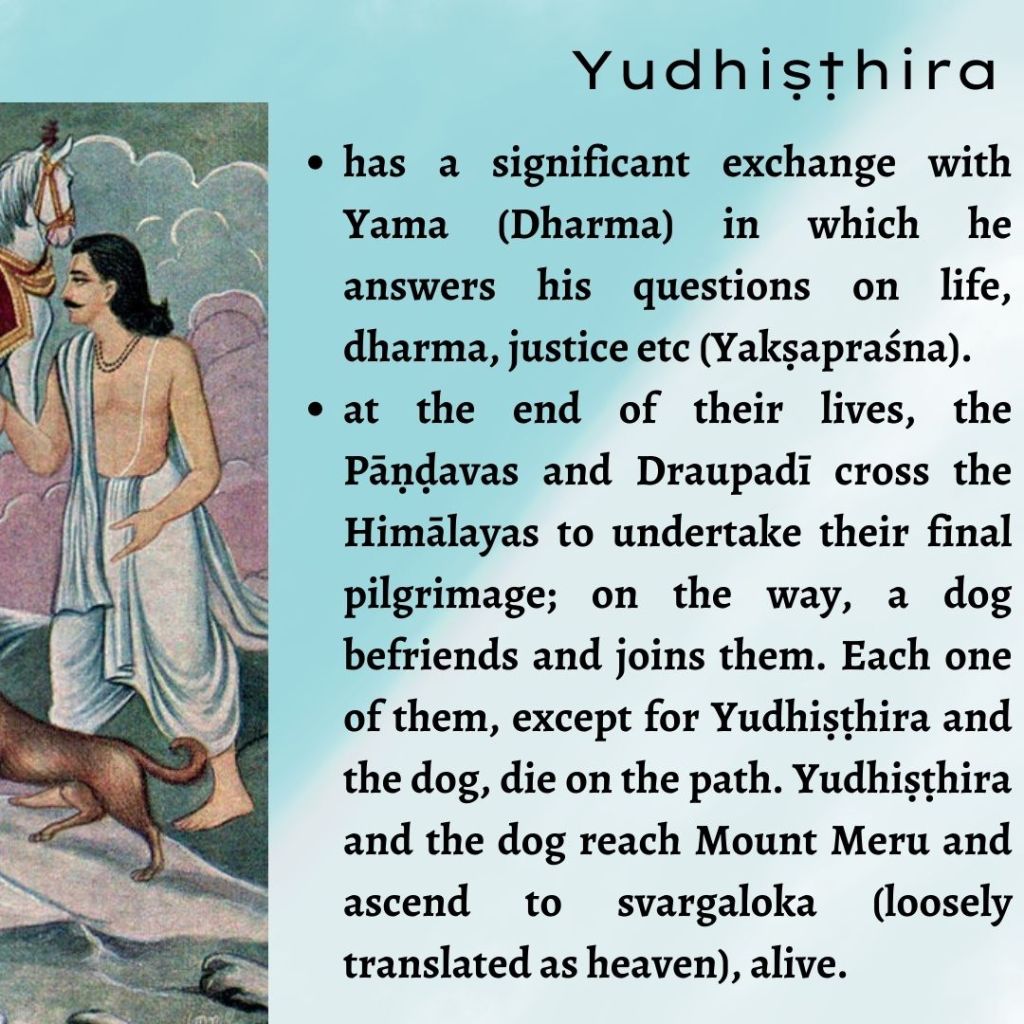
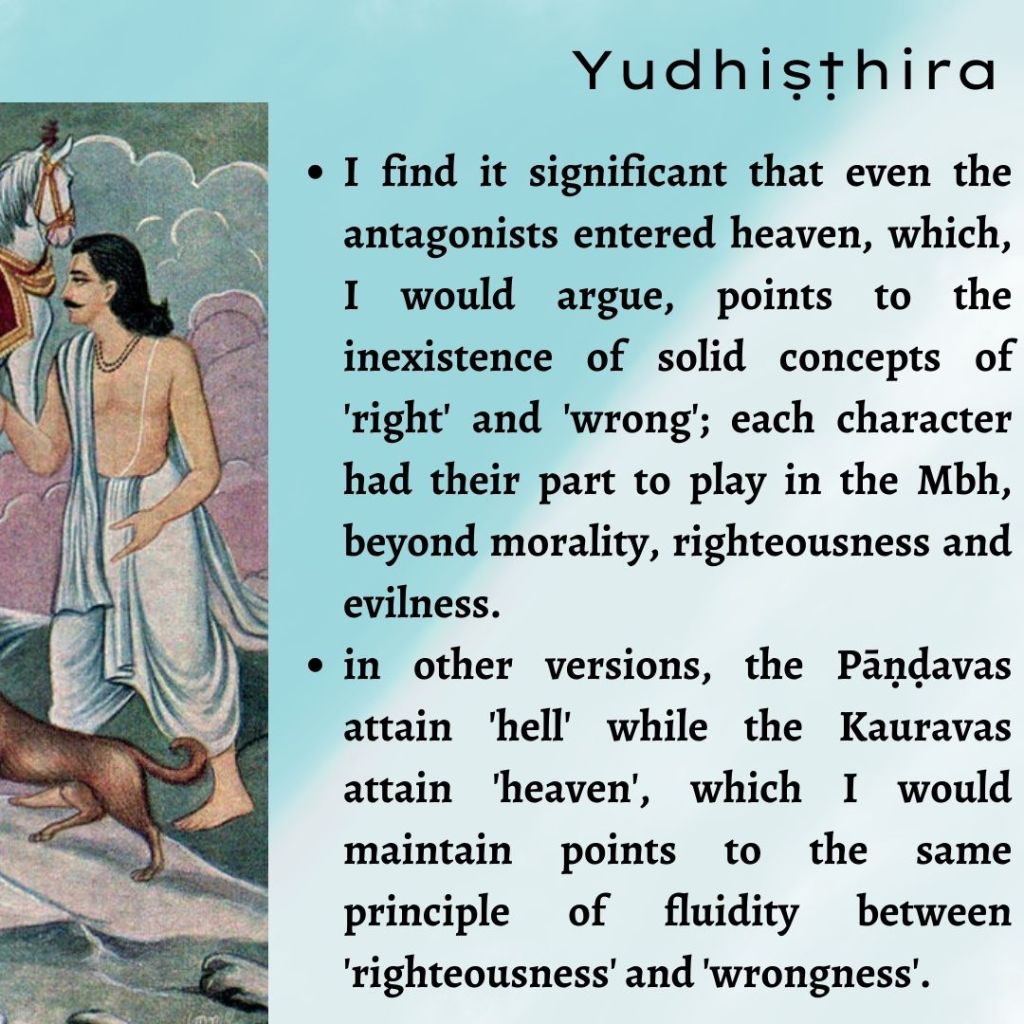
101 on the Mbh – infographics below! (parts 1, 2, 3… of many!)




























 amaryllis