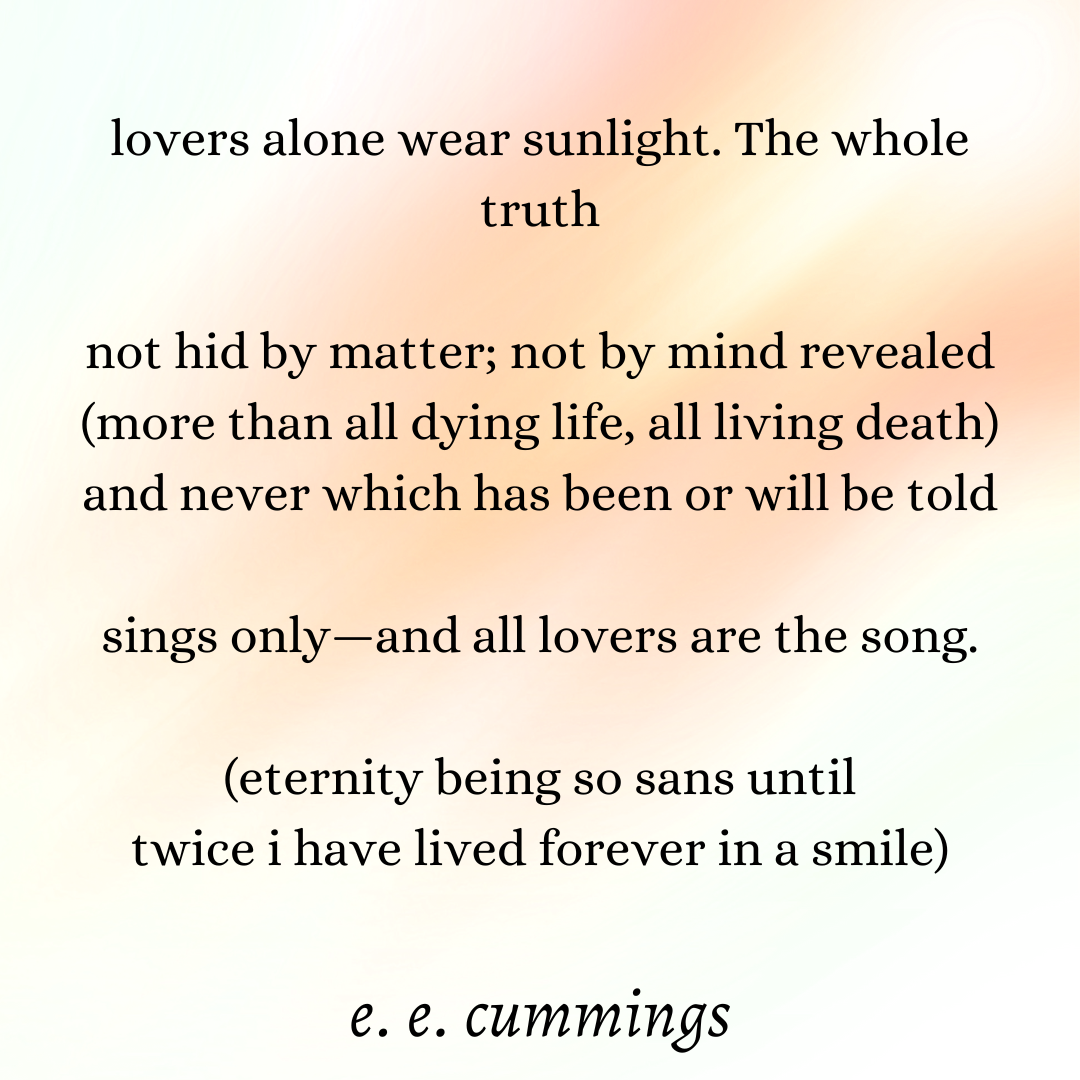
in my undergraduate degree, i studied western poetry, and one of the poets i focused on was the beguiling e. e. cummings. in the past two years, i have been exclusively exploring eastern poetry in my postgrad, and it is only recently that i have begun to see how the two apparent different worlds and approaches illuminate each other. one of the elements i am most interested in at the moment is the process of individualising the universal experience; or how to express the universal through means of individuality.
this, with relation to cummings and bhakti poetry: cummings, a pioneer of experimental poetry, created his own language, which functions, i would maintain, like an authorship stamp: he used conjunctions as nouns, rewrote linguistic rules, introduced spacing as verbs etc. his poetry addresses themes looked down upon by other avantgarde poets of his time (and our time!) such as love and nature, yet it is the creation of his own language and the erotic notes of his poetry that revolutionise and freshen the apparent cliché of his subject matter.
similarly, bhakti poets, who write about ‘common’ topics such as love and separation, revolutionise these universal themes by pinpointing the object of desire to be God, and by introducing eroticism as worship. and, their authorship stamps (example: Akkā Mahādevī’s Chennamallikarjuna – more on this later!) distinguish and establish their poetic voices as individual in the context of universality.
fascinating how the experience can be both universal yet unique as it expresses itself individually through us, and how marvellous the intricacies of language and poetry are, how beautifully they thread us together through traditions, genres, times and worlds! 🤍
sidenote, i did use the word ‘cliché’ as a convention, but i don’t believe in clichés exactly because of this reason.
part of my #poetrybeautyseries, in which i share my favourite poetry lines and muse on their significance! on pessoa:
to me, fernando pessoa is one of the most fascinating poets to have graced this earth. he created 81 heteronyms for himself – meaning, 81 different characters or identities he assumed while writing. each had a different personality, background story, style. in awe with the mind-blowing imagination of this beautiful man. here’s a fragment from ‘discontinuous poems’, which he wrote as alberto caeiro, and which is grounded in a non-dual view, in my opinion. planning to make a video about him soon 🖤
on ginsberg:
although this quote is well-known, its context isn’t! it’s an excerpt from an interview with Ginsberg from Writers Digest, edited by Bill Strickland (p.47), in which he talks about the importance of expressing yourself without caring for validation or recognition.
“It’s more important to concentrate on what you want to say to yourself and your friends. Follow your inner moonlight; don’t hide the madness. Take (William Carlos) Williams: until he was 50 or 60, he was a local nut from Paterson, New Jersey, as far as the literary world was concerned. He went half a century without real recognition except among his friends and peers.
You say what you want to say when you don’t care who’s listening. If you’re grasping to get your own voice, you’re making a strained attempt to talk, so it’s a matter of just listening to yourself as you sound when you’re talking about something that’s intensely important to you.”




 amaryllis