I attended a screening of “Her Name Was Sītā” at Edinburgh University’s Centre for South Asian Studies last month, an incredible film by Heshani Sothiraj Eddleston that explores shame and the concept of female virtue, and how these can drive women to suicide through religious discourse and socio-cultural castigation.
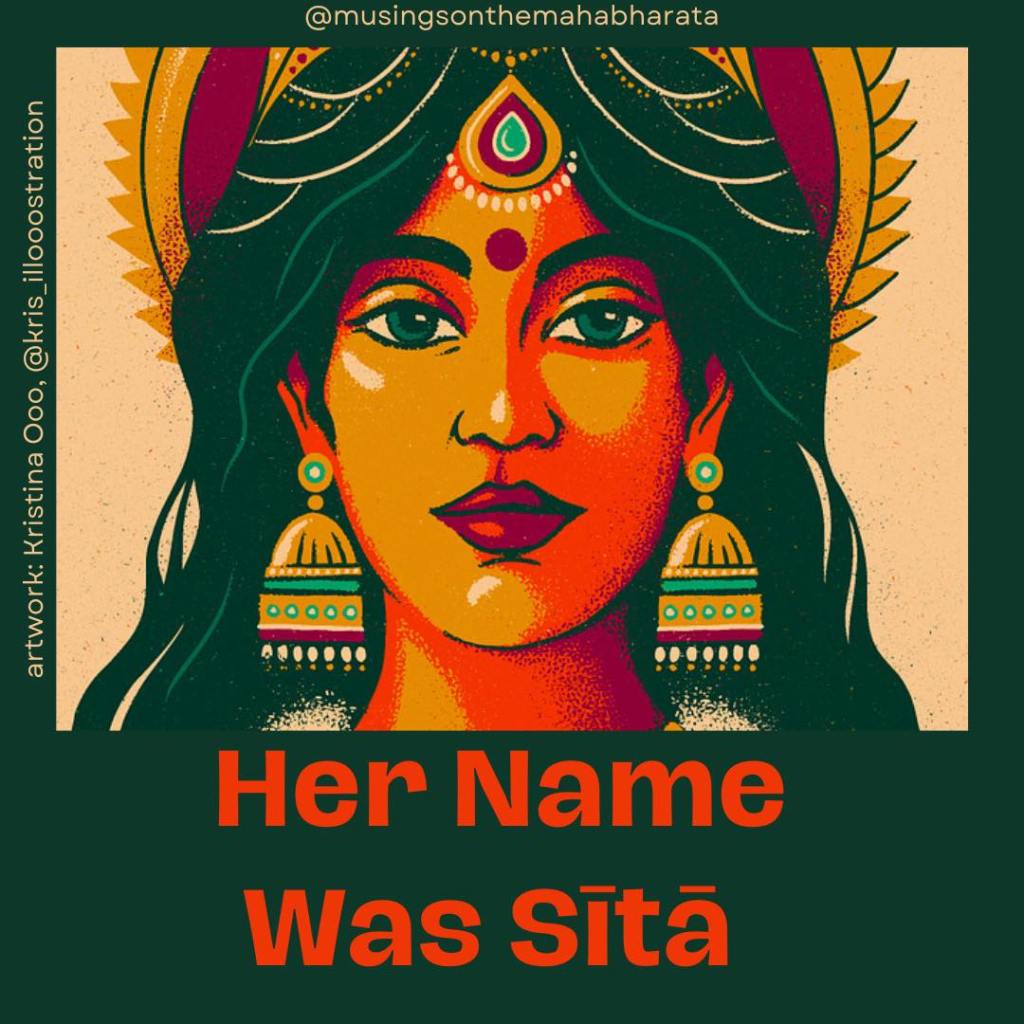
Sītā, as a character, Goddess or symbol, is not addressed directly in the film except for in the title, but I would maintain that this initial evocation builds a framework to process the film in. Sītā, as a key figure of itihāsa (Sanskrit for “so it was”, a body of work that accounts past events / the history of the Hindu streams or Hindu universe, of which the Mahābhārata and the Rāmāyaṇa are central components), holds an emblematic position in the South Asian collective consciousness as an archetype of female virtue, sacrifice, female suffering and tragedy. Notably, I would maintain that this is a limiting association and that Sītā, as with any element of itihāsa, can be decoded in expansive ways that subsume and transcend those connotations.
Regardless, the associations are there, and there is power in that, as well as in a name; symbols and names such as Sītā and Draupadī hold in themselves potential to be approached as mediums through which we can understand gender programming, socio-cultural gender relations and the moral biases related to that. They therefore offer us the opportunity to deconstruct gendered conditioning; however, unfortunately, we generally do not take the leap to do so, and instead become further embroiled in contractions such as our identification with gender through the very tools that could free us.
Final note — the film shook me in many ways, would recommend watching it!
The stunning artwork credit: Kristina Ooo.
 awe!
awe!



 amaryllis