amaryllis (/ˌæməˈrɪlɪs/[1]) – bears the name of the shepherdess in virgil's pastoral eclogues. it stems from the greek ἀμαρύσσω (amarysso), meaning "to sparkle", and it is rooted in "amarella" for the bitterness of the bulb. the common name, "naked lady", comes from the plant's pattern of flowering that blooms when the foliage dies. in the victorian language of flowers, it means "radiant beauty".
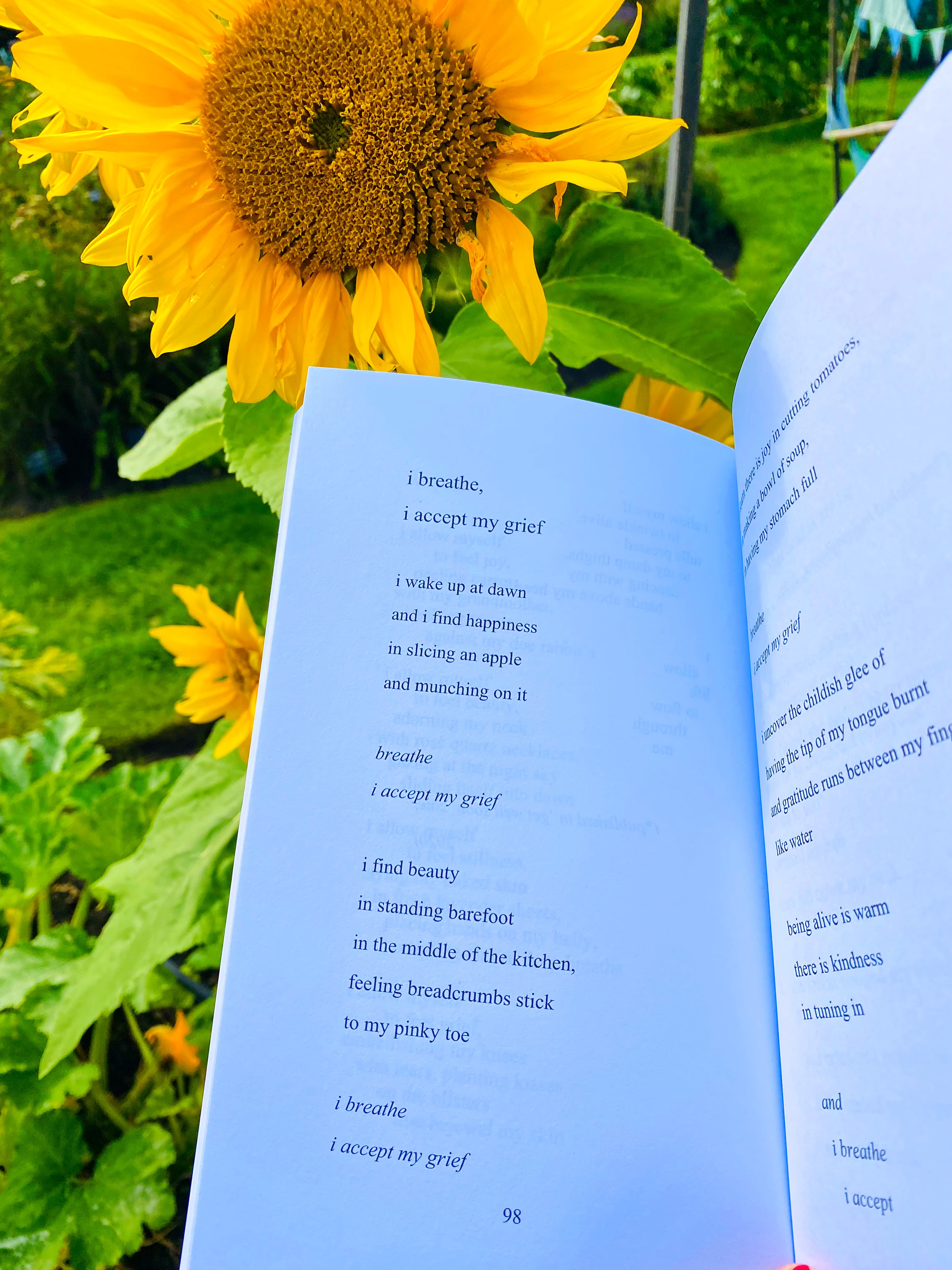
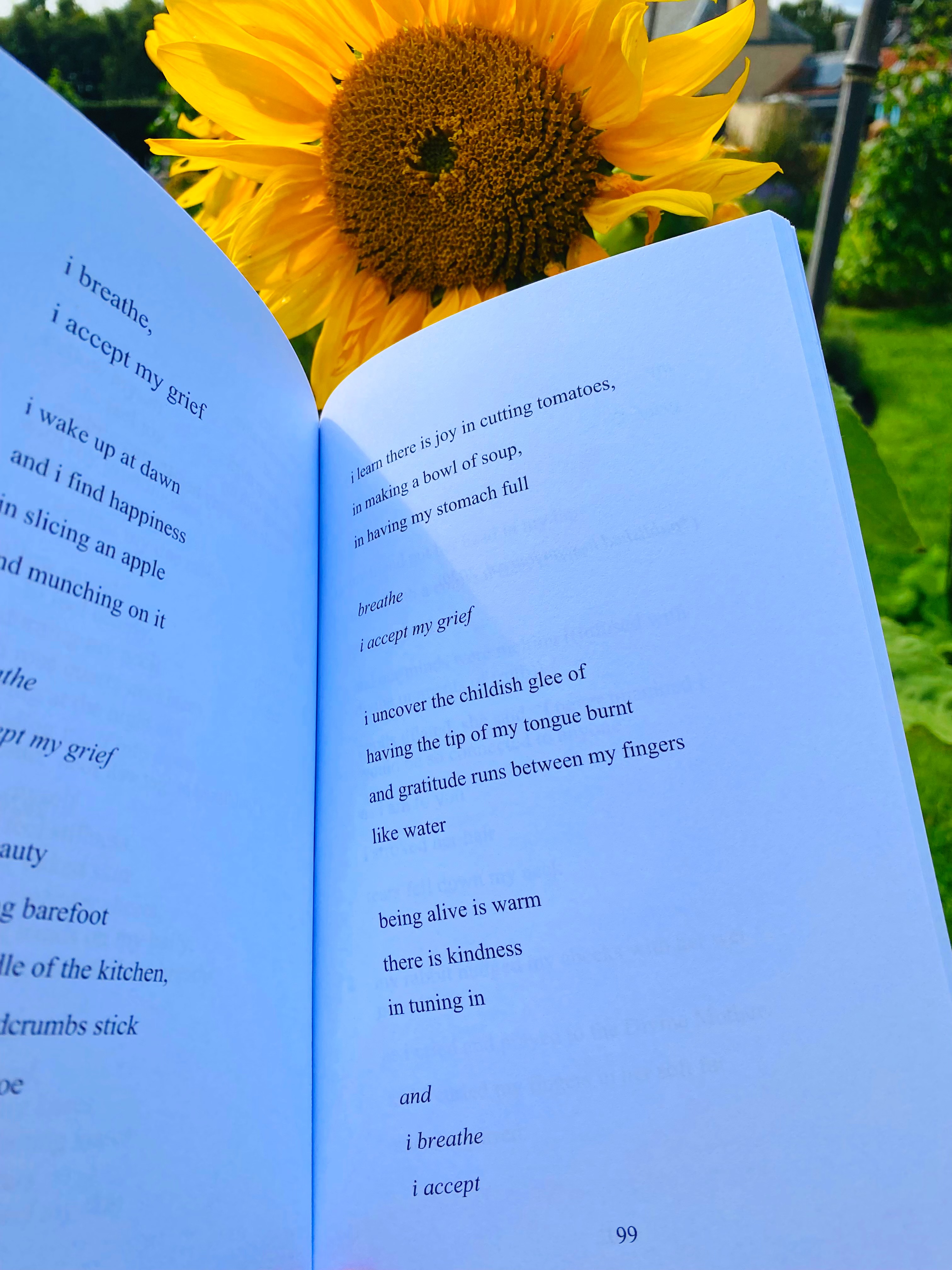
i wake up at dawn and i find happiness in slicing an apple and munching on it
𝘣𝘳𝘦𝘢𝘵𝘩𝘦 𝘪 𝘢𝘤𝘤𝘦𝘱𝘵 𝘮𝘺 𝘨𝘳𝘪𝘦𝘧
i find beauty in standing barefoot in the middle of the kitchen, feeling breadcrumbs stick to my pinky toe 𝘪 𝘣𝘳𝘦𝘢𝘵𝘩𝘦 𝘪 𝘢𝘤𝘤𝘦𝘱𝘵 𝘮𝘺 𝘨𝘳𝘪𝘦𝘧 i learn there is joy in cutting tomatoes, in making a bowl of soup, in having my stomach full
𝘣𝘳𝘦𝘢𝘵𝘩𝘦 𝘪 𝘢𝘤𝘤𝘦𝘱𝘵 𝘮𝘺 𝘨𝘳𝘪𝘦𝘧
i uncover the childish glee of having the tip of my tongue burnt and gratitude runs between my fingers like water being alive is warm there is kindness in tuning in and
𝘪 𝘣𝘳𝘦𝘢𝘵𝘩𝘦 𝘪 𝘢𝘤𝘤𝘦𝘱𝘵 𝘮𝘺 𝘨𝘳𝘪𝘦𝘧. ☼
from “at last, light: of joy”, the third section of my “songs of youth”. 🌻 {amazon u.k.: https://amzn.eu/d/0duef5g}
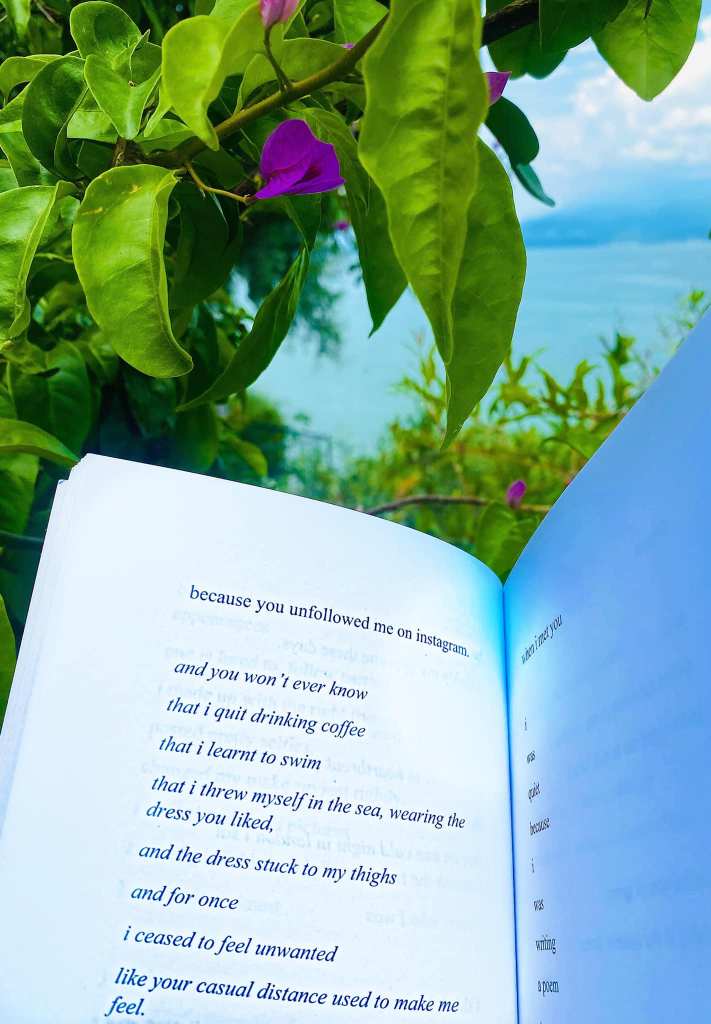
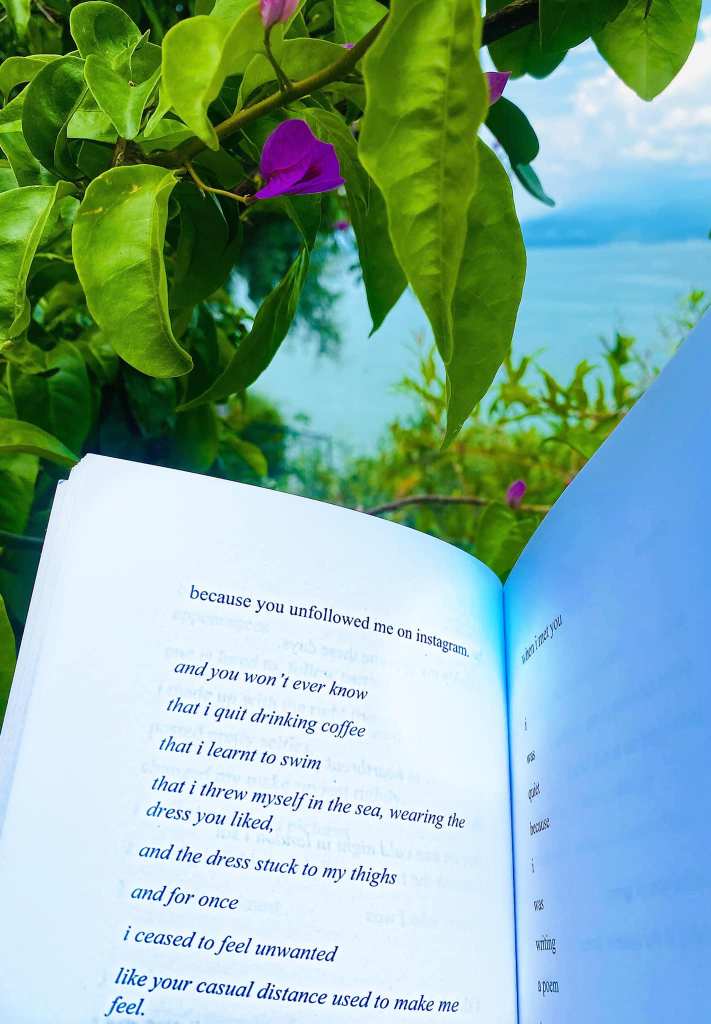
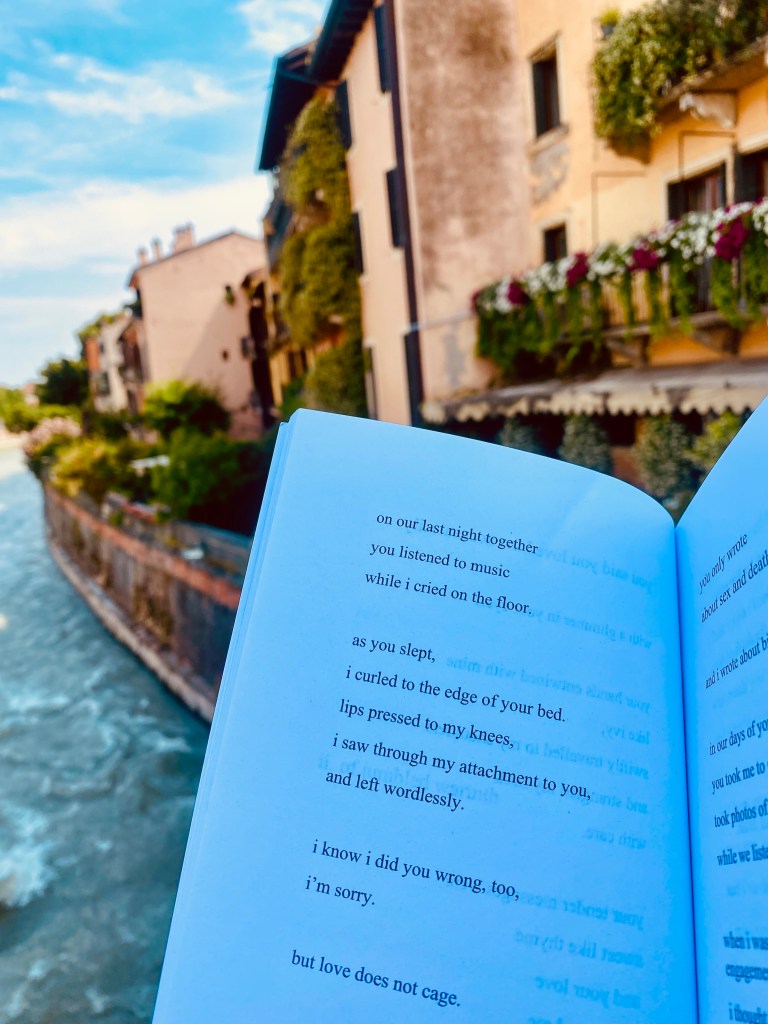
slighting bhakti poetry, the poems belonging to the “of jumbled warmth” section of ~ songs of youth ~ are poems i wrote which would most closely resemble what would be known as poems of love. sharing the ending stanzas of “you said you loved me accusatorily” from verona, the city of love!
*when i mused something similar, my very wise friend @flagrantambiguity noted that all poetry is love poetry in essence, only not in the customary way we think about love – which i *love*-d 🫀😁 because, indeed, to write a poem about something implies devotion to it – be it devotion to anger, grief or hatred. (my take!)
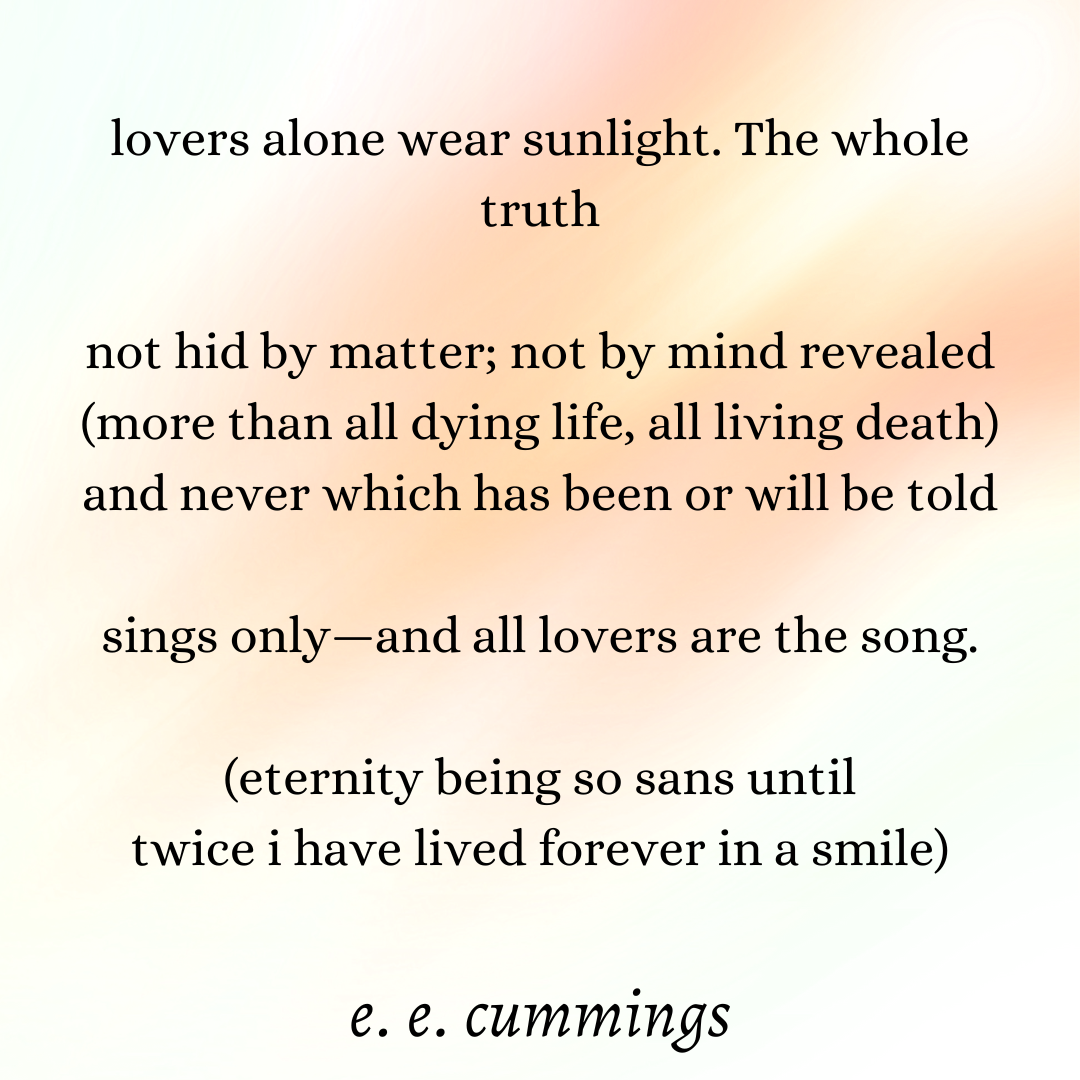
in my undergraduate degree, i studied western poetry, and one of the poets i focused on was the beguiling e. e. cummings. in the past two years, i have been exclusively exploring eastern poetry in my postgrad, and it is only recently that i have begun to see how the two apparent different worlds and approaches illuminate each other. one of the elements i am most interested in at the moment is the process of individualising the universal experience; or how to express the universal through means of individuality.
this, with relation to cummings and bhakti poetry: cummings, a pioneer of experimental poetry, created his own language, which functions, i would maintain, like an authorship stamp: he used conjunctions as nouns, rewrote linguistic rules, introduced spacing as verbs etc. his poetry addresses themes looked down upon by other avantgarde poets of his time (and our time!) such as love and nature, yet it is the creation of his own language and the erotic notes of his poetry that revolutionise and freshen the apparent cliché of his subject matter.
similarly, bhakti poets, who write about ‘common’ topics such as love and separation, revolutionise these universal themes by pinpointing the object of desire to be God, and by introducing eroticism as worship. and, their authorship stamps (example: Akkā Mahādevī’s Chennamallikarjuna – more on this later!) distinguish and establish their poetic voices as individual in the context of universality.
fascinating how the experience can be both universal yet unique as it expresses itself individually through us, and how marvellous the intricacies of language and poetry are, how beautifully they thread us together through traditions, genres, times and worlds! 🤍
sidenote, i did use the word ‘cliché’ as a convention, but i don’t believe in clichés exactly because of this reason.
part of my #poetrybeautyseries, in which i share my favourite poetry lines and muse on their significance! on pessoa:
to me, fernando pessoa is one of the most fascinating poets to have graced this earth. he created 81 heteronyms for himself – meaning, 81 different characters or identities he assumed while writing. each had a different personality, background story, style. in awe with the mind-blowing imagination of this beautiful man. here’s a fragment from ‘discontinuous poems’, which he wrote as alberto caeiro, and which is grounded in a non-dual view, in my opinion. planning to make a video about him soon 🖤
on ginsberg:
although this quote is well-known, its context isn’t! it’s an excerpt from an interview with Ginsberg from Writers Digest, edited by Bill Strickland (p.47), in which he talks about the importance of expressing yourself without caring for validation or recognition.
“It’s more important to concentrate on what you want to say to yourself and your friends. Follow your inner moonlight; don’t hide the madness. Take (William Carlos) Williams: until he was 50 or 60, he was a local nut from Paterson, New Jersey, as far as the literary world was concerned. He went half a century without real recognition except among his friends and peers.
You say what you want to say when you don’t care who’s listening. If you’re grasping to get your own voice, you’re making a strained attempt to talk, so it’s a matter of just listening to yourself as you sound when you’re talking about something that’s intensely important to you.”
the last few days have been tender, and last night i was happy to reconnect with a friend from university whom i studied film with. we exchanged kind words as well as poetry. after we both shared that we warmed each other’s hearts, i found myself thinking how much i treasure these brief moments of connection, yet how i often don’t enjoy them fully because i generally am so immersed in my mind palace and narratives, so overly focused on my insecurities, internal drama or questions of right and wrong that the beauty of life passes me by. i mentally noted a line i could have seen in a poem, ‘to bring and receive a little beauty to and from others is enough’, and i scribbled this quick poem this afternoon.
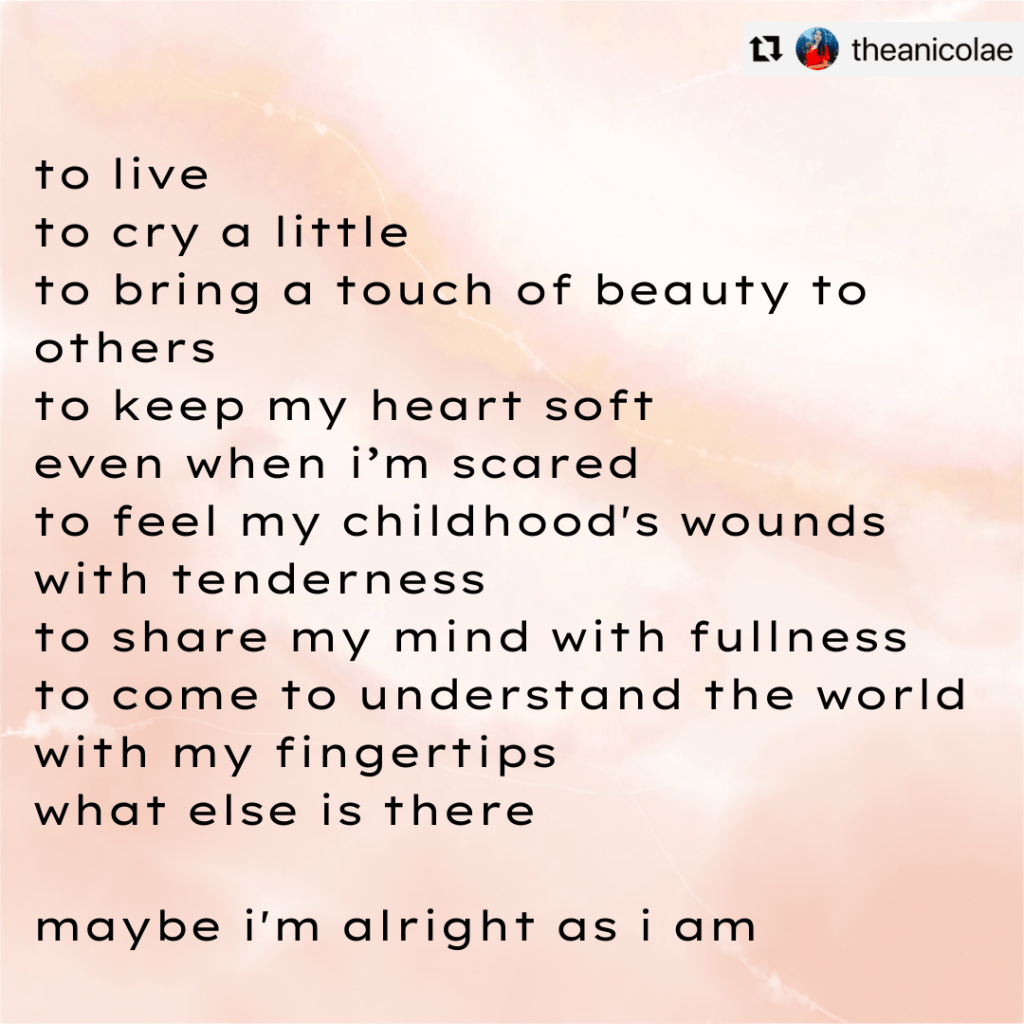
to live to cry a little to bring a touch of beauty to others to keep my heart soft even when i’m scared to feel my childhood’s wounds with tenderness to share my mind with fullness to come to understand the world with my fingertips what else is there
i had thought that i was just a girl who wanted to plant lemon trees but my hot blood scorched the vine trailing on the windowsill.
Keśava, you are pulling me to you by my teeth and i follow happily.
exploring the warm tones of warwickshire beauty 💛
i followed you into the seven seas and i followed you into the circle of mountains i have been calling you with folded hands and now i will dance to you with my mouth open and with flowers woven into my skin tissue.
monsoon one, did you know that the crevices of my heart can hold you whole? did you know that the fire in my belly can swallow the three worlds?
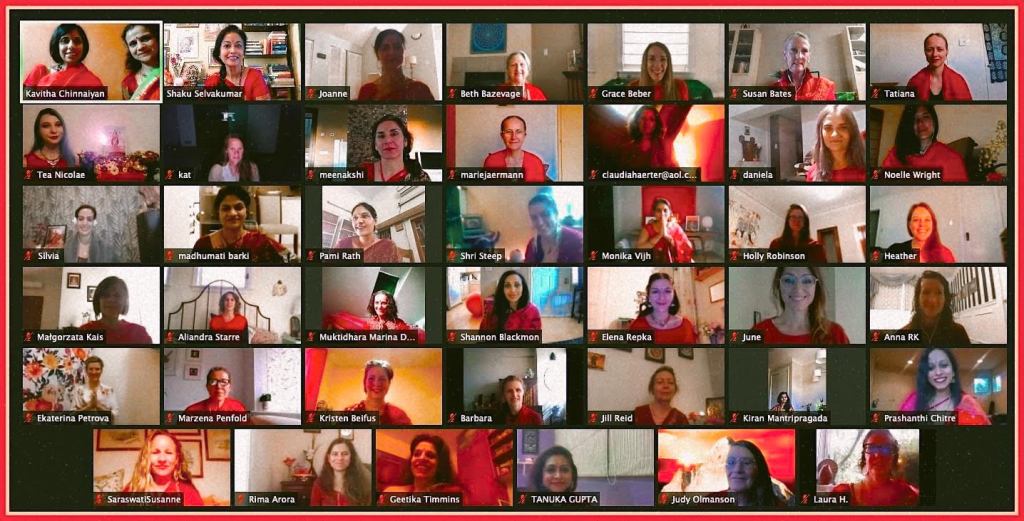
the Guhyāsādhanā-tantra tells us that fortunate are those who become the śiṣyas of a teacher, and even more fortunate are those blessed to become the śiṣyas of a strī-guru, the latter only accomplished after lifetimes of sādhanā. so unimaginable is my fortune as a student of Kavithaji Ammā, who has guided me to see glimpses of the beauty and truth veiled inside me and in all that is – who is polishing my rough edges so they can one day shine like diamonds. to finally be with Ammā & with the saṅgha in-person has been the greatest gift. śrī mātre namaḥ! śrī gurubhyo namaḥ! ♥️
the winter Śabdācāra retreat: the most beautiful moments of my life, spent in one of the most beautiful places, with the most beautiful people. tears, intimacy, connection, love, grace, flow, tenderness, and sweet vulnerability – all rushing through the light of the guru. dearest saṅgha, i did not know love before you.
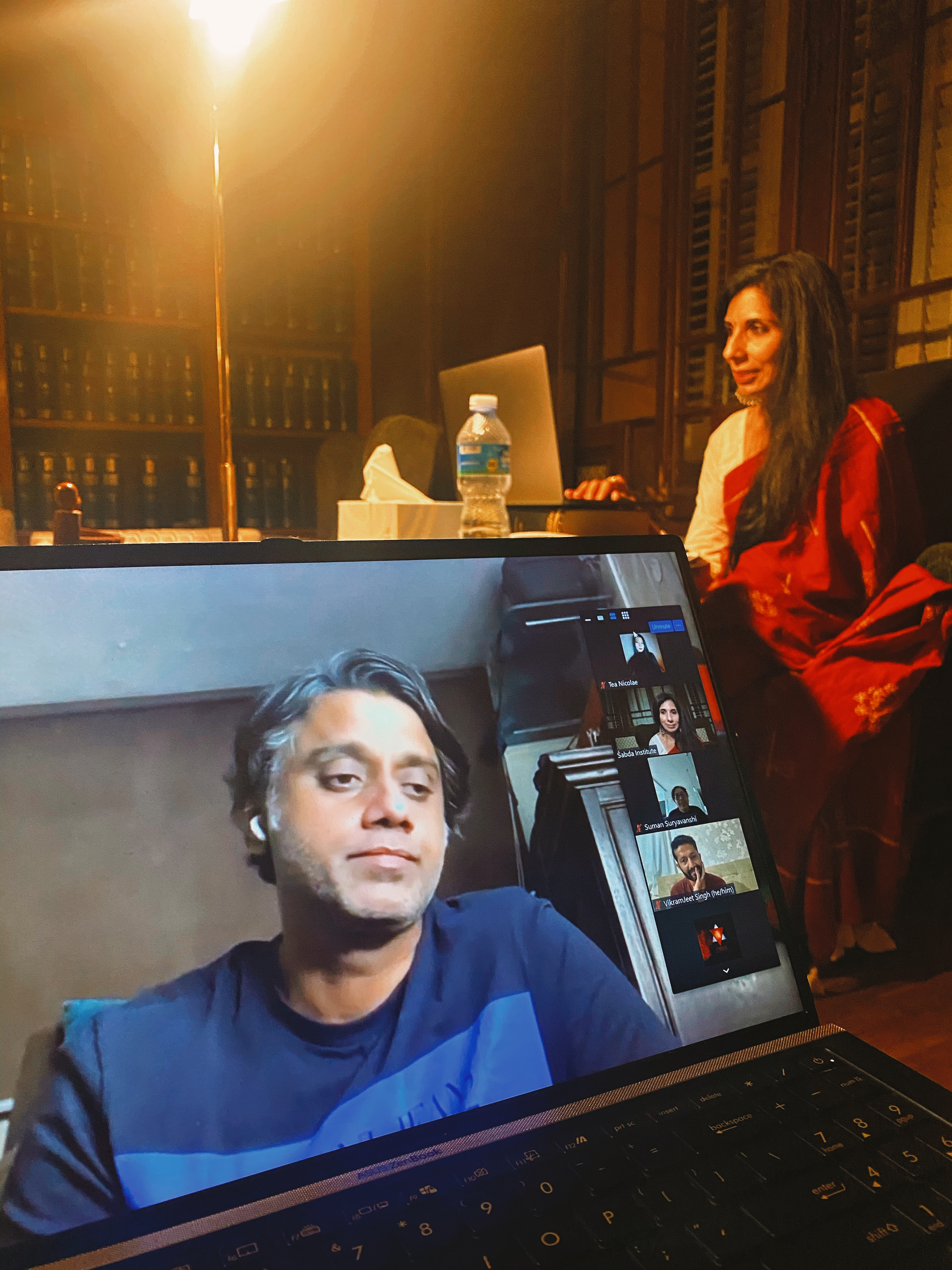
happy Vijayadaśamī! from this month’s newsletter of Śabda Institute. honoured that my poem accompanies the announcement of such an exquisite offering in this highly auspicious time, may our longing fuel our sādhanā, and may our devotion sweeten its unfolding.
Dear One,
The Śabda Saṅgha is continuing its study of the Bhagavad Gītā with a new theme – that of Bhakti Yoga. In honour of this new cycle of study, we are pleased to share a beautiful poem of longing and devotion by one of Kavithaji’s students, Téa Nicolae.
thirst infused with devotion my days unfurl tenderly chinks fissure the armour plate of the self and life dances through the cracks madly enamoured i long for the Beloved’s caress my throat, so swollen my mouth, so parched my Beloved quenches the thirst: grace pours down in ripples i drink hastily
happy international women’s day! 🌹 may we fearlessly open to our inherent power (śakti) within. ♥️ taking this opportunity to express my deepest gratitude to the women who transformed my life.
dearest saṅgha, i am so grateful for your exquisite & luminous presence. thank you for loving me for who i am and for supporting me without coddling me. thank you for listening to me without judgment and for holding space for me to unravel. thank you for trusting me. thank you for teaching me what true feminism and true empowerment mean. even though you are miles away from me, i feel you so unimaginably close. i am immensely honoured to be walking this wondrous path with you holding my hand. i love you from the bottom of my heart
pranām to our beloved teacher, who gave us this marvellous, once-in-a-lifetime opportunity to come together
śrī mātre namah
artwork credit: the very talented Anna Baartz!
from the future: Śabdācāra winter retreat, Barcelona, 2021.
you murmur
lips pressed
against
my
forehead
i look up
to you
your eyeballs
are shaking
your hair
is
damp
and
you look
so
beautiful
i feel
my eyes
rolling to
the back
of
my head
as i crash
my mouth
to yours
my hands
fall
on your
chest
and
i feel
your warmth
slip
through
my skin
wrapping
my heart
your hands
rest on
my waist
your beard
scratches
my ear
and i feel
tangled
with you
my mouth
is
dry
and
the
music
is
tearing
my
chest
open
i
feel
dizzy
i bring
your
hands
to
my
heart do you feel this
your voice
is hoarse
you
are
holding
my
youth
between
your
fingertips
i nod







 from this month’s newsletter of Śabda Institute. honoured that my poem accompanies the announcement of such an exquisite offering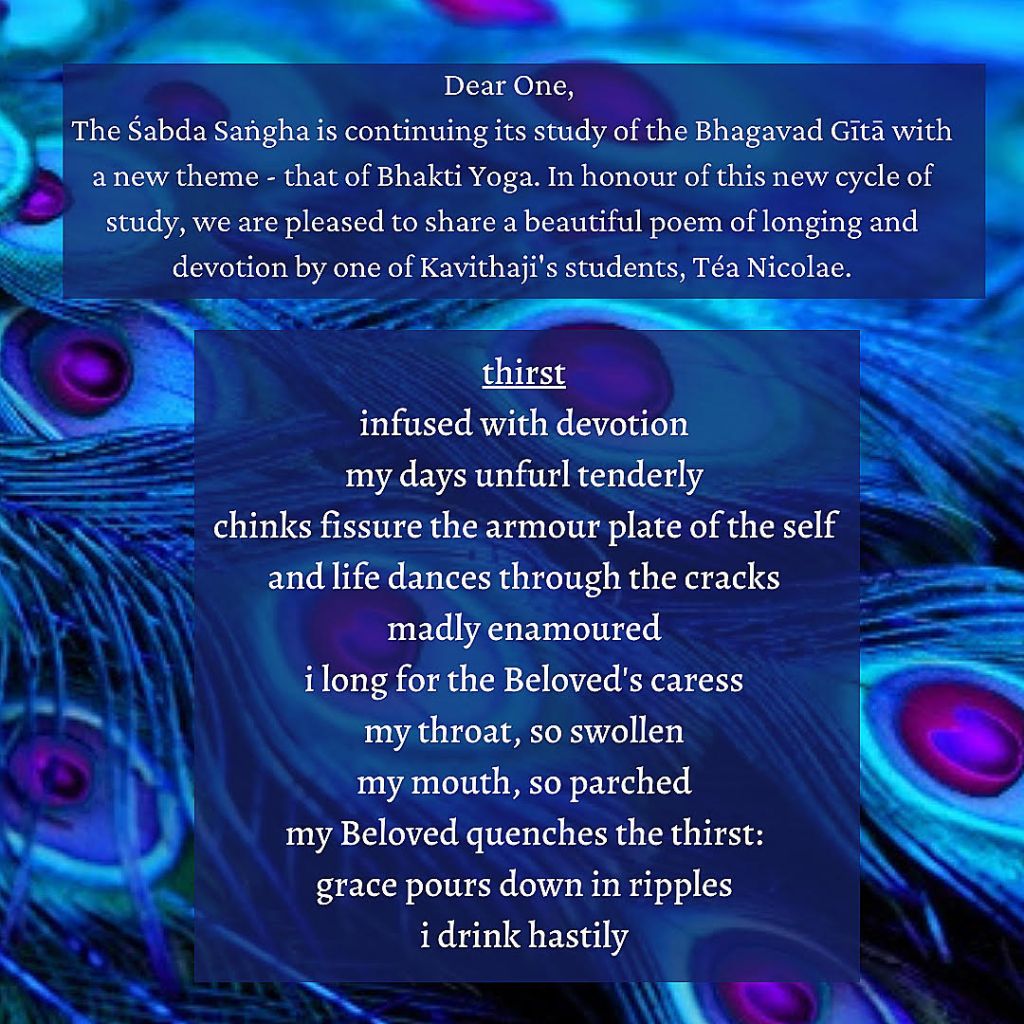



 amaryllis