amaryllis (/ˌæməˈrɪlɪs/[1]) – bears the name of the shepherdess in virgil's pastoral eclogues. it stems from the greek ἀμαρύσσω (amarysso), meaning "to sparkle", and it is rooted in "amarella" for the bitterness of the bulb. the common name, "naked lady", comes from the plant's pattern of flowering that blooms when the foliage dies. in the victorian language of flowers, it means "radiant beauty".
The order of the stakes of the dice game in the Mahābhārata goes as follows:
1) Yudhiṣṭhira stakes and loses the Pāṇḍavas’ wealth, army, empire, throne, weapons 2) Yudhiṣṭhira stakes and loses the autonomy of his four younger brothers, and they are enslaved on the spot (and they submit to it) 3) Yudhiṣṭhira stakes and loses his own autonomy, rendering himself enslaved (and submitting to it himself) 4) lastly, Yudhiṣṭhira stakes and loses Draupadī’s autonomy. The Kauravas roar in excitement, and they send a servant to fetch Draupadī to the sabhā (the royal hall) so she can be enslaved publicly.
Draupadī is absent from the sabhā at the time the dice game unfolds, as she is in her private chambers, menstruating. The servant comes to her and announces the outcome of the dice game. She is told that she has been ordered to present herself as a servant before the Kuru dynasty. She refuses to go, and says she wants one question to be asked to Yudhiṣṭhira:
“Did you first lose yourself, or me?” (2.60.9)
The servant returns to the sabhā and asks Draupadī’s question to Yudhiṣṭhira, who remains silent. The Kauravas become enraged by what they perceive to be Draupadī’s defiance, and one of them, Duḥśāsana, goes to fetch her himself. When she still refuses to come, he grabs her by her hair, drags her to the court and molests her publicly.
However, Draupadī is unbent: she delivers an incredibly powerful speech in which she continuously asserts her independence, challenges and rejects the men’s claims to her freedom, questions and denies the validity of the dice game, and, ultimately, overturns its verdict. In this speech, she presents a series of arguments, and I will analyse each in a series of upcoming posts.
Her first argument is her first question, which infers that, even if Yudhiṣṭhira did have any authority over her status (which she later challenges and denies as well), he lost all authority which could have been argued that he exerted over her the moment he renounced his independence. One who is not their own master cannot be the master of someone else, and one who is dependent cannot impair another’s independence.
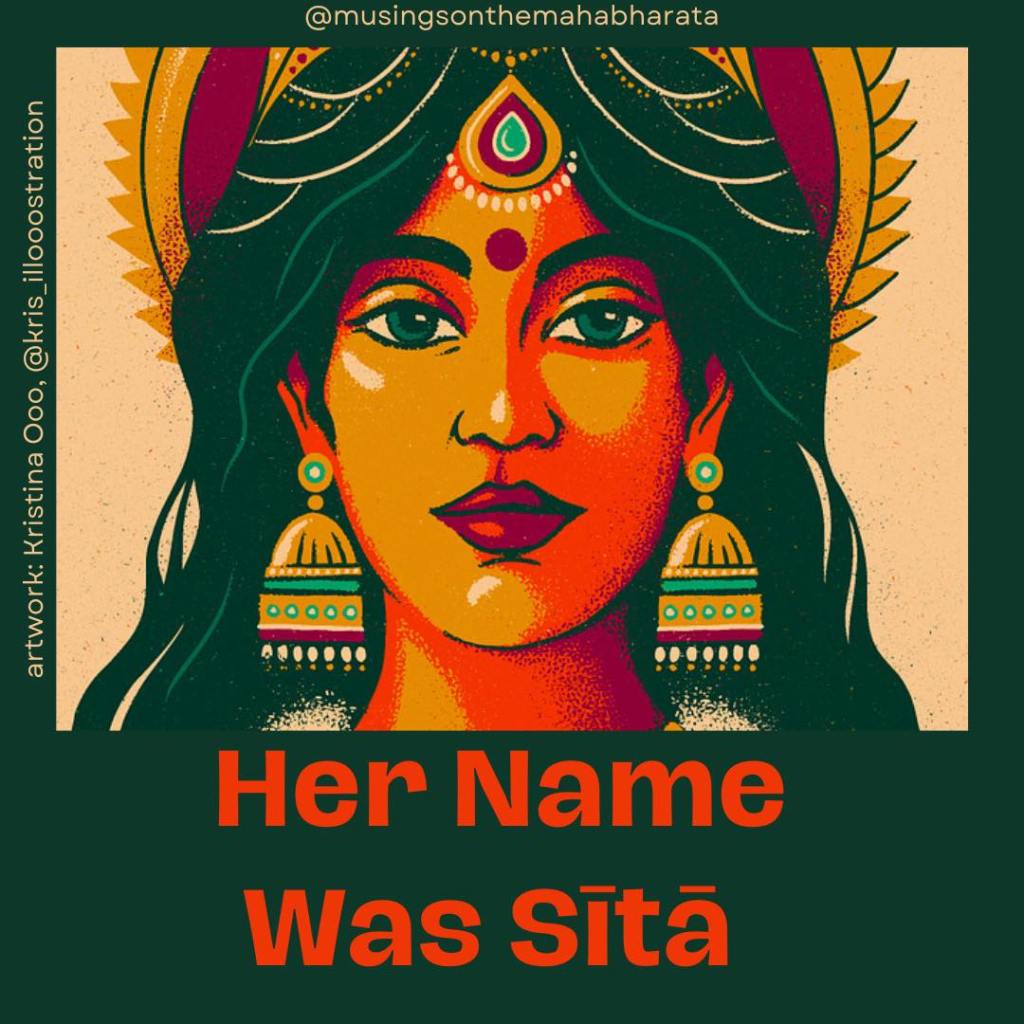
I attended a screening of “Her Name Was Sītā” at Edinburgh University’s Centre for South Asian Studies last month, an incredible film by Heshani Sothiraj Eddleston that explores shame and the concept of female virtue, and how these can drive women to suicide through religious discourse and socio-cultural castigation.
Sītā, as a character, Goddess or symbol, is not addressed directly in the film except for in the title, but I would maintain that this initial evocation builds a framework to process the film in. Sītā, as a key figure of itihāsa (Sanskrit for “so it was”, a body of work that accounts past events / the history of the Hindu streams or Hindu universe, of which the Mahābhārata and the Rāmāyaṇa are central components), holds an emblematic position in the South Asian collective consciousness as an archetype of female virtue, sacrifice, female suffering and tragedy. Notably, I would maintain that this is a limiting association and that Sītā, as with any element of itihāsa, can be decoded in expansive ways that subsume and transcend those connotations.
Regardless, the associations are there, and there is power in that, as well as in a name; symbols and names such as Sītā and Draupadī hold in themselves potential to be approached as mediums through which we can understand gender programming, socio-cultural gender relations and the moral biases related to that. They therefore offer us the opportunity to deconstruct gendered conditioning; however, unfortunately, we generally do not take the leap to do so, and instead become further embroiled in contractions such as our identification with gender through the very tools that could free us.
Final note — the film shook me in many ways, would recommend watching it!
i turned 25 in the Himālayas, on the resplendent Khaliya trek, and camped in a remote meadow that can only be described as the land of the apasāras.
hiking, i reflected on 24, which was the year of the great heartbreak: of fierce grace. the path burned through what i had worshipped as truth and held most dear, and violently pushed me to transform.
on last year’s pilgrimage to the Himālayas, i had prayed on a trek to Gomukh: “free me. i will do whatever it takes.” when the whatever it took came, it was not what i had imagined, and it broke my heart. i had thought i had known heartbreak, but all paled before the pain of facing the untruths i had clung to under the name of God. seeing through your own deceptions is a harsh business.
as the projections i had built my spiritual life around began crumbling, i was left feeling disillusioned, and i was tempted to renounce my search for God. one of the darkest nights of the soul of 24 was one of doubt, in which i doubted everything. i bitterly cursed my trust, and felt repulsed by the dynamics of modern spirituality. i reasoned, if such power dynamics can be built on spiritual teachings, then the teachings must be false.
and yet my intuition, which i had cut myself off from, arose gently; a tiny voice silently telling me that the truth i was seeking does exist. it is pulsing underneath the mirage. my intuition told me not to close myself. to trust the play and uncover the teachings. to keep moving and follow the energy.
diving deep into disillusionment paradoxically opened my system to increasing expansion as well as to a love of an encompassing nature that i had not tasted before.
followingly, one thing i have experienced, is this: freedom rests in autonomy on the spiritual path. the teachings, the dimensions of God, such as the Mahāvidyās, the Devas and Devīs, are real – only not in the way we tend to think about them and not in the way they are taught in modern spirituality. you have to experience them for yourself. you are intrinsically worthy of it. keep moving.
my second Master’s Degree is officially COMPLETE!! these past two years at Warwick University were a rich immersion in the art of poetry & in the practice of literary translation. milestones achieved have been:
completing my dissertation, entitled “Rendering Sacred Texts: Ethics and the Question of Untranslatability”, in which i explored the practice of translating sacred texts and the intricate issues it presents in the field of translation studies, mainly posed by the dilemma that is the hypothesis of an intrinsically sacred quality to languages such as Sanskrit or Latin. i argued that in the case of non-dual traditions, the subsequent question, of whether translation would defile the text, is incongruent with the philosophy & cosmology the text is rooted in. i used the Lalitāsahasranāma, a central hymn of Śrīvidyā, as a case-study.
conducting my poetic research centred on bhakti or devotional poetry, a genre of Indian poetry which worships the Divine as the Beloved. i worked on two bhakti collections: “odes to the Monsoon One” and “the Monsoon One and the pilgrim”, which explore a woman’s mystical journey. written as a response to the lingering legacy of female exclusion from spirituality that is present literature, the poetry rebels against misogynistic religious texts thematically, through female-centred imagery deifying the demonised body, through the subversion of elements of oppression such as motifs of marriage. the Divine is worshipped in my poems as a lover. i argued that for as long as remnants of a religious culture exclusive of women persist in South Asian literature and practice, for so long will bhakti poetry be needed for devotional rebuttal.
more on this soon! i am hoping for these to be published in 2024 or 2025.
i extend my gratitude to my extraordinary professors: my supervisors Dr. Jodie Kim & Rosalind Harvey; Professor David Morley, as well as Dr. Chantal Wright, who generously & expertly encouraged and guided me, as well as expressed genuine interest in my work – interest which i especially appreciated when my work took unconventional routes!
as this chapter ends, a new one at Edinburgh begins! onward!
various feminist scholars have accused the Mbh of misogyny and of not expressing the female experience in depth, claims which i would heavily disagree with. i will unpack my arguments in further videos, but the angle that i want to present today is related to my previous video, in which i talked about how all perspectives are contained within the Mbh, and it itself states so. i would like to offer the perspective of the Mbh being a dialogue, which i learned while studying with Dr. Brian Black at Lancaster University during my postgraduate degree.
🌸 what kind of dialogue? between its characters, between different ways of life, different perspectives, between us, the audience, and the epic itself; it does not have an inherent opinion on the characters presented there: everything we learn is from someone’s perspective, either the narrator of a particular story, or the way characters relate to each other. so, are there misogynistic perspectives in the Mbh presented by certain characters? yes; as, similarly, there are misogynistic takes in the world today. the Mbh is more like a neutral observer, i would say; it does not uphold certain views, it merely documents them and invites you to contemplate them, absorb or challenge them.
because dialogue relies on context, it is very important to understand the context of an event in question to understand its nuances.
to demonstrate this, i will use an episode from the Mbh in which Yudhiṣṭhira expresses a misogynistic comment. this happens in the 13th parva; in a conversation with Bhīṣma, Yudhiṣṭhira asks him in an exasperated manner, why are women so deceitful and hard to please? (13.39) context: the war ends, and Draupadī’s sons are unlawfully slaughtered during a night raid. Yudhiṣṭhira faints when he hears the news of his dead son and nephews, then asks Nakula to bring Draupadī to the camp, lamenting that yet another sorrow would fall upon his beloved. Nakula brings a grieving Draupadī, who lashes out at Yudhiṣṭhira and aggressively congratulates him on winning the war and on becoming emperor, the undertone of this being: at what cost? (10.11) additionally, Yudhiṣṭhira is hit by a revelation from Kuntī, his mother, which greatly disturbs him; later on, an exasperated Yudhiṣṭhira asks this question to Bhīṣma.
now, is Yudhiṣṭhira misogynistic? i would say no; in fact, he later praises Draupadī’s merits and speaks highly of other women. is this contradictory? i would also say no; i think this episode showcases a very humane moment between two characters found in a moment of crisis, in which their children were murdered, and they express their pain by lashing out irrationally. in my view, it showcases how messy and multifaceted we are as humans, which, for me, is one of the great beauties of the Mbh. 💗
pt. 2: on authorship
an argument several scholars have put forward is that the Mbh tells stories of men, and it has been written by men, for men. i would maintain that the first part of this claim can easily be deconstructed through the stories of incredibly empowered and empowering female characters such as Draupadī or Sulabhā.
although authorship of the Mbh has been indeed given to sage Vyāsa, the fluid nature of the epic, with many interpolations and changes made to its structure and with contributions which are anonymous in nature, has led scholars to claim that these changes were created by men, and, in this, the Mbh cannot properly encapsulate or express the female experience because women did not write it.
i will present a simple counterargument, emergent from discussions with Dr. Brian Black and my colleagues during a seminar at Lancaster University; more accurately, a question: how can we know this with certainty? how can we know that women did not contribute to the changes and interpolations that emerged in this epic?
i personally find it quite reductionistic and simplistic to automatically assume that women did not write these stories, or contribute to, for example, the creation of Draupadī’s narrative arc; i think this is exactly an assumption that could be misogynistic in itself, one stemming from a projection of women’s silence, namely to assume that such a great epic, which has shaped and moulded the culture in south asia, has not had any female contribution.
i would ask, why is this the automatic assumption that we make? 😊
listen to me speak more on these two subjects on my TikTok or on my IG account dedicated to my research: @musingsonthemahabharata.
so, did Draupadī laugh at Duryodhana in the Palace of Illusions and did she insult Karṇa at her svayaṃvara? no. neither of these events appear in the critical edition of the Mahābhārata, and they are considered interpolations coming from uncertain sources.
how do we relate to these, however – considering that they are now completely imbued in the South Asian collective consciousness?
devoid of frustration! we relate to them in a way that is devoid of frustration. 😁 this is my first answer because i used to be very frustrated with interpolations, especially with those that, in my view, vilified Draupadī in any way. inquiring into my intense reactivity triggered by these led me on a rich introspective process, in which, first, i questioned the depths of my identification as a woman to Draupadī’s character (will write more on this in the future!). second, i began questioning how important it is for the Mahābhārata to remain intact in popular culture and in retellings, and if these interpolations corrupt the epic. one of the conclusions that i have reached, which i will expand on in my PhD thesis, is that these interpolations and retellings can teach us about how society has progressed through time, and can teach us about what moves us as humans, and about the ways we continuously try to make meaning and to find reflections of ourselves in the external world. for instance, interpolations that might vilify Draupadī’s character, in my view, can pinpoint to blind spots in society which can uncover latent misogyny, whereas interpolations which glorify Karṇa can pinpoint to people’s identification with his particular character, which to many represents a symbol of class struggle. in this, i believe there is much to uncover; as scholars, and i have been guilty of this, we usually tend to dismiss interpolations, and i would maintain that we lose a lot by doing so. because everything is valid, and i would argue that every single retelling can teach us more about the ways in which this epic is actually lived, and comes alive for people. 🖤
did Draupadī’s disrobing ‘really’ happen?
yes, as in, it appears in the critical edition, and it is not considered an interpolation. there have been scholars who have argued for Draupadī’s disrobing to be recognised as an interpolation (one scholar in particular) but their claims have been rebuked.
however, i do not want to talk about the validity or invalidity of these arguments, but, as a follow-up to my previous video, i want to briefly discuss what i find most fascinating about these debates on interpolations, which is that i think they mirror back to us our own possible blind spots and our biases as researchers. this is a great generalisation, but i have noticed that people who are more drawn to argue for Draupadī’s disrobing being recognised as an interpolation might be more dismissive of the female experience as a whole in academia or in various strands of literature, whereas, for those of us belonging on the other side of the spectrum, our blind spots might be being too entrenched in validating the female experience or in being overfocused on it, and i count myself in this category. i believe there is worth to blind spots, though – i think they can be important or can work to our advantage in relative terms, in the same way overattachment to our own research can – in the sense that, both can provide fuel for our work as well as solidify belief in it – so, nothing is good or bad, no binary thinking here! 😁 but, i do think that this can be a very fruitful area for contemplation for each of us, in which we could question our overattachment to a particular argumentative thread. what can be mirrored back to us through it? for instance, i find that a lot of my attachment to certain narrative threads can mirror back to me my attachment to my female identity; which, again, if channelled properly, can be great fuel, but i do find it important for me to hold it in my awareness and deconstruct it internally if not externally through the means of, for example, an academic paper.
how everything can be great fuel for inner work – even academic research! 🤍
Now I am become Death, the destroyer of the worlds.
*Note, a more accurate translation is:
I am Time, the destroyer of all; I have come to consume the world.
BG: 11:32; trans. Eknath Easwaran.
Sometime ago, I was involved in a discussion about whether it was blasphemous for Oppenheimer to have quoted from the Bhagavadgītā upon seeing the explosion triggered by the atomic bomb he constructed. I was of the opinion that it was not. The opposing view was that Kṛṣṇa’s demolition was one of divine nature, whereas Oppenheimer’s manmade atomic bomb was not. Whereas, in this perspective, Kṛṣṇa’s violence and destruction were justified through Kṛṣṇa’s inherent divinity, Oppenheimer’s humanness disfigured his destruction with greed and impunity.
This comment rested at the back of my mind while I watched Oppenheimer the other night, and the film solidified my view.
I would maintain that, to one adhering to a non-dual outlook, there is no separation between Kṛṣṇa’s violence in the Bhagavadgītā (or, more accurately, in the Mahābhārata) and Oppenheimer’s manmade, humane violence. Violence is violence, and divinity (or Consciousness) is inherent in the fabric of that, as it is in all that is. The genius of Oppenheimer’s brain which created such a formidable and terrible invention functions on the same patterns that enable and are Kṛṣṇa’s destruction. There is nothing more inherently divine in death by astras (supranatural weapons controlled and imbued by mantras central to the Kurukṣetra war) than death by atomic bomb.
Not only do I argue that it was not blasphemous for Oppenheimer to quote the BG and internalise his work through its prism (and, incidentally, is blasphemy anything but a dual social construct? Can Consciousness be blasphemous of itself?), but I argue that this is exactly how the Bhagavadgītā is lived in direct experience. The Bhagavadgītā and the Mahābhārata are not lifeless ancient texts that are only accessible or relevant in an esoteric, abstract realm. The BG and the Mbh are lived here and now, from a moment to moment unfolding. I would maintain that we cannot pick and choose what we like from these texts or what aligns to our morals (such as teachings on goodness) and disregard the rest — or take it metaphorically. The last parvas of the Mbh are incredibly violent and include gory descriptions of war, and the BG occurs on the battlefield of said war. This, in my view, does not signify that the texts glorify violence — no more than they glorify any other aspect of creation. It is a sign that violence exists as a natural development of the triadic cycle of creation (creation — preservation — destruction), and it is a manifestation of Consciousness.
The Bhagavadgītā coming alive to Oppenheimer upon witnessing his own potential for destruction is a testament to the BG’s existence in the collective consciousness as an expression of truth, pulsing and flowering for the one who expands their individual consciousness enough to tap into it and to allow it to manifest through themselves.
God is not the socio-moral norms of religion. the socio-moral norms of religion are historical remnants of a time in which religion ruled society and culture and were means to both regulate and ensure harmony (eg. don’t harm another precept) or control and subjugate in the instances in which abuses of power occurred.
you won’t find God by adhering to archaic socio-moral norms belonging to scriptures from centuries ago. it might seem as an evident statement, but i have recently been struck by how insidious dichotomies of morality run inside of me, despite the fact that i adhere to a non-dual view (tldr on non-duality: the belief in one absolute, genderless, formless consciousness that pervades and is all that is).
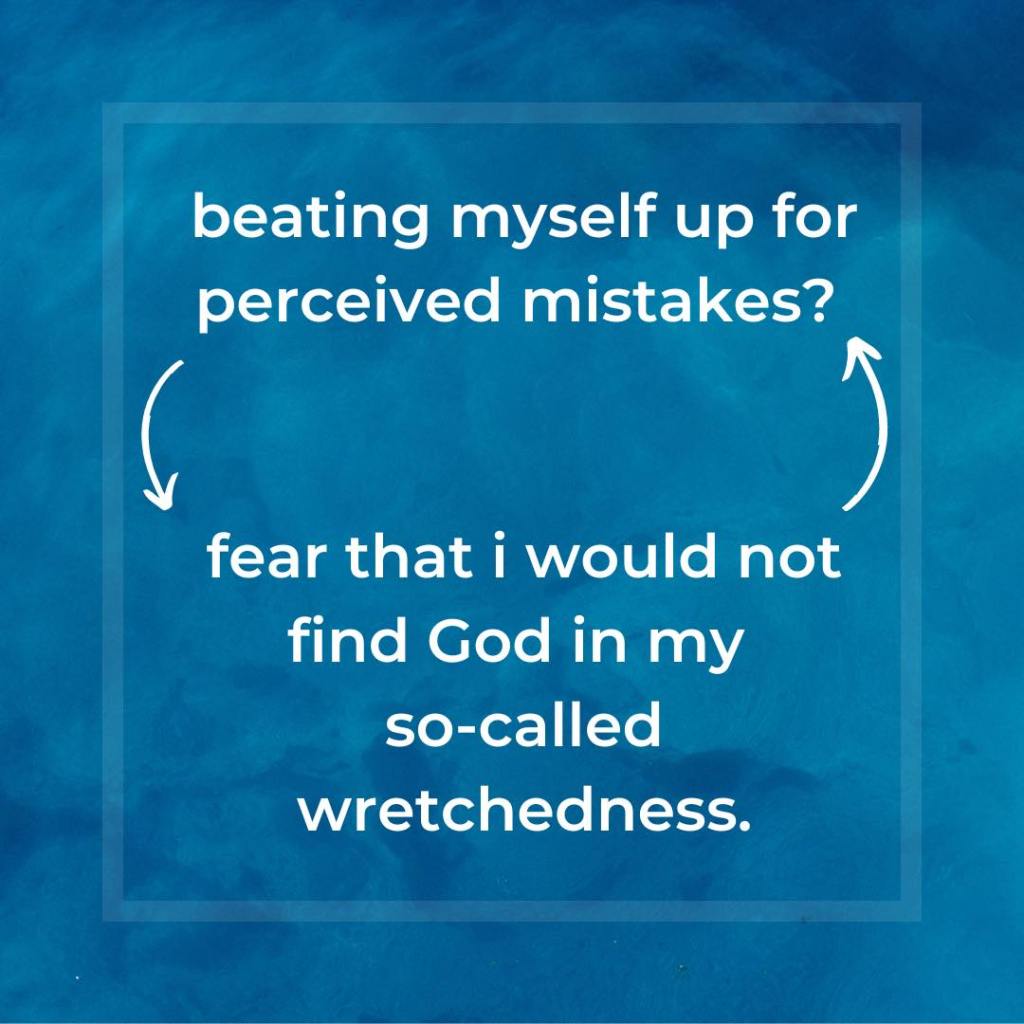
having seen how deeply remnants of morality are sown into me, i have been reflecting on: where has my obsessive streak of wanting to be a good person come from? from a subconscious understanding that it is in that morality that i will find God. what is my tendency to beat myself up rooted in whenever i do something which i perceive to be a mistake? in a fear that i would not find God in my so-called wretchedness. where does shame come from, with an emphasis on the shame that continues to shroud my connection to my sexuality? from internalising shame around sexuality as a ‘sin’, a wanton nail in the coffin that would ensure my perpetual disconnection to God.
God is beyond virtue and sin.
the other day, i told myself: damn it, use your intellect. no matter the fairytale story conjured about a higher power, how could that higher power ever punish, reject or be angered with me, or with anyone for the matter?
i was engaged in particularly unvirtuous-ly considered behaviour recently when it hit me, i feel so loved and accepted by God right now, and i am – inherently. and i don’t have to do anything else rather than be myself to be loved or accepted. note: it might seem contradictory to assign the wilfulness of love & acceptance to the non-dual understanding of consciousness, but it’s one of those contradictions that somehow just ‘is’ and i feel like can’t be explained. the love is there. 💙
In the recent months, I have been deeply reflecting on independence and personal power, and the reflections that I am sharing in this article are emergent from interactions with friends, from browsing social media trends, as well as from contemplations on my own journey.
What I’ve become familiar with, within and without, is recognising fear: the fear to stand on one’s own, in full autonomy and independence, which, I find, stems from deeper, more rooted fears of our own incompetence; fears of something just not being quite right with us.
I have observed, within and without, how, controlled by fears, we shy away from paving our path by ourselves, and fall into wanting it to be paved for us by an external agent. Insecurity leads us to wanting to be told how to think; how to act; how to be treated; what to aspire for. We desperately want to feel okay within ourselves, so we seek comfort and security in dependence — be it on a person or on a thought process. We conceal our gifts, infantilize ourselves and make ourselves small in exchange for what we think is love.
And, in a desperate quest to, very simply put, not feel awful about ourselves, we seek help: in the work of great thinkers, philosophers, spiritual leaders and mental health coaches. However, what I’m noticing is that, in such fear-based seeking, we don’t even trust ourselves to absorb these thought processes on our own. We rely on others to interpret them, and, in this, we remain even more stuck; dependent on someone, or something, for information, knowledge, comfort; dependent on someone to offer us an experience.
In a paradigm of co-dependency and fear, self-help and coaching businesses, as well as pop-psychology thrive. I want to underline that I find nothing wrong with either, and consider them to be essential in the great design, as well as helpful on an individual to individual basis. However, in my view, there is a worrisome element to the structure of these businesses as they prevail on social media, and it is this very element that enables much of our mental dependence: which is that, in an effort to appeal to the masses (which, again, is a logical and natural goal to have in the context of sustaining business), pop psychologists, health coaches distil the knowledge of great thinkers in consumable bites: rephrasing, extracting, simplifying, sometimes even appropriating without reference. So much is lost in this; we end up engaging with pruned versions of philosophies and pruned truths which only give a taste of the encompassing worldview we want to grasp and embody; we don’t enter that door of perception, we only hang at the frame. Our fears and mistrust in ourselves, combined with a modern short attention span and desire for quick fixes, provide the perfect context for us to fall before the illusion of knowledge, and not before the knowledge itself, as well as facilitate our dependency on surface-level content for relief, comfort, and insight. We remain alienated from ourselves and cling to external sources (coaches, teachers) in the absence of connection to ourselves and to direct sources of knowledge (which, ultimately, I am learning are our internalisations of our own experience). We end up extolling people and not knowledge, and, in impaired autonomy, remain perpetually unsatisfied, powerless, and stuck in one-dimensional echo-chambers, believing truth is held or experienced outside of ourselves, and can be offered to us by an external force; instead of attained within through our own power — yes, supported, and, yes, with guidance, but not as a passive, powerless actor, but as an active, free agent.
What I personally want to tackle within is dependence, and not trusting myself to pave my own path. After years of remaining stuck in personal mistrust, perpetual insecurity and in the fear of losing myself to myself, what I am coming to see is that it is only by having my own experience of the teachings that I want to follow that I can both understand them and break from my patterns of churn; so, for instance, if I resonate with Marcus Aurelius decreeing ‘no one can keep you from living as your nature requires’ (6.58), what I want to do is, after satisfying my intellectual curiosity by reading and inquiring into this precept, is to followingly FEEL, experience and embody what my nature is;to FEEL what it is to live as is; understand how I cannot be kept from living it; then decide if it’s a precept that I want to live by based on whether it brings most growth to me at this particular point in time. And, revisit, recheck if this remains valid as I move through life — as Aurelius says himself, your nature is of continuous change. Contrarily, what I have done until now is to read and either stop there by assimilating others’ takes without forming my own, or by relying on the experience of an external source / individual to teach me what it is for them to live as nature requires, and build my worldview, mould myself on that. Both approaches have left me powerless, insecure, and ultimately in pain.
I am learning that no intermediary is needed between me and knowledge — between me and understanding myself.
Of course, this does not mean that teachers, mentors, friends and guides are not needed; for me, this understanding, however, implies self-reliance and steadiness in my own knowledge and experience. Why is this important? Because, when these arrive, you will choose to stay at, or to leave a place you are learning in, or to stay with or leave a person you learn from, from a fearless place of autonomy, in which your discernment is not clouded by the fear of being alone. By the fear of being wrong.
I am learning that it is in the absence of fear, hierarchy, and personal gain that knowledge flows most abundantly, a place in which individuals can join each other in complete freedom of being, in mutual respect and openness, with the purpose to enrich each other’s understanding of their own self. A place where you enter and walk away as a captain of your own soul, steering the ship toward yourself.
Concluding this article by reminding myself that it is not enough to peer through the doors of perception, expression so beautifully coined by Aldous Huxley; we must enter.
spent today absorbed in the père lachaise cemetery, and one of the things i was struck most by was seeing the many sculptures of female figures towering over tombs: almost all tearful or in distress. it made me think of Strī Parva, “The Book of Women” from the Mahābhārata, which exclusively focuses on portraying women’s grief and tears, who break upon seeing their men & sons slaughtered on the battlefield in the aftermath of the war. one of the distressed female characters, queen Gāndhārī, lashes out at Kṛṣṇa and accuses him of murder, declaring that he could have stopped the war as he is both omniscient & ever-powerful.
Kṛṣṇa rejects her blame and retorts that he cannot override the cosmic laws. he himself is subjected to them; the massacre was ordained, no one is exempt from death, and the cycle of life is definitive.
my understanding of this exchange is: he is not telling her that she should not grieve or that her grief is “wrong”; he merely offers her the opportunity to place it in a larger context and to use her distress to understand deeper herself as well as the web of nature / existence / cosmology. there is no one to blame or resent or victimise; life unfolds as is. and,
even what we understand as ‘negative’ feelings therefore can be utilised as a stimulus for self-reflection. i myself have spent a lot of time simmering in grief without considering what it could teach me, so this particular scene is very profound for me.
and, how beautiful is Kṛṣṇa’s revelation that he himself is subjected to the cosmic laws once incarnated! will elaborate on this in a future article or post 😊
*my retelling of this dialogue is not based exclusively on the critical edition but also on its variations, as this is one of the instances in which i find referring to multi-versions valuable.
photos: some of my favourite sculptures seen in the cemetery!





 these past two years at Warwick University were a rich immersion in the art of poetry & in the practice of literary translation. milestones achieved have been:
 completing my dissertation, entitled “Rendering Sacred Texts: Ethics and the Question of Untranslatability”, in which i explored the practice of translating sacred texts and the intricate issues it presents in the field of translation studies, mainly posed by the dilemma that is the hypothesis of an intrinsically sacred quality to languages such as Sanskrit or Latin. i argued that in the case of non-dual traditions, the subsequent question, of whether translation would defile the text, is incongruent with the philosophy & cosmology the text is rooted in. i used the Lalitāsahasranāma, a central hymn of Śrīvidyā, as a case-study.

 onward!








 amaryllis