Four years ago, when I was a collaborator at Dissolved Magazine, I had the great pleasure to sit down with the very talented Debbie Millman and talk to her about heartbreak, design, and failure. I have particularly adored one of her take-aways about confidence and authenticity, which has stayed with me since.
*Notably, the views expressed in the full, published interview are her own and are more than four years old. Some do not align with the worldview I hold at the moment. I am attaching here my favourite parts of the interview which greatly spoke to me four years ago, and which continue to do so. And, I continue to be in awe of Debbie as an artist.
When did you realize you can design your life, was there a moment?
No. (laughs)
I’m still working on that. I think if I did fully design my life, I might rely too much on decision. I think that part of the experience in life is to be open; it’s hard for me to say I’m doing this and that and this – even saying that I’m a writer or an artist…Once you say you are one thing you are stuck doing that thing forever. For me, there’s a combination of worrying that I’m not that or becoming that and turning into a fraud and then I’m stuck with that despair. Despite my education on branding I have a really hard time labelling myself. There s a difference between seeing people as brands and perceiving brands as brands. People are people. Brands don’t have a soul, brands don’t have a sense of consciousness, brands can’t make decisions. We manufacture meaning into brands. I would hate to think that we manufacture meaning into people.
I can say I’m an educator or a designer. But I would have a hard time saying I’m designing my life in a certain way. I try to have a life of meaning, of purpose, but beyond that I can’t say that I’m designing a life. This way, it does leave a lot of room for the unexpected.
There are many artists that say they live with a constant fear of being ‘found out’, with the possibility of being a ‘fraud’. Are you ever afraid of being phony?
I worry more about not being good, both literally and figuratively, than I do of being a phony. I’ve been making things since I was a little girl: I’ve made fake perfume with baby oil and crushed rose petals. I made my own magazine when I was in 6th grade. I never questioned that I was a person that made things; I’ve been doing it for fifty years. Whether the things I do are valuable, meaningful… I know I’m a maker…if what I’m making is of value…that’s a constant struggle.
In 2014, you said you aspired for greatness, but never achieved it. Do you still feel the same?
Yes. (laughs)
Has anything changed?
No, I wish it had. I’m amazed with the people who have this confidence, this sense of ‘I’m good, I’m doing good’. The only thing I can tell you that I’m good at (which I’m not sure it’s meaningful in the scheme of my life) is understanding brands; I’ve been doing it all my life. Everything else, I just hope I’m good at.
It’s not preventing me from doing things, as it used to. I talk about this in various podcasts, in interviews, about this notion of confidence. Once I was interviewing Dani Shapiro and she said that confidence was overrated. I was surprised because I had been always searching for confidence. She thought that courage was more important.
I thought about it a lot…what is confidence, really? It is the successful repeated attempt to do something. Because the first time you do something, you have never done it before. How can you know if you’ll be successful? That’s where faith comes in. If I did it one time, I can do it again. I always think of it like driving. When you’re learning how to drive, you don’t have confidence. You’re terrified you’re going to kill yourself or someone else, you’re nervous. But, as the years pass, each time you get in a car you stop thinking ”I hope I don’t kill somebody.” That’s driving confidence. You can’t have confidence when you start something unless you are delusional. Confidence is built; courage is the birthplace of that: a successful repeated attempt of doing something.
The longer you do something, the longer it lasts, as you said in an interview. How do you find this to be fitting in this culture of gratification that we live in now?
It doesn’t fit in. People want instant greatness, instant success. That’s why people put confidence on such a high pedestal.
I think there’s this really misleading notion, that you need confidence to do something. I saw Barbra Streisand last summer in New York, in Brooklyn. I went by myself. I love her! And one of the things I read about her in the New Yorker is that her manager said that her greatest talent wasn’t singing or directing, but it was doing all of those things with stage fright. She didn’t tour for decades because she was nervous she would forget her lyrics, as she did this once. And there I am: watching her. At some point, I look up, for some reason. We were in a huge theatre, with a gigantic ceiling. And at the very top, I see a teleprompter tucked between the lights, with all the lyrics of all of her songs. She’s been doing this for 60 years and she still needed to know the lyrics. I mean, I know her lyrics! It was so incredibly heart warming to see that she still needs to have a backup. And she’s still doing it! And she’s one of the most important artists out there.
Why are we always amazed by this?
Because people manufacture their own work in an entire different way. What are the Kardashians really known for doing? They make it seem as if it’s easy; that all you need to break through it sort of just existing; living every moment or every day without making something meaningful.
And how do you teach this patience?
I don’t think you can. I think you can show what it does. It’s a matter of really understanding. I mostly teach my students sustainable ideas and how to turn those ideas into something concrete. If they can take something from that process and then apply it to their lives, then I did my job. I try to rewire their minds, to make them let go of self-imposed limits. I try to reveal to them what’s inside their minds.
Was there anyone that did that to you?
Therapy. (laughs)
What has teaching taught you?
You become very clear about what you do know and what you don’t know, which is very important.
Did your podcast teach you that you can do other things?
It taught me that you have the time to do what you want to do. You make it. You choose to spend the time that you have doing what you want to do.
It also made me ask myself: do you want to spend time making things or watching other people make things? Sometimes you do the second too, because you get inspired.
What does inspire you?
Travelling. I didn’t like to travel when I was younger, then I travelled for business. Now I mostly travel for events like these. (Power of Storytelling). I love meeting people from other cultures, experiencing things. I’m also inspired by music, theatre. I love theatre, I love live performances (music or theatre) I love watching people make things right in front of myself.
Was there a certain time in your career when you said ‘I’m self-sufficient now’?
Not exactly. Security would be a better word for it. But security is what you don’t have, which no amount of money can give you. The feeling that you’re okay, that you can take care of yourself.
Did you reach that point?
I’m close. I know where the worry comes from. But you always have to try to choose a path that not only provides security but also creativity.
Thank you for saying that you can “choose the creative path, not necessarily the secure or safe one”, and for pointing out that one does not exclude the other. As you’ve completely rebooted your life when you were 29, do you have any advice on this?
Try not to live in the future.
The question I ask myself is if not now, then when? Everything is easier when you’re young. You have everything at your fingertips. If you edit what is possible before it’s even possible, it becomes impossible. We self-impose our own fears on our futures. Very few people, once they become adults, are being told: you can’t do that. WE tell ourselves that. My mother or my father were not saying you can’t do that, I was the one saying it. So, I mean, it’s not something that I can tell people to stop doing, but I can suggest that if they do that, what are the alternatives? We will sooner die of regret than heartbreak. What would you rather?
What are you afraid of now?
I’m 55. How much time do I have? I remember 40 years ago as if it was yesterday. What if I don’t do everything I want to do?
Do you have a bucket list?
No, I only have a bucket list of places I want to travel to. I have to make a new plan, a new 3 year plan. Almost everything came true from my last plan: things that seemed impossible. Which is amazing, because it limits what you think is impossible.
How do you find a purpose and how do you keep going, even when everything seems meaningless?
Just this desire to have a meaningful life, to have a life that meant something. To feel like I was worthy of being born. But I still want to do so much more, to feel so much more.
Don’t we all, Debbie. We thank you.
 over the moon to share that i have submitted by MA dissertation, entitled: “Mapping the Absolute: The Iconography of the Daśa Mahāvidyās”
  ) to explore the deities from a cosmogenic standpoint was sown during a retreat i attended in 2020 that was centred on the first five of the Mahāvidyās, led by Kavithaji & Hareesh Wallis. i was spellbound listening to Kavithaji present the Goddesses as non-dual expressions of cosmological creative forces and i was concomitantly dismayed to realise that all the material i had encountered which addressed them was rooted in strong misconceptions. poignantly, the distortion & appropriation of the Goddesses in popular culture & western scholarship appear to majorly stem from the legacy of colonialist writings – and, i tried to offer my small contribution towards the deconstruction of the colonial / orientalist gaze through this thesis.
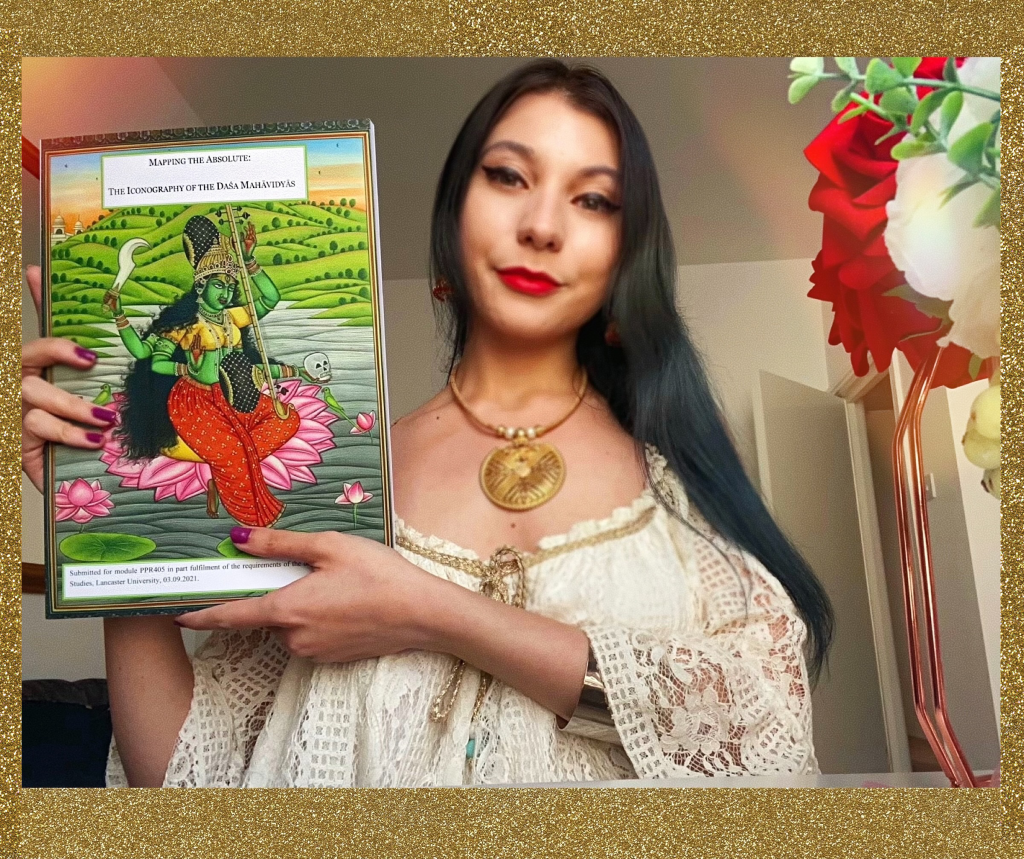
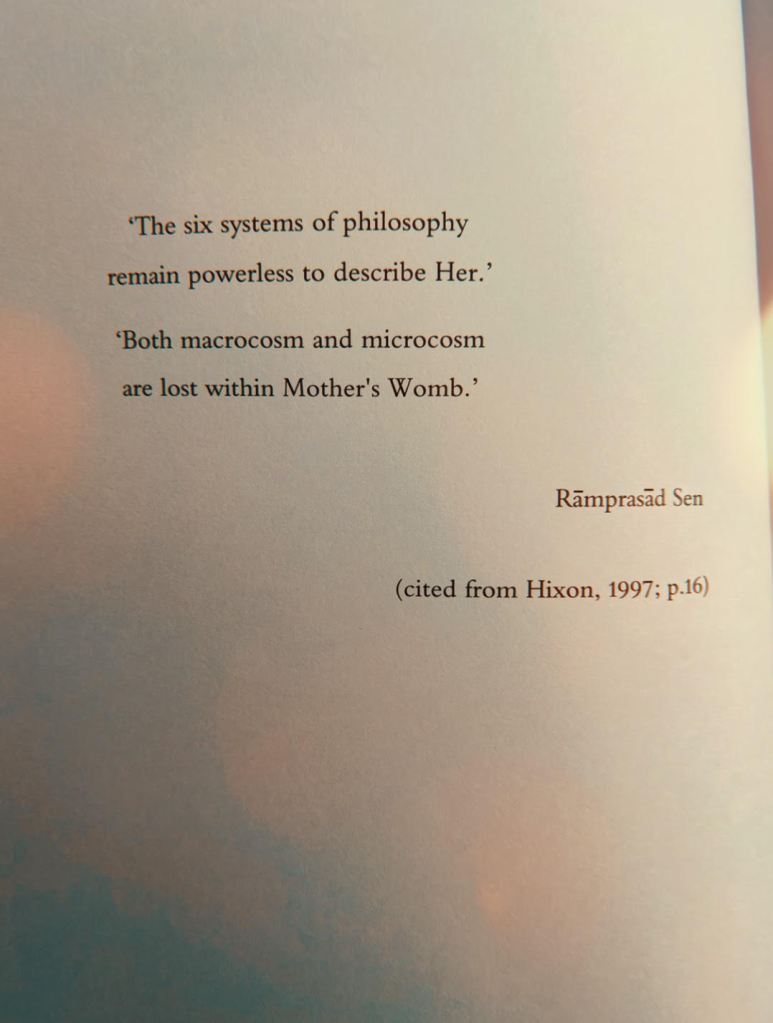

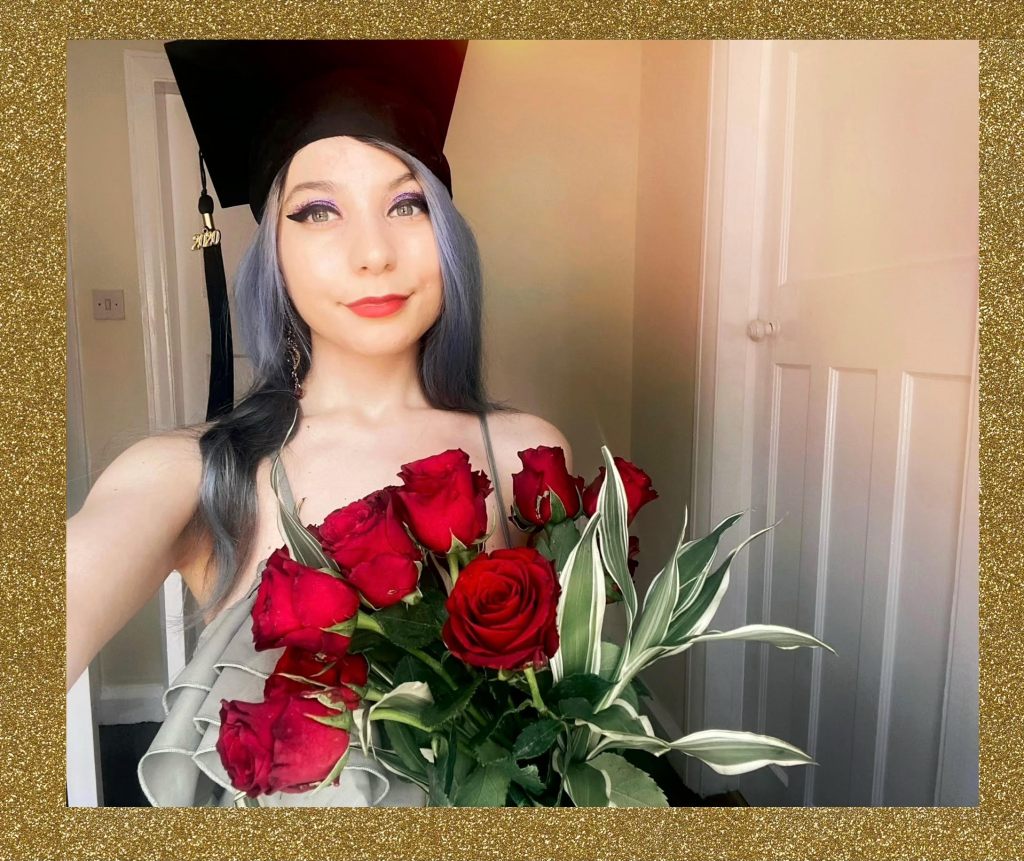
 with the graduation ceremony officially indefinitely postponed in the light of covid, here’s me recycling last year’s improvised photos!
 : summer of 2020, graduating from my beloved university with a first class honours and with jolly gratitude.

 }
}

 from an in-the-works poem of mine entitled “Mahārājñī”, written on the last day of retreat with my beloved saṅgha & teacher, which culminated with an all-day intensive open to the public consisting of the exquisite Siri Jyoti Pūjā, designed by our Kavithaji’s paramā-guru – Śrī Amritananda Natha Saraswati of Devipuram. the pūjā has been the most beauty my eyes have ever beheld at once.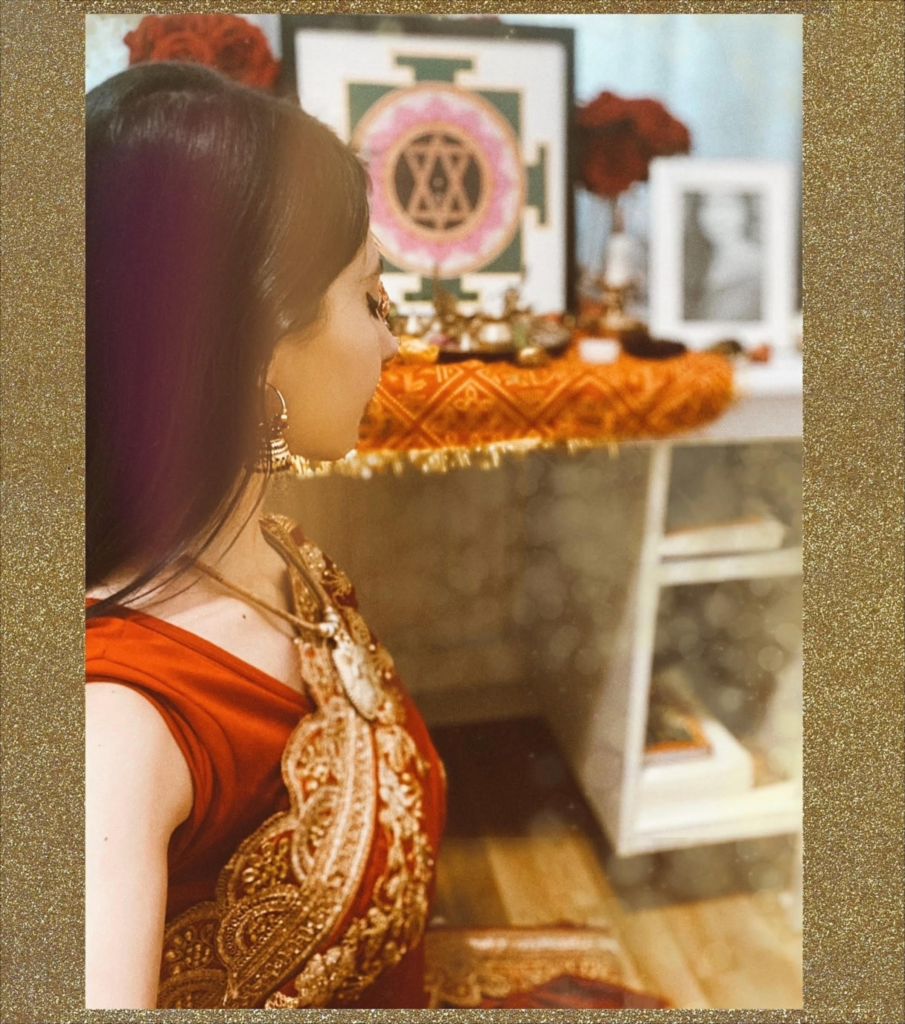

 : my first time wearing a saree with the occasion of the pūjā, which i believe to be the most beautiful garment ever created.
  today i presented my paper “purity, impurity & pollution in non-dual philosophy” at the “philosophy across disciplines” conference organised by newcastle university! it was my first time presenting at a conference!

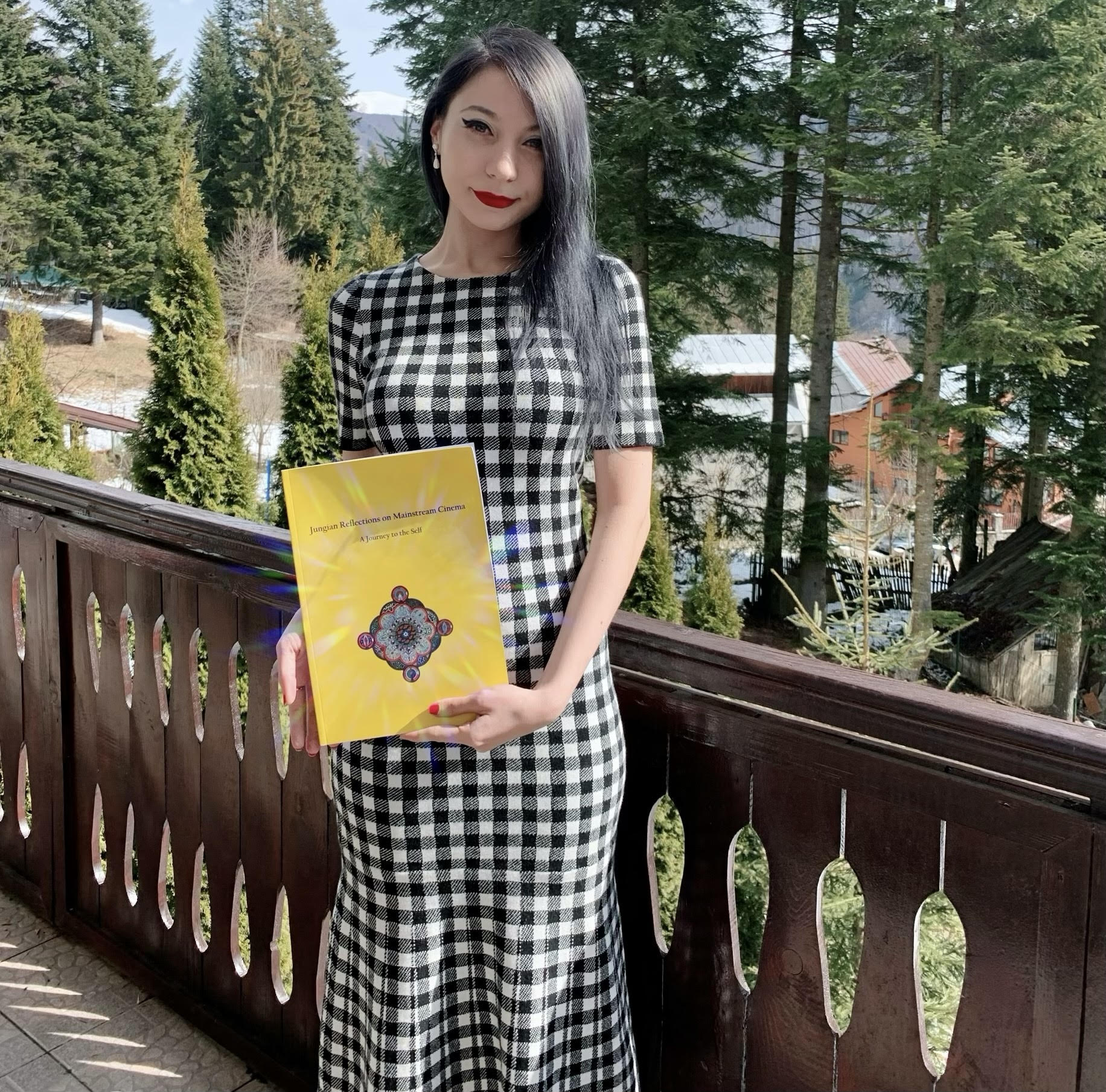
 taking a moment to gush: my final year as an undergrad was so very precious to me, as it represented the first big leap i took with my writing. dissertation-wise, i wanted to focus on what Richard Leonard calls “the mystical gaze” of cinema: cinema’s arguably innate fascination with the esoteric that enables the viewer to encounter the transcendent. although my supervisor advised me that it could be a tricky topic, i felt curiously pulled to it and decided to trust my gut – and so, my dissertation addressed the archaic imagery emerging in commercial cinema as seen through a Jungian gaze & argued that cinematic archetypes unveil layers of the psyche.


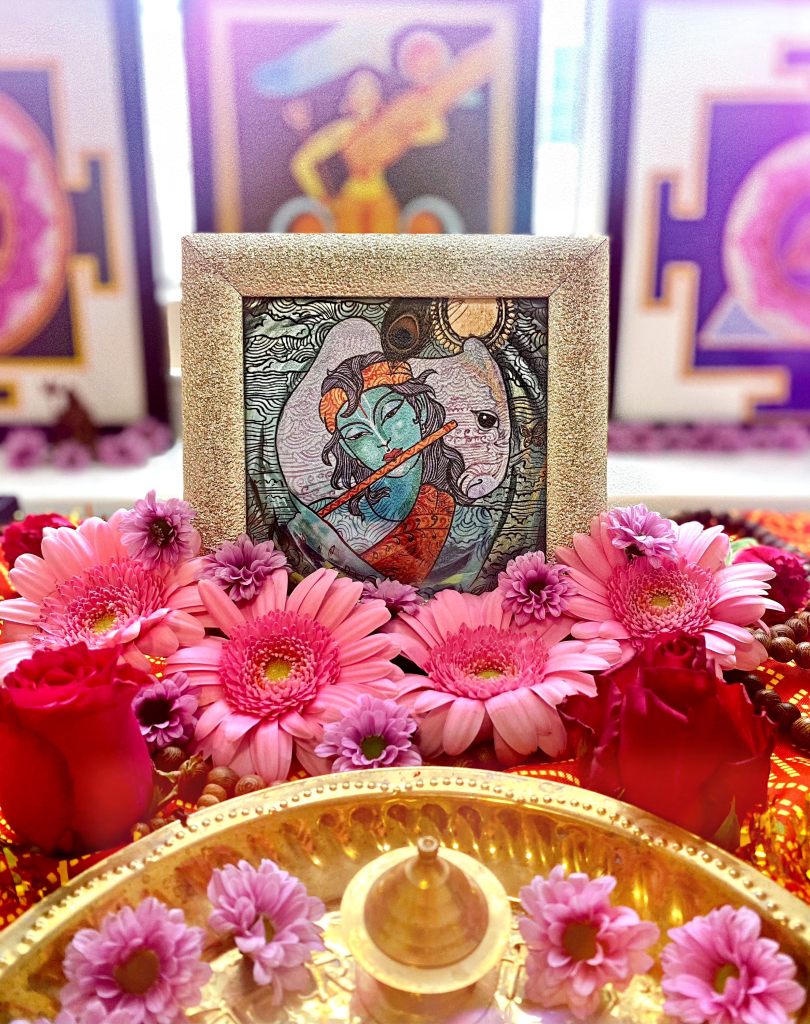
 pictured: my favourite sequence of the Kurukṣetra War & one of my favourite paintings – beloved Kṛṣṇa attacking Bhīṣma, while Arjuna pleads. the epic’s verses are hauntingly beautiful:
 Filled with wrath, the great lord of Yoga jumped from the chariot. The mighty Kṛṣṇa of immeasurable splendour, the Lord of the Universe, roared like a lion. With eyes red as copper from rage and with his bare arms alone as weapons, he rushed towards Bhīṣma, desirous of slaying him. Now, with a whip in hand, Kṛṣṇa splits the universe itself with his tread. Robed in yellow silk, and himself dark as the lapis lazuli, Janārdana looked as beautiful as a mass of clouds charged with lightning. With a loud roar, the bull of Madhu’s race impetuously darted towards Bhīṣma. Beholding him of eyes like lotus petals, Bhīṣma addressed Govinda: “Come, come, O thou of eyes of lotus. I am yours.”
 amaryllis
