amaryllis (/ˌæməˈrɪlɪs/[1]) – bears the name of the shepherdess in virgil's pastoral eclogues. it stems from the greek ἀμαρύσσω (amarysso), meaning "to sparkle", and it is rooted in "amarella" for the bitterness of the bulb. the common name, "naked lady", comes from the plant's pattern of flowering that blooms when the foliage dies. in the victorian language of flowers, it means "radiant beauty".
Author: Téa Nicolae
🌸 poetess and scholar 🌸 a Devī-bhakta 🕊
🌙 I wore myself out, looking for myself.
No one could have worked harder to break the code.
I lost myself in myself and found a wine cellar. Nectar, I tell you.
There were jars and jars, and no one to drink it. 🌙 Lallā
Praise be to The Empress of Kings seated on the throne of five corpses in the palace of ruby.
Her blinking eyes birth and collapse the cosmos, and her crown is the lunar half-moon.
She whose reddened eyes roll ecstatically, She is Mahātripurasundarī, The Great Beauty of the Triads.
Praise be to Parā Aṃbikā, of allure so exquisite that, enchanted, Śiva grew his third eye just to worship her beauty.
Her body is anointed with sandalwood, and her fragrance bathes and deludes the three worlds.
She is Śrīmātā, The Auspicious Mother.
Praise be to Lalitā Aṃbikā, The One Who Plays, whose girdle of tinkling bells stirs creation into being.
She who gifts the sun his effulgence, Her toenail holds the universes, and Her auspicious thighs are known only by the fortunate Kāmeśvara.
She is Kāmākṣī, She whose eyes are desire.
Bhavānī, you are the nectar of the ocean of compassion: grace this songstress to only sing of your praises.
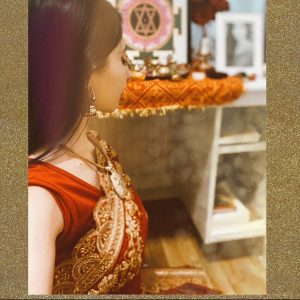
🌺 “Hymn to the Empress of Kings”, one of my poems offered to Devī at the magnificent Siri Jyoti Pūjā in Seattle. inspired by the verses of the Lalitāsahasranāma which extoll Lalitā’s rapturous beauty. Śrī Mātre Namaḥ. Happy Navarātra!
Fragment of a collaborative and experimental audio-translation of Draupadī’s speech following Vastrāharaṇa (The Attempted Disrobing of the Empress) in modern retellings of the epic. This excerpt follows the 2013 rendition of the Mahābhārat. It was created in the module ‘The Practice of Literary Translation’ of the Warwick Writing Programme with Sumithreyi Sivapalan. 🙂
Draupadī:
Touch me not, Queen Mother Kuntī.
I will get besmirched.
I am no longer your daughter-in-law.
I am no longer your sons’ wife.
I am no longer the bride of the Kuru dynasty.
Now I am without husband, without name, without dynasty.
I am the fire that burns in the furnace. I am purity itself,
yet I feed on what is impure.
Today, in this sabhā, I have cried the tears of the women who walked this Earth.
Queen Mother Kuntī, Great Queen Gandharī, if you wish to save yourselves, renounce this sabhā and leave. Because this palace hall will break today.
I am no longer a human being. I am death, only death. I am the death of all the vile men present in this unjust sabhā today.
My curse is that, at this very moment…
Gandharī:
No, Draupadī. Do not curse. Do not curse! Forgive them. Forgive us. I beg you, forgive us!
Draupadī:
My curse is forgiveness in itself, Great Queen. If I have to punish, let it be in this lifetime. Every moment, they will suffer the agony of hell. Their pain will know no end.
Gandharī:
No, my daughter. The woman who gives life cannot give death.
In taking one’s own life, one annihilates the body. In taking another’s life, one destroys the soul.
Destroying the soul is self-annihilation.
In your anger, do not act like these men!
Draupadī:
It is a woman’s duty to cleanse the house, and it is a woman’s duty to purify it. It is a woman’s duty, as well, to cleanse this world.
Indeed,
only a woman can purify the Earth. I curse (that)…
still and edit i created of Pooja Sharma as Draupadī. the most fantastic performance of the fireborn heroine!
i have officially completed my first year of the Warwick Writing Programme ✅! 🥰! it has been absolutely delightful. 🤍🙏 my gratitude to my professors for guiding me on working on my first collection of bhakti poetry, in researching devotional literature & in translating from sanskrit, as well as from my mother-tongue. 🤍
it was so much fun to venture into freelance writing & to work with my colleagues on different projects – a highlight of this year has been a collaborative audio-translation of my beloved Draupadī’s imposing speech from the Mahābhārata created with Sumithreyi Sivapalan! it is always a joy to work on anything Mbh-related, but it truly is an honour to collaborate with someone equally enamoured with itihāsa! 🙏
indeed, what i adore about academia is the opportunity to meet and connect with people with similar (or identic!) research interests! it truly is so enriching to discuss your research with someone as equally passionate about it as as you, and these discussions unmistakably propel each of you towards greater growth and understanding. in my case, it has been one of the greatest gifts to meet someone as madly infatuated with the Mahābhārata as me!
it wasn’t until meeting my colleague Sumithreyi that i realised how much i had longed to dissect the Mbh with a fellow lover of this magnificent epic, and I can wholeheartedly say that the insights we shared together refined my understanding of the intricacies of its narrative – a narrative so grand that it undoubtedly humbles anyone who dares to venture in it. thank you, dear sakhī! here’s to continuously learning and to emptying our cup of the arrogance of knowing.
pics: all smiles after 7 hours of editing work for the Warwick Anthology 2022!
Meet Téa Nicolae! Téa is a marketing co-head and an editor of this year’s anthology. She joined the Warwick Writing Programme to delve deeper into poetry and literary translation.
Téa is a poetess and a scholar-practitioner. She writes devotional (bhakti) poetry and her research interests are Śāktism, Mahābhārata and non-dual philosophy.
Téa holds a BA in Film and Creative Writing and an MA in Philosophy and Religious Studies from Lancaster University. She is studying oral-practice traditions enrich her writings with the insights, delight and fervour unearthed only through practice.
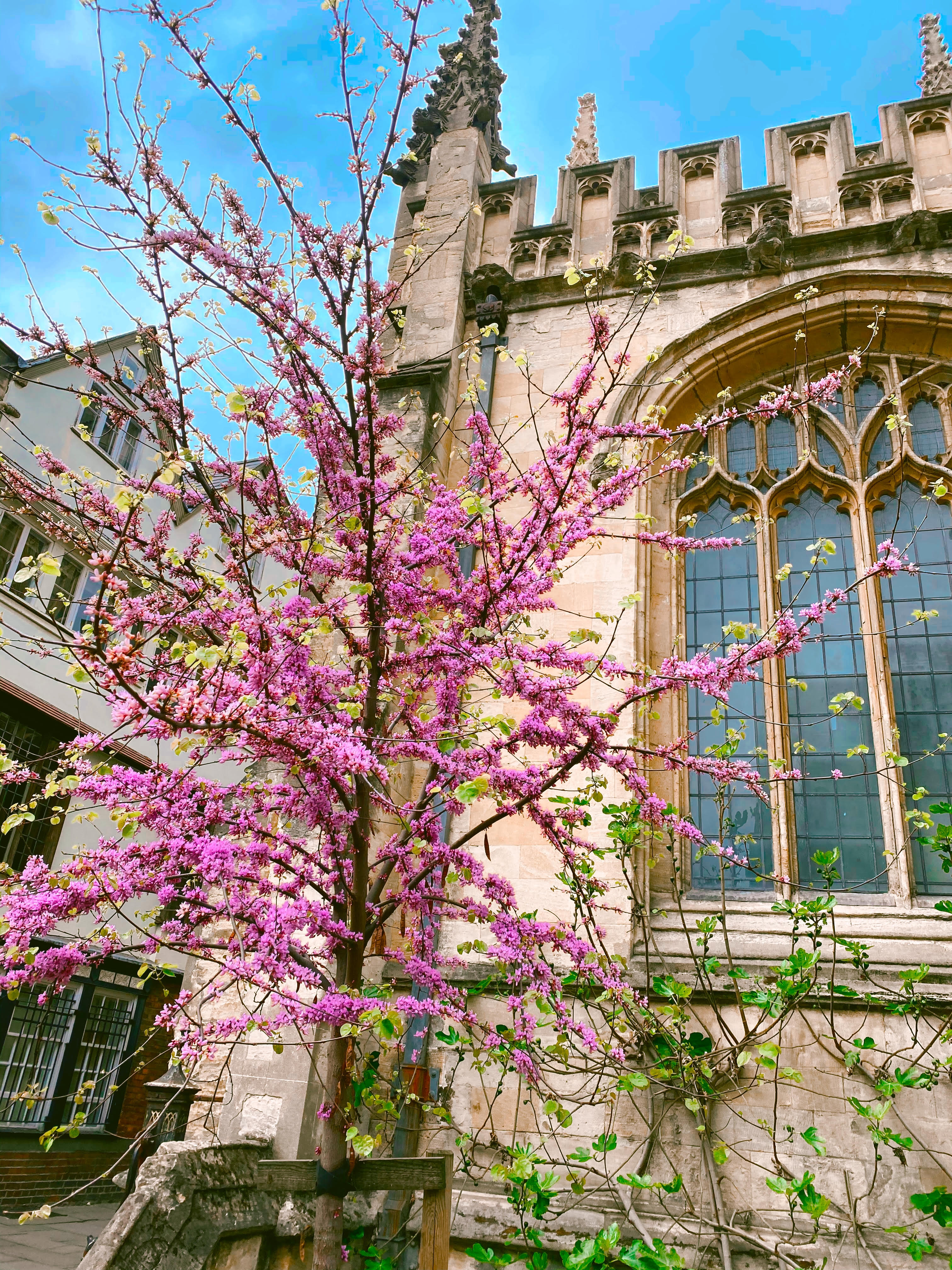
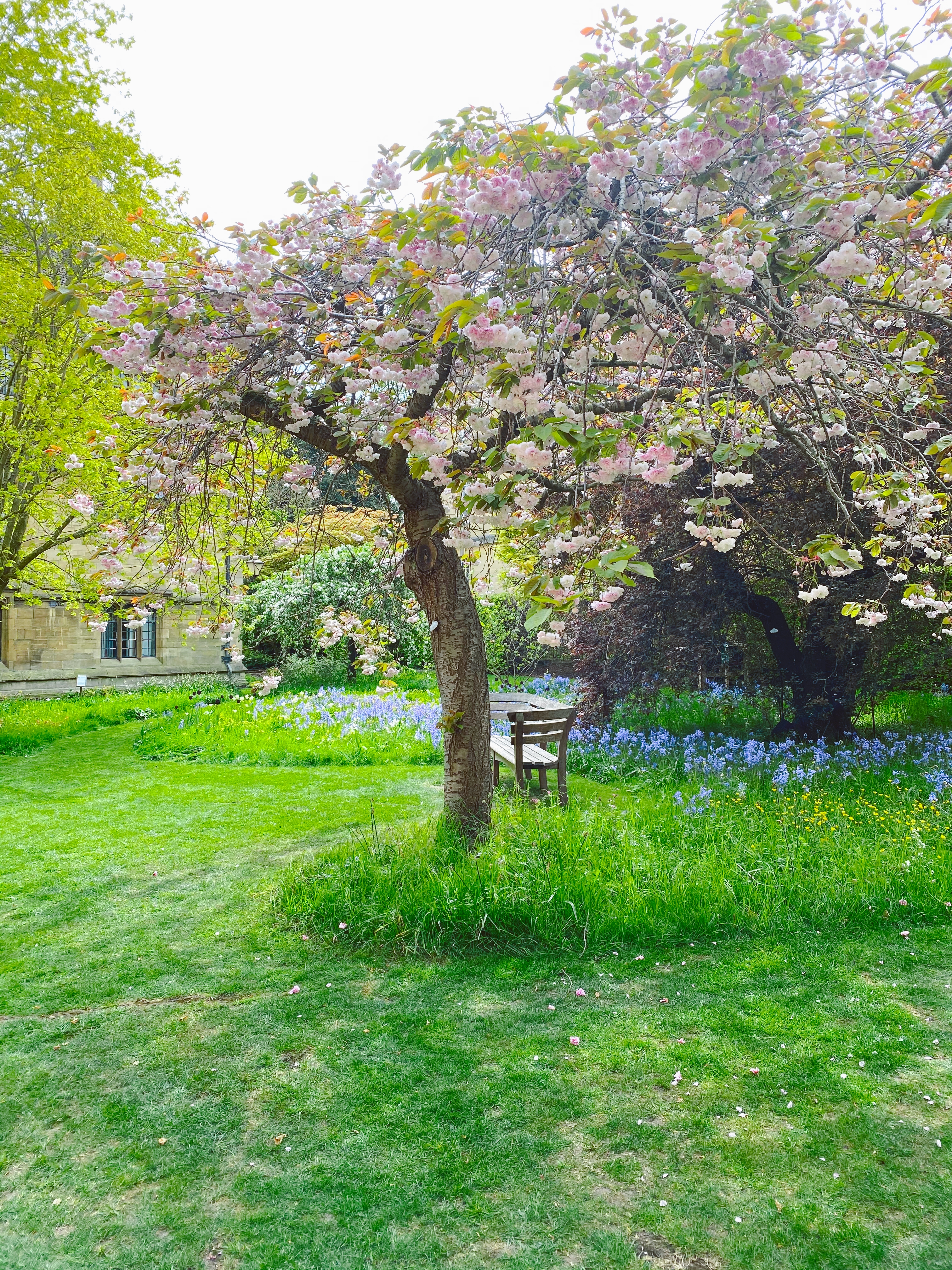
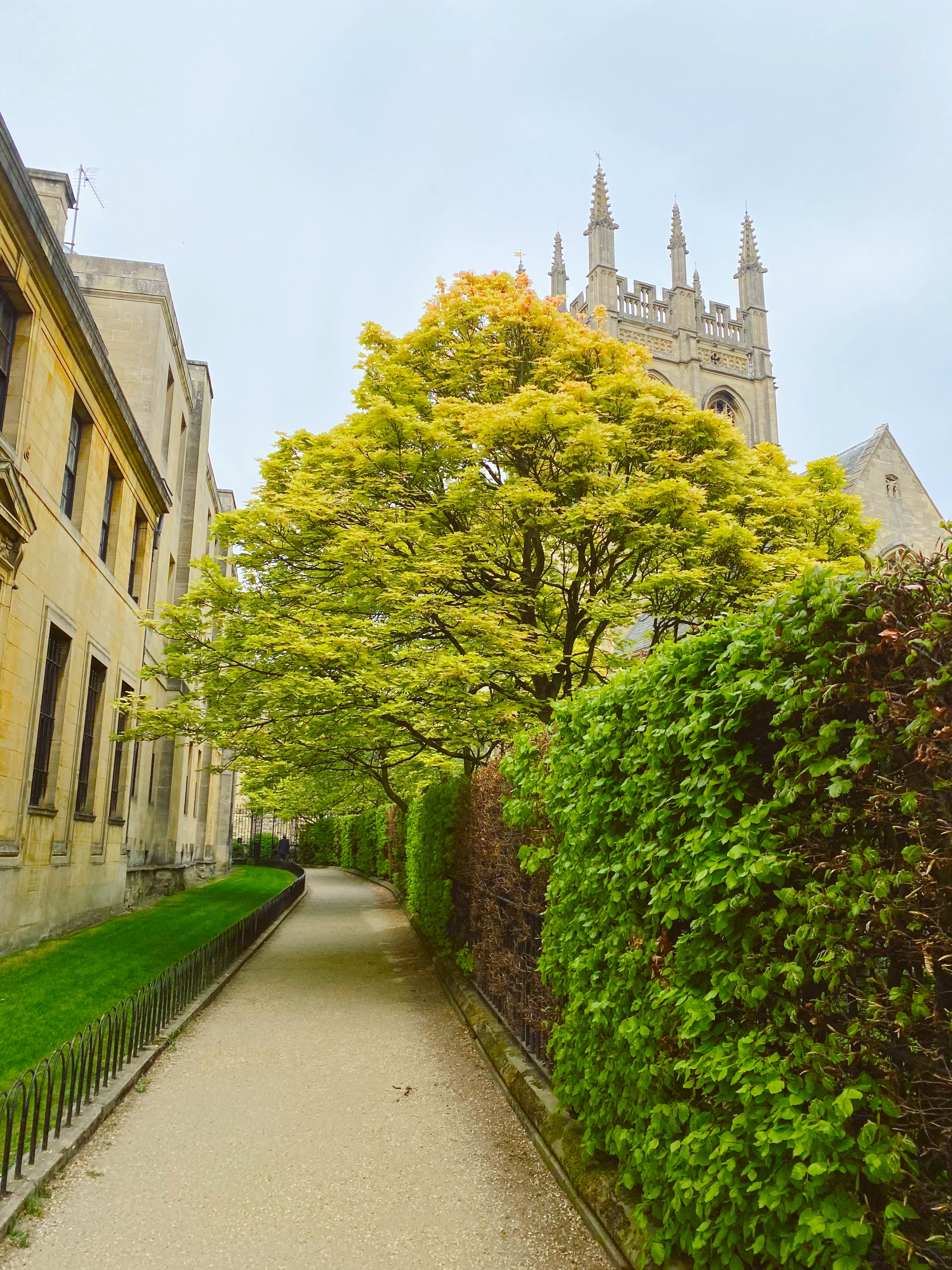
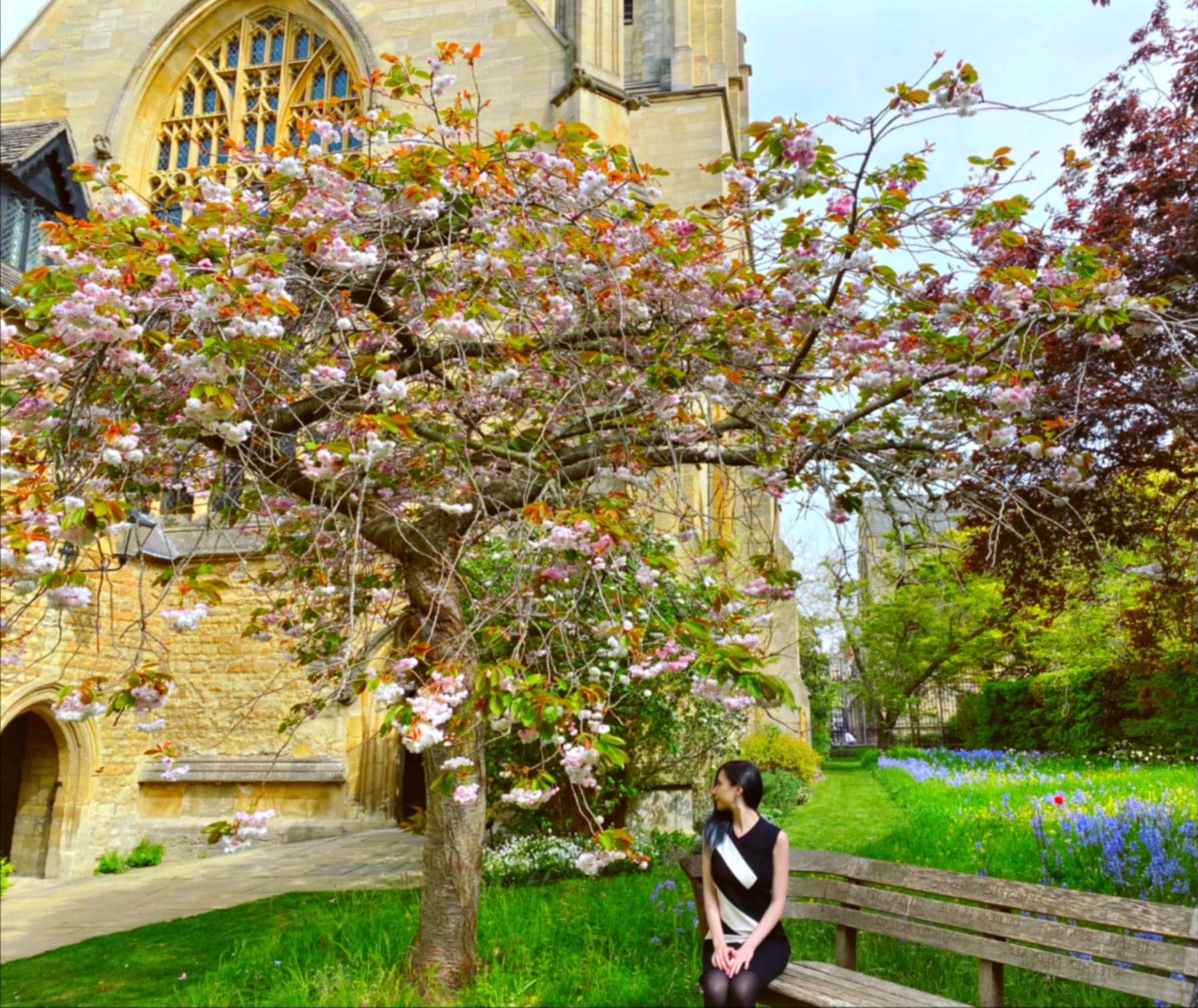
Oxford, in bloom! a wonder to walk where the great C.S. Lewis & J. R. R. Tolkien walked. 🌸 i ventured on Addison’s Walk, where C.S. Lewis, J.R.R. Tolkien & Hugo Dyson most famously discussed myth, philosophy and religion while pacing through the trees. Lewis recounted a walk of theirs to his dear friend, writing as follows: “These hauntingly beautiful lands which somehow never satisfy,—this passion to escape from death plus the certainty that life owes all its charm to mortality—these push you on to the real thing because they fill you with desire and yet prove absolutely clearly that in [William] Morris’s world that desire cannot be satisfied. (…) The [George] MacDonald conception of death—or, to speak more correctly, St Paul’s—is really the answer to Morris (…). He is an unwilling witness to the truth. He shows you just how far you can go without knowing God, and that is far enough to force you . . . to go further.” Lewis later wrote a poem about Addison’s Walk: “I heard in Addison’s Walk a bird sing clear: This year the summer will come true. This year. This year. … Often deceived, yet open once again your heart, Quick, quick, quick, quick!—the gates are drawn apart.” 🙏 source: Justin Taylor. 💗
after a fruitful opening term completed with a first class honours, i’m excited to proceed with my study of sanskrit at the oxford centre for hindu studies! translations guided by the brilliant zoë slatoff-ponté. ♥️
Perhaps one of the most jarring episodes of the Mahābhārata, the disrobing of Draupadī has been etched to my mind since my first introduction to the epic. The story of the Mahābhārata’s fire-born heroine goes as follows: the empress Draupadī, an incarnation of the celestial Śrī, is violently dragged to the royal court after her husbands, the Pāṇḍavas, are enslaved through deceit. Draupadī is tearful, menstruating, and the Pāṇḍavas’ offenders, the Kauravas, attempt to enslave her. However, she fiercely debates them and proclaims her freedom. Enraged by her rebuttal, the Kauravas decide to disrobe her. When they mercilessly begin to pull her clothing, Draupadī’s garment endlessly unfolds, and she remains clothed — by what is presumed to be the grace of Lord Kṛṣṇa. My fascination with Draupadī first began as awe of the female endurance she embodies. As a woman myself, I deeply identified with her pains, and found our sufferings to mirror each other. In my reflections, my being melded with her character, whom I felt connected to through the thread of shared female experience. I found comfort in her triumph. As I continued mulling over her story, I became inexplicably moved by the imposing testament of devotion that is showcased in her tale; in most renditions of the Mahābhārata, Draupadī, while being abused, earnestly prays to her dearest friend, confidant, and God, Kṛṣṇa, who, out of boundless compassion, answers to her calls and envelops her in his grace. It is a touching picture: as the men of the court hang their heads in shame, bound in silence and inaction by their royal vows, Draupadī, deserted by all, is shielded by her devotion to Kṛṣṇa — and her devotion is enough. However, my greatest personal and transformational shift has occurred when, with my beloved guru’s guidance, I was able to deconstruct the tale of Draupadī’s anguish in order to delve deeper into the teaching encased in it. Before doing so, there was slight anxiousness in my heart: there was self-doubt, and there were questions; Draupadī had been ‘saved’ through her devotion, but would I be? Would I be saveable or worthy? Indeed, my mistake had been not delving deeper into the teaching encased in Draupadī’s anguish by remaining stuck at the level of storytelling. The liberating conclusion I have reached is that, in truth, whether the empress’s garment endlessly expanded or not is irrelevant. The teaching veiled in Draupadī’s disrobing is that she was untouchable because she was internally free. The horror she was subjected to did not shake her internal freedom, nor did it dismantle her devotion. Throughout it all, she was rooted in her love for Kṛṣṇa, and immersed in her independent power. As she says in a recent rendition: “You cannot make me your slave because I do not allow it. Independence lies within me; it is not a piece of clothing you can snatch.” All along, the question was not whether I would have been saved; it was whether I could unearth Draupadī’s fearlessness in myself. The Mahābhārata’s fire-born heroine has taught me that freedom lies within me. It is not given to me by others, and it cannot be taken from me. My freedom is married to my devotion, and my heart holds the keys to both.
This article has been publishedin the second volume of Śabda Magazine.
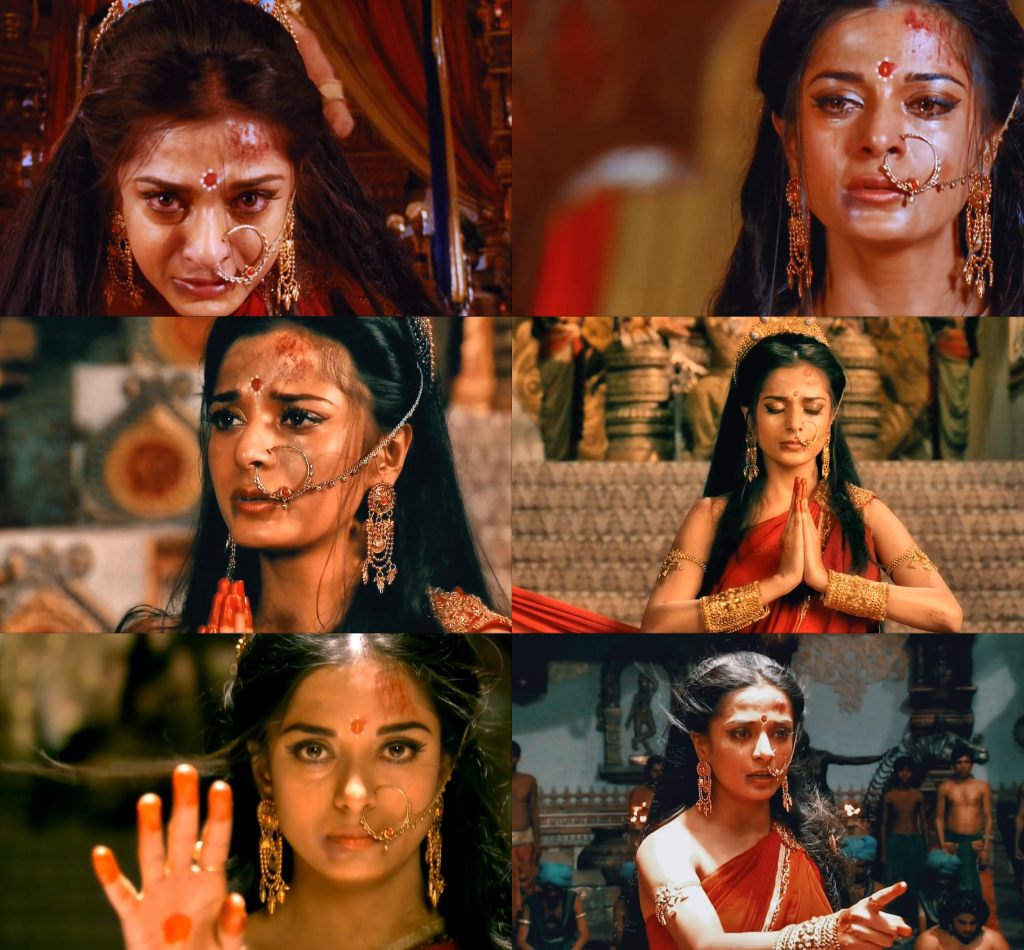
Collage I made of Pooja Sharma as Draupadī in the 2013 Mahābhārat. Although the TV series presents many distortions, her brilliant, fiery performance makes viewing it a joy for me.
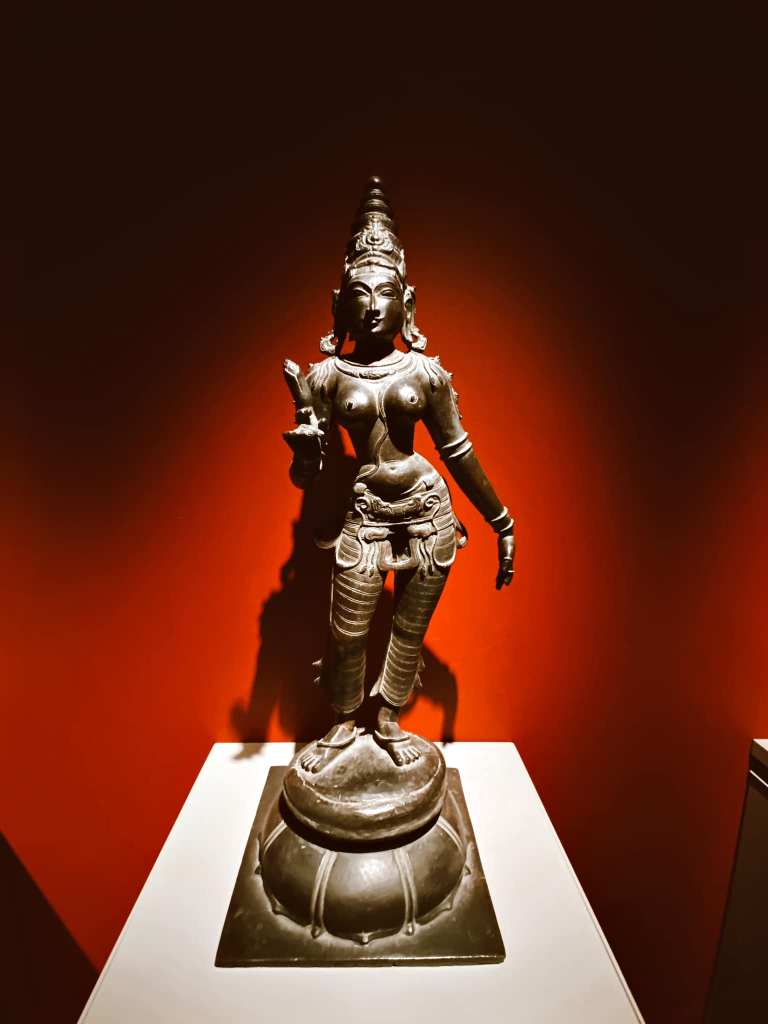
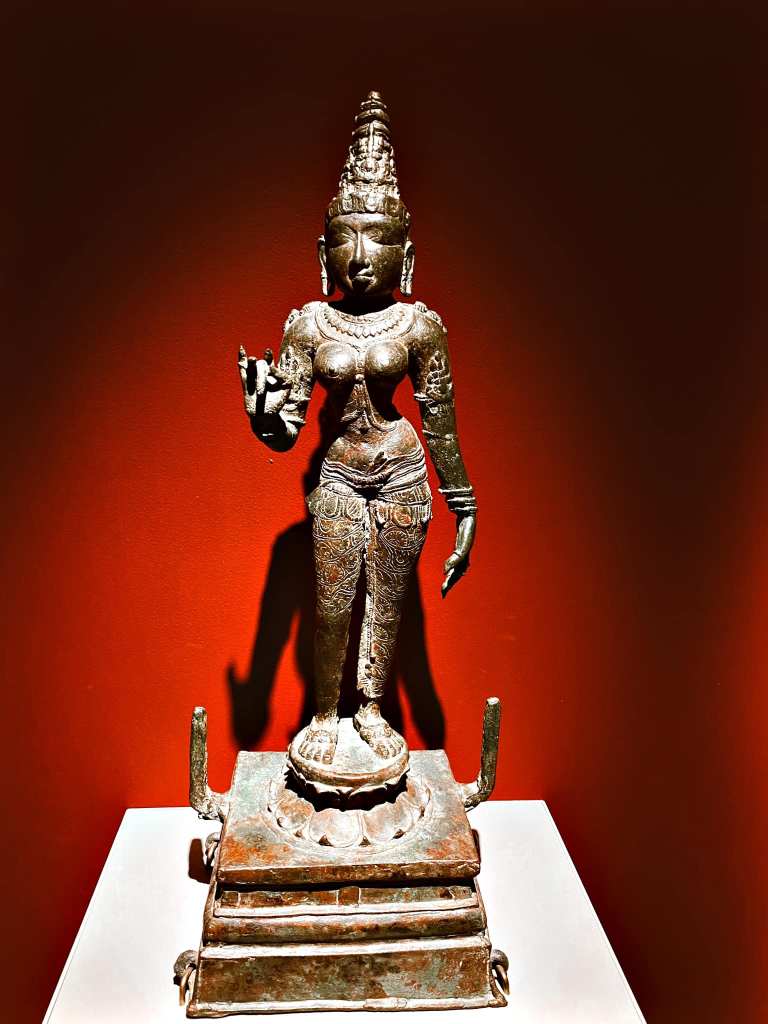
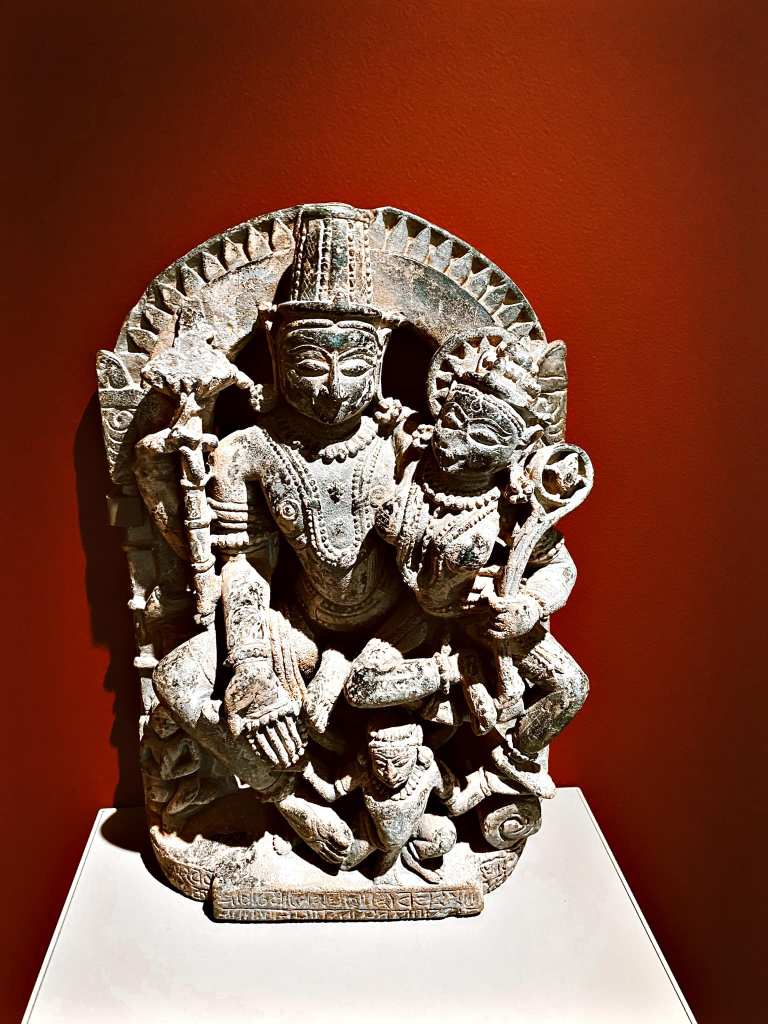
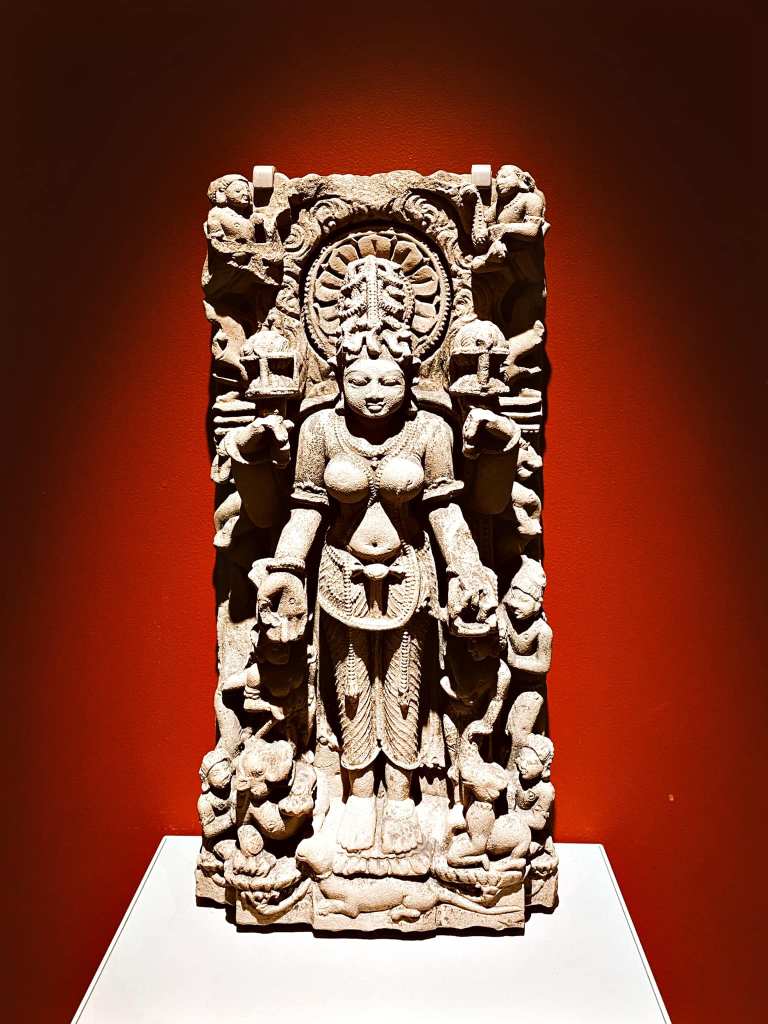
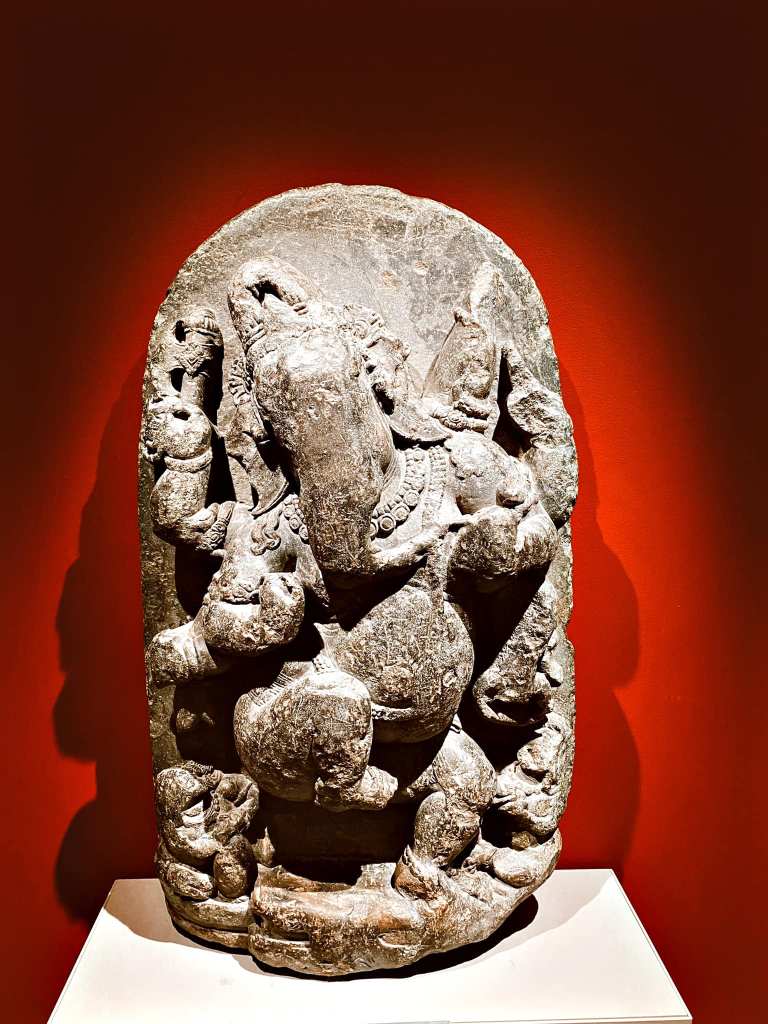
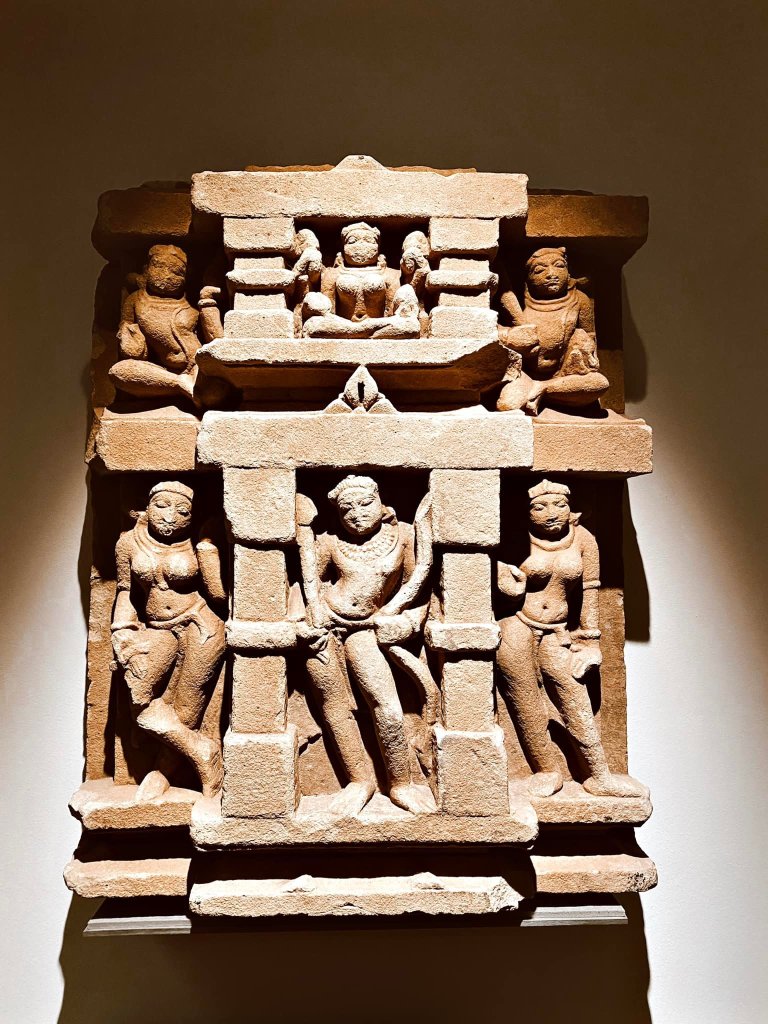
i have had the great fortune to visit the United States for the very first time to be with my saṅgha, and, during my trip, i had the opportunity to visit UMMA. i was mesmerised by its South Asian collection! not only are the sculptures magnificent in their precision and beauty, but their descriptive texts are poetry. attaching excerpts below.
1. Durgā on her lion mount
“In caves and temples, in metal and stone, artists captured the ferocious energy of the Goddess as revealed in her heroic victory [over Mahiṣāsura]. Here, her quiet grace signifies her boundless strength. Her round breasts and belly push forth from beneath her skin, indicating the distinctly feminine force behind her awesome capacities.”
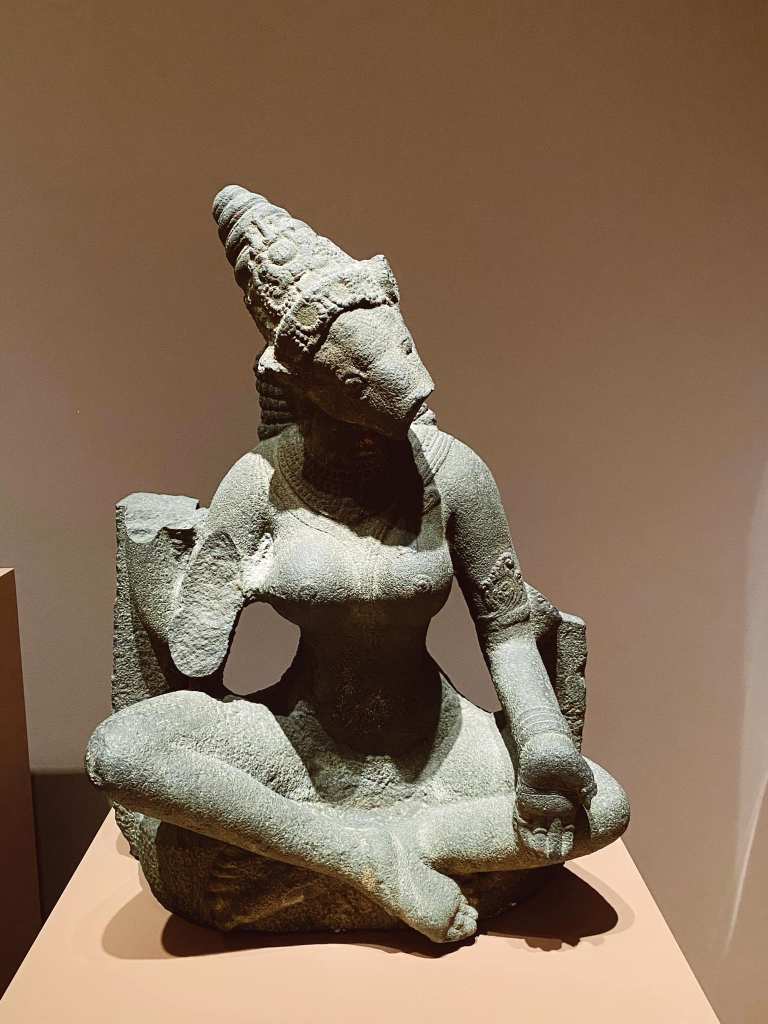
2. Vārāhī
“She is boar-headed, and her rear hands would have held signature weapons. She has taut, youthful flesh and full breasts, signifying fecundity. Her crossed legs form a cradle, offering a tender sanctuary.”
3. Devī
4. Śiva as Bhairava
“Śiva’s sensuous pose and levity communicate liberation as a result of contemplating death in lone wanderings through vast cemeteries.”
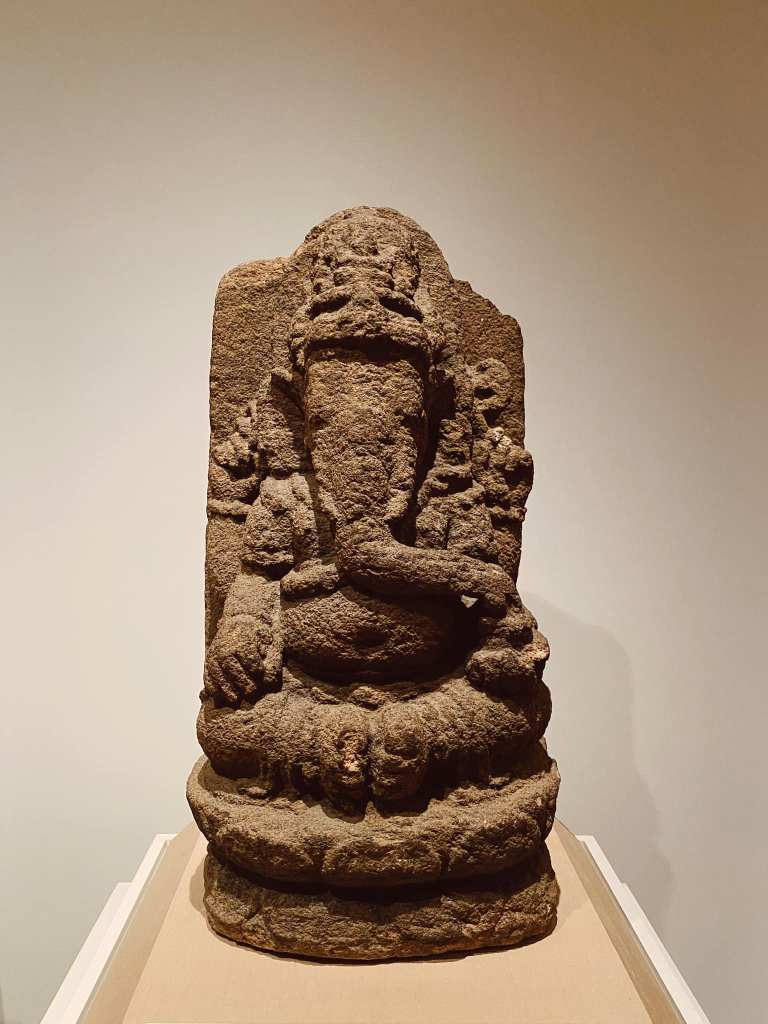
5. Pot-bellied Ganeśa, endearing and gentle
6. Viṣṇu
“There is an intimate relationship between the God’s body and his sculptural surroundings: two arms are embedded in the plane behind him, while two project forward, echoing the curved bell of his hips. A garland unites the planes of carving in an elliptical halo, framing his body for the gaze of his devotees.”
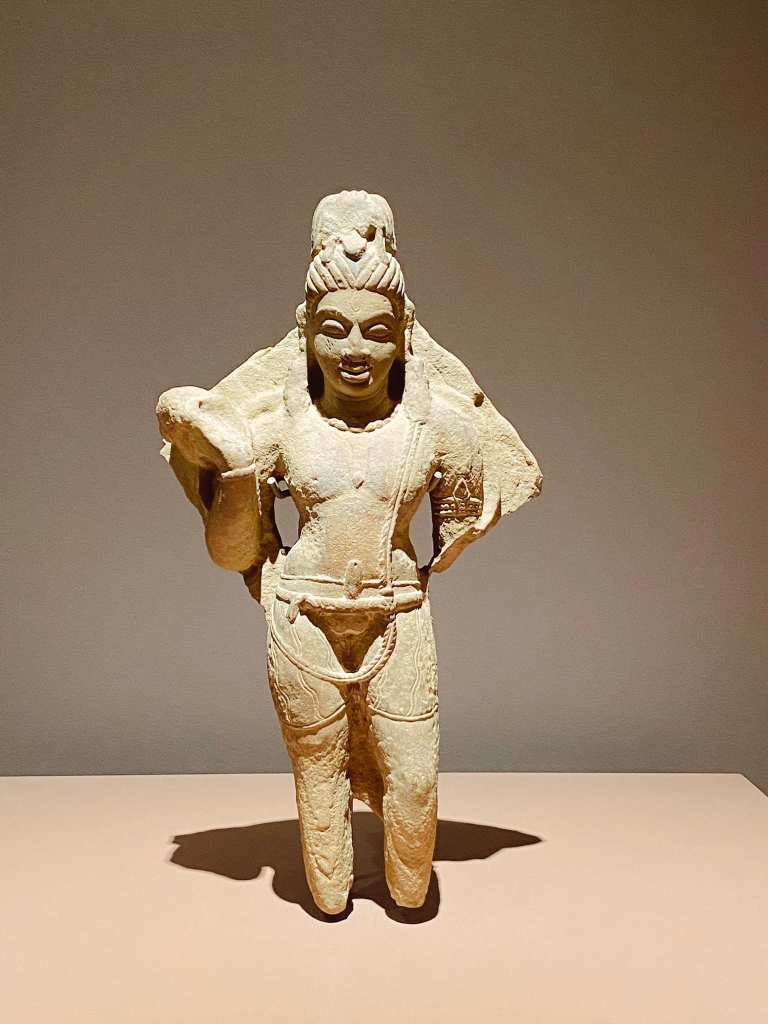
7. Śiva
“Here, he is shown in his role as the divine ascetic or yogi, unclad but for an animal skin about his loins, with matted hair piled high on his head.”
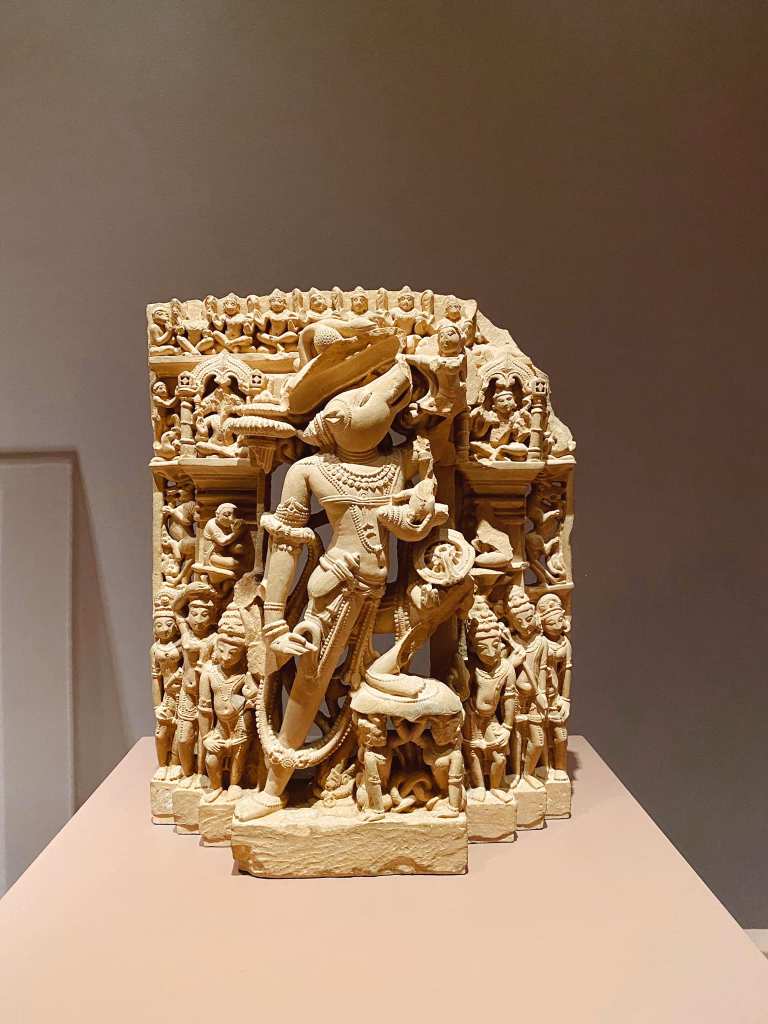
8. Viṣṇu as Varaha
“The body of Viṣṇu’s boar-headed incarnation, Varaha, forges a diagonal bolt through this sculpture. His right foot is planted decisively at the corner of its projecting base; his left is flexed for leverage on a lotus pedestal. Against these rooting forces, his body surges upward, culminating in an acutely raised snout”.
days of sweetness, study, laughter & wonder spent in retreat in Detroit! days of belonging, of returning home.
finally… an ode to the Siri Jyoti Pūjā! it is difficult to imagine a more beautiful way to spend my first day in the United States than by attending the Siri Jyoti Pūjā (“the wealth of light”, pūjā designed by Śrī Amṛtananda Natha Sarasvatī), conducted by my beloved teacher. ❤️♥️❤️ to have offered my poetry to Devī & Nārāyaṇa within this pūjā has been most precious… overflowing!
“to sing and dance through the Śrī Cakra”… (Śrī Vidyā Trust)
The Siri Jyoti Pūjā, which translates as “wealth of light”, is an exceedingly auspicious ritual designed by Śrī Amṛtananda Natha Sarasvatī, affectionately known as Guruji. The Pūjā is described by the Śrī Vidyā Trust of Devipuram as a group ritual that is performed to the Śrīcakra, which opens one to the immense benefits of performing the cakra pūjā within: “Doing this enables us to enjoy life, sing, and dance through it.”




 awe!
awe!













 amaryllis