amaryllis (/ˌæməˈrɪlɪs/[1]) – bears the name of the shepherdess in virgil's pastoral eclogues. it stems from the greek ἀμαρύσσω (amarysso), meaning "to sparkle", and it is rooted in "amarella" for the bitterness of the bulb. the common name, "naked lady", comes from the plant's pattern of flowering that blooms when the foliage dies. in the victorian language of flowers, it means "radiant beauty".
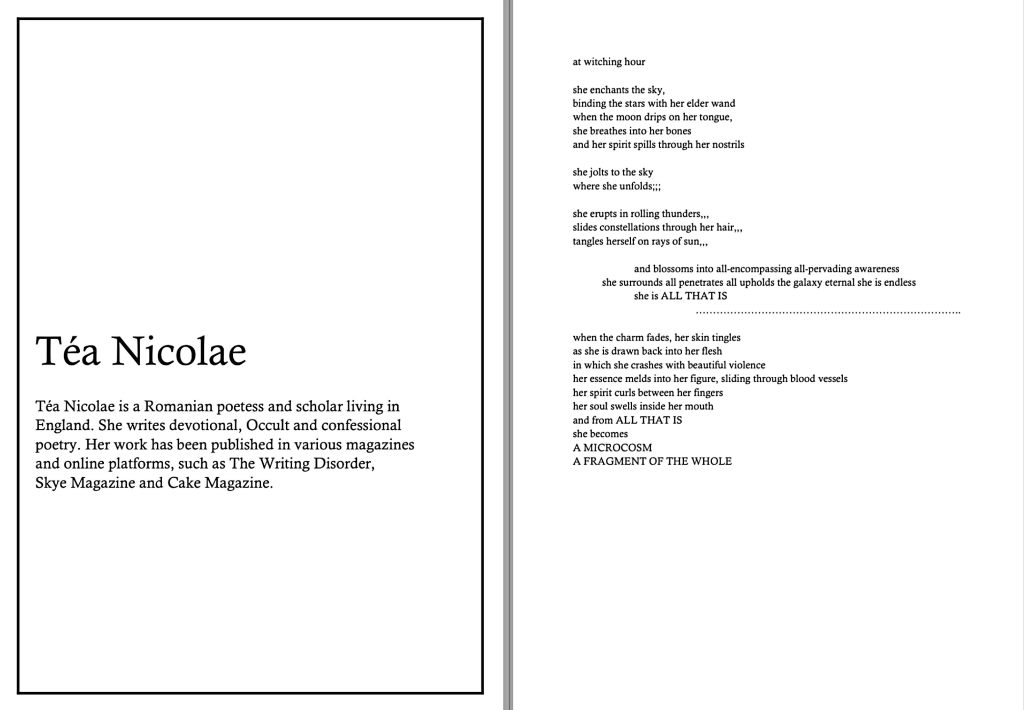
Author: Téa Nicolae
🌸 poetess and scholar 🌸 a Devī-bhakta 🕊
🌙 I wore myself out, looking for myself.
No one could have worked harder to break the code.
I lost myself in myself and found a wine cellar. Nectar, I tell you.
There were jars and jars, and no one to drink it. 🌙 Lallā
yesterday, we concluded three weeks of intense study at Śabda Institute. my beloved teacher, Amma (Dr. Kavitha Chinnaiyan), and her beloved teacher, Sumitji (Dr. Sumit Kesarkar), helped decode the esoteric meaning veiled within the magnificent Īśopaniṣad, and, with great expertise, made its heavy and charged verses applicable for us – as both householders and as practitioners. i was most touched by the chant’s invocation & by its teaching of wholeness, which inspired me to write a poem that i was greatly honoured to read at the beginning of our fifth class. 🧡
oṃ | pūrṇamadaḥ pūrṇamidaṃ pūrṇātpūrṇamudacyate |
pūrṇasya pūrṇamādāya pūrṇamevāvaśiṣyate ||
Oṃ is the entirety from which everything we see as parts has emerged. The whole remains whole even when a part is taken from it. The whole was born out of the whole. What appears as a part is the whole, and the leftover is whole. The whole cannot be split even when it appears so. (translation by Sumitji).
☀️ my poem (written as a ghazal):
pūrṇam | wholeness
you were always whole the grief on your tongue was whole
when longing cut like a knife the woe stuck to your eyelids was whole
when anger brimmed in your belly the burn of your cruelty was whole
when the sun washed your cheeks the glee warming your fingertips was whole
when your heart cracked open the light trickling through was whole
my parents named me ‘Gift of God’ what gifts are there when all’s already whole?
☀️ praṇām to our two illustrious teachers & to the vidyā they graciously transmitted to us in these three weeks. 🧡 the wonders of Śabda Institute 😊
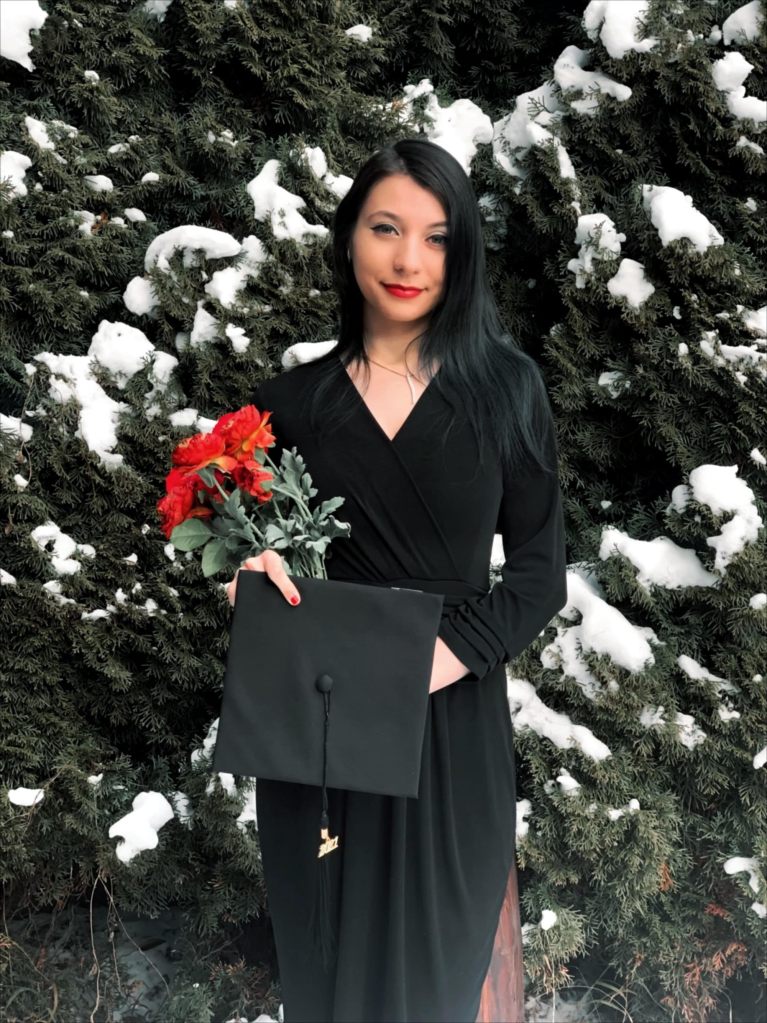
♥️ happy to be graduating with a distinction in my first master’s degree!
♥️ what a transformative journey this MA has been – i would not lightly call my last year at lancaster university life-changing! my studies in Indian philosophy and literature, with an emphasis on the exquisite Mahābhāratam, combined with my wondrous immersion in oral practice traditions at Śabda Institute, have radically challenged and changed my perception of both myself and the world, and introduced me to so much beauty, wisdom and wonder.
the pressing longing to * know * that had been hounding me since my teens, it was for * this *. i often joke that it feels as if i wasn’t living before – only dreaming!
grateful to my supervisor, Dr. Brian Black, who guided me in my research and introduced me to the Mahābhārata and its complexities, and incredibly grateful to my beloved teacher, Dr. Kavitha Chinnaiyan, whose teachings are the foundation of all that i do; i am so fortunate that my studies at Śabda Institute enrich my academic writing with the insights, delight and fervour that are only accessible to practitioners.
lifetimes of refinement to go!
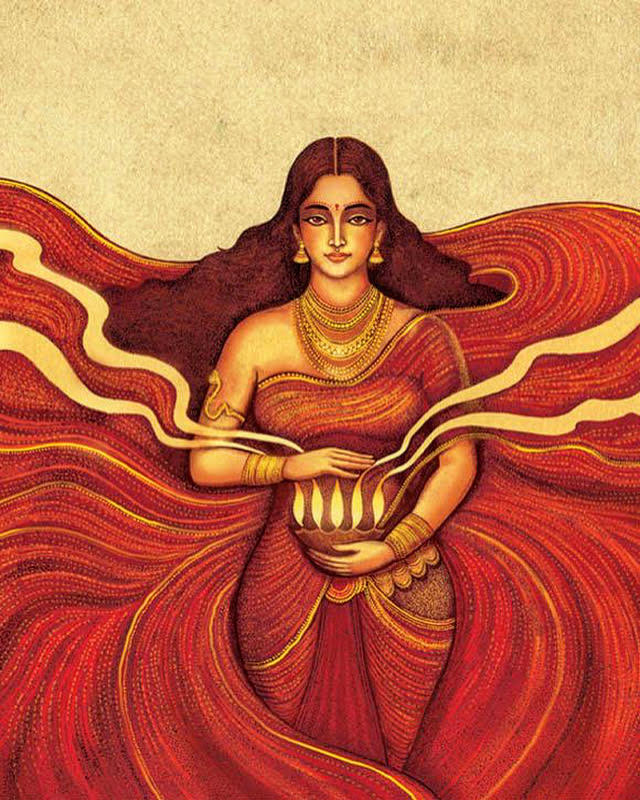
🌺 with the occasion of graduating from my master’s, taking a trip down memory lane to revisit the dearest pieces i worked on during my MA, namely “Feminine Dimensions of ‘God’: The Deification of Mahābhāratam’s Tragic Heroine”, “The Western Revival of Goddess Worship” & “The Question of Religious Violence in the Mahābhārata“. 🌺 my first paper explored the richness of the non-dual concept of ‘God’ by addressing the intricate worship of Draupadī, the Mahābhārata’s enigmatic female character – whose tragic and distinct storyline establishes her as a multifaceted heroine: a devoted wife; a caring mother; an abused and vindictive woman; a polyandrous empress; an avatāra of the Goddess; the Supreme Parāśakti, the all-pervading absolute reality herself; the celestial Śrī. i argued that, through the worship of an abused & vengeful woman, her devotees are deifying the entirety of the human experience. this piece has been my heart and soul, as my love for the fireborn Yājñasenī Draupadī knows no bounds. ♥️ 🌺 my second essay employed a discourse rooted in psychoanalysis, and was centred on the therapeutic values Goddess archetypes hold for the traumatised female psyche + commented on the ramifications of the phenomenon of religious revival in a secular age. 🌺 my third paper deconstructed the hypothesis of the existence of instigation to religious violence in the Mahābhārata – but this perhaps deserves a post of its own, so some other time. ♥️ current situation is incessant editing, and i am hopeful that in 2022 they will feel ready for publication. cannot wait to share my findings. image: “The Flaming Tresses of Draupadī” by Onkar Fondekar, for the illustration of the cover of the book of the same name written by Veerappa Moily, Rupa Publications. ♥️
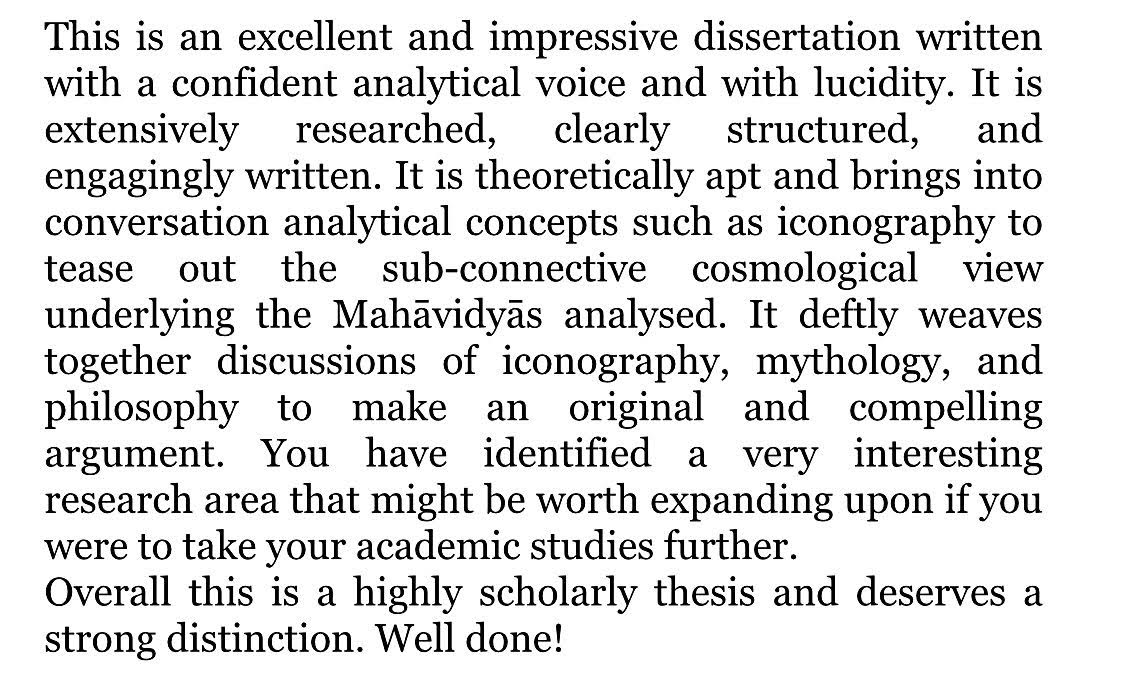
finally, attaching below the praise i received for my MA dissertation, which i plan to publish one day:
“This is an excellent and impressive dissertation written with a confident analytical voice and with lucidity. It is extensively researched, clearly structured, and engagingly written. It is theoretically apt and brings into conversation analytical concepts such as iconography to tease out the sub-connective cosmological view underlying the Mahāvidyās analysed. It deftly weaves together discussions of iconography, mythology, and philosophy to make an original and compelling argument. You have identified a very interesting research area that might be worth expanding upon if you were to take your academic studies further.
Overall this is a highly scholarly thesis and deserves a strong distinction. Well done!”
my christmas gift from dad has been the final draft of my MA dissertation, bound and printed on the glossiest paper (my favourite!). couldn’t take my eyes off how glorious the images of the Mahāvidyā Devīs looked. ♥️ the most precious christmas gift of all time for me. ♥️ cover-image: Mātaṅgī by Kailash Raj | Lalitā by Ekabhumi Ellik, Colouring Shakti. (2015) | the creations of the two artists are mesmerising and would recommend all to check them out! ♥️
the Guhyāsādhanā-tantra tells us that fortunate are those who become the śiṣyas of a teacher, and even more fortunate are those blessed to become the śiṣyas of a strī-guru, the latter only accomplished after lifetimes of sādhanā. so unimaginable is my fortune as a student of Kavithaji Ammā, who has guided me to see glimpses of the beauty and truth veiled inside me and in all that is – who is polishing my rough edges so they can one day shine like diamonds. to finally be with Ammā & with the saṅgha in-person has been the greatest gift. śrī mātre namaḥ! śrī gurubhyo namaḥ! ♥️
the winter Śabdācāra retreat: the most beautiful moments of my life, spent in one of the most beautiful places, with the most beautiful people. tears, intimacy, connection, love, grace, flow, tenderness, and sweet vulnerability – all rushing through the light of the guru. dearest saṅgha, i did not know love before you.
happy to share my academic article, “Jungian Reflections on Mainstream Cinema”.
“Jungian Reflections on Mainstream Cinema” was written during my undergraduate degree, and i expanded on its conclusions in my undergraduate dissertation. my research interests have shifted since then, and, as i dive deeper into other topics in academia, i want to briefly share some of my past findings – how perfect the form of an academic letter is for that! thank you to AL for gifting me the opportunity to publish open-access and, graciously, free of cost, my swift farewell to Jung, psychoanalysis & to the mystical gaze of cinema.grateful to all i’ve learned about myself while immersed in Jung, grateful for the bridge this individuation journey of mine represented – a transition to my postgraduate studies in philosophy & religion. very much looking forward to sharing complete papers centred on religion & philosophy in the future – if i’m ever done with obsessively editing them, that is!
end-note: have loved conversing with other Jung enthusiasts since this came out. i thought – oh! so this is the magic of presenting & sharing ideas with those who have similar interests as you do!
ACADEMIA Letters Jungian Reflections on Mainstream Cinema Téa Nicolae, Lancaster University
Fantastical worlds have been enchanting humans for centuries. From fairy-tales and legends to science-fiction blockbusters, we have been drawn to bewitching stories of heroes, magic and supranatural creatures since the dawn of creation. (Zipes, 2006) Although this subtle desire to encounter mysticism in art has been labelled as ‘escapism’ (Addis and Holbrook, 2010; p.823), I propose that the phantasmal imagery of mainstream cinema offers valuable insights into the human psyche.
I am building my assumption on the work of psychoanalyst Carl Jung (1875-1961), who believed that fantastical images of mythology and religion are allegories, cohesively constructed to supply ideas about the psyche. According to Jung, mythology and religion resemble psychology by perfectly creating ‘archetypes’ packed with meaning, which allow humans to dwell upon images of rebirth, transformation and self-realisation. (Jung, 1998)
The psychoanalyst was unconvinced that our ancestors went to great lengths to interpret the happenings of the natural world through religious iconography because they lacked scientific explanations. Instead, he considered that mystical imagery does not serve as a rationalisation of the physical world, but of the inner one. Thus, such images use the external, chimerical universe to decipher the complex layers of the mind. (Jung, 1998) Therefore, in Jungian thought, images that cross religious and modern myths reveal the nature of the Self, which represents one’s authentic identity. The Self emerges when consciousness and unconsciousness are united; Jung considered this union to be the nucleus of all psychological and spiritual inquiries, as he associated this psychological aspiration with the spiritual yearning for the Divine and believed that the ‘God’ referred to in religion is the Self. To allow the Self to arise, one undergoes psychic processes such as ‘individuation’ and integration, which are reflected in religious iconography within prototypal storylines and quintessential imagery. Hence, Jungians believe that humans have been telling similar stories for centuries: stories that are imbued in our collective unconscious because they are meaningful, soulful, because they guide us to understand our humanity. (Jung, 1998)
Jung considered that new myths are continuously created in lieu of ancient ones. (Jung, 2002) The concept of modern myths greatly interests me. As cinema has undoubtedly become one of the most accessible and popular artforms, I am inclined to believe that it is a medium where modern myths are crafted.
Accordingly, as technology allows our unconscious to rapidly absorb images and ideas without properly processing them, Jungian scholars consider that cinema ‘offers both a means and a space to witness the psyche in projection’, thus proving to be an ‘antidote to the modern assault on the unconscious’. (Hauke and Alister, 2001; p.2) I would thereby maintain that, while watching aspects of their humanity and layers of the world unravel on screen, spectators are guided to understand themselves and to find meaning in cinematic tales.
Indeed, numerous mainstream films encode traditionally religious beliefs that interlace with the Jungian worldview. For example, Star Wars: A New Hope (George Lucas, 1977) is heavily influenced by Hindu thought and is rich with archetypes, whereas George Lucas himself based his work on Jungian conceptions. The Lord of The Rings (Peter Jackson, 2001-2003) embodies Catholic consciousness and constructs a distinct individuation process. Both Interstellar (Christopher Nolan, 2014) and Inception (Christopher Nolan, 2010) include influences from Eastern schools of thoughts and address the concept of the collective unconscious, while Avatar (James Cameron, 2009) mirrors Hindu convictions and illustrates unity of consciousness. These works have been enthusiastically received by audiences and critics alike.
I suggest that the popularity of these cinematic pieces arises from a collective subconscious yearning for modern myths and self-reflection. The archaic nature of images that appear in the enumerated films allows cinema, even in its mainstream form, to engage the psyche, and to guide spectators to find purposefulness in life and in themselves. A Jungian analysis of mainstream cinema would thus unveil commercial films as psychic expressions of the unconscious that transcend individuality and collectively touch upon the complexities of our humanness, thus resembling religious myths.
I would therefore reject the dismissal of commercial films as ‘escapist’, embracing scholar Christopher Hauke’s articulation that ‘their very popularity (…) demonstrates a resonance with unconscious needs in the collective psyche to which the cinema frequently responds.’ (Hauke, 2001; p.9) Additionally, I would sustain that ancestral symbols present in film have the capacity to perform healing functions and to ‘indicate a psychic reality to which each person potentially has access’, which ‘transcends bounds of personal history’. (Frederickson, 2001: p.29) In a fast-moving society which allows little space for introspection, cinema makes complex psychological inquiries approachable and attainable: ‘when an intensity of experience is mixed with the less intense, psychological and emotional replenishment and growth may be made bearable and possible’. (Hauke and Alister, 2001; p.2)
In conclusion, I propose that cinema is becoming a religion of our own: it is a medium where stories of self-understanding and self-realisation are crafted, where our shared humanity reverberates in archaic images that are pregnant with meaning. Films, our modern myths, invite us to embark on inner, earnest journeys which lead to the Self: the nucleus of humanness.
‘I believe there’s spirituality in films, even if it’s not one which can supplant faith… It’s as if movies answer an ancient quest for common unconscious.’
Martin Scorsese (Scorsese and Wilson, 1995)
Corresponding Author: Téa Nicolae Citation: Nicolae, T. (2021). Jungian Reflections on Mainstream Cinema. Academia Letters, Article 3814. https://doi.org/10.20935/AL3814.
you can read the bibliography and the filmography of this article visiting the link pasted above.
defeat me, monsoon one. pierce through the weaponry of the self until my armour plate breaks in two, and i crumble at your feet the way Naraka fell before you and Satyā.
show me mercy, monsoon one. before your sudarśana delivers my final blow, hold me as one’s beloved would. cradle me the way you embraced your gopis when swaying with the woods of Vṛndā.
dance me, monsoon one, to your flute’s tune show me the hills where the milkmaids bathed your feet with their tears.
let our waltz come to end when my hand slips from yours… then claim your victory over me, Hari. unchain me from my bonds of delusion burn the bitterness weighing my heart so we meld as one. free me into union with you, lover of Rādhā, the way you wedded Naraka’s imprisoned women.
purifier of the fallen, defeat me and allow me rest within you.
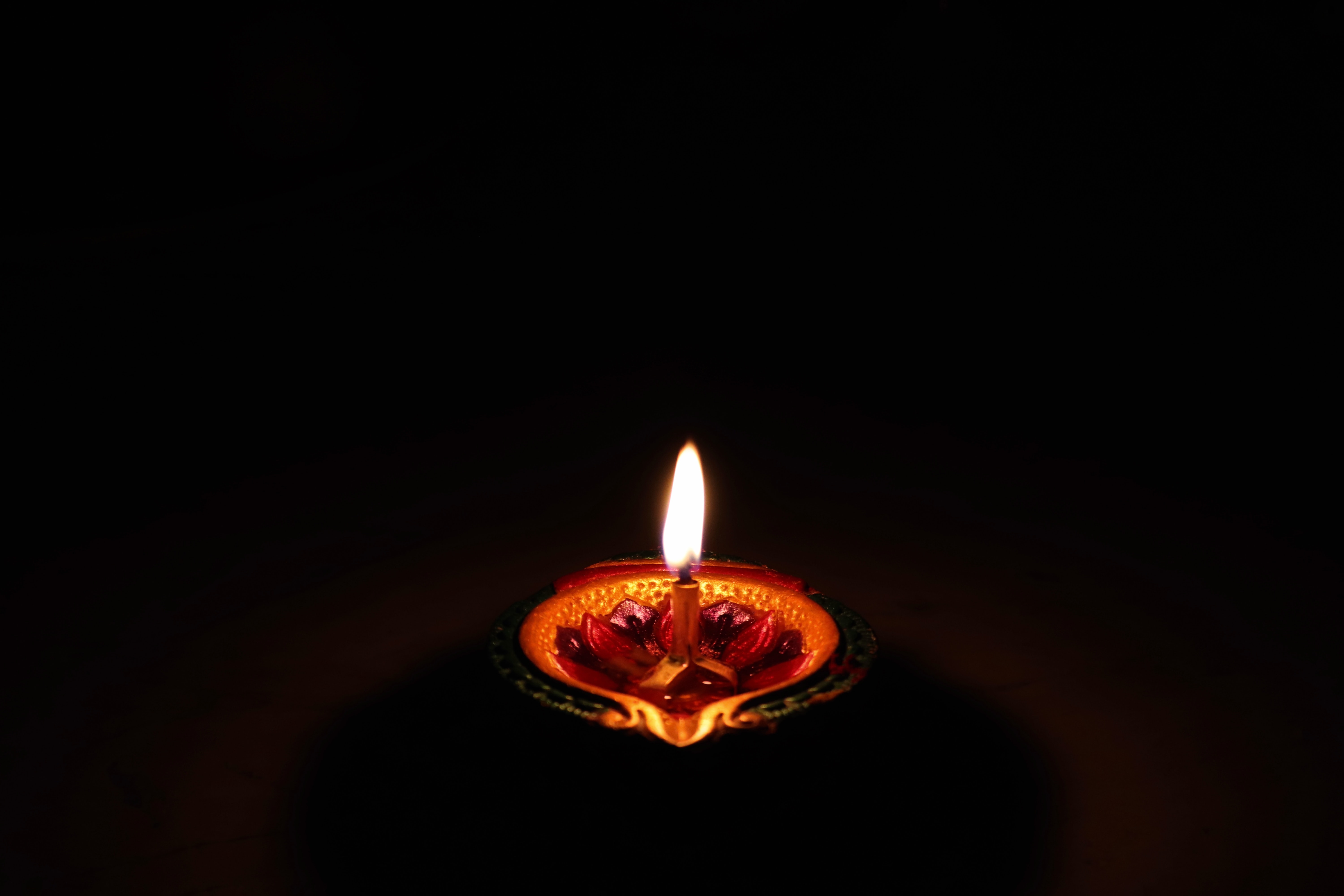
“defeat me”, poem / prayer for Naraka Caturdaśī… wishing a blessed Dīpāvali to all! may our ignorance dissolve into the light of consciousness as the asuras were absorbed into the devatās.
credit for the second, beautiful image: Madhav, unsplash.
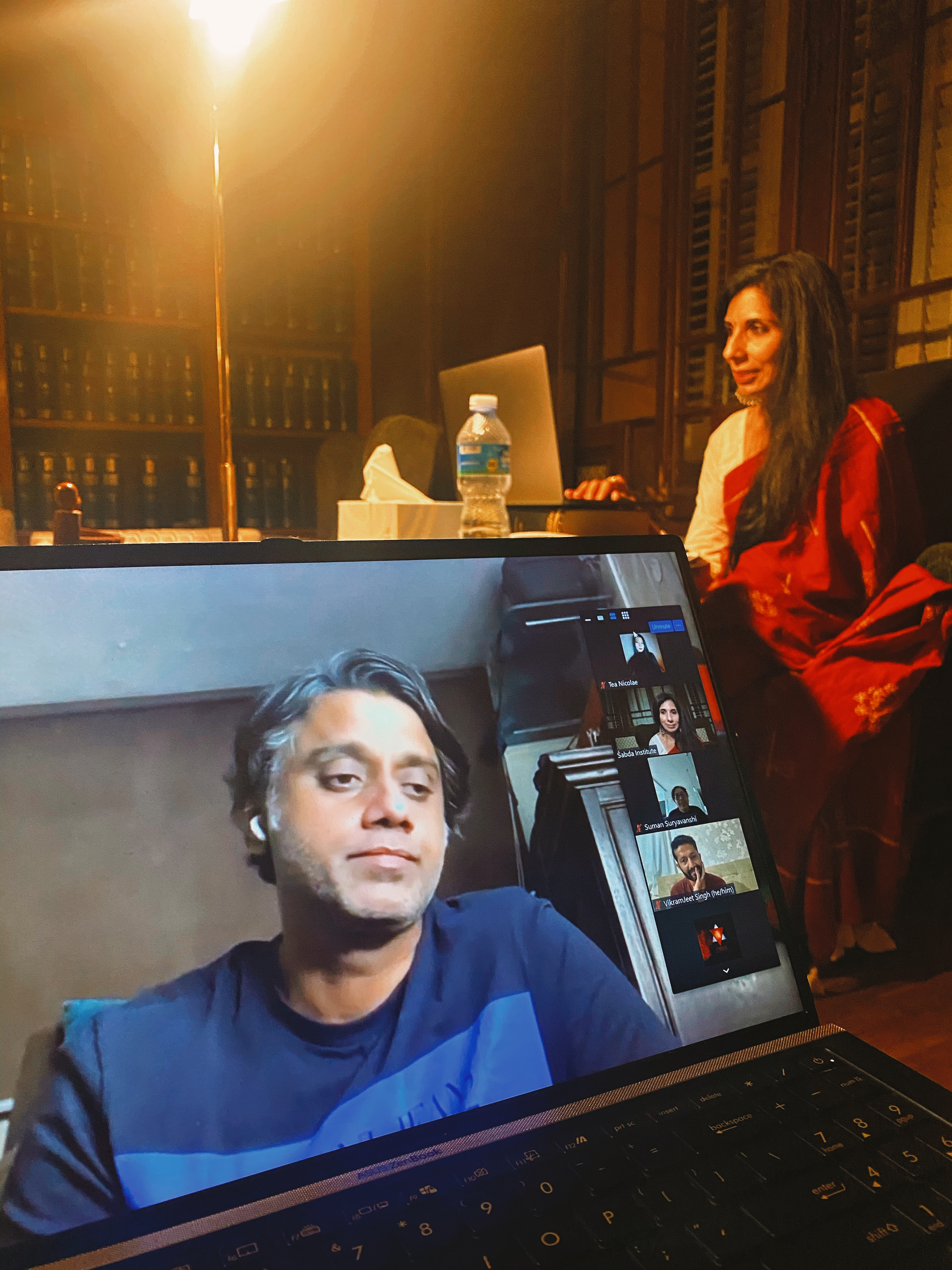
tiny personal note: this is the first Dīpāvali i am spending in a place of my own, and it has been so precious to decorate my apartment (and even my rabbit’s hutch!) for the festival of lights.
grateful!
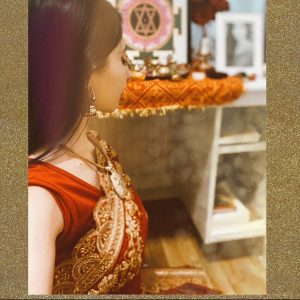
the tapestry behind me: the feet of Hari & Rādhārāṇī, by Harsh Malik.
happy halloween & a blessed samhain to those celebrating either of them! this has always been my favourite period of the year (and not just because it coincides with my bday!) – but more on this some other time.
today, i’ve thought of the eve of samhain 2019. i was in the midst of restless seeking, and wanted guidance as i was heading into my early twenties. celebrations of samhain were being held in my town, and i wound up having my runes read by a local practitioner. i talked about my longing, and talked about my seeking, before asking whether i should ‘walk that path’. i was indeed guided to deepen my inquiry, but was told: “you are already walking ‘the path’; the path is your life.”
i did not understand what that meant until, almost a year later, i discovered non-dual śaiva-śāktism and proceeded to meet my beloved teacher, who taught me that sādhanā is my life. my sādhanā is not separate mystique which excludes the mundane, or the day-to-day muck – it encompasses and it is the very mundane. i continue to cultivate this understanding every day with her guidance, and this has been my contemplation as i become one year older, and hopefully wiser!
“Every choice, every thought, and every action that occurs daily takes us one step toward or away from bliss. Nothing can be excluded in our pursuit of bliss: the way we brush our teeth, greet our spouse, look in the mirror, talk to the waitress, drive our car, prepare our food, eat our meals, exercise our body, nurture our mind, and relate to our children.”
“The path will light itself in such a way that one day, you will turn around and see that your entire life has been a stream of miracles.”
happy Vijayadaśamī! from this month’s newsletter of Śabda Institute. honoured that my poem accompanies the announcement of such an exquisite offering in this highly auspicious time, may our longing fuel our sādhanā, and may our devotion sweeten its unfolding.
Dear One,
The Śabda Saṅgha is continuing its study of the Bhagavad Gītā with a new theme – that of Bhakti Yoga. In honour of this new cycle of study, we are pleased to share a beautiful poem of longing and devotion by one of Kavithaji’s students, Téa Nicolae.
thirst infused with devotion my days unfurl tenderly chinks fissure the armour plate of the self and life dances through the cracks madly enamoured i long for the Beloved’s caress my throat, so swollen my mouth, so parched my Beloved quenches the thirst: grace pours down in ripples i drink hastily
this week is one of beginnings for me, and i am delighted that it coincides with the auspicious time of Navarātri… overjoyed to share that i am joining the Warwick Writing Programme to complete my second master’s degree in poetry & literary translation, as well as commencing my study of Sanskrit at the Oxford Centre of Hindu Studies and, this week i’m beginning my new job as a transcriber-translator! in typical fashion, i will turn this around to the Mahābhārata, and hope that this paves the way to translating some of its most beautiful ślokas… sometime in the far future





 wishing a blessed Dīpāvali to all! may our ignorance dissolve into the light of consciousness as the asuras were absorbed into the devatās.


 from this month’s newsletter of Śabda Institute. honoured that my poem accompanies the announcement of such an exquisite offering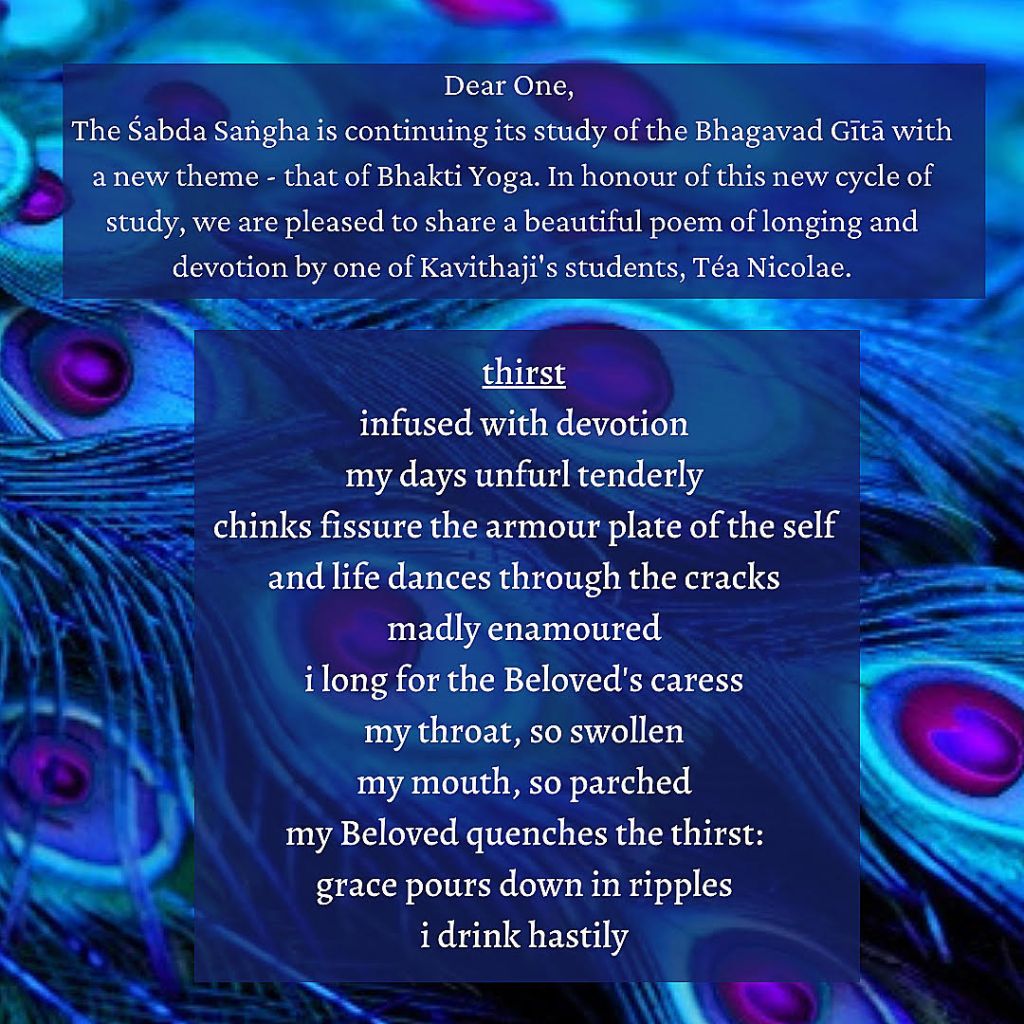
 in typical fashion, i will turn this around to the Mahābhārata, and hope that this paves the way to translating some of its most beautiful ślokas… sometime in the far future

 I love You because I love You
 amaryllis