amaryllis (/ˌæməˈrɪlɪs/[1]) – bears the name of the shepherdess in virgil's pastoral eclogues. it stems from the greek ἀμαρύσσω (amarysso), meaning "to sparkle", and it is rooted in "amarella" for the bitterness of the bulb. the common name, "naked lady", comes from the plant's pattern of flowering that blooms when the foliage dies. in the victorian language of flowers, it means "radiant beauty".
the sun in my mind aging by one the tinkle of golden anklets calling from the forest of monal the blood of my womb coalescing into bruised grass the clouds of silk blushing against my cheeks the burn of my skin drying before the unforgiving light the sound of my shame vibrating in my chest the cold untangling my fingers’ grasp on fears seeded into me as child
i sometimes wish i was satisfied by easy by swinging my feet over the white picket fence holding hands with perfect suitability but the fire in my belly scorches and i know i’m not
i sometimes wish to rest but the fire in my belly scorches and i know i have to keep moving
(..) my cheeks, full in lilies my mind, anointed by the half-moon bathing the Śivling
i walked and walked and walked hungry for a glimpse of your feet
at crossroads my torturous One of Monsoon devised a game:
i felt his lips hovering on my hair, hands, and eyelids yet when i turned my mouth to claim my longing i could only kiss a devious scent of lotus
the empty air and a devious scent of lotus
after ten, twenty thirty turns and one hundred and eight hot tears the mountain road came to a halt
you, nowhere to be found. only a devious scent of lotus.
a perfume so deceitful that when the milky ocean was churned in the first aeon the asuras did not taste nectar for they chose not the elixir but the conch streaming it instead
last crossroads in sight, i screamed
ENOUGH. MY LORD, IT IS ENOUGH.
TEAR MY CENTER WED MY NAVEL
DO NOT HIDE FROM ME.
Gangā sizzled as your lotus scent filled my nostrils maddened, i looked around for You, when, a whisper:
𝒊𝒕 𝒊𝒔 𝒚𝒐𝒖 𝒘𝒉𝒐 𝒉𝒊𝒅𝒆𝒔.
excerpt from a poem from my upcoming collection “the Monsoon One and the pilgrim”. photo: Gangotrī at night. the Himālayas are calling again.
“Strī” translates from Sanskrit as “woman”, while “dharma” is a complex principle with manifold meanings, in this context bearing the significance of “duty”; in simple terms, it refers to an individual conduct that contributes to harmony in a greater framework, be it societal or cosmological.
Draupadī is lauded in the Critical Edition of the Mbh several times as being the epitome of strī-dharma, of the dharma of women. (2.62.20; 2.63.25-30; 2.64). Interestingly, she is most intensely praised as such after she angrily (yet elegantly!) questions the men of the royal court and demands justice, being anything but meek and demure. I would argue that this showcases that in the Mahābhārata voicing oneself and standing up for oneself are considered responsibilities belonging to the dharma of women.
To nuance this even more, Eknath Easwaran, an eminent translator of the Bhagavadgītā, highlights that, etymologically, the term “dharma” can be traced back to the root ‘dhri’, which means ‘to support, hold up, or bear’; “dharma” therefore translates as “that which supports”, and Draupadī’s conduct therefore supports both society and cosmology.
In the Sanskrit Mbh, Kṛṣṇa does not appear in the sabhā (royal hall) at the time of Draupadī’s attempted disrobing, and no direct mention of him is made during this episode. In a conversation with Dr. Brian Black, a Mbh researcher whom I had the honour to have as my MA supervisor, we talked about the implication of this, which is that Draupadī’s adherence to strī-dharma appears to be that which shields her. A question that could arise here could be whether there is a contradiction between the Critical Edition and modern renderings of the Mahābhārata, with Draupadī being shielded by her dharma as opposed to by Kṛṣṇa.
For me there is no contradiction.
Kṛṣṇa in the Bhagavadgītā establishes himself as ‘the eternal dharma’ (14.27); and so, Kṛṣṇa is all dharmas, including strī-dharma. We tend to associate Kṛṣṇa with a fully-fledged incarnation; but he is beyond that. I would maintain that, as the divine principle, he exists in Draupadī’s consciousness and in her actions as dharma (and not only!). The latter renditions, for me, in which he is physically there, only bring forth in tangible projections the internal process extending Draupadī’s consciousness.
I will write more about strī-dharma as it appears in the Mbh.
you held me all night, my Lord unseen to the eye, your grace, a lover’s touch, wrapped my skin unheard to the ears, your name, my japa, vibrated through my braincells
Monsoon One, do you long for me as fully as i long for you? do you call on me as ardently as i call on you? you do, don’t you, my Lord? i am not alone in this quest
for every step i take towards you, you take two towards me for every tear i spill in yearning for you, you ignite vīrya in my skin tissue for every test of yours that i fail, you yank me freer of delusion
i see it now, Hari. you have been pulling me by my hair and hands to you. it was all you. it was always all you.
if i run to you as fast as my legs can take me, will you meet me halfway?
you will, won’t you, my Lord?
🦚 Happy Kṛṣṇa Janmāṣṭamī! 🙏 poem from my upcoming collection “the Monsoon One and the pilgrim”. 💛
in my sixteenth autumn, Nature called me to her, burned into my cells the yearning to meet my depths and i tasted myself wildly in her fold until wisteria tangled my feet and life pulled me from myself by my hair and i lost the thread, the web, the call.
𝒊 𝒘𝒂𝒔 𝒋𝒖𝒔𝒕 𝒂 𝒈𝒊𝒓𝒍 i told the river as it broke through my skin i forgot the lessons, i forgot the actual call. i could only hear an echo of it and i followed fragments of memory. it seemed like the call. it felt like the call. it wasn’t. i was just a girl.
your terence said, if you are to follow, only follow Nature. it is funny, how sixteen autumns of cracking fire could understand what twenty springs of dimmed flame did not.
twenty four summers rekindle the fire with rage, bare skin and an open chest, and with my girlhood as the blood offering.
watch me answering your call again with my hair burnt and my thighs bled.
like the dragon woman who ate horseflesh in the red sea, i sink my teeth into my girlhood and consume it rapaciously in the forest.
mad eyes, i pledge: this time, it will just be me, and you, and the wildness.
slighting bhakti poetry, the poems belonging to the “of jumbled warmth” section of ~ songs of youth ~ are poems i wrote which would most closely resemble what would be known as poems of love. sharing the ending stanzas of “you said you loved me accusatorily” from verona, the city of love!
*when i mused something similar, my very wise friend @flagrantambiguity noted that all poetry is love poetry in essence, only not in the customary way we think about love – which i *love*-d 🫀😁 because, indeed, to write a poem about something implies devotion to it – be it devotion to anger, grief or hatred. (my take!)
i had thought that i was just a girl who wanted to plant lemon trees but my hot blood scorched the vine trailing on the windowsill.
Keśava, you are pulling me to you by my teeth and i follow happily.
exploring the warm tones of warwickshire beauty 💛
i followed you into the seven seas and i followed you into the circle of mountains i have been calling you with folded hands and now i will dance to you with my mouth open and with flowers woven into my skin tissue.
monsoon one, did you know that the crevices of my heart can hold you whole? did you know that the fire in my belly can swallow the three worlds?
happy Mahāśivarātri! 🙏 reflecting today on the need to destroy within that which is familiar to be reborn as new. a poem inspired by the homam witnessed at the Chidambaram Temple (pictured):
Agni is starved
mantra pours into the fire ghee pours into the fire milk pours into the fire curd pours into the fire sugar pours into the fire silk pours into the fire
fear pours into the fire past pours into the fire doubt pours into the fire attachment pours into the fire woe pours into the fire ire pours into the fire
Agni licks his lips
quenching the homam within, i wear the embers on my eyelids with each blink i regenerate.
Har Har Mahādeva!
🔱 further context: scholar Richard K. Payne explores homa as symbiosis between fire, the deity invoked in and concomitantly identified with the fire, and with the practitioner, who themselves becomes ‘ritually identified with both the deity and the fire’. in this, the offerings immolated in the fire are connoted with ‘spiritual obstacles that impede the practitioner from full awakening’. most significantly, ‘the practitioner’s own inherent wisdom is identified with the fire, and just as the offerings are transformed and purified, the practitioner’s own spiritual obstacles are, as well’. (2017) Payne interestingly identifies two strains of interpretation of the ritual: first, ‘the yogic interiorization of ritual found in post-Vedic Indian religion, more as a form of esoteric physiology than as a psychologized understanding of visualization’; second, ‘the sexual symbolism’ ‘attached to all aspects of fire rituals’. (2017)


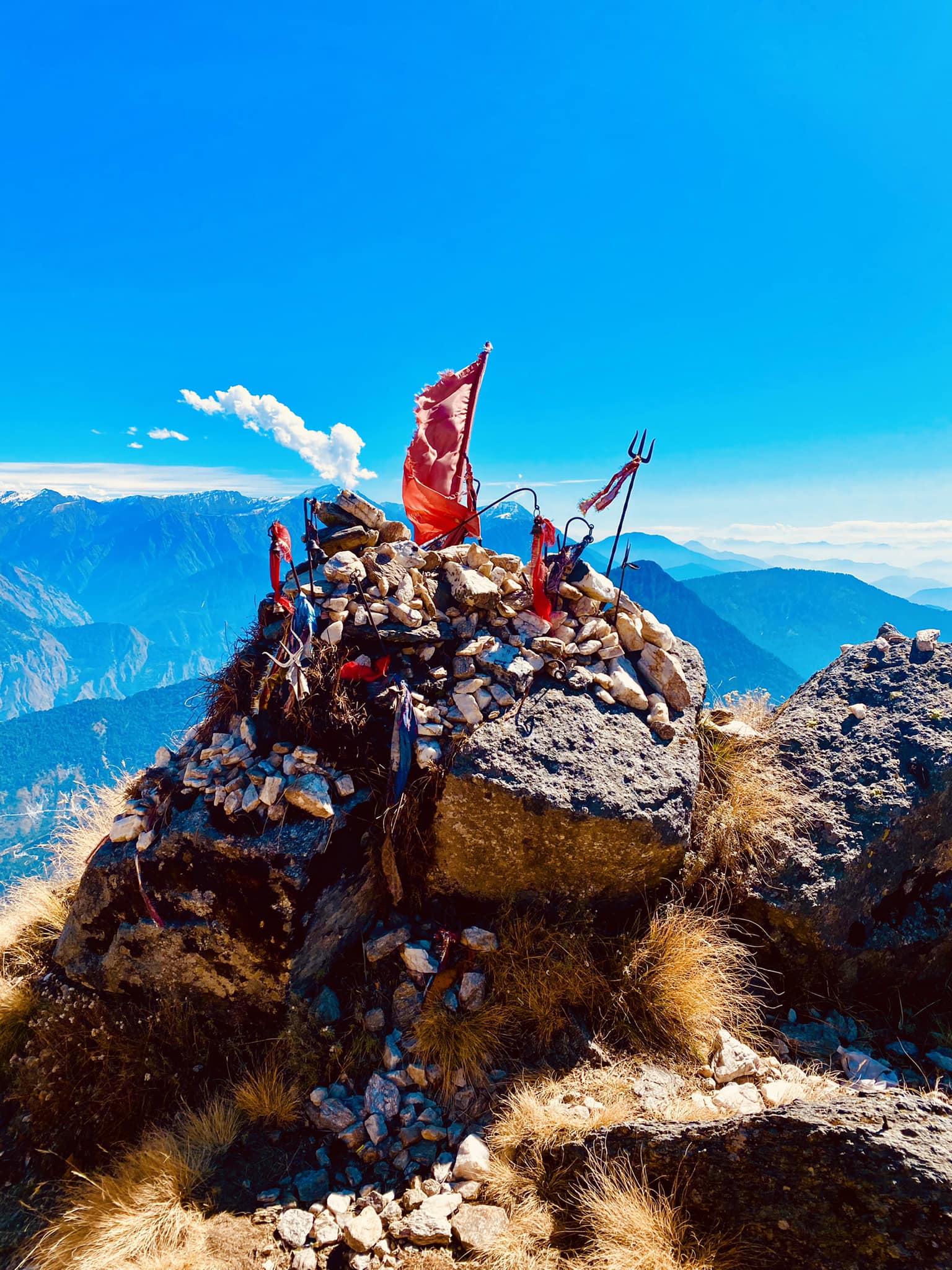
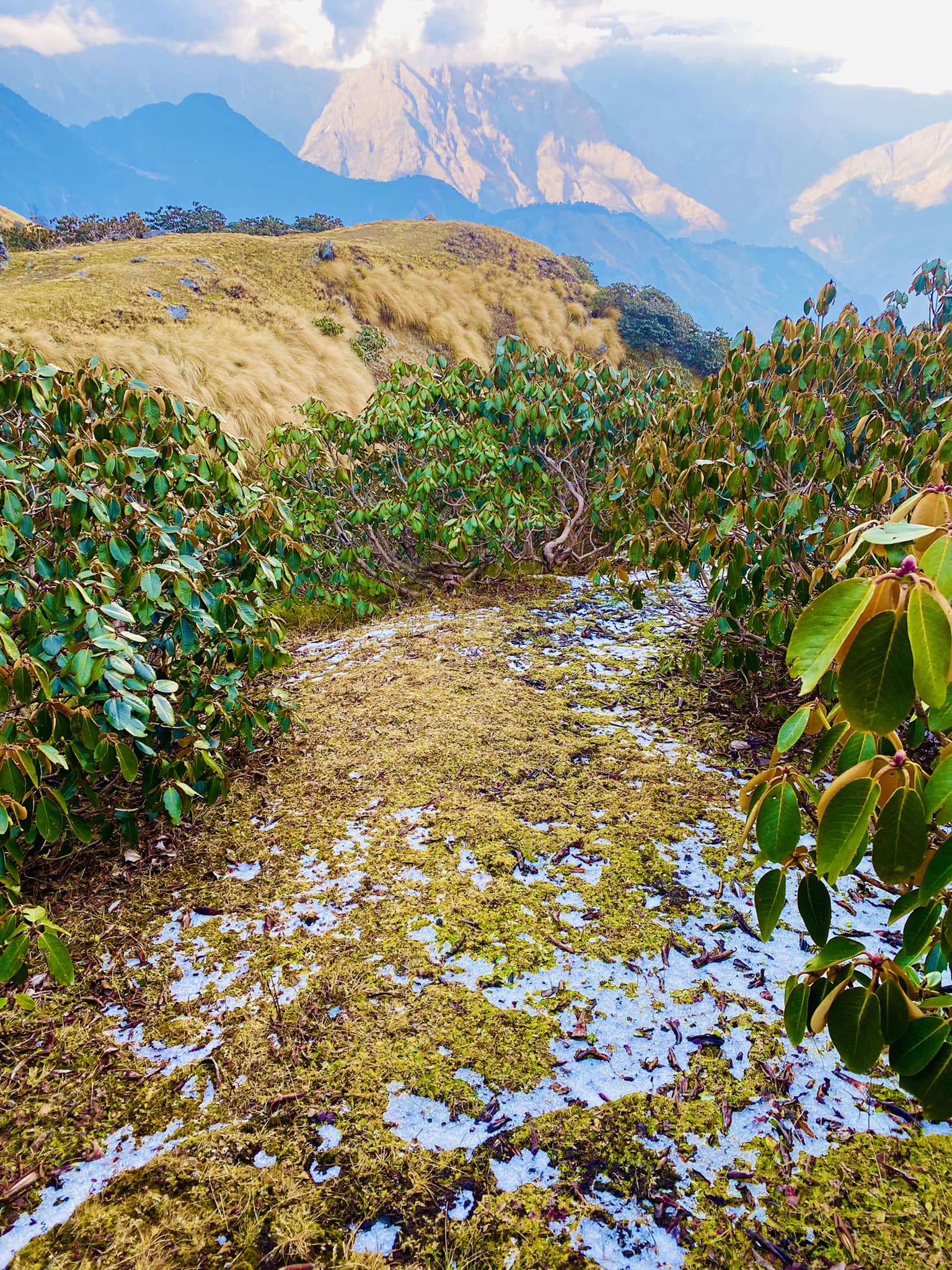
 excerpt from a poem from my upcoming collection “the Monsoon One and the pilgrim”. photo: Gangotrī at night. the Himālayas are calling again.





 photos: the ecstatic Caturāvṛtti Tarpaṇam, completed in forty-one days.
  amaryllis