twenty-four summers rekindle the fire

in my sixteenth autumn, Nature called me to her,
burned into my cells the yearning to meet my depths
and i tasted myself wildly in her fold
until wisteria tangled my feet
and life pulled me from myself by my hair
and i lost the thread, the web, the call.

𝒊 𝒘𝒂𝒔 𝒋𝒖𝒔𝒕 𝒂 𝒈𝒊𝒓𝒍
i told the river as it broke through my skin
i forgot the lessons, i forgot the actual call.
i could only hear an echo of it and i followed fragments of memory. it seemed like the call. it felt like the call. it wasn’t. i was just a girl.

your terence said, if you are to follow,
only follow Nature.
it is funny, how sixteen autumns of cracking fire could understand
what twenty springs of dimmed flame did not.

twenty four summers rekindle the fire with rage, bare skin and an open chest,
and with my girlhood as the blood offering.

watch me
answering your call again
with my hair burnt and my thighs bled.

like the dragon woman who ate horseflesh in the red sea,
i sink my teeth into my girlhood and consume it rapaciously in the forest.

mad eyes, i pledge:
this time, it will just be me,
and you, and the wildness.

you said you loved me accusatorily | poem | songs of youth

you said you loved me accusatorily

with a glimmer in your eyes.

your hands entwined with mine

like ivy,

swiftly travelled to my shoulders

and strangled my neck

with care.

your tender messages were

sweet like thyme

and your love

smothered me.

i was ashamed

that i could not mirror your affection,

but God knows i tried.

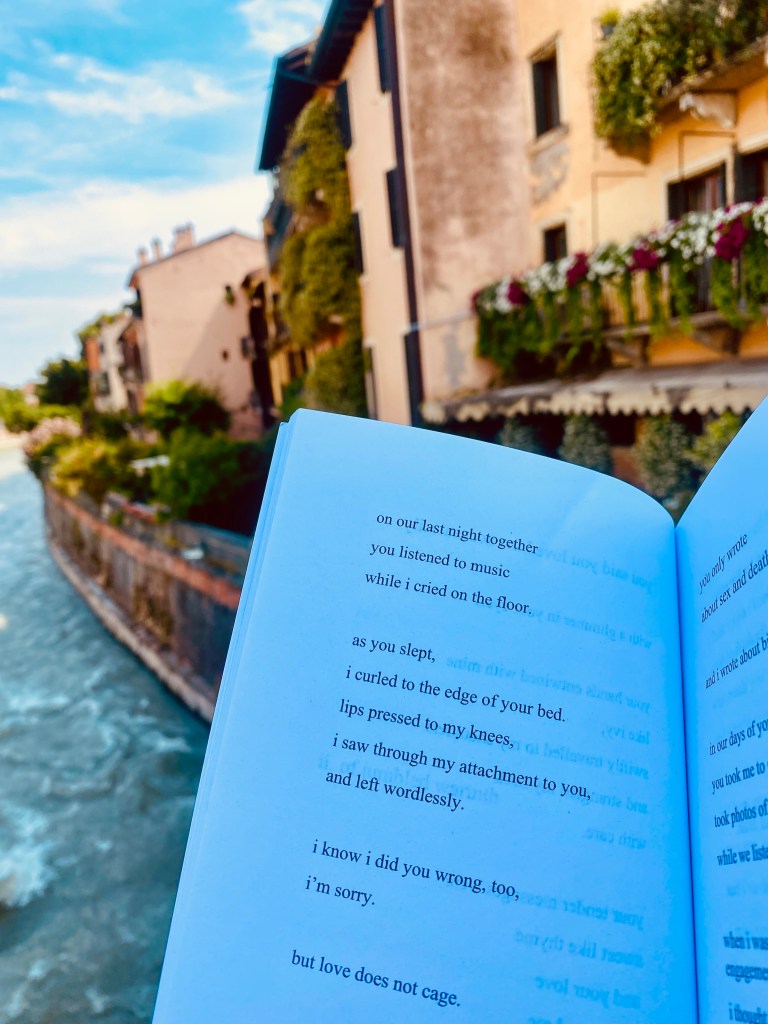
on our last night together

you listened to music

while i cried on the floor.

as you slept,

i curled to the edge of your bed.

lips pressed to my knees,

i saw through my attachment to you,

and left wordlessly.

i know i did you wrong, too,

i’m sorry.

but love does not cage.

slighting bhakti poetry, the poems belonging to the “of jumbled warmth” section of ~ songs of youth ~ are poems i wrote which would most closely resemble what would be known as poems of love. sharing the ending stanzas of “you said you loved me accusatorily” from verona, the city of love!

*when i mused something similar, my very wise friend @flagrantambiguity noted that all poetry is love poetry in essence, only not in the customary way we think about love – which i *love*-d 🫀😁 because, indeed, to write a poem about something implies devotion to it – be it devotion to anger, grief or hatred. (my take!)

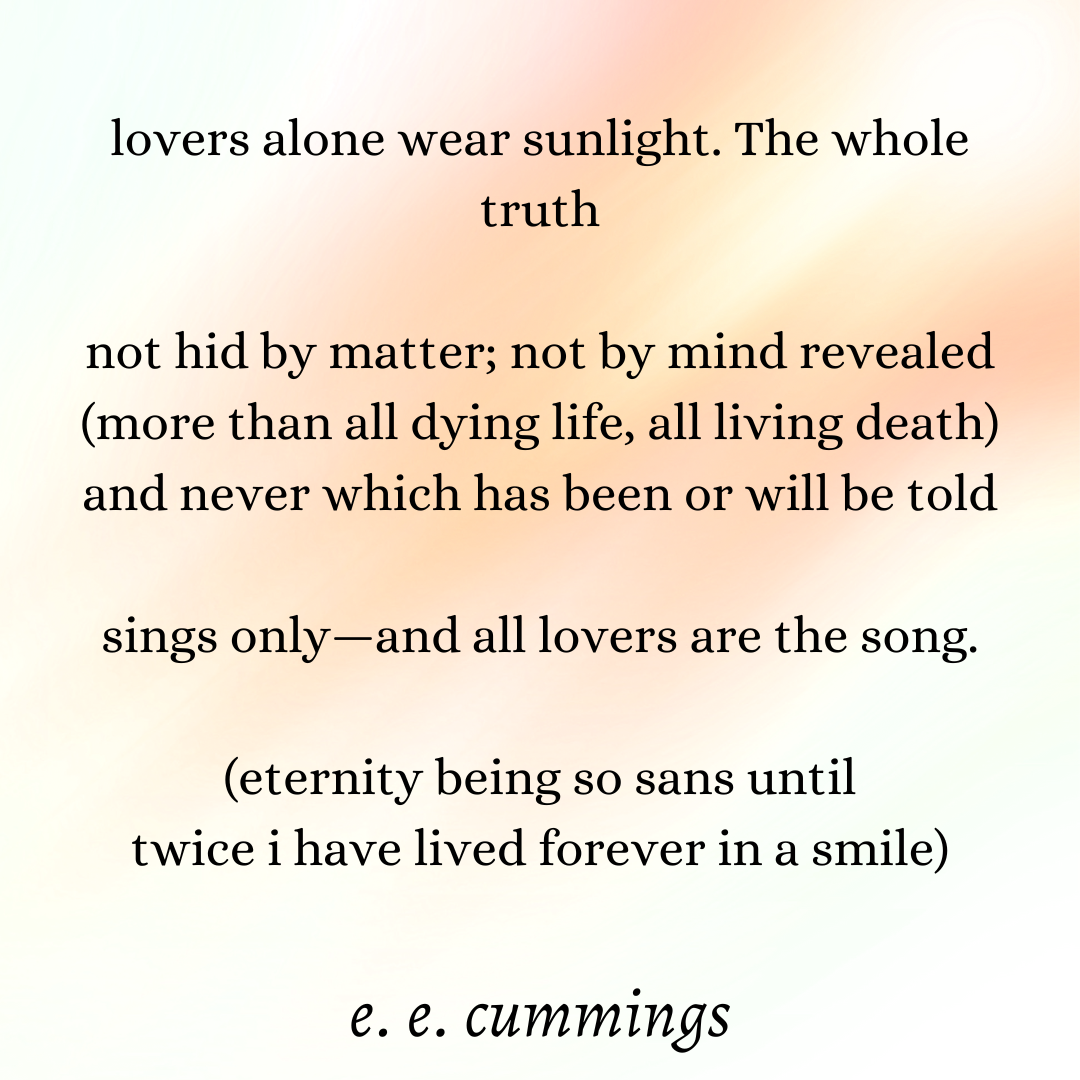
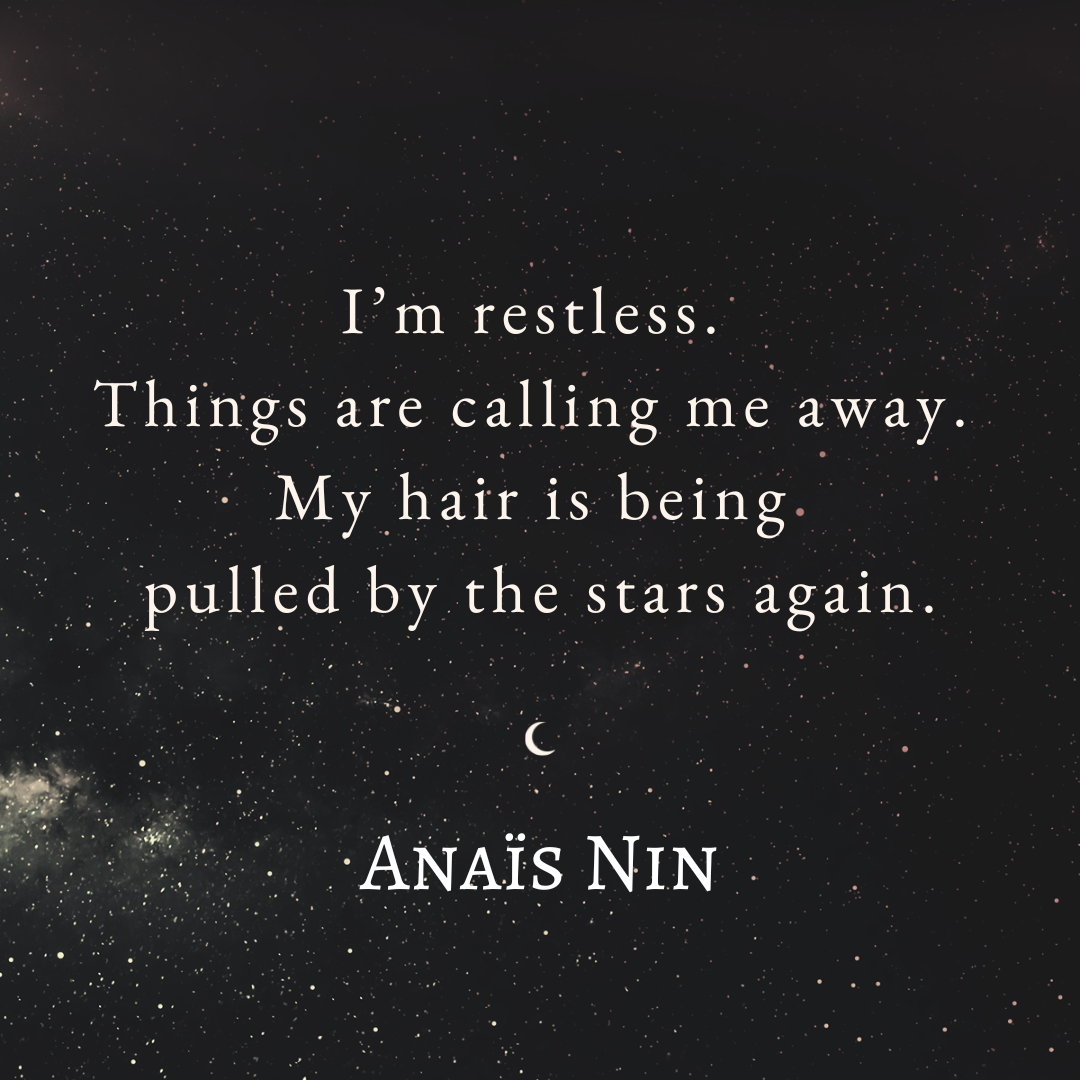
e.e. cummings, bhakti poetry and the individuality of the universal experience | pessoa, ginsberg, anaïs nin

in my undergraduate degree, i studied western poetry, and one of the poets i focused on was the beguiling e. e. cummings. in the past two years, i have been exclusively exploring eastern poetry in my postgrad, and it is only recently that i have begun to see how the two apparent different worlds and approaches illuminate each other. one of the elements i am most interested in at the moment is the process of individualising the universal experience; or how to express the universal through means of individuality.


this, with relation to cummings and bhakti poetry: cummings, a pioneer of experimental poetry, created his own language, which functions, i would maintain, like an authorship stamp: he used conjunctions as nouns, rewrote linguistic rules, introduced spacing as verbs etc. his poetry addresses themes looked down upon by other avantgarde poets of his time (and our time!) such as love and nature, yet it is the creation of his own language and the erotic notes of his poetry that revolutionise and freshen the apparent cliché of his subject matter.


similarly, bhakti poets, who write about ‘common’ topics such as love and separation, revolutionise these universal themes by pinpointing the object of desire to be God, and by introducing eroticism as worship. and, their authorship stamps (example: Akkā Mahādevī’s Chennamallikarjuna – more on this later!) distinguish and establish their poetic voices as individual in the context of universality.


fascinating how the experience can be both universal yet unique as it expresses itself individually through us, and how marvellous the intricacies of language and poetry are, how beautifully they thread us together through traditions, genres, times and worlds! 🤍


sidenote, i did use the word ‘cliché’ as a convention, but i don’t believe in clichés exactly because of this reason.

part of my #poetrybeautyseries, in which i share my favourite poetry lines and muse on their significance! on pessoa:

to me, fernando pessoa is one of the most fascinating poets to have graced this earth. he created 81 heteronyms for himself – meaning, 81 different characters or identities he assumed while writing. each had a different personality, background story, style. in awe with the mind-blowing imagination of this beautiful man. here’s a fragment from ‘discontinuous poems’, which he wrote as alberto caeiro, and which is grounded in a non-dual view, in my opinion. planning to make a video about him soon 🖤

on ginsberg:

although this quote is well-known, its context isn’t! it’s an excerpt from an interview with Ginsberg from Writers Digest, edited by Bill Strickland (p.47), in which he talks about the importance of expressing yourself without caring for validation or recognition.

“It’s more important to concentrate on what you want to say to yourself and your friends. Follow your inner moonlight; don’t hide the madness. Take (William Carlos) Williams: until he was 50 or 60, he was a local nut from Paterson, New Jersey, as far as the literary world was concerned. He went half a century without real recognition except among his friends and peers.

You say what you want to say when you don’t care who’s listening. If you’re grasping to get your own voice, you’re making a strained attempt to talk, so it’s a matter of just listening to yourself as you sound when you’re talking about something that’s intensely important to you.”
to seal my heart / is to deprive myself of God | bhakti poem by téa nicolae

in the depths of betrayal,

do not, under any circumstance,

seal your heart.

for years, you intricately

pushed yourself to unglue it.

to forfeit that effort

is to lose the rawness of God

tasting herself in you

as both the flutter in your womb

and as the pain in your left lung.

to seal my heart
is to deprive myself of God.


in this life,
there is much i have allowed.


but this,
this, i will not allow.

______________

~ note to myself. 🖤

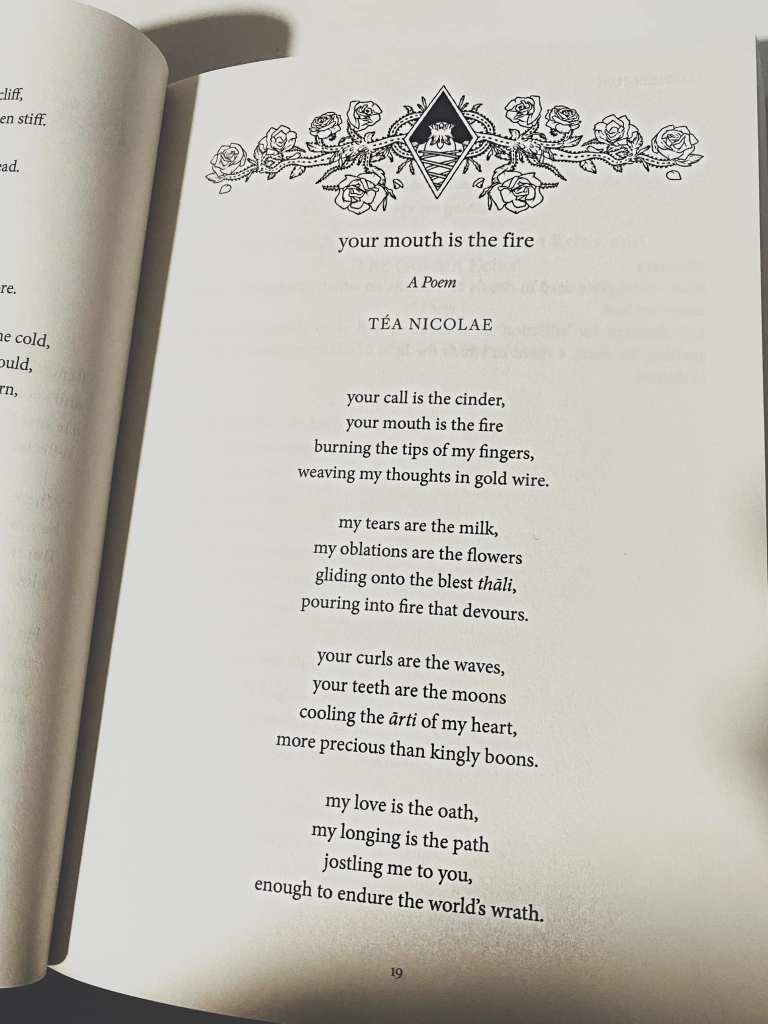
your mouth is the fire | bhakti poem by téa nicolae

your call is the cinder
your mouth is the fire
burning the tips of my fingers,
weaving my thoughts in gold wire.

my tears are the milk,
my oblations are the flowers
gliding onto the blest thāli,
pouring into fire that devours.

your curls are the waves,
your teeth are the moons
cooling the ārti of my heart ,
more precious than kingly boons.

my love is the oath,
my longing is the path
jostling me to you,
enough to endure the world’s wrath.

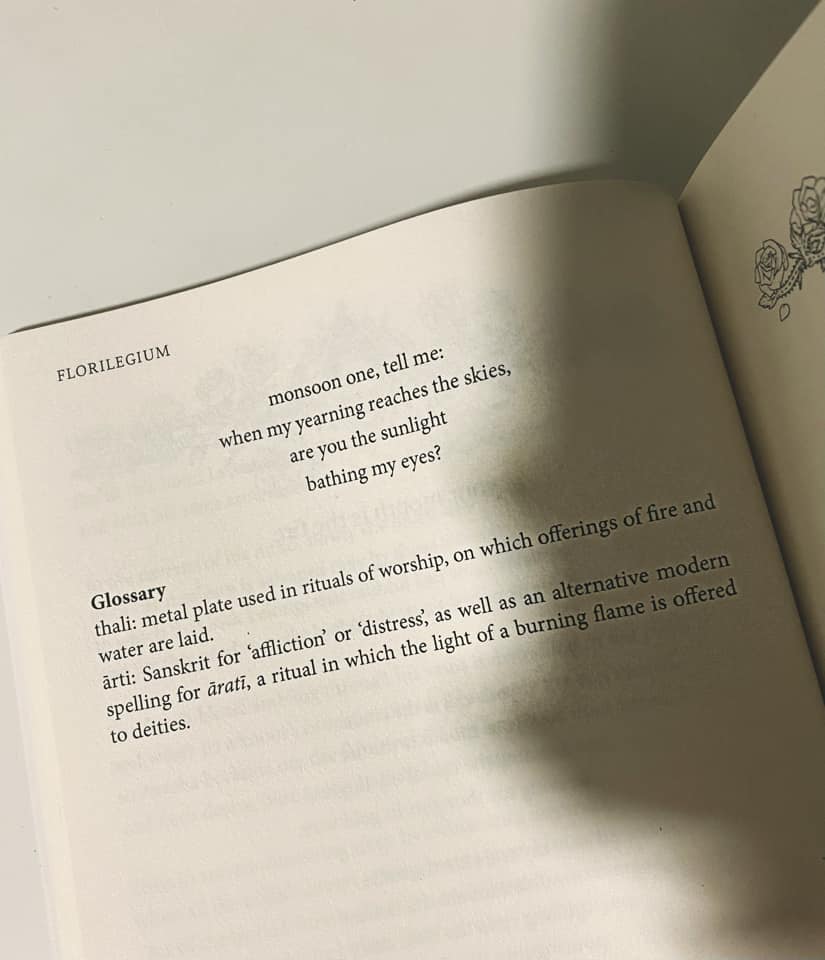
monsoon one, tell me
when my yearning reaches the skies
are you the sunlight
bathing my eyes?

Glossary
thāli – metal plate used in rituals of worship, on which offerings of fire and water are laid.
ārti – Sanskrit for ‘affliction’ or ‘distress’, as well as an alternative modern spelling for āratī, a ritual in which the light of a burning flame is offered to deities.

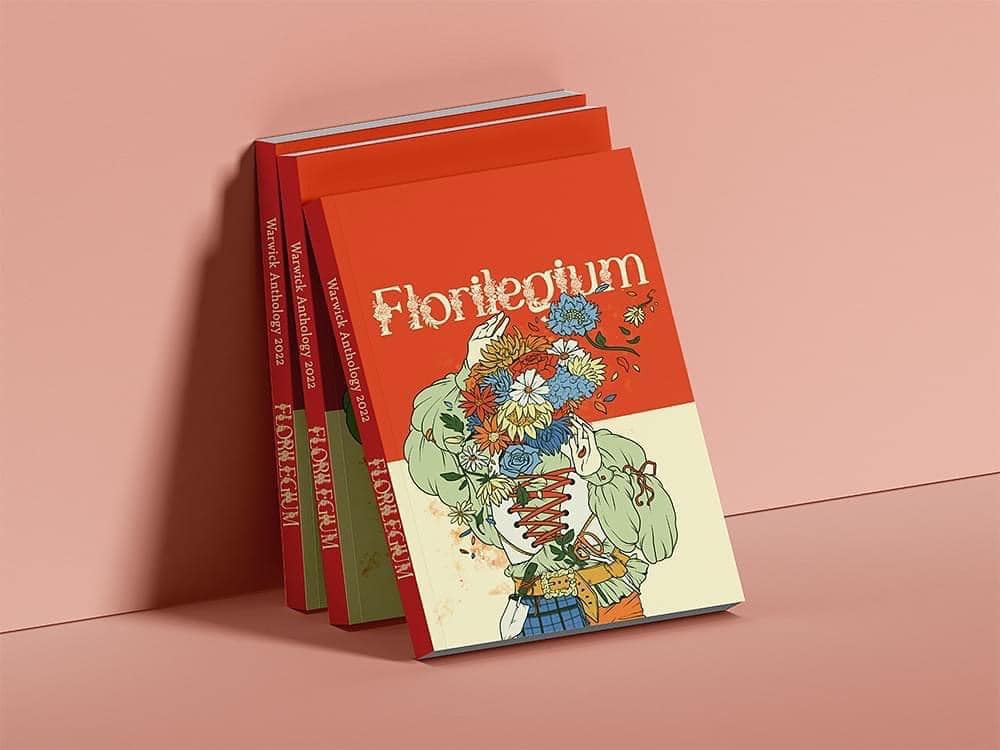
.❀。• *₊°。 ❀°。 my creative contribution to the Florilegium Anthology .❀。• *₊°。 ❀°

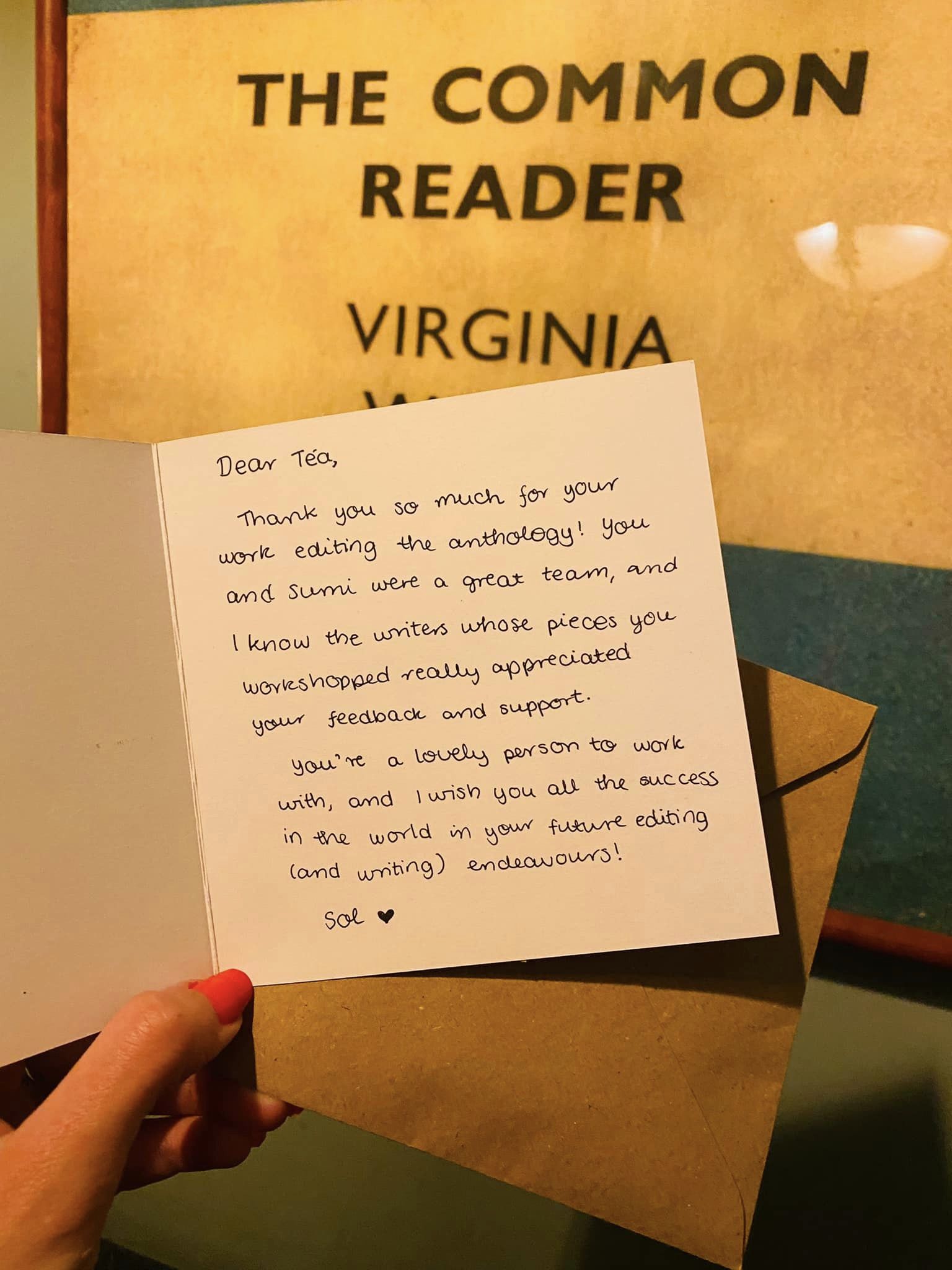
🖤🥀🌼 FLORILEGIUM 🥀🌼🖤 is an anthology of fiction & non-fiction literature compiled by the 2022 cohort of the Warwick Writing Programme, birthed out of love for writing and out of commitment to expression and self-discovery through the art of writing. Florilegium features 21 emerging writers and it holds short stories, flash fiction & poetry. it was a pure delight to work on this collection with my very talented colleagues and it is a joy to see it out in print! the Florilegium launch was held in february in London 🖤 photos from the launch below!

lemon tree flare | bhakti poem by Téa Nicolae

i had thought
that i was just a girl
who wanted to plant lemon trees
but my hot blood scorched
the vine trailing on the windowsill.


Keśava,
you are pulling me to you by my teeth
and i follow happily.

exploring the warm tones of warwickshire beauty 💛


i followed you into the seven seas
and i followed you into the circle of mountains
i have been calling you with folded hands
and now i will dance to you
with my mouth open
and with flowers woven into my skin tissue.


monsoon one,
did you know
that the crevices of my heart
can hold you whole?
did you know
that the fire in my belly
can swallow the three worlds?


i know you did,
Hari.
i know you did.

you elude me: bhakti poem by Téa Nicolae

you elude me,

my Beloved.
your nectarous call
trickles in my ears
and i run to you,
maddened.

i run to you,
enamoured,
clothed by longing
and with tears as jewels.

i run to you,
bare,
silk dress in shreds,
ripped slippers.

i’ve been running to you
since before i was born.
i am tired, Hari.
my dignity and pride
are long forgotten.
my toenails are cracked,
the skin peels off my feet.
my hair is rumpled,
my breasts are bruised;
your wayward bride.

whenever i get close
to throwing myself at your feet
my mind entangles me.
my wrongs push against my bones
and i fall on my face.
my blood smears the ground
and i grovel. i cry. i howl.

when your nectarous call
trickles in my ears,
i jolt forwards.
and i run to you,
maddened.

~ poem to Madhav, published in Śabda Magazine, volume II. my offering of longing as we approach the auspicious day of Vijayadaśamī! may we be victorious in our quest to merge with the Divine Beloved. 🙏

aegina, greece, 2018.

Hymn to the Empress of Kings by Téa Nicolae

Praise be to The Empress of Kings
seated on the throne of five corpses in the palace of ruby.


Her blinking eyes birth and collapse the cosmos,
and her crown is the lunar half-moon.


She whose reddened eyes roll ecstatically,
She is Mahātripurasundarī,
The Great Beauty of the Triads.


Praise be to Parā Aṃbikā,
of allure so exquisite that, enchanted,
Śiva grew his third eye just to worship her beauty.


Her body is anointed with sandalwood,
and her fragrance bathes and deludes the three worlds.


She is Śrīmātā,
The Auspicious Mother.


Praise be to Lalitā Aṃbikā,
The One Who Plays,
whose girdle of tinkling bells stirs creation into being.


She who gifts the sun his effulgence,
Her toenail holds the universes,
and Her auspicious thighs are known only by the fortunate Kāmeśvara.


She is Kāmākṣī,
She whose eyes are desire.


Bhavānī,
you are the nectar of the ocean of compassion:
grace this songstress to only sing of your praises.


🌺 “Hymn to the Empress of Kings”, one of my poems offered to Devī at the magnificent Siri Jyoti Pūjā in Seattle. inspired by the verses of the Lalitāsahasranāma which extoll Lalitā’s rapturous beauty. Śrī Mātre Namaḥ. Happy Navarātra!

Yajñasenī by Téa Nicolae

she who was born of fire

she whose beauty enticed even the sun

i garland thee

she whose blood spilled on royal floors of marble

she whose woe scorched the Kurus

i weep with thee

she who was touched yet remained stainless

she whose dishevelled hair holds the griefs of woman

i pray with thee

Draupadī,

she who cried the tears of the women who walked this earth

i am thee.

*poem published in Śabda Magazine, vol. II.

collage i made of pooja sharma as the beloved empress. her performance is etched to my heart!

prayer by Téa Nicolae

mother, my mother,

may your piercing hum shatter my chest

and imbibe my being with radiance.

mother, my mother,

may my eyelids burn at the sight of your lustrous sword,

and may my tears bathe the soles of your feet.

mother, my mother,

you are the darkness of the night sky

and the golden stars that gleam through.

one glimpse of you,

and i am humbled

before the blissful truth

that all that i am

and all that is

is dribble

gliding on your tongue.

🌺 i am so, so very honoured to have my poem included in the introduction to my beloved teacher’s upcoming course, accompanying the spellbinding art created by the incredibly talented Rashmi / Rashmi Thirtha Sacred Arts Studio💙🙏💙 the wisdom Dr. Kavitha Chinnaiyan imparts in her courses is exquisite and authentic. each time i listen to her, i feel my heart cracking open, bit by bit, to the vidyā flowing through. Kavithaji offers direct applications for one’s life: thus, the teaching does not remain an esoteric, abstract concept – the shift occurs instantly. i highly recommend her courses & her work to all sādhakas!

💙Kavithaji’s mesmerising words:

“It was the autumn Navarātra of 2015. I got out of the car and began walking. It was a clear night and I had been meditating on Tārā all day. It had been a day of alternating turmoil and bliss, both evoked by deep meditation. When I looked up at the star-studded sky, my legs suddenly stopped working. As if paralyzed, I stood on the sidewalk, staring at the sky. In the profound silence of that moment, the life purpose I had so ardently sought became clear. The path opened up before me… and also the obstacles that stood in my way – my self-deceptions and the demons of my own making. In retrospect, it was a defining moment, which would lead me to my guru. Like all the other Mahāvidyās, Tārā is fierce and her sādhanā is uncompromising. Her supreme vidyā is that of the Śabda Brahman. And of course, tārā also means star – how serendipitous…This Navarātra (February 17-21, 2021), we will throw ourselves at her feet, and implore her to show us the way. With her yantra as the focal point, we will explore her iconography, history, symbolism… and importantly, how she shows up in our lives. As always, this course is all about practical applications of the highest principles. We’ll see how this great goddess is constantly manifesting in our lives, our breath, our speech and our action. We will learn to invoke her in all of these areas.”

to enroll:

more information: